
Why CNC Machining is Essential for High-Performance Bicycle Drivetrain Systems
The drivetrain is undeniably the most critical system of any bicycle, acting as the primary link that transfers a rider’s physical power into forward motion. Whether it is a rugged mountain bike navigating steep, rocky terrain, an electric bike handling high motor torque, or a high-end road bike built for competitive sprinting, drivetrain components are constantly subjected to intense mechanical stress, extreme chain lines, and continuous friction. In the modern cycling industry, traditional manufacturing methods like standard casting, stamping, or basic high-volume forging often struggle to deliver the absolute level of precision and material durability required for these high-performance parts. This is exactly where CNC machining for bicycle drivetrain comes into play, as it allows manufacturers to produce high-tier transmission components that can withstand extreme riding conditions while maintaining flawless shifting efficiency over thousands of miles of intense use.
By leveraging advanced manufacturing methods, engineers can overcome many of the design, geometry, and material limitations found in traditional bicycle drivetrain production, enabling modern systems to achieve significantly higher levels of strength, stiffness, and weight efficiency; CNC machining for bicycle drivetrain allows every tooth profile, lightweight pocket, and mounting interface to be produced with precise engineering accuracy, ensuring consistent performance across complex geometries, and for today’s premium bicycles—especially in competitive, gravel, and mid-to-high-end markets—this CNC machining process has evolved from an optional enhancement into a core manufacturing standard that directly supports reliable power transmission, mechanical stability, and the high-performance expectations of athletes, enthusiasts, and premium bike brands.
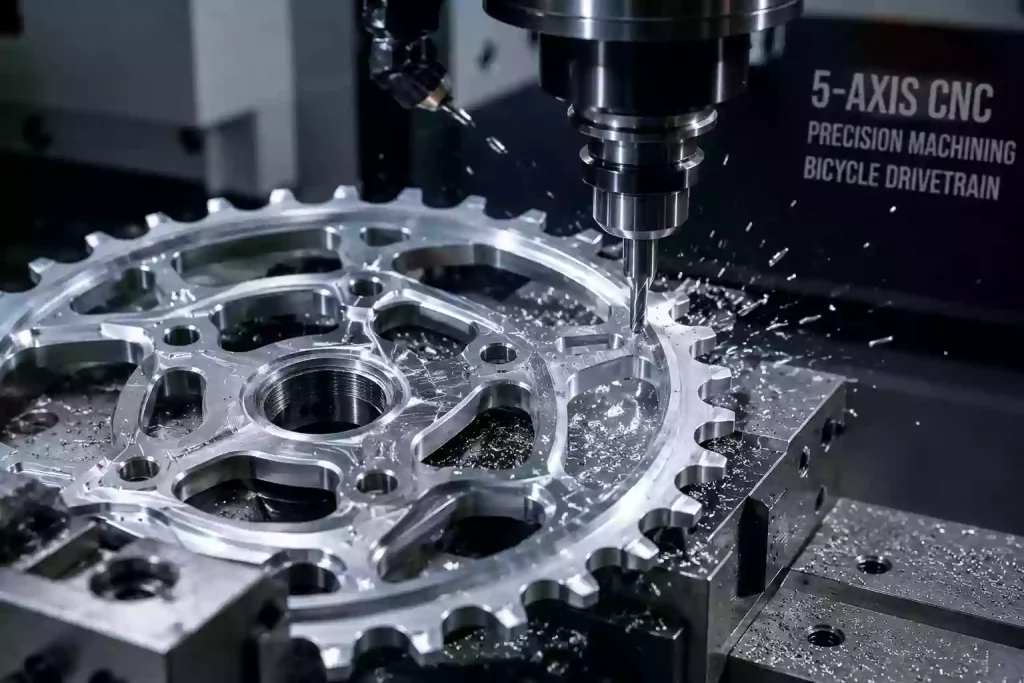
The Complex Geometry of Modern Tooth Profiles
Modern bicycle shifting systems require extremely complex tooth profiles to ensure smooth, instantaneous chain transitions under heavy pedaling loads. With the cycling industry moving rapidly toward 12-speed and even 13-speed rear cassettes, the physical spacing between individual chainrings and cassette cogs has become incredibly narrow, requiring tighter tolerances and more intricate designs than ever before. Traditional metal stamping or basic die-casting cannot achieve the multi-dimensional bevels, complex shifting ramps, and precise chamfers needed on each individual tooth to guide the chain perfectly without dropping. Implementing CNC machining for bicycle drivetrain allows manufacturing facilities to mill these intricate, microscopic geometric details with absolute consistency across large production runs, ensuring that every part performs identically in the field.
The global shift toward 1x (single chainring) drivetrains has led to the adoption of narrow-wide tooth profiles designed to prevent chain derailment without the need for a front derailleur, and CNC machining for bicycle drivetrain provides the precision required to alternately cut these thick and thin teeth with high accuracy; during high-load conditions such as uphill shifting, the chain must engage and disengage within fractions of a second, and this precise execution ensures tight mechanical synchronization between chain links and gear teeth, while without the multi-axis capabilities of this process, producing variable tooth thickness, narrow-wide profiles, and complex shifting interfaces would be extremely difficult, resulting in poor shifting quality, increased wear, and reduced overall ride smoothness.
Achieving the Ultimate Strength-to-Weight Ratio
Every single gram counts when designing high-performance bicycle components, particularly within the moving, rotational parts of a transmission system. Bicycle engineers are constantly facing the difficult challenge of removing excess material to reduce weight without sacrificing the component’s structural integrity, stiffness, or safety margins. This delicate engineering balance is why CNC machining for bicycle drivetrain has become the industry standard for producing elite-tier cranksets, spiders, and rear cassettes. Through advanced computer-controlled pocketing, multi-axis profiling, and deep pocket milling, it can hollow out solid metal blocks, strategically removing dead weight from low-stress areas while leaving extra material where the structural load is highest.
Traditional manufacturing methods simply cannot create these complex, hollowed-out internal structures or varying wall thicknesses. By opting for CNC machining for bicycle drivetrain, engineers can utilize Finite Element Analysis (FEA) to design one-piece cassettes and spiderless chainrings that are incredibly light yet exceptionally rigid under high wattages. A lighter drivetrain significantly reduces rotational inertia, allowing riders to accelerate much faster with less energy expenditure. Ultimately, relying on CNC machining for bicycle drivetrain ensures that critical components do not flex or bend under intense pedaling forces, maximizing the bike’s overall power transfer directly from the pedals, through the crankset, and directly to the rear wheel hub.
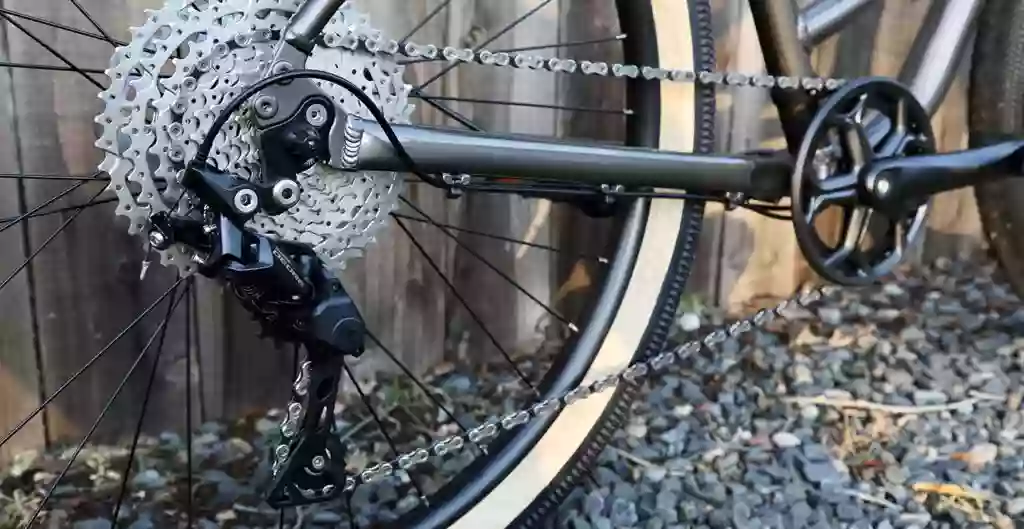
Overcoming the Material Limitations of Traditional Methods
High-performance drivetrain components require raw materials that offer exceptional hardness, high tensile strength, and superior fatigue resistance. Aerospace-grade aluminum alloys, such as 7075-T6 or 6061-T6, and high-grade titanium alloys are the preferred choices for premium parts. However, these advanced metals cannot be easily cast, molded, or stamped without creating internal structural flaws, such as porosity, air pockets, or micro-cracks that compromise rider safety. Utilizing CNC machining for bicycle drivetrain solves this metallurgical issue entirely because the manufacturing process begins with solid, pre-forged billets or extruded bars that already possess optimal grain alignment, uniform material density, and maximum structural integrity.
By applying advanced precision machining to these tough, high-performance metals, manufacturers can preserve the inherent strength and structural integrity of the raw material throughout the entire cutting process. Unlike cast components, which may contain hidden porosity or internal weaknesses, machined parts maintain consistent density and reliability—critical for chainring teeth and derailleur cages that endure continuous impact and abrasive wear. This approach enables premium bicycle brands to confidently use harder, longer-lasting materials that significantly extend drivetrain service life, reduce warranty issues, and strengthen brand trust in competitive global markets.
Micron-Level Tolerances for Flawless Mechanical Sync
Bicycle shifting is a game of precise mechanical synchronization where even a fraction of a millimeter of misalignment can cause misshifts, chain rub, or excessive drivetrain noise. Components like the bottom bracket shell, crankset spindles, and derailleur pulley cages must align perfectly to maintain a straight chainline across all gears. Mass-production techniques like stamping or standard die-casting carry wider tolerance variations that can easily compound during final assembly, leading to a poor user experience. This is why CNC machining for bicycle drivetrain is essential, as it consistently achieves tight tolerances down to micron levels, ensuring that every manufactured part matches the original CAD design perfectly.
Maintaining these exact, repeatable dimensions through advanced precision manufacturing eliminates the stacked tolerance issues that often plague complex multi-speed setups. When an OEM factory applies this level of CNC production to critical mating surfaces, the bearings seat perfectly, internal threads engage smoothly, and shifting remains crisp over thousands of miles of real-world use. For premium bike brands and engineering firms, this approach significantly reduces assembly line errors, lowers product defect rates, and delivers a consistently refined mechanical performance that end-users can feel immediately on their very first ride.
Zero Tooling Costs and Agile Small-Batch Production
From a business and supply chain perspective, the bicycle industry moves incredibly fast, with drivetrain designs, standards, and specifications evolving every single season. Bicycle transmission system designs change quickly based on new trends, such as varying rear hub spacing, different chainlines, or new frame clearance requirements. CNC machining for bicycle drivetrain offers unmatched manufacturing agility because it requires zero expensive upfront tooling or mold costs, unlike traditional forging or injection molding. Implementing CNC machining for bicycle drivetrain means that if an engineer needs to modify a chainring design or adjust a component’s dimensions, they simply update the digital CAD/CAM program rather than wasting thousands of dollars on a new physical mold.
This digital flexibility makes modern precision manufacturing an ideal solution for agile small-batch production and rapid prototyping phases. Startups, custom bike builders, and mid-sized OEM bicycle brands can order small production runs without being forced into high minimum order quantities (MOQs) that drain company capital and lead to excess inventory. Furthermore, this approach significantly accelerates the product development cycle, allowing brands to test working prototypes in the field within days instead of months. In a highly competitive market, this manufacturing method enables businesses to respond quickly to rider feedback and market changes, helping them stay ahead of the competition.
Conclusion
In summary, precision CNC machining for bicycle drivetrain is much more than just an alternative manufacturing method; it is a fundamental pillar of modern, high-performance bicycle engineering. By delivering unmatched geometric accuracy for complex tooth profiles, maximizing strength-to-weight ratios through strategic pocketing, and unlocking the full potential of elite materials like 7075-T6 aluminum and titanium, this manufacturing approach ensures a superior riding experience. It bridges the gap between complex digital engineering designs and rugged, real-world mechanical reliability, ensuring that every shift is crisp, every watt of power is transferred efficiently, and every component lasts under pressure.
For bicycle brands, component designers, and purchasing managers looking to develop next-generation transmission systems, choosing the right manufacturing partner is critical. At XTPROTO, we combine years of specialized engineering expertise with advanced, multi-axis CNC machining capabilities to deliver premium components with tight tolerances and exceptional surface finishes. Whether you are scaling up production for a custom component line or developing a brand-new drivetrain concept, the XTPROTO team is equipped to support your project from prototype to final batch production. Contact XTPROTO today to discuss your design requirements and see how our dedicated CNC machining for bicycle services can bring your vision to life.