
Metal CNC Machining: Processes, Materials, Applications, and Key Advantages
Metal CNC machining is one of the most widely used manufacturing methods for producing precise metal parts. From aerospace brackets to automotive components and electronic housings, CNC machining allows manufacturers to turn raw metal into complex, high-precision parts with consistent quality.
The process uses computer-controlled machines to cut and shape metals such as aluminum, steel, titanium, brass, and copper. Compared with traditional manual machining, CNC machining offers much higher precision, better repeatability, and faster production.
Today, companies rely on metal CNC machining to produce everything from prototypes to large production runs. Its ability to combine tight tolerances, flexible materials, and complex geometries makes it a core technology in modern manufacturing.
What Is Metal CNC Machining?
Metal CNC machining is a subtractive manufacturing process that removes material from a solid metal block to create a finished part. The machines are controlled by computer programs that guide cutting tools with extremely high accuracy.
The process usually starts with a digital 3D model created in CAD software. This design is then converted into machine instructions using CAM software. Once the program is loaded into the CNC machine, the cutting tools follow the programmed paths to remove material and form the desired shape.
Because the process is fully automated, it can achieve excellent consistency and precision. Many CNC machined metal parts can reach tolerances as tight as ±0.01 mm, depending on the machine and material.
This level of control is why CNC machining metals is widely used for critical components where accuracy and reliability are essential.
How Metal CNC Machining Works
Although CNC machining may seem complex, the basic workflow is relatively straightforward. Most metal CNC machining projects follow several key steps.
1. CAD Design
The process begins with a digital design. Engineers create a 3D model of the part using CAD software. This model defines the exact dimensions, shapes, and features of the component.
2. CAM Programming
The CAD model is then imported into CAM software, which generates the toolpaths that the machine will follow. These instructions tell the cutting tools how to move, how fast to cut, and how deep to remove material.
3. Machine Setup
Before machining begins, the operator installs the metal material onto the machine and selects the appropriate cutting tools. Proper setup ensures stability and accuracy during the machining process.
4. CNC Machining Operations
Once everything is ready, the CNC machine starts cutting the metal. Depending on the design, the process may include milling, turning, drilling, or tapping operations.
5. Finishing and Inspection
After machining, the part may go through additional finishing processes such as deburring, polishing, or surface treatment. The final component is then inspected to ensure it meets the required tolerances and quality standards.
Types of Metal CNC Machining Processes
Several machining methods are commonly used to manufacture metal parts. Each process serves a different purpose depending on the part geometry and design requirements.
CNC Milling
CNC milling is one of the most common metal machining processes. A rotating cutting tool removes material from a stationary metal workpiece. Milling machines can create complex shapes, slots, pockets, and surfaces.
CNC Turning
CNC turning is typically used for cylindrical or round components. In this process, the metal workpiece rotates while the cutting tool removes material to form the desired shape. It is commonly used for shafts, pins, and threaded parts.
CNC Drilling
Drilling is used to create precise holes in metal parts. CNC drilling ensures accurate hole positions and consistent depths, which is essential for assemblies and fasteners.
CNC Grinding
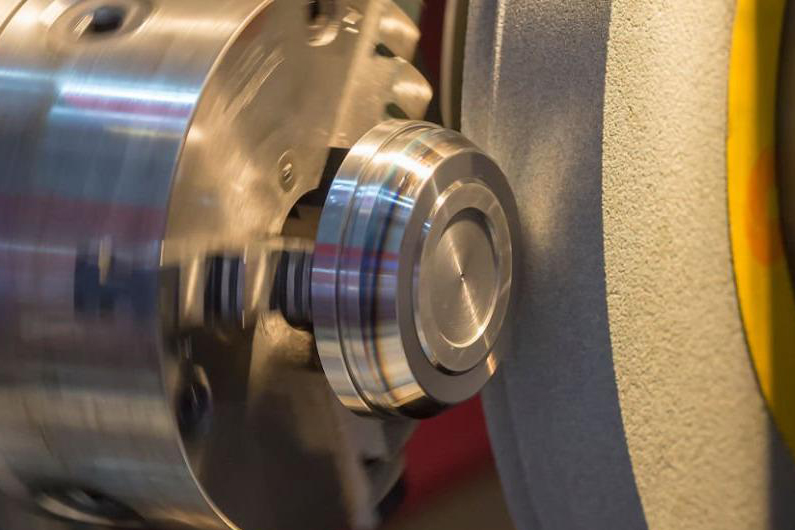
Grinding is often used for finishing operations. It produces very smooth surfaces and extremely tight tolerances, especially for precision components.
Multi-Axis Machining
Modern CNC machines often use 4-axis or 5-axis technology. These machines allow tools to approach the part from multiple angles, making it possible to produce highly complex metal components in fewer setups.
Common Metals Used in CNC Machining
One major advantage of metal CNC machining is its compatibility with many different metals. The choice of material depends on factors such as strength, weight, corrosion resistance, and cost.
Aluminum
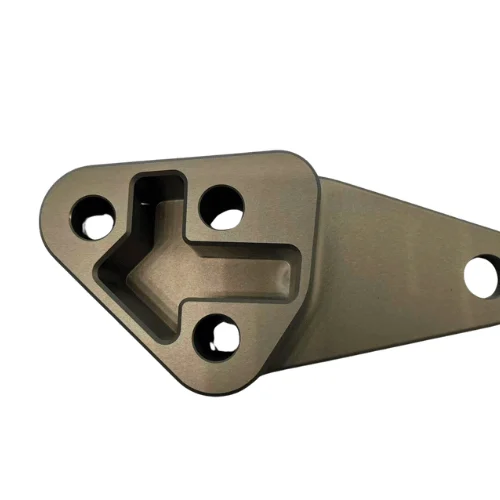
Aluminum is one of the most popular CNC machining metals. It is lightweight, easy to machine, and offers good corrosion resistance. It is widely used in aerospace, electronics, and automotive applications.
Stainless Steel
Stainless steel is known for its strength and corrosion resistance. It is commonly used in medical devices, food processing equipment, and industrial machinery.
Carbon Steel
Carbon steel provides excellent strength and durability. It is often used for structural components, mechanical parts, and heavy-duty applications.
Titanium
Titanium offers an outstanding strength-to-weight ratio and excellent corrosion resistance. Because of these properties, it is frequently used in aerospace and medical implants.
Brass and Copper
Brass and copper are commonly used when electrical conductivity or corrosion resistance is required. They are often found in connectors, fittings, and electronic components.
Advantages of Metal CNC Machining
Metal CNC machining offers several important advantages compared with other manufacturing methods.
High Precision
CNC machines can produce extremely accurate parts with tight tolerances. This makes them ideal for industries where precision is critical.
Excellent Repeatability
Because the machines are computer-controlled, every part can be produced with the same dimensions. This consistency is especially important for production runs.
Complex Geometry
CNC machining makes it possible to create complex shapes and intricate features that would be difficult or impossible with manual machining.
Strong and Durable Parts
Unlike some additive manufacturing processes, CNC machining starts with solid metal material. This means the finished parts retain the full strength of the original metal.
Flexible Production
CNC machining can be used for both prototypes and large production batches, making it a versatile solution for many manufacturing needs.
Limitations of Metal CNC Machining
While CNC machining is highly capable, it also has some limitations.
Higher Equipment Cost
CNC machines and cutting tools can be expensive, which can increase the overall production cost for small projects.
Material Waste
Since the process removes material from a solid block, some waste is unavoidable. This can make CNC machining less efficient for certain designs.
Size Constraints
The maximum part size is limited by the working area of the CNC machine.
Despite these limitations, CNC machining metals remains one of the most reliable ways to manufacture high-precision metal components.
Industries That Use Metal CNC Machining
Many industries rely on CNC machining to produce critical metal parts.
Aerospace
CNC machining is used to produce lightweight structural components, brackets, and precision housings for aircraft and spacecraft.
Automotive
Automotive manufacturers use CNC machining for engine parts, transmission components, and performance upgrades.
Medical Devices
Precision machining is essential for surgical instruments, orthopedic implants, and medical equipment.
Electronics
CNC machining is commonly used to produce aluminum housings, heat sinks, and structural components for electronic devices.
Industrial Equipment
Many machines and manufacturing systems rely on CNC-machined metal parts for durability and precision.
Metal CNC Machining vs Other Manufacturing Methods
CNC machining is often compared with other production methods.
Compared with casting, CNC machining provides much higher precision and better surface quality. However, casting may be more cost-effective for very large production volumes.
Compared with sheet metal fabrication, CNC machining is better suited for solid components with complex 3D geometries.
Compared with 3D printing, CNC machining produces stronger metal parts with better surface finishes, although additive manufacturing can be useful for highly complex or lightweight structures.
Design Tips for CNC Metal Parts
Designing parts specifically for CNC machining can help reduce cost and improve manufacturability.
Sharp internal corners should be avoided because cutting tools are round. Adding small radii helps improve machining efficiency.
Wall thickness should also be kept reasonable. Extremely thin walls can deform during machining and increase production difficulty.
Hole depth should generally not exceed four times the diameter of the hole to maintain machining accuracy.
Finally, designers should avoid unnecessarily tight tolerances, as tighter tolerances often increase machining time and cost.
Factors That Affect Metal CNC Machining Cost
Several factors influence the cost of CNC machining metal parts.
Material choice is a major factor. Harder materials such as titanium typically require slower cutting speeds and specialized tools.
Part complexity also affects cost. More complex geometries require longer machining times and additional setups.
Tight tolerances and high-quality surface finishes can further increase manufacturing time and inspection requirements.
Production volume also plays a role. Larger quantities usually reduce the cost per part because setup time is spread across more components.
Conclusion
Metal CNC machining has become a fundamental manufacturing process for producing high-precision metal components. By combining computer-controlled accuracy with advanced cutting technology, CNC machines can manufacture complex parts with consistent quality.
From aerospace and automotive to electronics and medical devices, CNC machining metals continues to play a critical role in modern industry. As manufacturing technologies continue to evolve, CNC machining will remain an essential solution for producing reliable, high-performance metal parts.
FAQ
What is the difference between sheet metal CNC machining and standard metal CNC machining?
While both fall under the metal CNC machining umbrella, they use different equipment. Sheet metal CNC machining typically involves punching, laser cutting, or bending thin flat sheets. Standard metal CNC machining (milling and turning) starts with a solid block or “billet” of metal and removes material to create complex 3D shapes. Our metal CNC machining service covers both, providing a one-stop solution for everything from brackets to solid engine blocks.
How much does it cost to CNC metal?
The cost of a metal CNC machining service depends on material type (e.g., Aluminum is cheaper than Titanium), part complexity, and machine time. To give you an accurate figure, we offer an instant quote CNC machining tool. By uploading your CAD files, our system calculates the exact tool paths and material costs, providing a transparent price faster than traditional shops like Sneha Industries or regional Sdn Bhd providers.
Will CNC machinists be replaced by AI in metal fabrication?
AI is currently used to optimize toolpaths and monitor tool wear on the C N C machine, but it cannot replace the human intuition required for complex setups and material behavior adjustments. In professional metal CNC machining, a human expert is still essential to oversee quality control and handle the nuances of custom heavy fabrication.