
Hybrid Manufacturing Technology: Combining 3D Printing and CNC Machining
As manufacturing demands continue to evolve, traditional production methods face new challenges in manufacturing parts with complex geometries, high precision tolerances, and shorter lead times. While 3D printing offers exceptional design flexibility and the ability to fabricate complex structures, it doesn’t always achieve the dimensional accuracy and surface finish required for functional components. CNC machining, on the other hand, provides high precision and superior surface quality, but it has limitations when machining highly complex geometries.
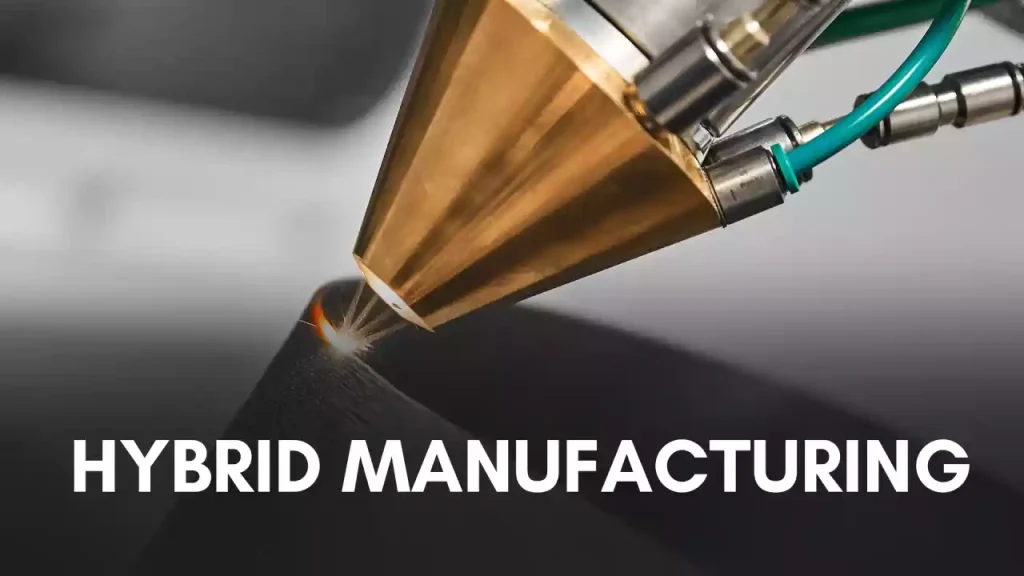
Hybrid manufacturing combines the advantages of additive and subtractive manufacturing, integrating 3D printing with CNC machining into a single production process. This approach allows manufacturers to create complex, near-net-shape parts using 3D printing and then use CNC machining to achieve precise dimensions, critical features, and high-quality surface finishes.
By combining the design freedom of 3D printing with the precision of CNC machining, hybrid manufacturing offers an efficient solution for producing complex, high-performance components. This article will explore how hybrid manufacturing works, its advantages, applications, challenges, and why it is becoming an important technology in modern manufacturing.
What is Hybrid Manufacturing?
Hybrid manufacturing is an advanced manufacturing approach that integrates additive manufacturing (AM) and subtractive manufacturing processes to produce complex parts with higher performance and efficiency. Unlike traditional manufacturing methods that rely on a single production technology, hybrid manufacturing combines the addition and removal of material within the same manufacturing process.
In this process, 3D printing is typically used to build parts layer by layer, creating complex geometries, internal structures, or near-final shapes that are difficult to achieve through traditional machining. CNC machining is then used to finish critical areas such as precision holes, threaded features, mating surfaces, and other parts requiring tight tolerances and excellent surface finishes.
The key concept of hybrid manufacturing is not simply using multiple processes on the same part, but rather strategically combining the strengths of each technology. 3D printing offers greater design freedom and material utilization, while CNC machining provides the precision and surface quality required for functional applications.
By integrating these complementary technologies, hybrid manufacturing enables manufacturers to produce parts with both complex designs and high dimensional accuracy, making it a valuable solution for prototyping, low-volume production, and advanced engineering applications.
How Does Hybrid Manufacturing Work?
Hybrid manufacturing works by combining the material-building capability of 3D printing with the precision finishing capability of CNC machining. Instead of relying on a single manufacturing method, the process assigns different tasks to each technology based on the design requirements of the part.
During the initial stage, 3D printing creates the basic structure of the component by adding material layer by layer. This allows manufacturers to produce complex geometries, lightweight structures, and internal features that may be difficult or impossible to achieve through traditional machining methods. The printed part is usually produced close to its final shape, leaving specific areas for subsequent machining.
After the additive manufacturing stage, CNC machining is used to improve critical features and achieve the required specifications. Machining operations such as milling, drilling, turning, and tapping can be applied to areas that require higher accuracy, tighter tolerances, or smoother surface finishes.
The typical hybrid manufacturing workflow includes:
Design Optimization → 3D Printing → CNC Machining → Surface Finishing → Inspection
- Design Optimization: Engineers determine which features are best created through additive manufacturing and which areas require CNC machining.
- 3D Printing: The part is built with complex shapes while minimizing material usage.
- CNC Machining: Critical dimensions, functional surfaces, holes, and threads are precisely machined.
- Surface Finishing and Inspection: The final part receives additional finishing processes and undergoes quality verification.
By combining these two manufacturing approaches, hybrid manufacturing overcomes the limitations of both technologies. It enables the production of parts with complex designs, high precision, and improved overall performance.
Why Combine 3D Printing with CNC Machining?
Although both 3D printing and CNC machining are powerful manufacturing technologies, each process has its own limitations when used independently. Combining these two methods allows manufacturers to take advantage of their complementary strengths and create parts with greater design flexibility, precision, and efficiency.
Limitations of 3D Printing
3D printing has transformed manufacturing by enabling the production of complex geometries and customized designs. However, some limitations remain when producing functional end-use parts:
- Limited dimensional accuracy: Printed parts may require additional machining to achieve tight tolerances for critical features.
- Surface finish limitations: Layer-by-layer manufacturing can leave visible surface textures that may not meet requirements for precision applications.
- Difficulty achieving functional features: Features such as precision holes, threads, and mating surfaces often require post-processing to meet performance requirements.
Limitations of CNC Machining
CNC machining is widely recognized for its accuracy and excellent surface quality, but it also has challenges when producing highly complex components:
- Complex geometry limitations: Certain internal structures, lattice designs, and intricate features can be difficult or impossible to machine.
- Higher material waste: Traditional machining removes material from a solid block, which can result in significant material waste.
- Longer production time for complex parts: Multi-axis setups and extensive machining operations may increase manufacturing time and cost.
How Hybrid Manufacturing Solves These Challenges
By combining 3D printing with CNC machining, hybrid manufacturing creates a more balanced production approach:
- 3D printing handles complex shapes and lightweight structures, reducing design limitations and material usage.
- CNC machining refines critical areas, providing tight tolerances, smooth surfaces, and precise functional features.
- The combined process reduces production time and improves part performance, especially for complex prototypes and low-volume production parts.
This integration allows manufacturers to produce components that are difficult to achieve with either technology alone, combining the design freedom of additive manufacturing with the precision of CNC machining.
Hybrid Manufacturing Process: From Design to Finished Part
The hybrid manufacturing process combines additive manufacturing and CNC machining in a coordinated workflow. Instead of choosing one manufacturing method for the entire part, engineers analyze the design requirements and determine which areas benefit from 3D printing and which features require precision machining.
Step 1: Design Optimization
The process begins with analyzing the part design, material requirements, and functional specifications. Engineers identify areas where additive manufacturing can provide advantages, such as complex geometries, internal channels, or lightweight structures, while reserving critical features for CNC machining.Design optimization helps reduce unnecessary machining operations while ensuring the final part meets performance and dimensional requirements.
Step 2: Additive Manufacturing
During the additive manufacturing stage, 3D printing is used to create the primary structure of the component layer by layer. This stage focuses on producing complex shapes and near-net-shape parts while minimizing material waste.Compared with traditional manufacturing methods, 3D printing enables greater design freedom and allows manufacturers to create features that are difficult to produce through conventional machining.
Step 3: CNC Machining Finishing
After 3D printing, CNC machining is performed on areas that require higher precision or better surface quality. Common CNC operations include:
- Milling precision surfaces
- Drilling accurate holes
- Machining threaded features
- Finishing mating surfaces
- Achieving tight dimensional tolerances
CNC machining ensures that the final component meets strict functional requirements and assembly specifications.
Step 4: Surface Finishing and Inspection
After machining, additional finishing processes may be applied to improve appearance, durability, or performance. These processes can include polishing, coating, anodizing, or other surface treatments depending on the application requirements.The finished part then undergoes dimensional inspection and quality verification to ensure it meets the required specifications.
Complete Hybrid Manufacturing Workflow
CAD Design → Design Optimization → 3D Printing → CNC Machining → Surface Finishing → Inspection
Through this integrated workflow, hybrid manufacturing combines the flexibility of additive manufacturing with the precision of CNC machining, providing an efficient solution for producing complex and high-performance components.
Advantages of Hybrid Manufacturing Technology
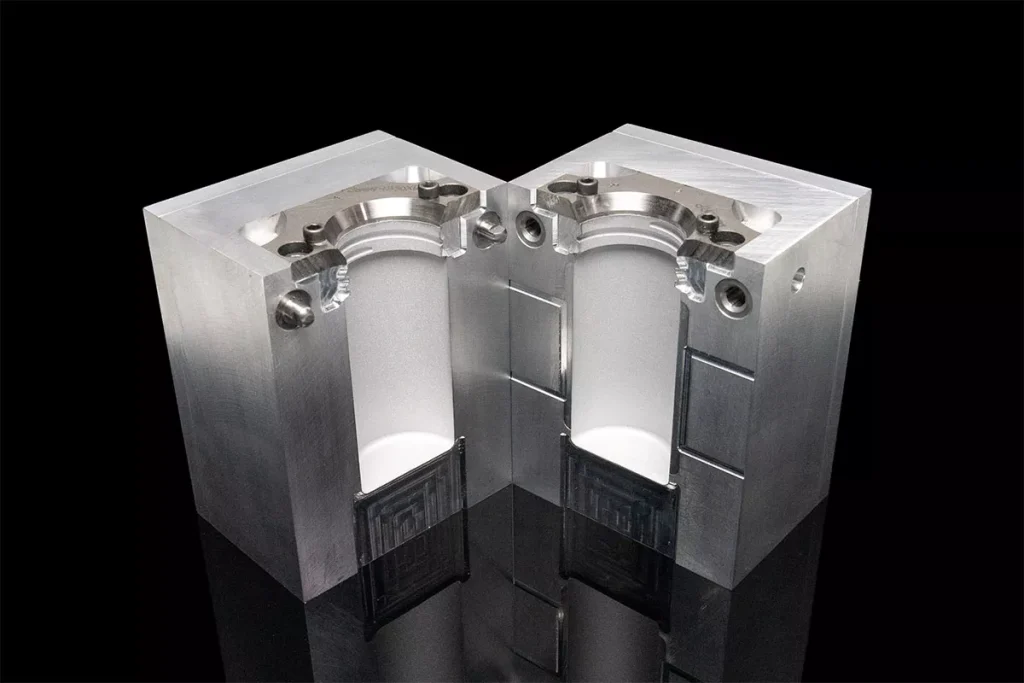
Hybrid manufacturing combines the design flexibility of 3D printing with the precision of CNC machining, allowing manufacturers to overcome the limitations of using either technology alone. This integrated approach provides several advantages for producing complex, high-performance components.
Greater Design Freedom
3D printing enables manufacturers to create complex geometries, internal channels, lattice structures, and lightweight designs that are difficult or impossible to produce with traditional machining methods. By combining CNC machining afterward, these advanced designs can also achieve the accuracy required for functional applications.
Improved Precision and Surface Quality
One of the biggest advantages of hybrid manufacturing is the ability to achieve both complex structures and high precision. While 3D printing provides excellent design flexibility, CNC machining improves critical features by delivering:
- Tighter dimensional tolerances
- Precise holes and threads
- Smooth mating surfaces
- Better surface finishes
This makes hybrid manufacturing suitable for parts that require both advanced geometries and strict performance requirements.
Reduced Material Waste
Traditional CNC machining starts with a solid block of material and removes excess material to create the final shape. For complex parts, this process can result in significant material waste.Hybrid manufacturing reduces material consumption by using 3D printing to build the majority of the part near its final shape, while CNC machining only removes material from specific areas that require precision finishing.
Faster Production and Shorter Lead Times
By reducing the amount of machining required, hybrid manufacturing can shorten production cycles, especially for complex prototypes and low-volume parts. Manufacturers can quickly create near-final components through 3D printing and use CNC machining only where necessary.
Cost-Effective Production for Complex Parts
For highly complex components, producing the entire part through traditional CNC machining may require multiple setups, specialized tooling, and longer processing times. Hybrid manufacturing helps optimize the production process by combining efficient material use with precision machining, making it a cost-effective solution for advanced part manufacturing.Overall, hybrid manufacturing provides a balanced approach that delivers the benefits of both additive and subtractive manufacturing, enabling the production of complex parts with improved efficiency, accuracy, and performance.
Hybrid Manufacturing Applications
Hybrid manufacturing is widely used in applications where parts require both complex geometries and high precision. By combining 3D printing with CNC machining, manufacturers can produce components that are difficult to achieve through either process alone.
Rapid Prototyping
Hybrid manufacturing is highly effective for product development and design validation. 3D printing enables engineers to quickly create prototype parts, while CNC machining improves critical dimensions, surface finishes, and functional features for accurate testing.This combination allows companies to evaluate designs faster, make improvements efficiently, and reduce the time required before final production.
Complex Components
For complex parts with advanced geometries, hybrid manufacturing provides advantages that traditional methods may not achieve.3D printing can create intricate structures, internal channels, and lightweight designs, while CNC machining ensures dimensional accuracy and high-quality surface finishes on critical areas.
Typical applications include:
- Aerospace components
- Medical implants
- Lightweight structural parts
- Complex engineering components
Low-Volume Production
Hybrid manufacturing is suitable for customized parts and low-volume production where flexibility and precision are both important.3D printing reduces tooling requirements and enables faster production of unique designs, while CNC machining ensures consistent quality and accuracy across finished components.This makes hybrid manufacturing an effective solution for prototypes, customized products, and small-batch production.
Multi-Material Components
Hybrid manufacturing also enables the combination of different materials or manufacturing approaches within a single component.By integrating different material properties, manufacturers can optimize part performance, such as improving strength, reducing weight, or enhancing functionality.This approach is particularly valuable for advanced engineering applications that require customized material characteristics.
Materials Used in Hybrid Manufacturing
The choice of material plays an important role in hybrid manufacturing because different materials have different requirements for 3D printing and CNC machining. By selecting suitable materials and combining both processes, manufacturers can achieve the desired balance between design flexibility, mechanical performance, and precision.
Metal Materials
Metal materials are widely used in hybrid manufacturing, especially for applications that require high strength, durability, and thermal resistance.
Common metal materials include:
- Aluminum: Lightweight, corrosion-resistant, and easy to machine, making it suitable for aerospace components, prototypes, and lightweight structures.
- Stainless Steel: Provides excellent strength, corrosion resistance, and durability for industrial and medical applications.
- Titanium: Offers a high strength-to-weight ratio and excellent performance in demanding applications such as aerospace and medical components.
- Inconel: Known for its high-temperature strength and corrosion resistance, commonly used for advanced engineering applications.
In hybrid manufacturing, metal 3D printing is often used to create complex structures or near-net-shape parts, while CNC machining is applied to achieve precise dimensions, smooth surfaces, and critical functional features.
Plastic Materials
Engineering plastics are also suitable for hybrid manufacturing, particularly for prototypes, lightweight components, and functional parts.Common plastic materials include:
- Nylon: Offers good strength, flexibility, and wear resistance for functional prototypes and mechanical parts.
- PEEK: Provides excellent chemical resistance, temperature resistance, and mechanical performance for demanding applications.
- ABS: A cost-effective material commonly used for rapid prototyping and product development.
After 3D printing, CNC machining can improve dimensional accuracy, create precise holes or threads, and enhance surface quality when required.
Material Selection Considerations
When choosing materials for hybrid manufacturing, several factors should be considered:
- Mechanical requirements: Strength, hardness, and durability needed for the final application.
- Manufacturing compatibility: Whether the material is suitable for both additive manufacturing and CNC machining.
- Surface finish requirements: Whether additional machining or finishing is needed.
- Application environment: Temperature, chemical exposure, and operating conditions.
By selecting the right material and combining the strengths of 3D printing and CNC machining, hybrid manufacturing can produce high-performance parts with complex designs and reliable functionality.
Challenges of Hybrid Manufacturing Technology
Despite its advantages, hybrid manufacturing still faces some challenges during implementation.
Process Integration
Combining 3D printing and CNC machining requires careful process planning, including part positioning, data transfer, and machining strategy optimization.
Equipment Investment
Hybrid manufacturing requires both additive manufacturing and CNC machining capabilities, which can increase equipment and setup costs.
Material Compatibility
Different materials may require specific printing and machining parameters. Proper material selection is essential to ensure consistent part quality.
Hybrid Manufacturing vs Traditional Manufacturing Methods
Hybrid manufacturing combines the advantages of additive manufacturing and subtractive manufacturing, offering a different approach compared with traditional production methods. Understanding the differences between these processes helps manufacturers select the right solution based on part complexity, accuracy requirements, and production needs.
| Feature | 3D Printing | CNC Machining | Hybrid Manufacturing |
| Part Complexity | Excellent for complex geometries | Limited by tool access and setup | Excellent for complex designs |
| Dimensional Accuracy | Moderate | High | High |
| Surface Finish | Limited | Excellent | Excellent |
| Material Efficiency | High | Lower due to material removal | High |
| Design Flexibility | High | Moderate | High |
| Production Flexibility | Excellent for prototypes | Suitable for precision parts | Suitable for complex prototypes and low-volume production |
Hybrid Manufacturing Compared with Traditional CNC Machining
Compared with traditional CNC machining, hybrid manufacturing reduces the amount of material removal required by using 3D printing to create near-net-shape parts. This approach is especially beneficial for complex components that require lightweight structures or intricate internal features.
Hybrid Manufacturing Compared with Standalone 3D Printing
Compared with using 3D printing alone, hybrid manufacturing improves part accuracy and surface quality through CNC machining. Critical features such as holes, threads, and mating surfaces can be precisely finished to meet functional requirements.Overall, hybrid manufacturing provides a balanced solution by combining the design freedom of 3D printing with the precision of CNC machining, making it suitable for advanced manufacturing applications where both complexity and accuracy are required.
When Should You Choose Hybrid Manufacturing?
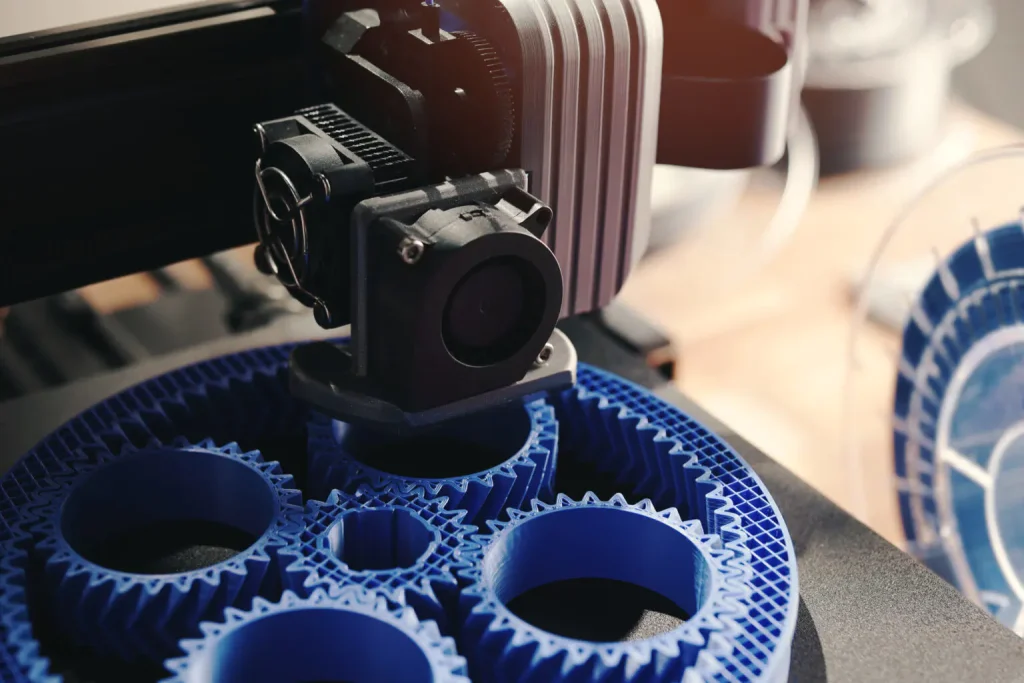
Hybrid manufacturing is not the best choice for every part, but it provides significant advantages when a component requires both complex designs and high precision. Manufacturers should consider hybrid manufacturing when traditional processes cannot efficiently meet design, performance, or production requirements.
Complex Geometry Parts
Hybrid manufacturing is suitable for parts with complex structures, internal channels, lattice designs, or lightweight features that are difficult to produce through conventional CNC machining.
Functional Prototypes
For product development, hybrid manufacturing allows engineers to quickly create prototypes with 3D printing and refine critical features through CNC machining. This helps achieve more accurate testing results before final production.
Low-Volume Production
Hybrid manufacturing is a practical solution for customized parts and small-batch production. It reduces the need for expensive tooling while maintaining the precision and quality required for functional components.
Parts Requiring Both Design Flexibility and Precision
When a part requires the design freedom of additive manufacturing and the accuracy of CNC machining, hybrid manufacturing provides an effective solution.However, for simple geometries, high-volume production, or parts that can be efficiently produced using a single manufacturing method, traditional processes may remain more cost-effective.
Future Trends of Hybrid Manufacturing
As additive manufacturing and CNC machining technologies continue to advance, hybrid manufacturing is expected to become more widely adopted in modern production. Improvements in automation, digital technologies, and material development will further enhance the capabilities of hybrid manufacturing systems.
Increased Automation and Intelligent Manufacturing
Future hybrid manufacturing processes will integrate more automation, artificial intelligence, and real-time monitoring technologies. These improvements will help optimize manufacturing parameters, reduce manual adjustments, and improve production consistency.
More Advanced Hybrid Manufacturing Equipment
The development of advanced hybrid machines that combine 3D printing and CNC machining capabilities in a single platform will simplify production workflows and reduce the need for multiple setups.
Expanded Material Options
Advances in metal and polymer materials will enable hybrid manufacturing to support a wider range of applications. New materials with improved strength, heat resistance, and performance will expand its use in demanding industries.
Greater Adoption in Complex Part Production
As manufacturing requirements continue to evolve, hybrid manufacturing will play a larger role in producing complex, lightweight, and high-performance components, especially for industries such as aerospace, medical, and advanced engineering.Overall, hybrid manufacturing represents an important direction in the future of manufacturing by combining design flexibility, production efficiency, and precision machining capabilities.
Xtproto’s CNC Machining Support for Hybrid Manufacturing
As hybrid manufacturing continues to develop, CNC machining remains an essential step for achieving the precision and surface quality required for functional parts. Xtproto provides advanced CNC machining capabilities to support the finishing and refinement of complex components produced through hybrid manufacturing workflows. With multi-axis CNC milling and turning capabilities, Xtproto helps improve critical features such as precision holes, threaded structures, mating surfaces, and tight-tolerance areas that require high machining accuracy. Xtproto’s CNC machining capabilities include:
- Precision CNC Milling and Turning for accurate feature machining and finishing.
- Multi-Axis Machining to handle complex geometries and challenging part designs.
- Tight Tolerance Machining to meet demanding dimensional requirements.
- Surface Finishing Services to improve part appearance and performance.
- Quality Inspection to ensure finished components meet customer specifications.
By combining advanced CNC machining expertise with flexible manufacturing solutions, Xtproto helps customers transform complex designs into high-quality, production-ready parts with improved accuracy, reliability, and performance.