
Types of Engraving
Engraving is a widely used process for creating permanent marks, patterns, text, logos, and identification information on various materials. From decorative designs on consumer products to part numbers and traceability marks on industrial components, engraving provides a reliable way to improve product identification, customization, and functionality.
With advancements in manufacturing technology, engraving methods have evolved from traditional hand engraving to modern CNC engraving, laser engraving, and other precision marking processes. Each method offers different advantages in terms of accuracy, engraving depth, material compatibility, and production efficiency.
Understanding the different types of engraving helps manufacturers and designers choose the most suitable method based on their application requirements, material properties, and production goals. This article introduces the common engraving methods, their working principles, advantages, limitations, and typical applications.
What Is Engraving?
Engraving is a manufacturing and marking process that creates permanent designs, text, patterns, or identification marks on a material surface by removing material or altering the surface structure. Depending on the engraving method, the process can be performed through mechanical cutting tools, laser beams, impact forces, or chemical reactions.
Unlike simple printing or surface coating, engraving creates a physical mark that is more durable and resistant to wear, making it suitable for applications where long-lasting identification or decoration is required. Engraving can be applied to a wide range of materials, including metals, plastics, glass, wood, and ceramics.
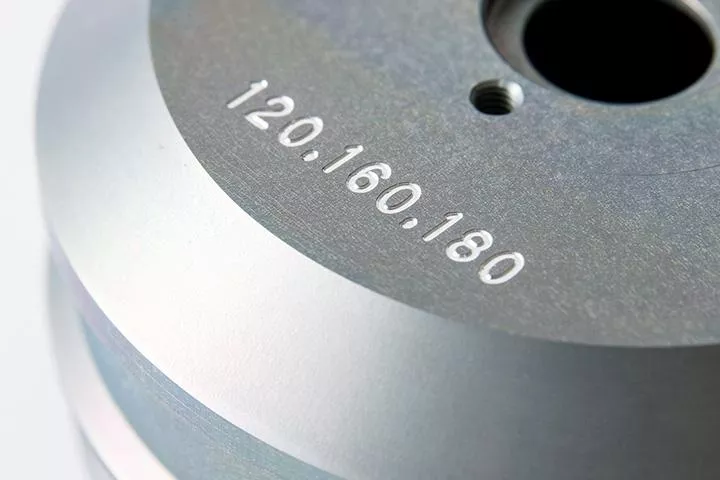
In industrial manufacturing, engraving is commonly used for part numbers, serial numbers, logos, measurement scales, warning labels, and traceability information. For custom machined components, engraving provides a precise and permanent way to add product identification without affecting the overall function or performance of the part.
How Does Engraving Work?
Although different engraving methods use different technologies, the basic process generally includes the following steps:
- Design Preparation
The engraving pattern, text, logo, or marking information is created using CAD software or specialized design files.
- Method Selection
The appropriate engraving method is selected based on material type, required depth, precision, appearance, and production volume.
- Surface Processing
Material is removed or modified using cutting tools, laser energy, impact marking, or chemical processes to create the desired engraving.
- Quality Inspection
The engraved features are inspected to ensure correct dimensions, readability, depth consistency, and surface quality.
Key Characteristics of Engraving
- Permanent Marking: Engraved information remains visible even under wear, cleaning, or harsh operating conditions.
- High Customization: Engraving can create complex designs, logos, text, and machine-readable codes.
- Wide Material Compatibility: Different engraving methods can process metals, plastics, glass, wood, and other materials.
- Flexible Applications: It can be used for both decorative purposes and functional industrial identification.
Types of Engraving Methods
Different engraving methods are developed to meet different application requirements, from decorative marking to permanent industrial identification. The main differences between these methods are the way material is removed, the level of precision they achieve, the materials they can process, and their suitability for different production volumes.
Common engraving technologies include CNC engraving, laser engraving, rotary engraving, dot peen engraving, diamond drag engraving, hand engraving, and chemical etching. Among them, CNC and laser engraving are widely used in modern manufacturing due to their high accuracy, repeatability, and efficiency.
CNC Engraving
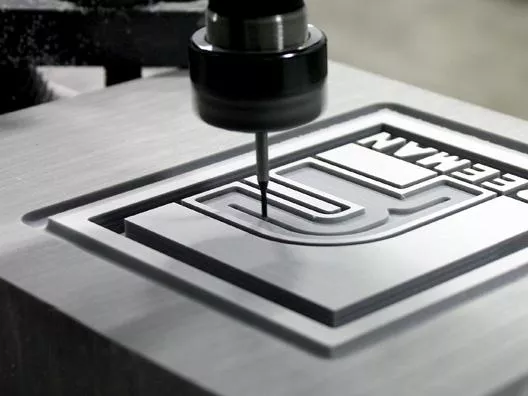
CNC engraving is a precision machining process that uses computer-controlled cutting tools to create text, patterns, logos, and identification marks on a workpiece surface. Unlike traditional manual engraving, CNC engraving follows programmed tool paths generated from CAD/CAM files, allowing manufacturers to achieve consistent results across multiple parts.
During the process, the engraving design is first converted into machining instructions. The CNC machine then controls the movement of the cutting tool to remove material at a specified depth and create the required features. By adjusting cutting parameters such as spindle speed, feed rate, and tool selection, manufacturers can achieve different engraving effects on various materials.
One of the main advantages of CNC engraving is its high precision and repeatability. It can produce clear and consistent markings on metal and plastic components, making it suitable for both prototypes and production runs. Compared with manual engraving, CNC engraving provides better control over engraving depth, geometry, and overall quality.
CNC engraving is commonly used for custom machined parts, industrial nameplates, mold markings, control panels, product logos, and component identification. In industries such as aerospace, automotive, medical, and electronics, engraved information helps improve product traceability and long-term identification.
Rotary Engraving
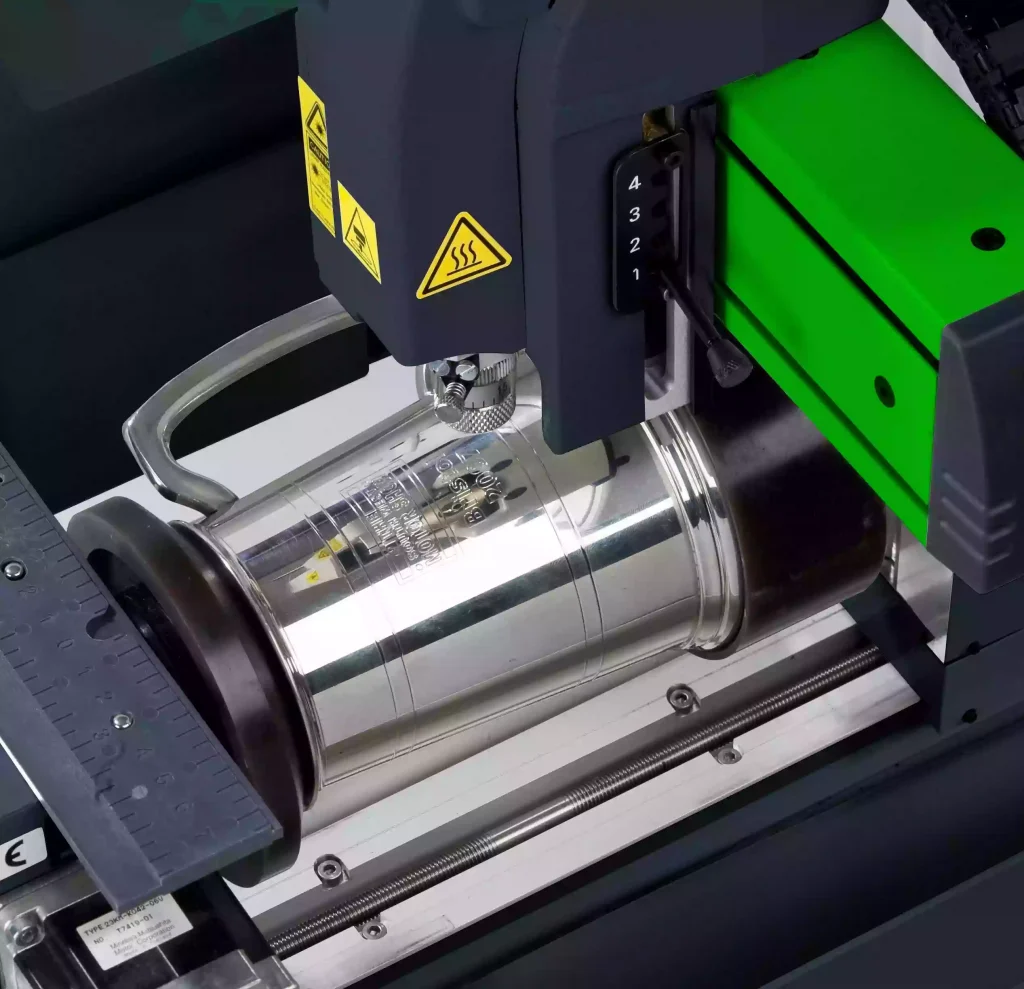
Rotary engraving is a mechanical engraving process that uses a rotating cutting tool to remove material from the surface of a workpiece. As the cutter moves along the programmed or guided path, it creates grooves that form letters, numbers, logos, patterns, or other designs.
The depth and width of the engraving can be controlled by selecting an appropriate cutter and adjusting the cutting parameters. Because rotary engraving physically removes material, it can produce deeper and more durable marks than many surface-marking methods. This makes it suitable for applications where the engraving needs to remain visible after repeated handling or exposure to wear.
Rotary engraving can be performed on materials such as aluminum, brass, copper, plastics, acrylic, and other relatively machinable materials. It is commonly used for nameplates, control panels, industrial labels, signage, equipment identification, and decorative components.
Rotary engraving and CNC engraving are closely related because both use mechanical cutting tools, but they are not necessarily interchangeable terms. Rotary engraving describes the use of a rotating cutter to create the engraving, while CNC engraving refers to computer-controlled machining of the engraving path. A rotary engraving machine can therefore be manually controlled or CNC-controlled, depending on the equipment and application.
Laser Engraving
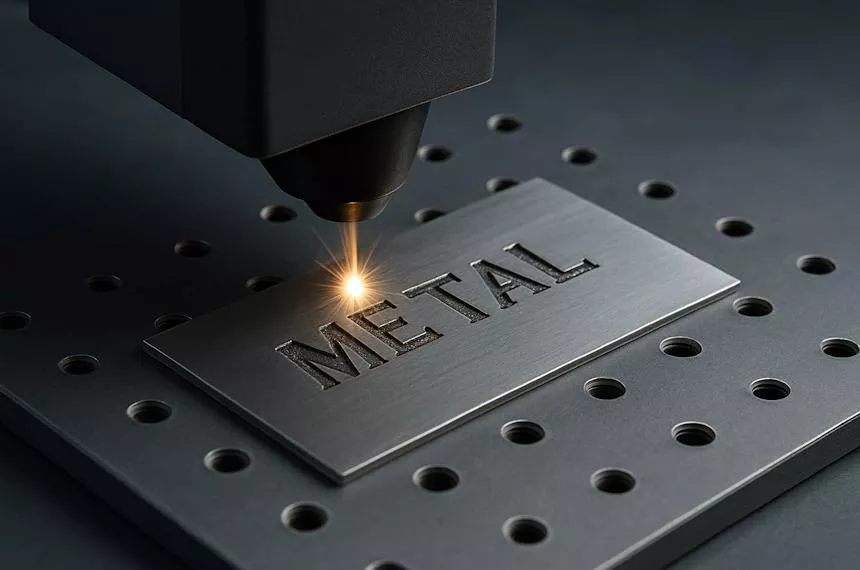
Laser engraving is a non-contact marking process that uses a focused laser beam to remove material or modify the surface structure of a workpiece. Instead of using a physical cutting tool, the laser creates marks through controlled heat energy, making it suitable for producing fine details and complex patterns.
Different laser technologies are used depending on the material and application. Fiber lasers are commonly used for metal components such as stainless steel, aluminum, and titanium, while CO₂ and UV lasers are often selected for plastics, glass, and heat-sensitive materials.
The major advantage of laser engraving is its ability to create precise markings without tool wear. It is widely used for serial numbers, QR codes, barcodes, logos, and product identification marks where readability and durability are important.
However, compared with mechanical engraving methods, laser engraving generally provides less physical depth. Therefore, applications requiring deep grooves or high wear resistance may require CNC or rotary engraving instead.
Dot Peen Engraving
Dot peen engraving is a mechanical marking process that creates permanent marks by repeatedly striking the material surface with a hardened stylus. Instead of continuously cutting a line into the workpiece, the stylus produces a series of closely spaced dots that form letters, numbers, logos, or other symbols.
Because the marking is physically impressed into the material, dot peen engraving produces durable identification marks that can remain readable even when the component is exposed to abrasion, heat, or harsh industrial environments. The marking depth can also be controlled according to the material and application requirements.
Dot peen engraving is particularly common for industrial traceability. Manufacturers use it to mark serial numbers, part numbers, production codes, and other identification information directly onto metal components. It is widely used for automotive parts, aerospace components, heavy equipment, and other products where permanent identification is important.
Compared with CNC or laser engraving, dot peen engraving is primarily focused on durable identification rather than decorative or highly detailed engraving. It is therefore a practical choice when the main requirement is to create permanent, machine-readable markings that can withstand demanding operating conditions.
Diamond Drag Engraving
Diamond drag engraving is a mechanical engraving method that uses a diamond-tipped tool to scratch the surface of a workpiece. Unlike rotary engraving, the diamond does not rotate or remove a significant amount of material. Instead, it is dragged across the surface under controlled pressure to create fine, clean lines.
Because the process produces very little material removal, diamond drag engraving is particularly suitable for applications where a precise and visually clean mark is required rather than a deep groove. The diamond tip can create consistent lines with a smooth appearance, while the absence of high-speed cutting also minimizes heat generation during the process.
Diamond drag engraving is commonly used on metals such as aluminum, brass, copper, and stainless steel. Typical applications include nameplates, jewelry, awards, decorative components, and personalized products. It can also be used to create fine text, logos, and simple graphic designs on metal surfaces.
Compared with CNC engraving, diamond drag engraving is generally better suited to shallow surface markings and decorative applications. When deep engraving or significant material removal is required, a rotary or CNC cutting process is usually more appropriate.
Hand Engraving
Hand engraving is one of the oldest engraving methods and relies on manually operated engraving tools to cut designs directly into a material surface. The engraver controls the tool by hand, adjusting the cutting direction, depth, and angle to produce the desired pattern or lettering.
The main characteristic of hand engraving is the level of craftsmanship involved. Skilled engravers can create highly detailed and customized designs that are difficult to reproduce using completely automated processes. Slight variations in cutting direction and depth can also give each engraved piece a distinctive appearance.
However, hand engraving is generally slower and less repeatable than CNC or automated engraving methods. The quality of the finished result depends heavily on the operator’s experience and technique, making it less suitable for high-volume industrial production where consistent results across large quantities are required.
Hand engraving is commonly associated with jewelry, watches, trophies, firearms, decorative metalwork, and other products where craftsmanship and personalization are more important than production speed. It remains particularly valuable for artistic and custom engraving applications.
Chemical Etching
Chemical etching is an engraving-related process that uses controlled chemical reactions to selectively remove material from a surface. Instead of mechanically cutting the workpiece or using concentrated heat energy, a protective layer is applied to define the areas that should remain unchanged, while exposed areas are chemically etched to create the desired pattern.
The process can produce highly detailed designs and is especially useful when working with thin metal sheets or components where mechanical cutting could cause deformation. Since the process does not rely on physical cutting forces, it can create intricate patterns without introducing significant mechanical stress into the material.
Chemical etching is commonly used for stainless steel, copper, brass, and other metals. Typical applications include electronic components, precision metal parts, decorative panels, filters, nameplates, and other products requiring fine surface patterns or detailed features.
Compared with CNC engraving, chemical etching is more suitable for shallow and highly detailed patterns, particularly on thin materials. CNC engraving, on the other hand, provides direct control over cutting depth and is generally more appropriate when the application requires deeper grooves or three-dimensional machined features.
Other Engraving Methods
In addition to the commonly used methods above, engraving can also be performed through specialized techniques developed for particular materials and applications. The choice of method depends largely on the required appearance, marking depth, production efficiency, and durability.
Some applications combine engraving with other manufacturing or finishing processes. For example, a component may first be CNC machined to its final dimensions and then engraved with a serial number or logo before surface treatment. This allows manufacturers to combine the dimensional accuracy of machining with permanent product identification.
For industrial components, the engraving method should therefore be selected as part of the overall manufacturing process rather than considered as an isolated operation.
Engraving Methods Comparison
The different engraving methods vary considerably in terms of cutting principle, achievable depth, precision, production efficiency, and typical applications. CNC and rotary engraving are primarily mechanical processes that physically remove material, while laser engraving modifies or removes material using concentrated energy. Dot peen engraving creates marks through repeated impact, diamond drag produces shallow scratches, and chemical etching removes material through a controlled chemical reaction.
| Engraving Method | Process | Typical Depth | Precision | Main Applications |
| CNC Engraving | Mechanical cutting | Shallow to deep | High | Machined parts, logos, identification |
| Laser Engraving | Laser energy | Shallow to medium | Very high | Serial numbers, QR codes, branding |
| Rotary Engraving | Rotary cutting | Medium to deep | High | Nameplates, panels, industrial marking |
| Dot Peen Engraving | Impact marking | Medium | Medium | Traceability and identification |
| Diamond Drag Engraving | Diamond scratching | Shallow | High | Decorative marking, nameplates |
| Hand Engraving | Manual cutting | Shallow to deep | Depends on skill | Jewelry, artwork, customization |
| Chemical Etching | Chemical removal | Shallow | High | Thin metal parts, detailed patterns |
Engraving Materials
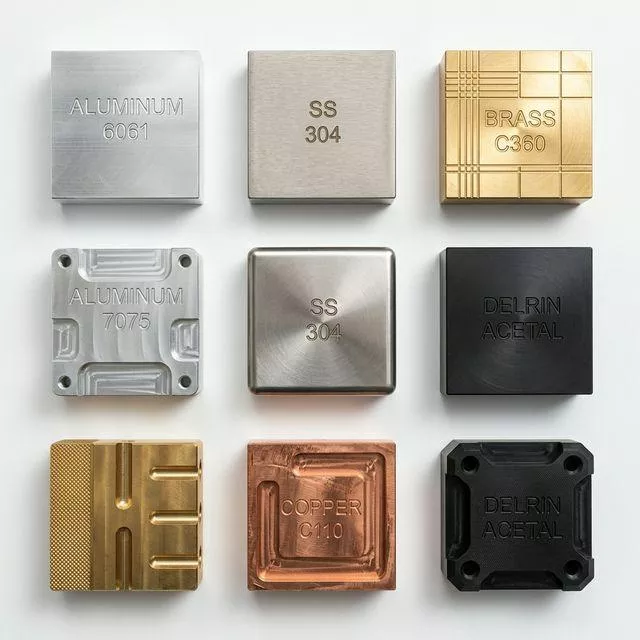
The material being engraved has a direct impact on the choice of engraving method, cutting parameters, achievable detail, and final appearance. Different materials respond differently to mechanical cutting, laser energy, impact marking, and chemical treatment. Therefore, an engraving process that works well for one material may not be suitable for another.
Metals
Metals are among the most common materials used for industrial engraving. Aluminum, stainless steel, brass, copper, titanium, carbon steel, and other engineering metals can be engraved using suitable mechanical or laser-based methods.
Aluminum is relatively easy to machine and can be engraved using CNC, rotary, diamond drag, or laser processes. Its relatively soft surface allows cutting tools to produce clean and precise grooves, making it common for nameplates, panels, housings, and custom machined components.
Stainless steel is harder and more wear resistant, so the engraving method and cutting parameters need to be selected carefully. CNC and rotary engraving can produce physical grooves, while fiber laser engraving is widely used when permanent surface marking is required.
Brass and copper can also be mechanically engraved because of their machinability. They are commonly used for decorative components, nameplates, electrical components, and identification plates.
Titanium and other harder metals generally require greater control over cutting conditions or specialized laser systems. The appropriate process depends on the required engraving depth, detail, and surface condition.
Plastics
Many engineering plastics can be engraved using mechanical or laser-based processes. Common materials include ABS, acrylic, polycarbonate, nylon, POM, and other thermoplastics.
Mechanical engraving can create clearly defined physical grooves and is useful when a deeper mark is required. Laser engraving can be advantageous for fine text, logos, and other detailed markings, although the appropriate laser type and processing parameters depend on the specific plastic.
Because plastics can soften, melt, discolor, or deform when exposed to excessive heat, both tool selection and processing conditions are important. The engraving method should therefore be chosen according to the material’s thermal and mechanical properties.
Glass, Wood, and Ceramics
Engraving can also be applied to non-metallic materials such as glass, wood, and ceramics. These materials generally require specialized processes because their physical properties differ significantly from metals and engineering plastics.
Laser engraving is particularly useful for these materials because it provides non-contact processing and can create detailed surface patterns. Glass can be marked with fine designs and text, while wood and certain ceramics can be engraved with decorative or functional patterns.
For industrial applications, the material should always be evaluated together with the required engraving depth, detail, surface appearance, and production requirements before selecting the engraving method.
How to Choose the Right Engraving Method?
Choosing the right engraving method depends on the material, required depth, level of detail, production volume, durability, and desired appearance. Different processes offer different advantages, so the best choice depends on the specific application.
Consider the Material
Different materials require different engraving processes. Metals such as aluminum, stainless steel, and brass can be processed by CNC, rotary, laser, or other methods, while plastics, glass, and ceramics may require specialized techniques.
Consider Engraving Depth and Detail
Shallow markings and fine details are often suitable for laser or diamond drag engraving, while CNC and rotary engraving are better when deeper physical grooves are required.
Consider Production Volume and Durability
Hand engraving is suitable for customized or one-off products, while CNC, laser, and dot peen engraving are more efficient for repeated production. For components exposed to wear or harsh environments, deeper mechanical or impact-based markings may provide better durability.
Consider the Final Appearance
The desired visual effect also influences the choice. Laser engraving can create fine and clean markings, while CNC, rotary, diamond drag, and hand engraving can produce different physical and decorative effects.
Overall, the right engraving method should match the material, depth, detail, production volume, durability, and appearance requirements of the application.
CNC Engraving vs. Laser Engraving
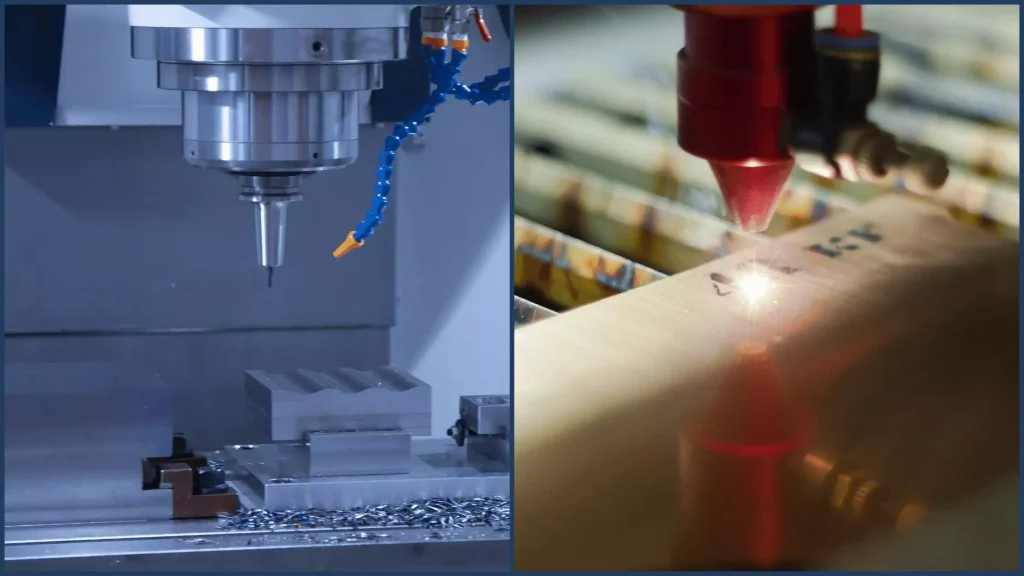
CNC engraving and laser engraving are both widely used for creating text, logos, patterns, and identification marks, but they use different processing methods. CNC engraving uses a cutting tool to physically remove material, while laser engraving uses focused energy to modify or remove the surface.
Process Difference
CNC engraving uses a rotating cutter to create controlled grooves in the workpiece. Laser engraving is non-contact and uses a focused laser beam to create surface markings.
Engraving Depth and Detail
CNC engraving can produce deeper physical grooves and precise engraving depths, making it suitable for durable markings. Laser engraving generally creates shallower marks but can produce very fine text, graphics, QR codes, and barcodes.
Material Compatibility
CNC engraving is suitable for machinable metals and plastics, including aluminum, stainless steel, brass, copper, titanium, and engineering plastics. Laser engraving can process metals, plastics, glass, wood, and other materials, depending on the laser type.
Which One Should You Choose?
Choose CNC engraving when you need deeper grooves, controlled depth, or engraving integrated into the machining process. Choose laser engraving when fine details, fast processing, or non-contact surface marking are the priority.
Conclusion
The right engraving method depends on the material, required depth, level of detail, production volume, and durability requirements. CNC, rotary, laser, dot peen, diamond drag, and other engraving methods each offer different advantages for specific applications.
At Xtproto, we provide precision CNC machining and engraving services for custom components, helping customers achieve accurate, consistent, and durable markings on a wide range of materials. Whether you need part numbers, logos, serial numbers, or other custom engravings, our machining capabilities can be tailored to your part requirements and production needs.