
What is cnc milling
CNC milling is one of the most widely used machining processes in modern manufacturing. It enables manufacturers to produce high-precision parts with complex geometries using a variety of materials, including metals and plastics. From rapid prototyping to mass production, CNC milling plays a crucial role in industries such as aerospace, automotive, medical, and electronics.
In this article, we will explain what CNC milling is, how it works, the different types of CNC milling operations and machines, and its advantages, limitations, and practical applications. Whether you are new to CNC machining or looking for the right machining process for your project, this guide will help you understand when and why CNC milling is the right solution.
What Is CNC Milling?
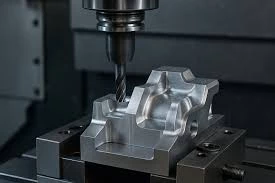
CNC milling is a machining process that uses computer-controlled cutting tools to remove material from a solid workpiece, thereby producing precision parts. It is a subtractive manufacturing method, meaning that the desired shape is achieved by removing material through cutting.
In CNC milling, the movement of the cutting tool and the workpiece is controlled by programmed instructions, ensuring high precision and repeatability. Compared to manual milling, CNC milling offers greater accuracy and consistency, making it suitable for both prototyping and mass production.
CNC Milling vs CNC Turning
CNC milling and CNC turning are two fundamental subtractive manufacturing processes that differ in how material is removed and the types of parts they produce.
CNC Milling uses a rotating cutting tool to remove material from a stationary or moving workpiece. This process is ideal for creating complex geometries, pockets, slots, and detailed contours on multiple surfaces. Milling is highly versatile and commonly used for components that require multiple features or precision finishes.
CNC Turning, in contrast, rotates the workpiece against a stationary cutting tool, typically on a lathe. Turning is best suited for cylindrical or symmetrical parts such as shafts, pins, and threaded components, where roundness and concentricity are critical.
The choice between milling and turning depends on part geometry, complexity, and production requirements. Milling is preferred for multi-surface or intricate parts, while turning is efficient for rotationally symmetrical components.
CNC Milling Process: How Does It Work?
A CNC milling machine shapes solid materials by automatically cutting away excess material according to a digital design.The movement of the tool and workpiece is controlled by a computer numerical control (CNC) system, which follows instructions generated from a digital design. This allows the machine to produce complex shapes with tight tolerances, consistent repeatability, and high efficiency. CNC milling can handle a wide range of materials, from metals like aluminum, steel, and brass to engineering plastics.
The CNC milling process generally involves several key stages:
Part Design (CAD) – Engineers create a detailed 3D model of the part using CAD software, specifying dimensions, features, and tolerances. Proper design ensures the part can be manufactured efficiently and meets functional requirements.
Toolpath Generation (CAM) – The CAD model is imported into CAM software, where cutting strategies, tool selection, speeds, feeds, and toolpaths are defined. This step determines how the machine will move to achieve the desired geometry.
Machine Setup – The workpiece is securely clamped to the machine table, and cutting tools are installed in the spindle. Operators may calibrate the machine and perform test runs to ensure alignment and accuracy.
Automated Milling – The CNC machine executes the program, moving the cutting tool along multiple axes to remove material according to the defined toolpaths. Modern CNC machines can perform simultaneous multi-axis operations for complex parts, minimizing manual intervention and reducing error.
Inspection and Quality Control – After machining, parts are measured using precision instruments to verify dimensions, surface finish, and tolerances. Any necessary finishing operations, such as deburring or polishing, are applied to meet quality standards.
By following these stages, CNC milling allows manufacturers to produce both prototypes and high-volume production parts with high precision and repeatability. Its ability to handle complex geometries and a variety of materials makes it an essential process in modern manufacturing.
Types of CNC Milling Operations
Understanding the different types of CNC milling operations provides insight into how parts are shaped and finished. To fully leverage these capabilities, it is important to know what a CNC milling machine can be used for and which applications are best suited for each type of operation.
Face Milling
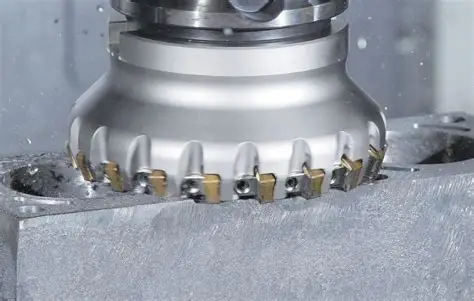
Face milling is primarily used to create flat surfaces and smooth finishes on a workpiece. It typically employs large-diameter cutters and high feed rates to remove material efficiently while minimizing tool deflection. This operation is ideal for preparing surfaces for assembly or achieving a high-quality finish.
End Milling
End milling is versatile and capable of producing slots, pockets, and detailed contours. Smaller end mills can achieve fine features, but spindle speed and feed must be carefully controlled to prevent tool breakage. End milling is widely used for both simple and complex part geometries.
Slot Milling
Slot milling focuses on cutting narrow channels or grooves, often for assembly, guiding components, or reducing part weight. Deep or narrow slots may require multiple passes, and proper chip evacuation is critical to maintain precision and avoid tool wear.
Pocket Milling
Pocket milling removes material from defined internal areas to create cavities or recesses. Tool diameter and step-down depth must be optimized to reduce machining time while maintaining accuracy and minimizing wear. It is commonly used in molds, enclosures, and parts with internal features.
Contour and Profile Milling
Contour and profile milling follow the edges or 3D surfaces of a part to define external shapes or complex profiles. Multi-axis milling is often employed to improve surface quality and dimensional accuracy for intricate designs, making it suitable for aerospace, automotive, and custom components.
Chamfering and Corner Rounding
Chamfering and corner rounding are specialized operations that refine edges or round corners for aesthetics, safety, or assembly fit. Tool selection and careful setup are essential to maintain dimensional accuracy.
By understanding and applying these milling operations appropriately, manufacturers can efficiently produce parts with the desired features, surface finish, and tolerances, making CNC milling a flexible solution for both prototyping and high-volume production.
CNC Milling Machine Axes: 3-, 4-, and 5-Axis
CNC milling machines are classified by the number of axes they support, which determines their flexibility and capability:
3-Axis Milling: The cutting tool moves along three linear axes (X, Y, and Z). This configuration is suitable for simpler parts with basic features but often requires multiple setups to machine all faces of a component.
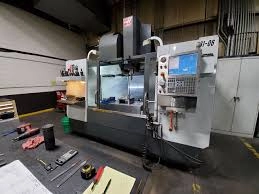
4-Axis Milling: Adds a rotational axis (commonly called the A axis), allowing the part to rotate and enabling machining of multiple sides in fewer setups. This increases accuracy and efficiency for parts with angled or cylindrical features.
5-Axis Milling: Adds a second rotational axis (usually A + B or A + C), giving the cutting tool the ability to approach the workpiece from virtually any angle. 5 axis milling is ideal for highly complex 3D surfaces, deep cavities, and intricate curves or undercuts that would otherwise require multiple setups.
As the number of axes increases, so does machining flexibility and precision, but this also involves more complex programming and higher equipment cost. 3 axis machines are cost-effective for standard applications, while 4 and 5 axis machines are used when efficiency, reduced setup time, and complex geometries are priorities.
Practical Insight on Axis Selection
In practical machining projects, most standard CNC-milled parts can be produced efficiently using 3-axis machines. When parts involve multiple sides or angled features, 4-axis milling often provides a better balance between cost and accuracy by reducing repositioning and setup time.
5-axis milling is typically reserved for complex 3D surfaces, deep cavities, or undercuts where tool accessibility and surface quality are critical. From a production standpoint, choosing the appropriate axis configuration early can significantly improve machining efficiency and reduce overall manufacturing cost.
CNC Milling Material Selection
Selecting the right material is a critical step in CNC milling, as it directly affects part performance, machinability, and overall cost. CNC milling can handle a wide range of metals and engineering plastics, each offering unique advantages.
Metals commonly used include aluminum, steel, stainless steel, and brass. Aluminum is lightweight, easy to machine, and ideal for prototypes or high-speed production. Steel provides strength and durability, while stainless steel adds corrosion resistance for demanding applications. Brass is valued for its excellent machinability and conductivity, often used in electrical components or decorative parts.
Engineering plastics and composites expand the possibilities of CNC milling, particularly for lightweight or electrically insulating parts. Materials such as ABS, PEEK, polycarbonate, and POM (Delrin) are commonly milled, offering good chemical resistance and dimensional stability. Fiber-reinforced composites, like carbon fiber plastics, provide high strength-to-weight ratios, making them suitable for aerospace, automotive, and specialized industrial applications.
When choosing a material, factors to consider include mechanical properties, thermal and chemical resistance, surface finish requirements, cost, and the intended application. Combining the appropriate material with the right CNC milling operations ensures the final component meets design specifications while optimizing production efficiency.
What Is a CNC Milling Machine Used For?
CNC milling machines are highly versatile tools used across industries to manufacture parts with precision and consistency. They are capable of producing complex geometries that would be difficult or impossible to achieve with manual machining. In prototyping, CNC milling enables engineers to create functional models and test designs quickly, allowing for iterative improvements before committing to full-scale production.
For production parts, CNC milling machines can handle both low-volume custom components and high-volume manufacturing, delivering consistent dimensional accuracy and surface finish across batches. Industries such as aerospace, automotive, electronics, medical devices, and industrial machinery rely on CNC milling to produce components ranging from engine parts and brackets to housings and intricate tooling.
Beyond metals like aluminum, steel, and brass, CNC milling machines are also used to shape plastics, composites, and other engineering materials, providing flexibility for diverse applications. By selecting the appropriate machine type, cutting tools, and milling operations, manufacturers can optimize efficiency, reduce waste, and maintain quality across a wide range of parts and materials.
Advantages and Disadvantages of CNC Milling
While CNC milling provides a wide range of capabilities for producing precise and complex parts, it is important to consider both its benefits and limitations. Evaluating these factors can help determine whether CNC milling is the right choice for a particular project, whether for prototyping or high-volume production.
| Advantages | Disadvantages |
| High Precision and Accuracy – Produces parts with tight tolerances consistently, ensuring reliable quality. | High Equipment Cost – CNC machines and tooling require significant upfront investment and maintenance. |
| Repeatability – Identical parts can be manufactured repeatedly with minimal variation once the program is set. | Complex Setup – Initial programming, machine calibration, and tooling require skilled operators and more time. |
| Ability to Machine Complex Geometries – Multi-axis machines allow intricate shapes that are difficult or impossible with manual methods. | Tool Wear – Hard materials and high-speed cutting can wear tools quickly, necessitating frequent replacement or maintenance. |
| Wide Material Compatibility – Capable of machining metals, plastics, composites, and other engineering materials. | Energy and Operating Costs – High-volume or large-scale machining can consume substantial power. |
| Automation and Efficiency – Minimal manual intervention reduces human error and improves production efficiency. | Subtractive Process Only – Material is removed rather than added, which may result in higher waste compared with additive methods. |
CNC Milling Applications
CNC milling has a broad range of applications and plays a role in many industries. Below are some of its typical uses.
Aerospace: CNC milling is employed to manufacture structural components, brackets, and housings that require tight tolerances and high strength. Precision and repeatability are essential to meet aerospace standards.
Automotive: Engine parts, gear components, and prototype models are commonly produced using CNC milling. The process ensures consistent surface finish and dimensional accuracy, suitable for both prototypes and production parts.
Electronics & Enclosures: CNC milling creates precise housings, panels, and connectors, ensuring proper alignment and fit for electronic devices.
Medical Devices: Surgical instruments, implants, and other medical components are machined to exact specifications, often from biocompatible materials. High precision guarantees safety and reliability.
Industrial Machinery & Tooling: Molds, dies, jigs, and fixtures are manufactured with CNC milling to support high-volume production and complex assemblies, providing both speed and accuracy.
Prototyping & Custom Manufacturing: CNC milling enables engineers and designers to rapidly produce functional prototypes, test designs, and iterate before full-scale production. Its ability to work with metals, plastics, and composites makes it suitable for both low-volume prototypes and high-volume production parts.
Conclusion
CNC milling is a versatile and precise manufacturing process that delivers high-quality parts across a wide range of industries. From aerospace and automotive to medical devices and electronics, understanding the right operations, materials, and machining parameters ensures efficient production with excellent accuracy and repeatability.
With XTProto’s professional CNC milling services, you can turn designs into precise components quickly and reliably. By leveraging our expert machining capabilities, advanced equipment, and optimized processes, you can achieve superior surface finishes, complex geometries, and consistent quality across all types of parts—all while enjoying competitive pricing and fast turnaround times.
Whether you need prototypes or high-volume production, XTProto makes it easy to realize your designs with precision, efficiency, and reliability, helping your projects move from concept to finished part seamlessly.