
What is CNC Machining for the Solar Industry?
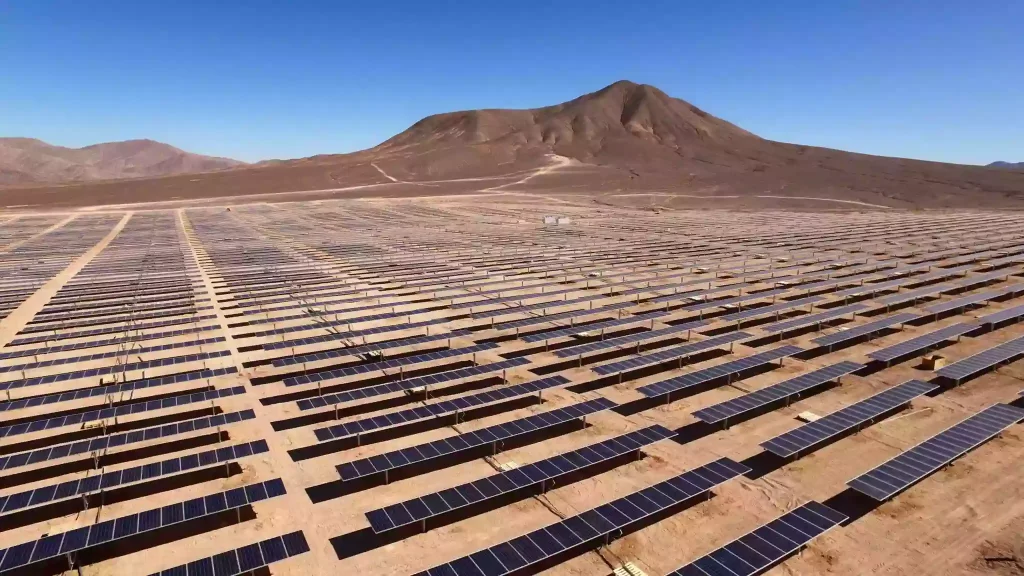
In the photovoltaic (PV) sector, the efficiency of solar cells and the capacity of inverters often dominate technical discussions. However, the operational viability of utility-scale solar installations relies heavily on the physical infrastructure that supports and protects these electronic systems. As solar arrays transition toward large-scale deployment and dynamic racking networks, the structural components must sustain severe environmental stressors over decades. This necessity has integrated advanced mechanical fabrication—specifically computer numerical control (CNC) processing—deeply into the renewable energy manufacturing sector.
Solar CNC machining refers to the automated, subtractive manufacturing process where raw metal or polymer stock is precisely cut, milled, drilled, or turned according to digital blueprints. Unlike generalized machining, this specific discipline focuses on the structural predictability and geometric exactness required for outdoor power generation equipment. The process handles heavy-gauge extrusions, complex geometric housings, and high-wear rotation interfaces, ensuring that mechanical parts interact seamlessly under continuous outdoor exposure.
Modern utility-scale projects no longer utilize purely static racking. The widespread adoption of single-axis and dual-axis tracking mechanisms has turned solar fields into large, moving mechanical installations. Because these systems depend on synchronized motorized movement, any minor geometric error can cause structural binding or premature hardware fatigue. Consequently, standardized mechanical machining has become a critical operational layer within the global solar supply chain, transforming basic raw materials into the highly repeatable hardware necessary to maintain structural integrity across vast solar fields.
Core Material Substrates in Solar Machining
Selecting the correct raw materials is the foundational step in manufacturing functional solar hardware. Because these components are exposed to variable thermal ranges, humidity, and constant mechanical loads, sub-standard materials can lead to structural sagging or premature decomposition. CNC machining centers process specific categories of high-strength alloys and industrial polymers chosen for their distinct mechanical behaviors under stress.
High-Strength Metals: Aluminum and Stainless Steel
Aluminum alloys, particularly within the 6000 series, serve as the primary substrate for structural frames and structural bracing. The material provides a favorable strength-to-weight ratio, which reduces the total structural dead load on ground foundations while retaining sufficient yield strength to withstand violent wind uplifts. During the milling and drilling stages, these alloys allow for high-speed cutting without accelerating tool wear, enabling tight dimensional control across long linear spans.
For high-stress nodes, fastening elements, and articulating joints, stainless steel (typically within the 300 series family) is used. Stainless steel possesses superior tensile strength and excellent resistance to stress corrosion cracking (SCC).
and milling operations on stainless steel require rigid machine setups and precise feed rates to manage work-hardening, ensuring that critical structural couplers and load-bearing pins do not deform under cyclic mechanical tension.
Engineering Plastics and Composites
Mechanical synchronization within tracking mechanisms requires specific non-metallic materials to handle rotation, insulation, and vibration damping. CNC centers frequently machine polymers such as Polyoxymethylene (POM, commonly known as Acetal), specialized Nylons, and Polytetrafluoroethylene (PTFE).
These engineering plastics are selected because they exhibit low friction coefficients and high dimensional stability under varying moisture levels. CNC routing and milling of these materials require specialized sharp-edged tooling and optimized cooling techniques to prevent thermal expansion during the cutting process, ensuring that critical bushings, slide blocks, and isolation washers retain their exact design geometry.
CNC Milling and Turning Applications for PV Systems
The physical configuration of utility-scale solar hardware demands distinct machining methods depending on whether a component requires complex, multi-sided profiling or highly concentric, rotational symmetry. Computer numerical control allows manufacturers to execute these geometries with systematic repetition, isolating stress-prone zones and ensuring appropriate component interfaces across the array.
Multi-Axis CNC Milling Applications
Multi-axis CNC milling is utilized for irregular, non-concentric components that require material removal across multiple planes simultaneously. In solar infrastructure, this process is fundamental for producing complex structural interfaces such as heavy-duty articulation hinges, multi-way mounting brackets, and specialized heat-dissipation housings.
During the milling process, multi-axis setups allow the cutting tool to approach the workpiece from optimal angles, which is critical for generating deep, thin-walled cooling fins on inverter enclosures or complex pocketing on structural nodes. This method eliminates the need for multiple manual setups, thereby reducing cumulative setup errors and ensuring that mounting holes, alignment slots, and structural webs align perfectly with the predefined engineering coordinate system.
Precision CNC Turning Applications
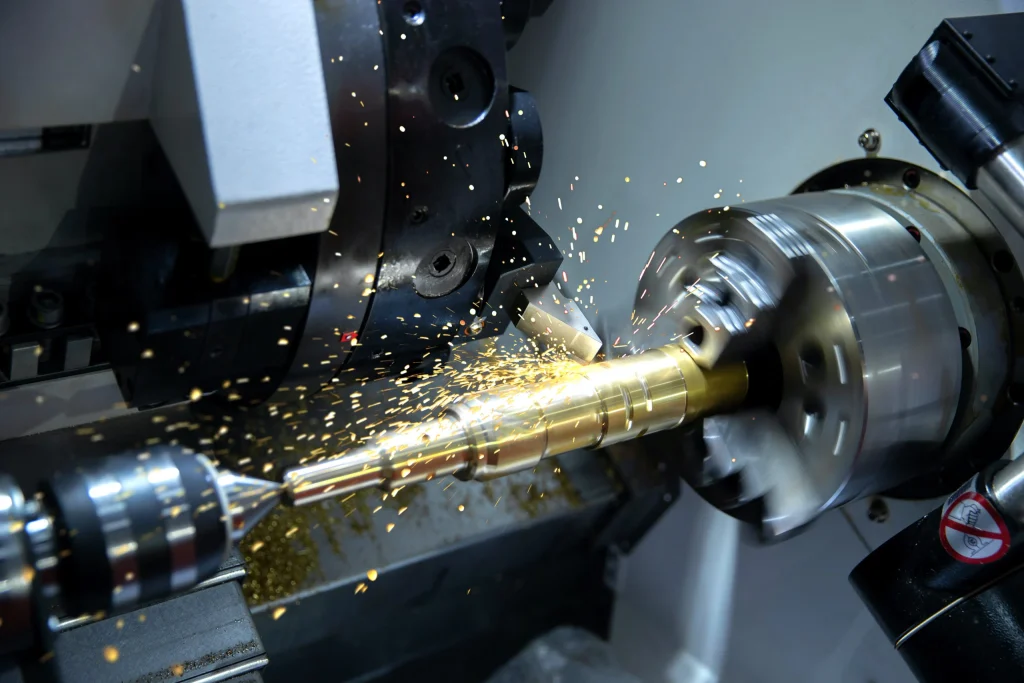
Components that handle rotational movement, load transfer, and axial alignment within solar tracking mechanisms are produced using CNC turning centers. This process rotates the raw material against stationary cutting tools to generate precise cylindrical profiles, external and internal threads, and uniform concentric shoulders.
Typical turned applications include heavy-load drive shafts, articulating hinge pins, linkage sleeves, and threaded tensioners. The technical priority during turning operations is the maintenance of strict cylindricity and coaxiality. If a drive shaft or pivot pin deviates from its true center axis, the resulting eccentricity creates uneven torque distribution during motorized tracking adjustments. This uneven load accelerates mechanical wear on adjacent bearings and gearboxes, making precise rotational machining critical to the mechanical longevity of the system.
Other Essential CNC Technologies (Laser, Bending, & Routing)
Beyond standard chip-breaking cutting processes like milling and turning, utility-scale solar hardware production relies on several specialized computer-controlled fabrication methods. These auxiliary CNC technologies handle large-format raw materials, structural tubes, and non-metallic insulators, providing the diverse manufacturing capabilities required to construct comprehensive solar array infrastructures.
CNC Laser and Plasma Cutting
Utility-scale solar fields require vast quantities of heavy-gauge sheet metal, base plates, and structural adapter brackets. CNC laser and plasma cutting systems are deployed to execute high-speed, automated blanking and complex profiling of flat steel and aluminum stock.
By utilizing precise computer paths, CNC laser cutters achieve clean, burr-free edges that eliminate the need for secondary manual deburring operations. More importantly, the concentrated energy delivery minimizes the Heat-Affected Zone (HAZ) along the cut margins. Preserving the structural metallurgy of the edge is essential, as these cut faces often undergo subsequent welding or act as high-stress fastening points that must resist fracturing under heavy wind loads.
CNC Tube and Pipe Bending
The structural backbone of modern single-axis trackers consists of elongated steel torque tubes and interconnecting drive lines. CNC tube bending machinery utilizes programmable mandrel systems and hydraulic press dies to introduce precise angular deviations and multi-axis bends into hollow structural profiles.
The primary engineering challenge in tube bending is preventing wall thinning, ovalization, or wrinkling along the inner radius of the bend. CNC control syncs the axial feed, rotation, and bending force to maintain the structural roundness and cross-sectional integrity of the tube. This automation also allows for the simultaneous integration of localized, multi-angle hole patterns along the tube length, ensuring that mounting hardware can be bolted directly to the torque tube without manual field modification.
CNC Plastic Routing
Industrial polymers used for electrical isolation and low-friction wear surfaces require different cutting dynamics than structural metals. High-speed CNC routers, equipped with specialized vacuum hold-down beds and high-RPM spindles, are used to process large-format plastic sheets into finished components like tracking slide plates, isolation spacers, and junction box internal mountings.
Because polymers possess low thermal conductivity and low melting points, standard machining parameters can cause material smearing or localized warping. CNC plastic routing utilizes optimized chip-evacuation geometry and high feed-to-speed ratios to rapidly remove material before heat can accumulate within the workpiece, ensuring that the machined polymer components retain their flat profiles and exact linear dimensions.
Overcoming the “25-Year Outdoor Reliability” Challenge
Solar infrastructure is exposed to continuous environmental stress, meaning mechanical components must endure ultraviolet radiation, extreme day-to-night temperature swings, and cyclic wind loads without performance degradation. Achieving this long-term durability requires precise control of micro-geometric features during manufacturing, which CNC machining directly enables through accurate dimensional and surface texture management.
Micro-Tolerance Control via GD&T
Utility-scale solar installations cover large areas, exposing hardware to significant temperature fluctuations. Metals naturally expand and contract with heat, so if moving parts—like bearing housings, torque tube couplers, or drive links—are too tight, thermal expansion can cause binding, motor overcurrent, or structural deformation. Too much clearance, however, allows mechanical backlash, letting wind induce vibrations that accelerate fatigue failure.
Applying strict Geometric Dimensioning and Tolerancing (GD&T) in CNC programming sets precise limits on true position, cylindricity, and parallelism. This ensures that moving assemblies maintain their intended clearances under extreme thermal stress, preventing localized mechanical lockups over decades of operation.
Machined Surface Finish (Ra) Standards
The long-term durability of metal components also depends on protective coatings such as anodizing, powder coating, or hot-dip galvanizing. The adhesion and effectiveness of these layers are directly influenced by the surface roughness produced during machining.
CNC machining parameters—including tool nose radius, feed rate, and spindle speed—are carefully chosen to control the micro-topography of the cut surface. If the surface is too rough, microscopic peaks can puncture protective coatings, exposing metal to oxygen and moisture and initiating localized corrosion. Maintaining a consistent, controlled surface finish ensures protective layers remain intact and effective over the component’s lifetime.
CNC Machining vs. Traditional Metal Fabrication (Stamping & Casting)
To optimize manufacturing expenditures within the solar supply chain, industrial engineers must evaluate the technical trade-offs between chip-breaking CNC machining and traditional metalforming or net-shape fabrication methods. While processes such as high-speed metal stamping and die casting offer high throughput for baseline hardware, they present specific mechanical limitations when applied to the heavy-duty or highly precise components required by modern photovoltaic infrastructures.
Limitations of Stamping and the CNC Alternative
Metal stamping is highly efficient for producing high-volume, thin-gauge planar hardware such as basic module clamps, grounding clips, and standard fixed-tilt racking brackets. However, stamping operates by cold-working sheet metal between mating dies, which introduces severe mechanical limitations regarding material thickness and geometric complexity.
When structural components must resist high bending moments or torsional shear stresses—such as the heavy-duty torque arm couplers or drive line brackets utilized in single-axis trackers—the required material thickness often exceeds the capacity of standard stamping presses. Attempting to stamp these thick-gauge profiles can introduce localized stress concentrations and micro-fracturing along bent radii. CNC milling and laser profiling overcome this constraint by processing thick, structural-grade plate and solid bar stock without altering the internal metallurgical grain structure, preserving the full nominal yield strength of the material.
Limitations of Die Casting and the Role of Secondary CNC Processing
Die casting allows for the rapid mass production of complex, near-net-shape components, particularly aluminum inverter enclosures, electrical junction boxes, and complex articulating hinges. However, the molten metal injection process inherent in die casting frequently introduces internal structural defects, such as gas porosity and shrinkage cavities. Furthermore, standard die casting tolerances cannot achieve the exact dimensions required for dynamic mechanical interfaces or fluid-tight barriers.
For example, a cast inverter housing cannot ensure a standardized seal against environmental moisture infiltration if its mating edges exhibit surface deviations or mold parting lines. To rectify these geometric deficiencies, high-volume castings must undergo secondary CNC machining operations. CNC milling centers are deployed to skim mating surfaces to a flat profile, bore high-concentricity bearing seats, and cut precise, deep grooves for rubber sealing gaskets. This hybrid manufacturing approach leverages the speed of casting while utilizing the precision of CNC machining to meet strict environmental protection ratings.
How Pre-Production Process Optimization Lowers Industry LCOE
Within the economics of utility-scale solar development, hardware procurement costs directly impact the Levelized Cost of Electricity (LCOE). Because mechanical components represent a significant portion of the initial balance of system (BOS) expenditures, optimizing the fabrication process prior to mass production is critical. Implementing systematic design adjustments allows manufacturers to minimize machining cycle times and reduce material waste, translating directly to lower per-watt hardware costs.
Design for Manufacturing (DFM) in Solar Infrastructure
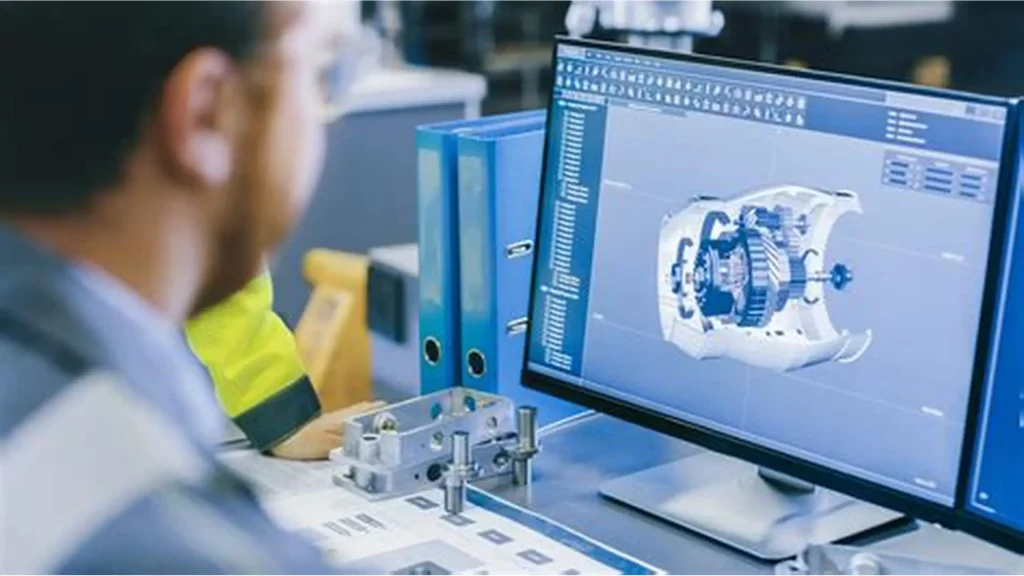
Design for Manufacturing (DFM) is the engineering practice of modifying component geometry to fit the specific operational limits and efficiencies of CNC machinery. When applied to solar hardware, DFM focuses on eliminating unnecessary machining complexities that do not contribute to the structural function of the part.
Typical DFM optimizations for solar components include:
- Standardizing Thread and Hole Sizes: Aligning all fastener holes to a single metric or imperial standard allows CNC centers to use a uniform toolset, eliminating the need for frequent tool changes during the machining cycle.
- Avoiding Deep Internal Pockets: Restricting the depth-to-width ratio of internal milled cavities prevents tool deflection and allows for the use of shorter, rigid end mills, which can operate at faster feed rates.
- Minimizing Multi-Axis Repositioning: Reconfiguring the part geometry so that all critical features can be machined in a single clamping setup significantly reduces cumulative cycle time and manual labor requirements.
Direct Impact on Levelized Cost of Electricity (LCOE)
The economic benefits of DFM extend beyond simple manufacturing efficiency. In the context of global solar deployment, components are ordered in quantities of tens or hundreds of thousands of units. A reduction of even a few seconds in individual CNC cycle times accumulates into thousands of production hours saved across a single utility contract.
Furthermore, optimized toolpaths and component nested layouts increase material utilization rates, minimizing the volume of scrap alloy generated during subtractive processing. By systematically lowering the production cost per component, these upstream manufacturing optimizations minimize upfront capital expenditures (CapEx) for developers, serving as a primary lever for reducing the long-term LCOE of completed solar power facilities.
Conclusion
Maintaining mechanical integrity over a multi-decade operational lifespan remains the key engineering challenge in modern solar infrastructure. From managing wind loads through precise micro-tolerances to mitigating galvanic corrosion with controlled surface finishes (Ra), high-precision CNC machining provides the foundational reliability that protects utility-scale investments.
This is where XTPROTO integrates into the solar supply chain. Leveraging advanced multi-axis milling, precision turning, and heavy-gauge laser cutting, we produce components with exact geometries for structural brackets, concentric drive shafts, and sealed inverter enclosures. Our production protocols enforce strict GD&T to prevent mechanical binding under thermal expansion, while proactive Design for Manufacturing (DFM) reviews optimize part geometry to reduce cycle times and material waste.
By combining direct-from-factory control with rigorous technical compliance, XTPROTO helps developers lower upfront capital costs and improve the long-term Levelized Cost of Electricity (LCOE) for their projects.