
What is eVTOL CNC Machining? A Comprehensive Guide to Manufacturing the Future of Aviation
The global transportation landscape is undergoing a fundamental shift. Electric Vertical Takeoff and Landing (eVTOL) aircraft, once confined to conceptual designs, are now advancing rapidly toward commercialization and airworthiness certification. Often referred to as “flying cars” or “air taxis,” these aircraft represent a new category of mobility designed to alleviate urban congestion, reduce carbon emissions, and redefine regional transit.
However, bringing Urban Air Mobility (UAM) into reality introduces unprecedented manufacturing challenges. eVTOL aircraft cannot simply be built using automotive assembly lines, nor can they rely entirely on traditional commercial aviation production methods. Instead, they demand a radical convergence of two traditionally opposing manufacturing philosophies: the high-volume efficiency and weight optimization of the automotive sector, and the zero-tolerance safety and quality standards of the aerospace industry.
To achieve the necessary flight range and operational efficiency, eVTOL aircraft require extreme lightweighting. At the same time, to withstand the dynamic forces of vertical liftoff and forward flight, their structural components must possess exceptional mechanical strength.
This critical balance is where eVTOL CNC machining becomes indispensable. Far from being a standard subtractive manufacturing process, eVTOL CNC machining is a specialized, highly controlled engineering discipline. It serves as the primary technical bridge required to transform complex, multi-functional designs into flight-ready, certified hardware capable of operating safely in the modern airspace.
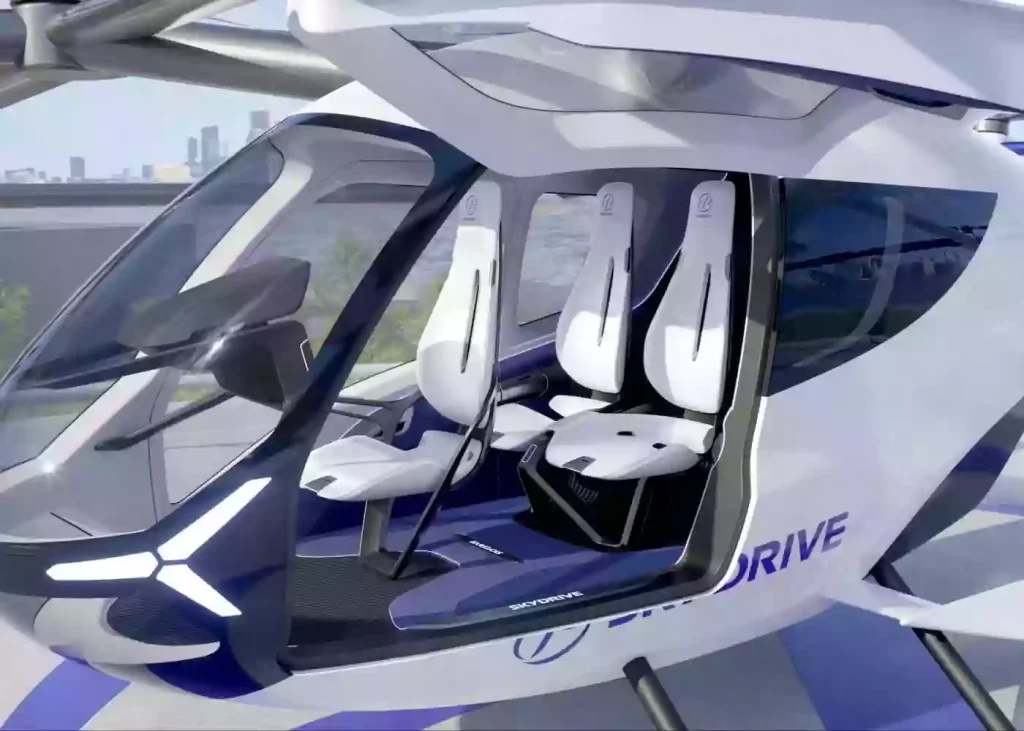
What is eVTOL CNC Machining?
eVTOL CNC machining is the precision manufacturing process used to produce critical components for electric vertical takeoff and landing aircraft. Utilizing advanced 3-axis, 4-axis, and 5-axis CNC equipment, material is removed from aerospace-grade metals and engineering materials to create lightweight, high-accuracy parts for airframes, propulsion systems, battery structures, and avionics assemblies.
Although CNC machining is widely used across many industries, eVTOL manufacturing introduces unique engineering requirements driven by weight reduction, structural efficiency, and flight safety.
1. Lightweight Thin-Wall Structures
Every gram matters in electric aircraft. To maximize flight range and payload capacity, eVTOL components are often designed with thin walls, internal pockets, and optimized geometries. Maintaining dimensional accuracy while machining these lightweight structures requires advanced tooling strategies, rigid fixturing, and carefully controlled cutting parameters to minimize distortion and vibration.
2. Superior Surface Quality and Fatigue Resistance
eVTOL aircraft operate under continuous vibration generated by multiple electric propulsion units. High-quality surface finishes are essential to reduce stress concentrations and improve long-term fatigue performance. Precision CNC machining enables smooth surface integrity and consistent dimensional control, helping critical flight components meet demanding aerospace reliability requirements.
3. Advanced Aerospace Materials
Modern eVTOL platforms combine multiple materials to balance strength, weight, thermal performance, and durability:
- Aluminum Alloys (6061-T6, 7075-T6): Lightweight structural frames and housings.
- Titanium Alloys (Ti-6Al-4V): High-strength components for heavily loaded joints and mounting systems.
- Carbon Fiber Composites (CFRP): Aerodynamic structures, covers, and lightweight assemblies requiring specialized machining techniques.
Each material requires dedicated tooling, cutting strategies, and process controls to achieve optimal performance and manufacturing consistency.
As eVTOL aircraft move from prototype development toward commercial production, CNC machining remains a core manufacturing technology for delivering the precision, repeatability, and material versatility required by next-generation electric aviation platforms.
Key eVTOL Components Manufactured by CNC Machining
CNC machining supports nearly every critical subsystem within an eVTOL aircraft. From propulsion assemblies and battery systems to structural airframe components and avionics housings, precision machining delivers the accuracy, strength, and reliability required for safe flight operations.
1. Propulsion & Rotor Systems
The propulsion system operates under continuous rotational loads, vibration, and aerodynamic forces, requiring exceptional dimensional accuracy and fatigue resistance.
- Rotor Hubs & Blade Mounts — Precision-machined components that securely connect rotor blades to drive systems while withstanding high rotational and transition-flight loads.
- Motor Housings — Lightweight, high-precision housings that maintain critical alignment between rotating and stationary motor components.
- Stator Rings & Mounting Structures — Tight-tolerance components supporting efficient electric motor performance and thermal stability.
2. Battery & Thermal Management Systems
Battery systems represent one of the most critical and weight-sensitive areas of an eVTOL platform.
- Battery Enclosures — Lightweight aluminum structures designed to protect battery modules while maximizing energy density and structural efficiency.
- Cooling Plates — Precision-machined thermal management components featuring integrated fluid channels for effective heat dissipation.
- Sealing & Mounting Components — Machined interfaces that support environmental protection and system reliability.
3. Airframe Structures & Mechanical Assemblies
Structural components must withstand complex loading conditions while minimizing overall aircraft weight.
- Airframe Joints — High-strength aluminum and titanium components engineered for critical structural connections.
- Mounting Brackets — Lightweight support structures used throughout the airframe and propulsion systems.
- Landing Gear Components — Precision-machined pivots, mounts, and structural elements designed for repeated landing loads.
- Tilt-Rotor Mechanisms — Complex motion-control components requiring tight tolerances and excellent fatigue performance.
4. Avionics & Flight Control Systems
Modern eVTOL aircraft rely heavily on advanced electronics, autonomous control systems, and high-speed data communication.
- Flight Computer Enclosures — Protective housings for onboard control units and mission-critical electronics.
- EMI Shielding Housings — Precision-machined enclosures designed to reduce electromagnetic interference from high-voltage systems.
- Sensor & Communication Mounts — Components supporting navigation, telemetry, and flight monitoring equipment.
- Control System Interfaces — Machined assemblies that integrate electronic, mechanical, and actuation systems.
As eVTOL technology advances toward large-scale deployment, CNC machining remains essential for producing lightweight, high-performance components that meet the demanding requirements of electric aviation.
Technical Requirements for eVTOL CNC Machining
Manufacturing eVTOL components requires far more than conventional CNC machining. The combination of lightweight structures, complex geometries, and aerospace-grade reliability demands advanced equipment, optimized machining strategies, and tightly controlled production environments.
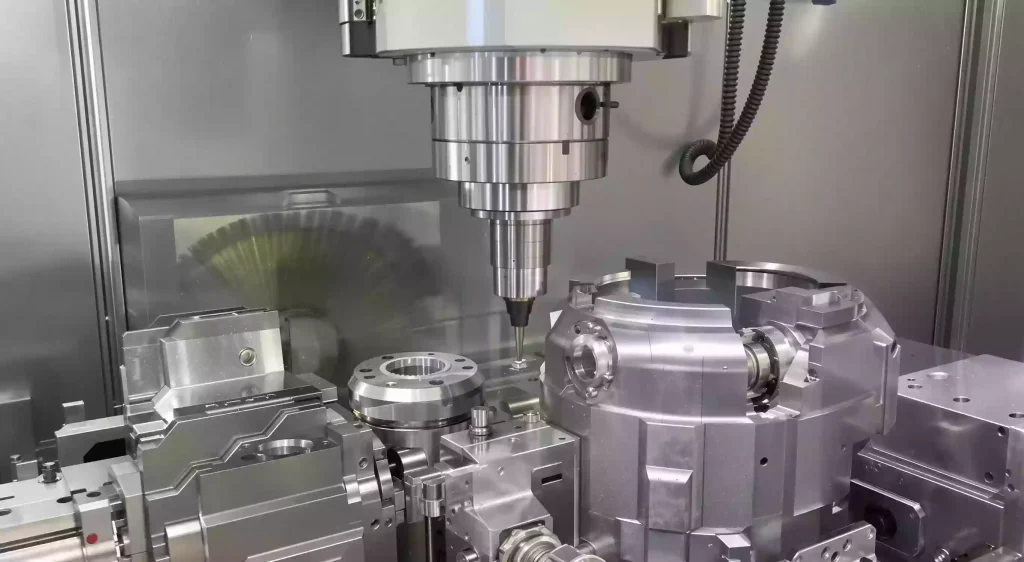
1. Advanced 5-Axis Machining
Many eVTOL components feature complex contours and multi-angle surfaces that cannot be efficiently produced using traditional machining methods.
- Complex Geometries: Enables the production of aerodynamic structures, rotor components, and intricate airframe parts with continuous curved surfaces.
- Single-Setup Accuracy: Machining multiple surfaces in one setup reduces repositioning errors and improves overall dimensional consistency.
2. High-Speed and High-Rigidity Machining
eVTOL manufacturing commonly involves both lightweight aluminum alloys and difficult-to-machine titanium components.
- Aluminum Components: High-speed spindles and optimized toolpaths support efficient material removal while minimizing distortion in thin-wall structures.
- Titanium Components: Rigid machine platforms and stable cutting conditions help maintain surface quality and dimensional accuracy during heavy-duty machining operations.
3. Thermal Stability and Process Control
Maintaining precision across aerospace components requires strict control of temperature-related variation throughout the manufacturing process.
- Climate-Controlled Production: Stable environmental conditions help ensure consistent machining accuracy and inspection results.
- Temperature-Regulated Coolant Systems: Controlled coolant delivery improves heat management and enhances tool performance.
- Thermal Compensation Technology: Advanced CNC systems continuously monitor machine conditions and automatically adjust for thermal expansion effects.
By combining 5-axis machining capability, rigid machine platforms, and tightly controlled manufacturing environments, modern CNC facilities can consistently produce the lightweight, high-precision components required for next-generation eVTOL aircraft.
From Prototyping to Production: The eVTOL Manufacturing Challenge
As the eVTOL industry matures, manufacturers are shifting from prototype development toward low-rate production and future commercial-scale manufacturing. While early programs focused on validating flight performance and design concepts, the next phase requires consistent, repeatable, and cost-effective production processes.
One of the industry’s biggest challenges is ensuring that innovative aircraft designs can be efficiently manufactured at scale without compromising performance or safety.
1. Design for Manufacturability (DFM)
Successful eVTOL production begins with manufacturing considerations early in the design stage. Frequent design revisions may improve performance, but they can also introduce production challenges if machining requirements are overlooked.
Key DFM considerations include:
- Machining Accessibility: Features should be designed to accommodate standard cutting tools and efficient machining operations.
- Material Utilization: Optimized part geometry helps reduce material waste and improve production efficiency.
- Cycle-Time Reduction: Manufacturing-friendly designs shorten machining time and improve scalability.
Early collaboration between engineering teams and CNC machining specialists helps prevent costly redesigns later in the development cycle.
2. Scalable Tooling and Fixturing Strategies
The transition from prototype production to commercial manufacturing requires machining processes that can evolve alongside the aircraft program.
- Prototype Phase: Flexible fixturing and adaptable machining setups support rapid design iterations and engineering changes.
- Pre-Production Phase: Process optimization focuses on improving repeatability, consistency, and manufacturing efficiency.
- Production Phase: Dedicated fixtures and standardized machining workflows enable high-volume production with minimal variation.
By combining DFM principles with scalable tooling strategies, manufacturers can bridge the gap between prototype validation and reliable commercial production, supporting the long-term growth of the eVTOL industry.
Quality Assurance, Compliance, and Aerospace Traceability
In eVTOL manufacturing, component quality extends beyond dimensional accuracy. Every machined part must be supported by comprehensive documentation, process control, and traceability to satisfy aerospace certification requirements and flight safety standards.
1. AS9100 Quality Management Systems
AS9100 is the leading quality standard for aerospace manufacturing and a key requirement throughout the eVTOL supply chain.
For CNC machining operations, AS9100 emphasizes:
- Controlled and repeatable manufacturing processes
- Material verification and inspection procedures
- Tooling and equipment calibration management
- Continuous quality monitoring and documentation
These requirements help ensure consistent product quality and reduce manufacturing risk.
2. Complete Manufacturing Traceability
Every aerospace component should be supported by a fully documented production history, allowing manufacturers to track each part throughout its lifecycle.
Typical records include:
- Material Certifications: Verification of material composition and processing history.
- Production Records: Documentation of machining operations, equipment, and process parameters.
- Inspection Reports: CMM, dimensional inspection, and quality verification data.
- Quality Documentation: Certificates of Conformance (CoC), First Article Inspection (FAI), and related compliance records.
This level of traceability supports regulatory compliance and long-term product accountability.
3. Advanced Inspection and Validation
Critical eVTOL components often require additional verification beyond standard dimensional inspection.
Common validation methods include:
- Coordinate Measuring Machine (CMM) Inspection: High-accuracy dimensional verification of complex geometries.
- 3D Scanning: Digital comparison between manufactured parts and CAD models.
- Fluorescent Penetrant Inspection (FPI): Detection of surface discontinuities and micro-cracks.
- Ultrasonic Testing (UT): Non-destructive evaluation of internal material integrity in load-bearing components.
By combining AS9100-compliant processes, complete traceability, and advanced inspection technologies, manufacturers can deliver the reliability, consistency, and documentation required for next-generation eVTOL aircraft programs.
The Economics of eVTOL CNC Machining
While performance, safety, and certification remain top priorities in eVTOL development, manufacturing cost ultimately determines commercial scalability. As programs move from prototype validation to volume production, controlling machining costs becomes essential for long-term success.
Several key factors have the greatest impact on the economics of eVTOL CNC machining.
1. Material Utilization and Buy-to-Fly Ratio
Many eVTOL components are manufactured from aerospace-grade aluminum and titanium billets. Because lightweight designs often require extensive pocketing and material removal, a significant percentage of the original material may be machined away during production.
Improving material utilization helps reduce:
- Raw material consumption
- Machining cycle times
- Overall manufacturing costs
Where production volumes support it, manufacturers may transition from billet machining to near-net-shape forgings or castings to improve efficiency and reduce waste.
2. Reducing Machining Cycle Time
Machine utilization is one of the largest contributors to CNC manufacturing costs. Optimized machining strategies can significantly improve productivity without sacrificing quality.
Common approaches include:
- High-Efficiency Milling (HEM)
- Advanced toolpath optimization
- High-speed machining techniques
- Automated tool management systems
Reducing cycle time increases machine throughput and lowers the cost per component.
3. Scaling from Prototype to Production
Manufacturing economics change considerably as production volumes increase.
- Prototype Production: Higher engineering costs, flexible fixturing, and lower volumes typically result in higher per-part pricing.
- Low-Rate Production: Process optimization improves consistency while reducing setup costs.
- Volume Manufacturing: Dedicated fixtures, automated workflows, and standardized machining processes help achieve greater production efficiency.
As production scales, cycle time, automation, and repeatability become increasingly important cost drivers.
By addressing manufacturability, material utilization, and process efficiency early in development, eVTOL companies can reduce production costs while maintaining the precision and reliability required for aerospace applications.
Conclusion
The realization of Urban Air Mobility does not hinge solely on software algorithms or battery chemistry; it relies fundamentally on physical manufacturing execution. As the eVTOL sector moves forward, the ability to safely, reliably, and efficiently scale production will separate viable aerospace innovators from conceptual failures.
eVTOL CNC machining stands as the silent enabler of this transition. By mastering the delicate balance of extreme lightweighting, tight geometric tolerances, advanced material management, and rigorous aerospace compliance, this precise manufacturing discipline transforms complex digital engineering models into flight-ready hardware.
Navigating the complexities of this evolving industry requires a manufacturing partner that understands both the agility needed for early-stage development and the strict quality control demanded by regulatory bodies. XTPROTO delivers this exact capability. With expertise in simultaneous 5-axis CNC machining, advanced thin-wall processing, and aerospace-grade quality management, XTPROTO provides the technical precision and engineering insight required to manufacture critical eVTOL components.
As regulatory frameworks continue to integrate these advanced aircraft into the modern airspace, the demand for precision on the factory floor will only intensify. Ultimately, the future of flight will not be defined by how fast a vehicle can be designed, but by the precision with which its final components are machined—and XTPROTO is ready to manufacture that future.