
How to Prevent Warping When Machining PPA: 5 Proven Shop-Floor Strategies
Polyphthalamide (PPA) has become a go-to high-performance plastic for engineers looking to replace die-cast metals in harsh environments. Thanks to its high thermal resistance, excellent mechanical strength, and chemical stability, it performs exceptionally well under the automotive hood and inside demanding electronic connectors. However, for CNC machine shops, working with this semi-crystalline polymer regularly presents a notorious manufacturing hurdle: dimensional instability.
Many machinists have experienced the frustration of milling a complex PPA component to perfect blueprint tolerances, only to find the part warped, bowed, or twisted after sitting on the inspection bench for 24 hours. When dealing with high-value engineering plastics, these dimensional distortions lead to costly material scrap, missed project deadlines, and failed Quality Control audits.
Controlling flatness and preventing geometric distortion in high-temperature polyamides requires a deep understanding of how the material reacts to cutting forces and temperature shifts. If you are struggling with parts failing to hold their shape during or after production, this guide will analyze the direct mechanical causes of part distortion and provide practical, shop-floor adjustments you can implement on your CNC machines today to understand how to prevent warping when machining PPA.
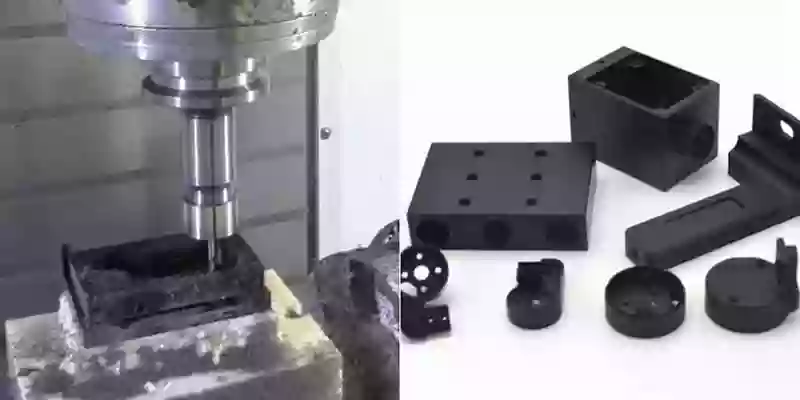
Why Does PPA Warp During CNC Machining?
Before jumping into the solutions, it is crucial to analyze why PPA is so prone to distortion during the cutting process. Unlike aluminum or steel, PPA is a semi-crystalline engineering thermoplastic. This molecular structure gives the material its excellent strength and thermal limits, but it also makes the polymer highly sensitive to manufacturing stresses and rapid temperature changes. Understanding these underlying mechanical vulnerabilities is the very first step in learning how to prevent warping when machining PPA on the shop floor, as most distortions can usually be traced back to three distinct root causes.
The first cause is the release of internal residual stresses. Stock shapes, such as extruded PPA sheets, plates, and rods, accumulate massive amounts of internal tension during their own manufacturing process when the molten plastic is pushed through a die and cooled. The material behaves like a compressed spring. When you mount a PPA block on a CNC mill and cut away material from one side, you disturb this delicate balance of internal forces. The remaining material on the unmachined side forces the part to bow, warp, or twist as it attempts to find a new structural equilibrium.
The second factor is poor thermal dissipation during cutting. PPA has very low thermal conductivity, meaning it does not transfer heat efficiently through its body. When a CNC cutting tool shears through the plastic, friction generates intense localized heat at the tool-workpiece interface. In metal machining, the chips and the coolant carry this heat away. In plastic machining, the heat often gets trapped directly on the surface of the part. This localized heating causes uneven thermal expansion, and as the part cools down after machining, the uneven contraction leads to severe geometric distortion.
The third cause involves improper clamping pressure and elastic recovery. Although PPA is rigid for a plastic, its modulus of elasticity is still far lower than that of metal. Machinists accustomed to working with metals often over-tighten the CNC vise. This excessive clamping force physically deforms the plastic part before the tool even touches it. The machined surface might look perfectly flat while held under pressure, but the moment the operator opens the vise jaws, the material springs back to its relaxed state, resulting in a distorted part.
Step-by-Step Guide: How to Prevent Warping When Machining PPA
To achieve flat, true, and dimensionally stable parts, machinists must move away from standard metal-cutting mentalities and adopt a plastic-specific workflow. You should never try to machine a high-tolerance PPA part from raw stock to its final dimensions in a single setup. Because the material reacts dynamically to the removal of its outer layers, learning how to prevent warping when machining PPA requires breaking the production process down into a strict, controlled sequence.
Follow this comprehensive, step-by-step guide to eliminate internal forces and maintain part flatness throughout the production run:
Step 1: Rough-Machine the Part and Leave a Uniform Allowance
Do not attempt to cut directly to the final blueprint dimensions on your first pass. Start by rough-machining the PPA raw stock on all sides to remove the bulk of the material. However, the depth of cut must be carefully managed, and you must leave a uniform machining allowance of 1.0 mm to 1.5 mm on all critical surfaces. This roughing phase is intentionally designed to provoke the material. As you strip away the outer skin of the extruded stock, the internal tension will immediately cause the semi-machined component to move, twist, or bow. By leaving a generous and uniform allowance, you ensure that there is enough sacrificial material remaining on the part to fully clean up and correct these geometric distortions during the final precision finishing passes.
Step 2: Perform Inter-Stage Stress-Relief Annealing
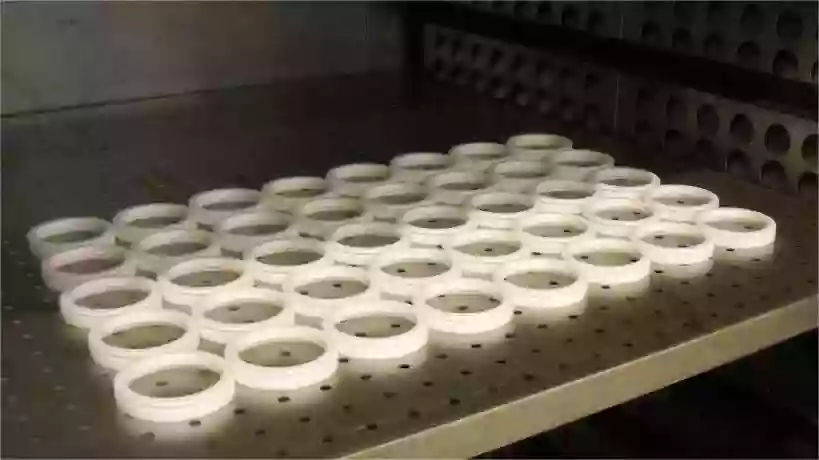
Once the heavy roughing phase is complete and the part has taken its initial warp, you must remove the semi-machined component from the CNC machine for a thermal stress-relief cycle. This intermediate heat treatment is a critical milestone in mastering how to prevent warping when machining PPA, as it allows the highly oriented polymer chains to relax, resetting the latent internal stresses caused by both the original extrusion manufacturing and your heavy roughing cuts.
- The Heating Phase: Place the rough-machined parts into an air-circulating oven. Do not subject the plastic to sudden heat. Instead, ramp the oven temperature up slowly at a rate of roughly 20 to 30 degrees Celsius per hour. You must bring the oven temperature to just below the glass transition temperature of your specific PPA grade, which typically sits around 120 degrees Celsius.
- The Soak Phase: Once the target temperature is reached, hold the parts at this steady thermal state. The soak time must be calculated based on the maximum wall thickness of the component. A good shop rule of thumb is to soak the material for at least two to four hours. This ensures that the core of the PPA plastic reaches the exact same temperature as the exterior surface, allowing for uniform molecular relaxation across the entire geometric profile.
- The Cooling Phase: The success of the entire process hinges on how the parts are cooled. You must turn off the oven heating elements or program a controlled cool-down cycle that drops at a rate of no more than 5 to 10 degrees Celsius per hour. Keep the oven door tightly closed until the internal temperature drops completely back to room temperature around 25 to 30 degrees Celsius. If you remove the parts too early, open the oven door prematurely, or allow a rapid temperature drop, the outer layers of the PPA will shrink faster than the core. This thermal shock introduces severe new residual stresses that cause catastrophic warping during your final finish cuts.
Step 3: Execute a Symmetrical Material Removal Strategy
A common mistake on the shop floor is milling out a deep pocket, engraving large features, or removing a massive volume of stock from just one side of a PPA block while leaving the opposing face untouched. This practice creates an immediate, severe imbalance of forces. The unmachined face retains its original surface tension, while the machined face has lost its structure, forcing the plastic part to curl or cup toward the heavier side. To establish a reliable, repeatable standard for how to prevent warping when machining PPA, your CNC toolpaths must distribute the material removal symmetrically across the part’s central axis.
- The Balanced Flipping Method: You must establish a sequence that frequently flips the part within your workholding fixture. For instance, if you need to reduce a thick PPA plate down by a total of 4 mm during the finishing setup, do not attempt to take a single 4 mm pass on Side A. Instead, program your toolpaths to mill 1 mm off Side A, stop the machine, flip the part over, and mill 2 mm off Side B. Finally, flip the part back to its original orientation and take the remaining 1 mm off Side A.
- Equalizing Stress Release: By stepping down incrementally and taking equal, balanced cuts from both sides of the material, you force the residual stresses to release simultaneously and evenly from both faces. This balanced approach keeps the neutral axis of the plastic component perfectly centered, preventing the corners from curling upward and ensuring the finished product remains completely flat and straight.
Advanced Prevention Techniques
While following a correct machining sequence is essential, you must also optimize your physical tooling, cutting parameters, and workholding setup. Crafting a low-stress environment during the cut is a vital component of learning how to prevent warping when machining PPA. If your mechanical setup introduces excessive friction heat or physical deflection, the part will warp the moment it is released from the fixture.Implement these three advanced techniques on your shop floor to maintain absolute dimensional control:
Technique 1: Optimize Cutting Parameters to Eliminate Friction Heat
Because PPA has low thermal conductivity, cutting heat can easily trap on the surface, causing uneven thermal expansion and post-machining shrinkage.
- Tool Selection: Always use extremely sharp cutting tools with large positive rake angles and polished flutes to minimize friction. Uncoated micro-grain carbide or Polycrystalline Diamond (PCD) tools are ideal. Never use a tool that has previously cut metal, as its micro-edges will be too dull for high-performance polymers.
- Speeds and Feeds: Adopt a strategy of high feed rates paired with moderate spindle speeds. A heavy feed rate creates a thicker chip that physically carries the shearing heat away from the part. Avoid high RPMs with low feed rates, which cause the tool to rub and melt the plastic rather than slicing it cleanly. Knowing how to balance these parameters is key to mastering how to prevent warping when machining PPA.
Technique 2: Maintain Continuous, High-Volume Flood Cooling
Running PPA dry or with a weak mist creates intense localized heat. Proper temperature control requires a generous, uninterrupted application of coolant.
- Continuous Flow: Use water-soluble, high-flow flood coolant directed precisely at the cutting zone. High-pressure cooling is highly effective because it lowers the temperature instantly and blasts hot chips out of deep cavities.
- Avoid Thermal Shock: Never use intermittent cooling or manual spraying. Stopping and starting the coolant flow creates localized hot and cold spots. This sudden thermal shock causes uneven volumetric contraction, which will instantly pull flat sheets or thin walls out of shape, making it impossible to succeed at how to prevent warping when machining PPA.
Technique 3: Reduce and Distribute Clamping Pressure for Finishing Passes
Standard CNC vises can apply thousands of pounds of concentrated force. While metals can withstand this, PPA has a lower modulus of elasticity and will readily flex under concentrated mechanical loads.
- Two-Stage Clamping: Clamp securely during heavy roughing passes to handle the chip loads. However, before executing your final precision finishing passes, program a stop, back off the vise pressure completely, and re-tighten it just enough to hold the part securely. This simple mechanical adjustment is a vital secret of how to prevent warping when machining PPA.
- Specialized Workholding: Replace standard flat steel jaws with custom soft jaws machined to match the exact contour of your PPA part. Soft jaws distribute the holding force evenly over a large surface area rather than concentrating it on thin lines. For thin plates or large sheets, utilize vacuum fixtures to eliminate edge-clamping deflection entirely.
Conclusion
Eliminating distortion when working with high-performance polyamides is not about finding a single shortcut; it requires a disciplined combination of proper raw material preparation, intelligent toolpath programming, and careful temperature management. By implementing inter-stage stress-relief annealing, utilizing symmetrical material removal, selecting razor-sharp tools, and reducing finishing clamping pressures, you can establish a foolproof system for how to prevent warping when machining PPA.
If your project demands tight tolerances and you want to bypass the trial-and-error phase on the shop floor, partnering with a dedicated manufacturing expert is the most reliable choice. At XTPROTO, we specialize in the precision CNC machining of advanced engineering plastics. Our production team applies these exact stress-relief protocols and low-force cutting strategies to ensure every custom component arrives perfectly flat, dimensionally stable, and strictly to your blueprint specifications.
Are you dealing with warped plastic components or struggling to hold geometric tolerances on your high-temperature polymer projects? Contact XTPROTO today to upload your CAD files and get a free manufacturing assessment and a competitive quotation for your next production run.