
What is PBT CNC Machining?
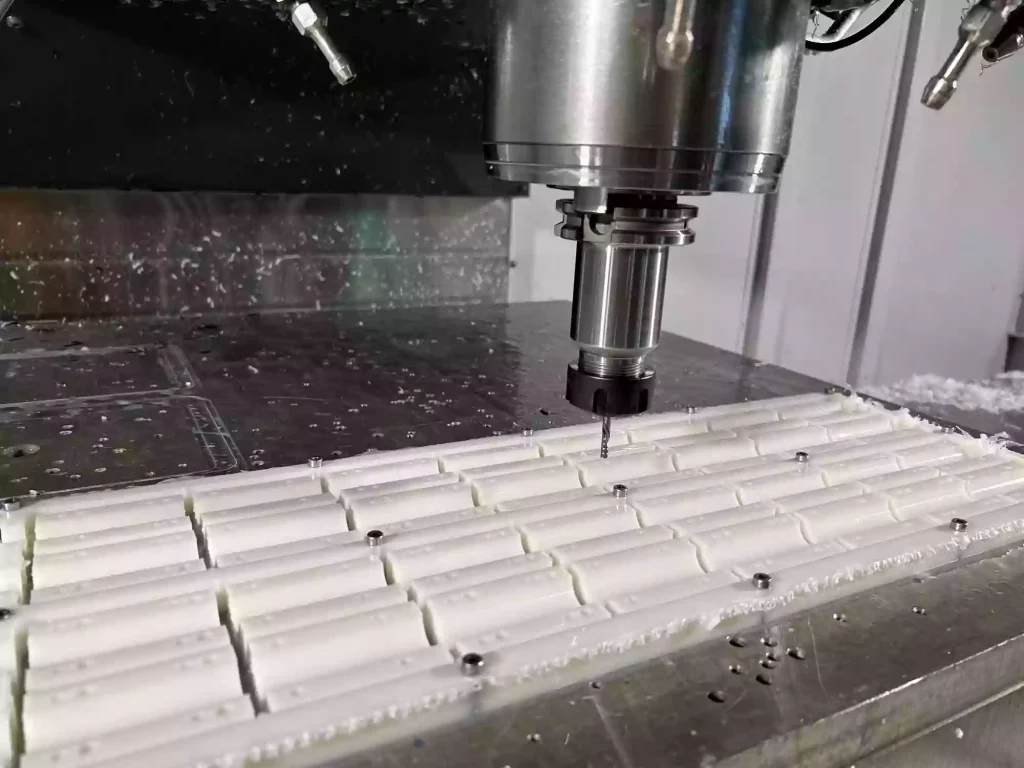
PBT is a high-performance engineering material characterized by excellent toughness and fatigue resistance, good heat and weather resistance, superior electrical properties, and low water absorption. Modified PBT—enhanced for properties such as heat resistance, flame retardancy, dimensional stability, and modulus—is widely used in industries including automotive and electronics. CNC machining is a precision subtractive manufacturing process that employs computer-programmed automated equipment to cut, mill, and turn solid polybutylene terephthalate (PBT) plastic stock into custom finished parts. Unlike injection molding, CNC machining begins with solid PBT blocks, sheets, or rods. Guided precisely by 3D CAD design files, CNC milling machines or lathes use high-speed rotating cutting tools to remove excess material layer by layer. This process enables the creation of complex geometries, deep cavities, and internal threads with exceptional precision. In modern manufacturing, PBT CNC machining plays a vital role in bridging the gap between initial product design and mass production. It is the preferred manufacturing method when engineers require high-precision functional prototypes, specialized industrial components, or small-to-medium batch production—scenarios where the cost and lead time associated with injection molds would be prohibitively high or impractical.
This guide provides an in-depth look at what is PBT CNC machining, detailing its properties, applications, and processing techniques to help designers and manufacturers maximize the potential of PBT plastic.
What is PBT Plastic?
To fully understand how this material behaves during processing, one must first examine its intrinsic properties as a plastic.
PBT (polybutylene terephthalate) is an engineering-grade thermoplastic belonging to the polyester family. Synthesized through polymerization, PBT features a semi-crystalline structure and shares characteristics quite similar to those of PET (polyethylene terephthalate). The polymer is produced via the polycondensation reaction of terephthalic acid and 1,4-butanediol. Some production processes utilize dimethyl terephthalate as a raw material, requiring a catalyst to ensure stable polymer formation. In the realm of plastics, a semi-crystalline structure implies a highly ordered and tightly packed molecular arrangement. This unique molecular configuration imparts key properties to PBT: high rigidity, excellent impact strength, and inherent resistance to wear and environmental stress.
Thanks to its balanced performance profile, PBT is widely used in automotive systems, electronic housings, electrical insulation components, and medical applications. It is particularly well-suited for injection molding and is available in various engineering formulations, such as impact-modified, reinforced, and flame-retardant grades.
In the CNC machining supply chain, PBT is typically extruded into solid sheets or rods. When selecting materials for a project, engineers generally choose between two primary grades, each offering distinct advantages:
- Unfilled (Virgin) PBT: This is the unmodified, pure form of the plastic. Unfilled PBT offers a high-quality surface finish, a low coefficient of friction, and excellent impact resistance. It possesses good ductility and is easy to machine, making it ideal for manufacturing precision parts with intricate details that do not require exposure to extreme mechanical loads.
- Glass-Fiber Reinforced PBT (e.g., 15% or 30% GF): To enhance mechanical strength, PBT resin is often reinforced with glass fibers. Incorporating 15% to 30% glass fiber significantly boosts the material’s tensile strength, rigidity, and heat deflection temperature. Although glass-fiber-reinforced PBT offers greater hardness and stability under high stress, it is also highly abrasive, necessitating specialized tooling strategies during processing.
Ultimately, whether in modified or neat form, PBT strikes an ideal balance between performance and processability, making it one of the most reliable synthetic polyester materials for demanding engineering applications.
Key Features of Polybutylene Terephthalate (PBT)
| Property | Value |
| Elongation at Break | 5–300% |
| Elongation at Yield | 3.5–9% |
| Flexural Modulus (Stiffness) | 2–4 GPa |
| Rockwell Hardness (M Scale) | 70–90 |
| Shore D Hardness | 90–95 |
| Tensile Strength | 40–50 MPa |
| Notched Izod Impact (Room Temp.) | 27–999 J/m |
| Notched Izod Impact (Low Temp.) | 27–120 J/m |
| Young’s Modulus | 2–3 GPa |
| Coefficient of Linear Thermal Expansion | 6–10 × 10⁻⁵ /°C |
| Molding Shrinkage | 0.5–2.2% |
| Water Absorption (24h) | 0.1–0.2% |
How to CNC Machine PBT
A thorough understanding of PBT material is essential for selecting the appropriate CNC machining processes based on its specific properties. In CNC machining, PBT typically enters the workflow as sheets or rods and is shaped directly into the final part through subtractive manufacturing. The specific steps for machining PBT are outlined below.
1. Material Preparation and Workholding
Before machining, select a suitable blank size based on the part’s structure and ensure stable workholding to prevent vibration or deformation during the process.
2. Rough Machining
In this stage, aggressive cutting parameters are used to rapidly remove excess material and establish the part’s basic profile. The specific machining process—such as milling, turning, or 5-axis machining—is chosen based on requirements. Since PBT is a thermoplastic, it is crucial to control heat buildup to avoid localized softening or dimensional deviations.
3. Finishing
As the part approaches its final dimensions, lighter cuts are used for finishing to ensure dimensional accuracy and surface quality. PBT’s low-friction characteristics facilitate a stable surface finish, though careful selection of cutting tools and feed parameters remains necessary.
4. Cooling and Thermal Control
Thermal management is critical during CNC machining. Excessive cutting temperatures that could cause material deformation must be avoided by controlling feed rates and employing methods such as air cooling or light cooling techniques.
5. Dimensional Inspection and Post-processing
After machining, dimensional inspections are conducted to ensure the PBT part meets design specifications and tolerance requirements. If necessary, surface treatments such as deburring may be performed to enhance the part’s assembly performance.
The Pros and Cons: Evaluating What is PBT CNC Machining Capable Of
When deciding on the right manufacturing process for engineering plastics, it is essential to look past basic material data sheets and analyze how the polymer responds to actual cutting forces. To fully understand what PBT CNC machining is—and when to deploy it,engineers must weigh its clear operational advantages against its inherent processing limitations.
Pros of PBT in CNC Machining
- High Mechanical Strength: PBT provides strong tensile strength and rigidity, making it suitable for structural applications requiring functional stability.
- Dimensional Stability: Low moisture absorption ensures minimal dimensional change, which is critical for precision parts.
- Chemical Resistance: Resistant to a wide range of chemicals, enhancing durability in harsh operating environments.
- Electrical Insulation: PBT’s strong dielectric properties make it ideal for electronic components.
- Stable Processing Behavior: Maintains consistent machining performance under controlled conditions, supporting repeatable results.
Cons of PBT in CNC Machining
- Thermal Sensitivity: Excess heat during machining can lead to deformation or surface degradation, requiring careful process control.
- Tool Wear Potential: Its rigidity and possible reinforcement can increase tool wear, making tooling selection important.
- Cost Consideration: Compared to commodity plastics, PBT is relatively more expensive, affecting material selection decisions.
- Limited Toughness (Certain Grades): Some unfilled grades may show reduced impact resistance under stress concentration.
Choosing a PBT Part Manufacturing Method: CNC Machining vs. Injection Molding
Now that we understand what PBT CNC machining is, the question remains: should you choose CNC machining or injection molding when manufacturing PBT (polybutylene terephthalate) parts? We need to weigh several factors, including production volume, cost structure, design maturity, and the physical properties of the parts. Each process has its own advantages and ideal use cases:
1. When should you choose injection molding?
Injection molding is a traditional molding process in which molten PBT resin is injected into a mold cavity under high pressure to cool and solidify. It dominates in the following scenarios:
- Large-scale mass production: Production volumes typically exceed 1,000 units, ranging up to tens of thousands or even millions of parts.
- Products with finalized designs: The product structure has undergone rigorous validation, and there is no risk of design changes in the near future.
- Pursuit of ultra-low per-unit costs: Although substantial upfront investment is required for steel or aluminum mold development (typically ranging from several thousand to tens of thousands of dollars), once the molds are delivered, the per-unit production cost drops sharply as production volume surges.
- Standardized structural parts: Suitable for long-term, stable projects requiring uniform wall thickness, high standardization, and high manufacturing repeatability.
2. When should you choose PBT CNC machining?
While PBT is typically processed via injection molding—a common method among manufacturers—it is also suitable for CNC machining. Manufacturers often prioritize CNC machining when specific customization requirements arise. As a precision subtractive manufacturing process, CNC machining involves cutting material directly from a solid block or rod of PBT. Consequently, PBT CNC machining is the preferred solution in the following scenarios:
- Low-volume production and customization: Production runs of fewer than 1,000 units, or even single custom pieces.
- Prototyping and design validation: Creating functional test samples during the early stages of product development.
- Frequent design modifications and rapid delivery: Parts are produced directly from 3D CAD models; dimensional adjustments simply require updating the drawing before machining begins. Lead times are often just a few days, with no mold modification costs.
- Extreme dimensional precision and complex structures: PBT exhibits high shrinkage rates (0.5%–2.2%) during injection molding cooling, which can cause warping in thick-walled parts. In contrast, CNC machining easily handles complex deep cavities and non-standard geometries while consistently maintaining strict, micron-level tolerances.
Applications of PBT CNC Machining
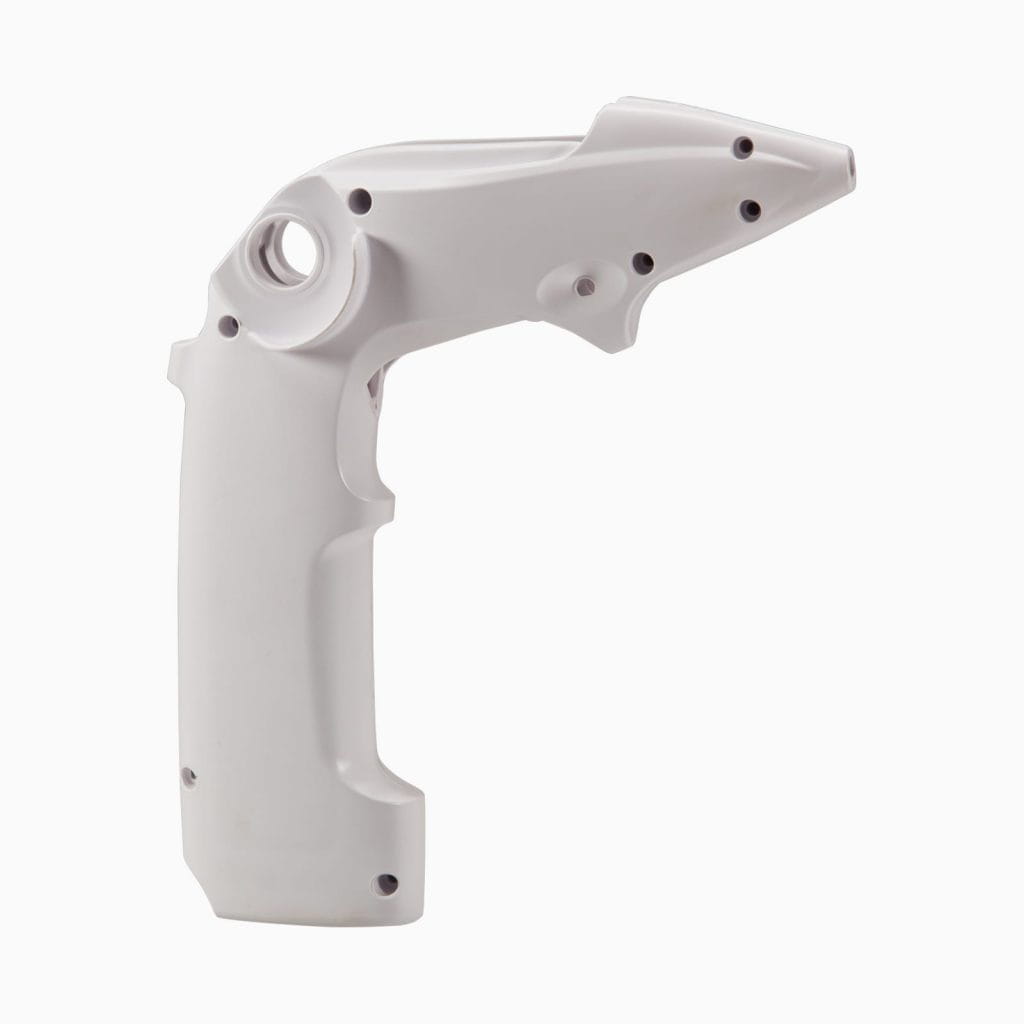
PBT (polybutylene terephthalate) is widely used in CNC machining for various functional engineering components.
Electrical and Electronic Industry Applications
In the electrical and electronics sector, machined PBT parts are frequently used for components requiring insulation properties and structural stability:
- Connector housings and terminal strips
- Insulating supports and mounting structures
- Sensor and switch housings
- Protective casings and structural covers for electronic devices
Automotive Industry Applications
In automotive manufacturing, PBT is frequently used for engine compartment components and functional structural parts, as it can withstand vibration, temperature fluctuations, and exposure to oils and fluids:
- Transmission components such as gears and cams
- Fuel pump and fuel system parts
- Wear-resistant sliding strips and guides
- Pump housings and fluid control assemblies
- Structural and functional support components for interior and exterior trim
Industrial Machinery and Power Transmission System
In industrial equipment, PBT is frequently used for components requiring low friction, wear resistance, and high structural stability:
- Gears and transmission components
- Conveyor system guide rails and sliding elements
- Scraper blades and wear-resistant parts
- Pump components for fluid handling
- Bearing supports and structural parts
Food Processing and Selected Medical Equipment
Due to its low water absorption and excellent resistance to cleaning chemicals, PBT is suitable for use in food processing and equipment for controlled environments:
- Food-grade pump housing components
- Valves and flow control parts
- Conveyor and material handling system components
- Equipment housings exposed to cleaning agents
Conclusion
This guide has provided an in-depth look at what is PBT CNC machining, highlighting the material’s exceptional dimensional stability (with a 24-hour water absorption rate of just 0.1%–0.2%), outstanding chemical resistance, and superior electrical insulation properties.
A comparison between CNC machining and injection molding reveals that each process has its own distinct scope of application: CNC is better suited for low-volume production, high-precision requirements, and rapid iteration, whereas injection molding is ideal for large-scale, stable production of finalized designs. In practical engineering applications, selecting the right process not only impacts costs and lead times but also directly influences the final product’s performance and reliability.
Manufacturing high-quality PBT CNC parts requires an experienced team with a deep understanding of how this semi-crystalline polymer behaves under actual cutting forces. If you are developing PBT parts or seeking a reliable machining solution, partnering with a provider that possesses both engineering expertise and consistent manufacturing capabilities is crucial. We invite you to explore our professional PBT CNC machining services. Upload your 3D CAD files today to receive an expert technical assessment, a design-for-manufacturing (DFM) analysis, and a highly competitive project quote.