
How the Electronics Industry Can Leverage Custom Metal Fabrication to Streamline Processes
The electronics industry is constantly evolving, with manufacturers facing increasing demands for smaller designs, higher performance, faster development cycles, and more reliable products. As electronic devices become more compact and complex, standard metal components often cannot meet the specific requirements of modern applications.
Custom metal fabrication provides electronics manufacturers with a flexible solution for producing precision metal components designed for specific product needs. From electronic enclosures and mounting brackets to thermal management components and structural parts, custom fabrication helps improve design flexibility, manufacturing efficiency, and product reliability.
By leveraging processes such as CNC machining, sheet metal fabrication, laser cutting, and metal finishing, electronics companies can streamline production workflows, accelerate prototyping, and create components that meet strict performance requirements. This article explores how custom metal fabrication supports the electronics industry and helps manufacturers improve their processes from product development to production.
What is Custom Metalworking in the Electronics Industry?
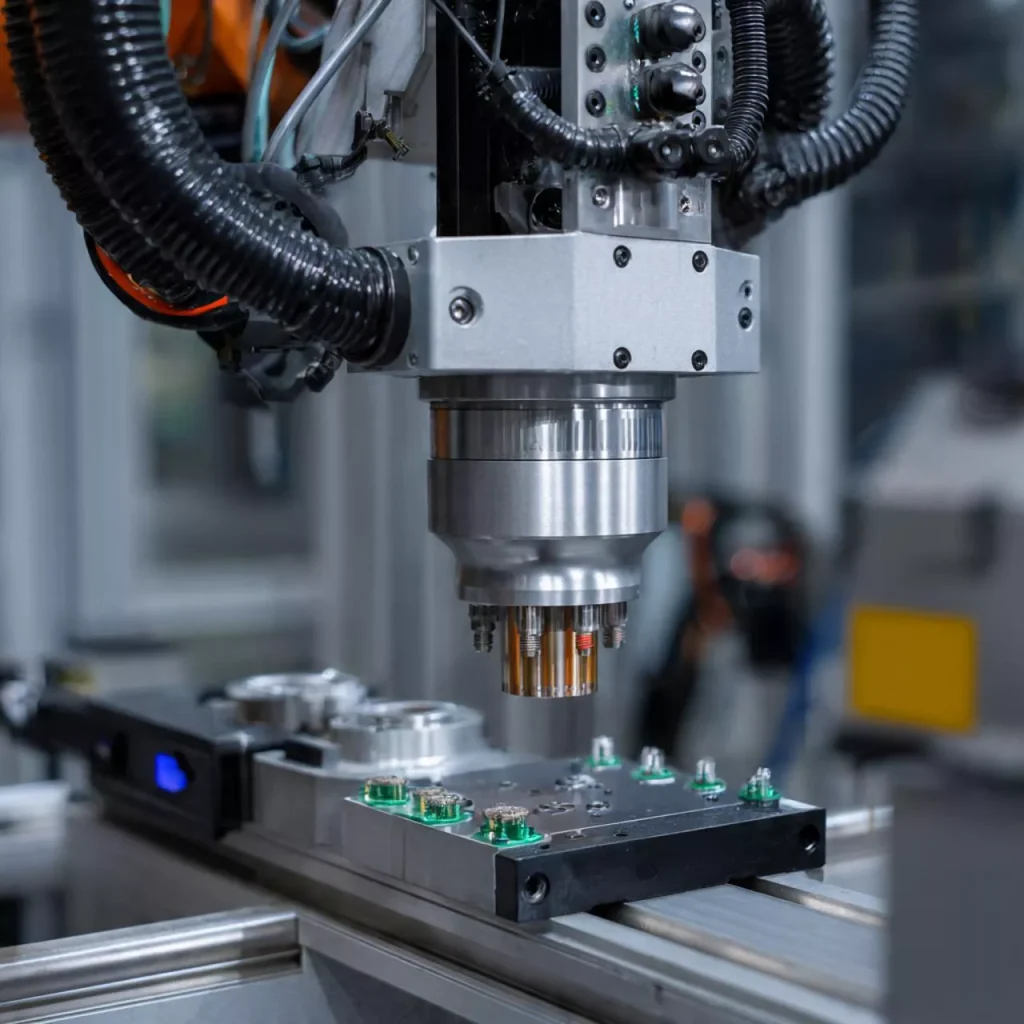
Custom metalworking refers to the process of creating custom metal parts and structures based on specific design requirements using various manufacturing methods. Unlike standard metal parts, custom metalworking allows manufacturers to produce components with unique dimensions, shapes, materials, and functional characteristics to meet diverse application needs.
In the electronics industry, custom metalworking typically involves multiple processes, including CNC machining, sheet metal fabrication, laser cutting, bending, welding, and surface finishing. These processes can be combined to manufacture precision components such as electronic housings, mounting brackets, heat sinks, shielding components, and structural supports.
By selecting appropriate processing methods and materials, electronics manufacturers can develop metal parts that meet specific requirements such as strength, weight, thermal performance, electromagnetic protection, and assembly compatibility. This flexibility makes custom metalworking an important solution for producing prototype parts and mass-produced components.
Types of Custom Metal Fabrication Used in Electronics
Custom metal fabrication involves various manufacturing processes that transform raw metal materials into functional components for electronic applications. The selection of fabrication methods depends on factors such as part design, material requirements, precision, and production needs.
CNC Machining
CNC machining uses computer-controlled machine tools to remove material from metal workpieces and produce components with precise dimensions and complex geometries.
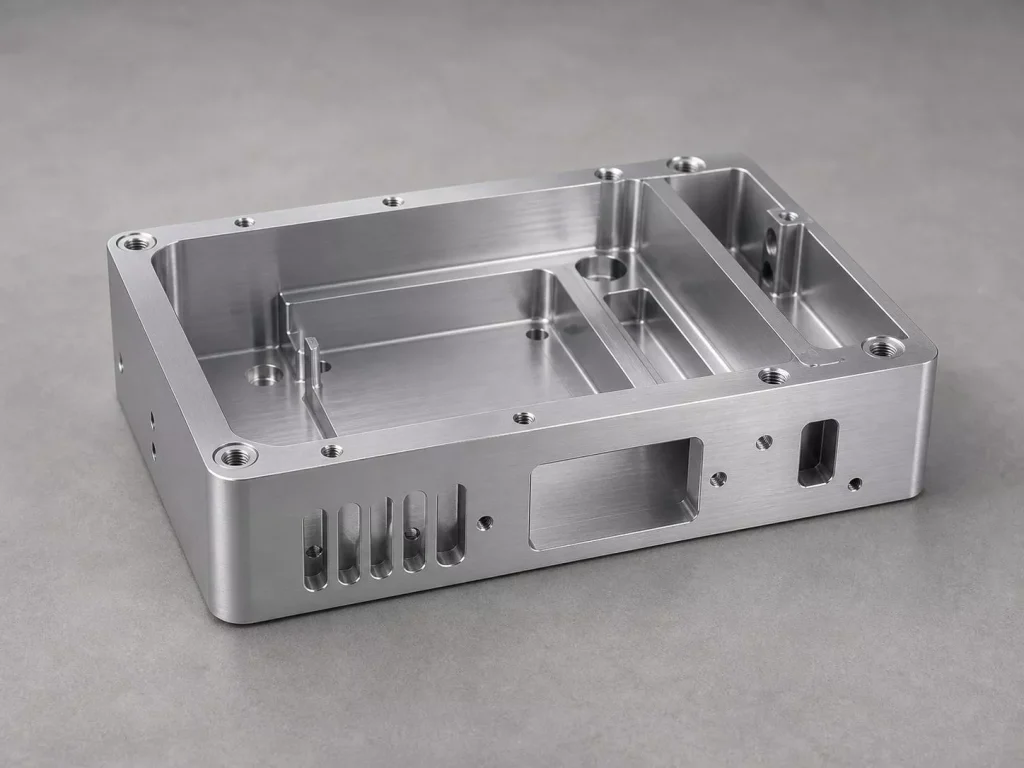
This process is widely used in electronics manufacturing for producing parts such as electronic housings, heat sinks, mounting brackets, and structural components. Although CNC machining generally has a higher manufacturing cost compared with some other processes, it provides excellent accuracy, repeatability, and surface quality.
Welding
Welding is a process that permanently joins multiple metal components together to create a larger structure or assembly.
In electronics manufacturing, welding is commonly used for equipment frames, cabinets, support structures, and custom metal assemblies. It provides a strong alternative to mechanical fasteners when permanent connections are required.
However, achieving reliable weld quality requires proper equipment, skilled operators, and suitable material selection.
Cutting
Metal cutting involves separating larger metal sheets or materials into smaller sections with specific shapes and dimensions.
Depending on project requirements, cutting can be performed using various methods, including manual cutting tools, laser cutting, and other precision cutting technologies.
Cutting is one of the most common processes in custom metal fabrication and is often combined with other operations to create complete electronic components.
Drilling and Tapping
Drilling and tapping are essential processes for creating holes and threaded features in metal components.
These operations are commonly used for mounting electronic components, installing fasteners, and creating assembly connections. Additional processes such as countersinking, chamfering, and boring can further improve part functionality and assembly accuracy.
Surface Finishing and Coating
Surface finishing processes improve both the appearance and performance of metal components.
Common finishing methods include anodizing, powder coating, plating, and other protective treatments. These processes can enhance corrosion resistance, improve wear resistance, reduce friction, and provide a more suitable surface finish for electronic applications.
Bending and Forming
Bending and forming transform flat metal sheets into three-dimensional components without removing large amounts of material.
These processes are commonly used for manufacturing electronic enclosures, cabinets, covers, and mounting structures. They can create simple bends, reinforcement features, and more complex formed shapes while maintaining structural strength.
Common Applications of Custom Metal Fabrication in Electronics
Custom metal fabrication plays an important role in the electronics industry by enabling manufacturers to produce metal components that meet specific design, performance, and assembly requirements. From protective structures to functional internal parts, fabricated metal components support a wide range of electronic products and systems.
Electronic Enclosures and Housings
Electronic enclosures are one of the most common applications of custom metal fabrication. These components protect sensitive electronic circuits and provide structural support for internal assemblies.
Custom-fabricated enclosures can be designed with specific dimensions, mounting features, ventilation requirements, and material selections to meet different environmental and performance needs.
Heat Sinks and Thermal Management Components
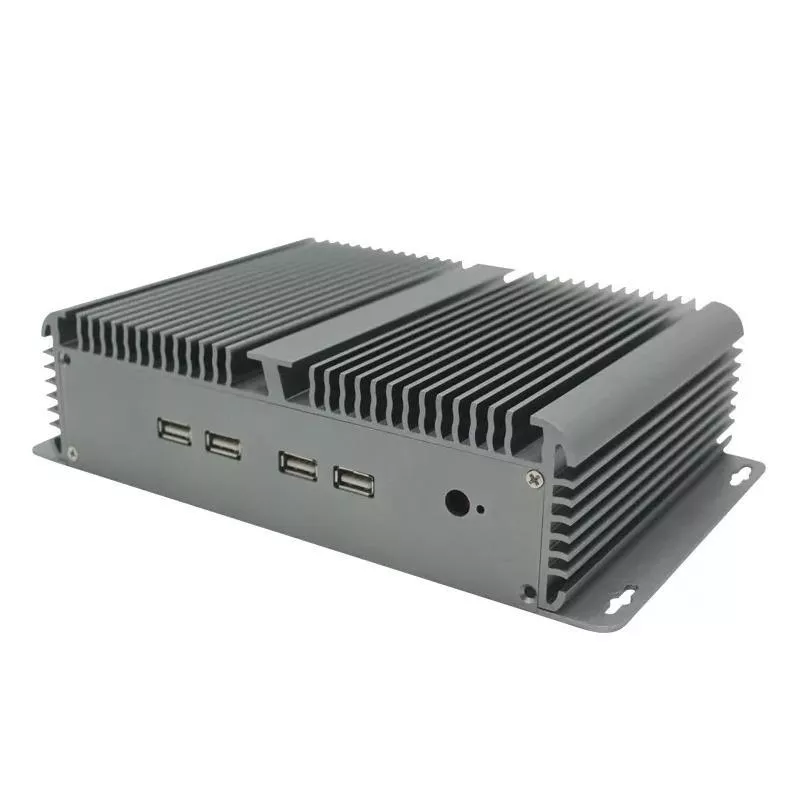
Many electronic devices generate heat during operation and require effective thermal management solutions. Custom metal fabrication allows manufacturers to create heat sinks and cooling components optimized for specific products.
Materials such as aluminum and copper are commonly selected due to their excellent thermal conductivity, helping improve heat dissipation and maintain reliable electronic performance.
EMI and RFI Shielding Components
Electromagnetic interference (EMI) and radio frequency interference (RFI) can affect the performance of electronic systems. Custom metal-fabricated shielding components help protect sensitive circuits by reducing unwanted electromagnetic signals.
These components are often designed with precise dimensions and material properties to provide effective protection while fitting into compact electronic assemblies.
Mounting Brackets and Structural Components
Electronic systems often require customized brackets, frames, and supports for component installation and assembly. Custom metal fabrication enables manufacturers to produce mounting solutions with accurate dimensions and specific configurations.
These components help improve assembly efficiency, provide mechanical stability, and ensure proper alignment between different parts.
Prototypes and Custom Electronic Hardware
Custom metal fabrication is also widely used during product development and prototyping. Engineers can quickly produce custom metal parts for testing, evaluation, and design improvements before moving into full-scale production.
This flexibility allows electronics manufacturers to reduce development time and optimize product designs more efficiently.
How Custom Metal Fabrication Helps Streamline Electronics Manufacturing Processes
Custom metal fabrication provides electronics manufacturers with more flexibility and efficiency throughout the product development and manufacturing process. By creating components specifically designed for each application, companies can reduce production challenges, improve workflow efficiency, and achieve better product performance.
Faster Product Development and Prototyping
The electronics industry often requires rapid innovation and shorter product development cycles. Custom metal fabrication allows engineers to quickly transform designs into physical components for testing and validation.
By producing prototypes with the same materials and manufacturing methods used in final production, manufacturers can identify design issues earlier, make improvements faster, and reduce the time required to bring products to market.
Improved Assembly Efficiency
Custom-fabricated metal components can be designed according to specific assembly requirements, helping simplify production processes.
Components such as precision brackets, mounting structures, and custom fixtures can improve part alignment, reduce manual adjustments, and create more consistent assembly operations.
Reduced Manufacturing Limitations
Standard metal components may restrict product designs due to fixed dimensions or limited configurations. Custom metal fabrication removes these limitations by allowing manufacturers to create parts based on exact specifications.
This enables electronics companies to develop more compact, efficient, and application-specific products without being limited by available standard components.
Better Quality Control and Production Consistency
Custom fabrication processes allow manufacturers to maintain greater control over component dimensions, materials, and finishing requirements.
With precise manufacturing methods and inspection processes, companies can achieve consistent part quality, reduce production variations, and improve the reliability of electronic products.
Support for Different Production Volumes
Custom metal fabrication can support various production needs, from one-time prototypes to low-volume production and larger manufacturing runs.
This flexibility allows electronics manufacturers to adapt their production strategies according to market demand, product development stages, and business requirements.
How to Choose the Right Custom Metal Fabrication Partner for Electronics
Selecting the right custom metal fabrication partner is essential for electronics manufacturers that require reliable, precise, and high-quality components. The right supplier should have the manufacturing capabilities, technical expertise, and quality control processes needed to support both product development and production requirements.
Manufacturing Capabilities
A capable fabrication partner should offer a wide range of manufacturing processes to meet different component requirements. These may include CNC machining, sheet metal fabrication, laser cutting, bending, welding, and surface finishing.
Having multiple fabrication capabilities allows manufacturers to simplify their supply chain and choose the most suitable process for each component.
Material Selection Options
Different electronic applications require different material properties. A reliable metal fabrication partner should provide a variety of material options, including aluminum, stainless steel, copper, brass, and other alloys.
Material selection should be based on factors such as strength, weight, thermal conductivity, corrosion resistance, and electrical performance.
Precision and Quality Control
Electronic components often require tight dimensional accuracy and consistent quality. A suitable fabrication partner should have advanced inspection equipment and quality control procedures to ensure that manufactured parts meet design specifications.
Proper quality management helps reduce assembly issues, improve product reliability, and maintain consistent production performance.
Prototyping and Production Support
The electronics industry requires flexibility throughout different stages of product development. A qualified fabrication partner should be able to support rapid prototypes, engineering samples, low-volume production, and larger production requirements.
Working with a supplier that can support the entire manufacturing process helps companies improve efficiency and reduce the challenges of transitioning from design to production.
Custom Metal Fabrication Services for Electronics at Xtproto
Xtproto provides custom metal fabrication solutions for electronics manufacturers, helping customers develop and produce precision metal components from prototypes to low-volume production. With advanced CNC machining capabilities, flexible manufacturing processes, and strict quality control, Xtproto supports the production of reliable metal parts designed for electronic applications.
Our manufacturing capabilities include metal CNC milling, metal CNC turning, and precision machining for complex metal components. By combining advanced equipment with professional machining expertise, Xtproto can produce electronic enclosures, heat sinks, mounting brackets, structural components, and other custom metal parts with tight dimensional requirements.
Xtproto supports a wide range of metals commonly used in electronics manufacturing, including aluminum, stainless steel, copper, and brass. These materials can be selected based on specific application requirements such as lightweight design, thermal management, corrosion resistance, and mechanical strength.
From rapid prototyping to low-volume production, Xtproto works with customers to provide flexible manufacturing solutions that help shorten development cycles, improve production efficiency, and ensure consistent part quality for electronic products.