
A Complete Guide to CNC Routing
CNC routing is a computer-controlled cutting process used to shape, cut, and engrave flat and large-format materials with high speed and consistency. Unlike traditional manual routing, CNC routing relies on digital design files and automated toolpaths to produce precise parts repeatedly, making it a reliable solution for both prototyping and low-to-medium volume production.
CNC routers are especially well suited for processing sheet materials such as wood panels, plastics, composites, and lightweight metals. With a gantry-style structure and high-speed spindle, CNC routing enables efficient machining of large parts that would be impractical or costly to produce using conventional CNC milling machines.
Today, CNC routing is widely applied in industries including furniture manufacturing, signage, enclosures, automotive interiors, and custom fabrication. By combining flexible design input, fast setup, and scalable production capability, CNC routing has become an essential manufacturing method for projects that require accuracy, repeatability, and cost-effective machining of flat components.
What Is CNC Routing?
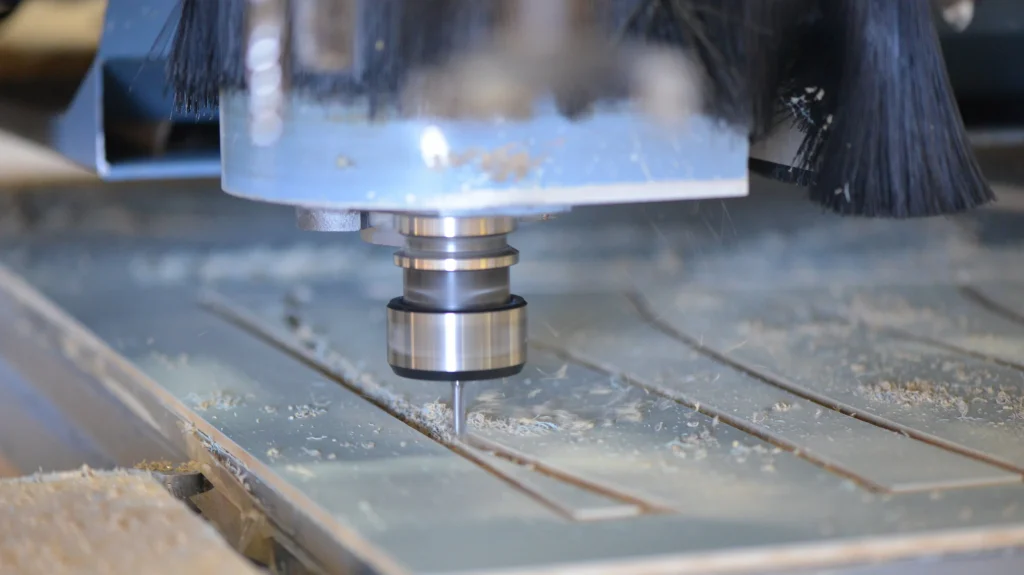
CNC routing is a specialized subtractive manufacturing process that uses a computer-controlled router to cut, shape, and engrave various materials based on digital design files. The machine follows programmed toolpaths to remove material with high-speed rotating router bits, producing parts with consistent accuracy and repeatability that traditional manual methods cannot match.
While it shares some similarities with vertical milling, CNC routing is primarily utilized for the efficient CNC machining of flat and large-format components. It is the ideal choice for processing sheet materials such as wood, plastics, composites, and lightweight metals. By integrating CNC machining principles into a high-speed router format, manufacturers can achieve rapid throughput on expansive workpieces while maintaining the tight tolerances required for industrial applications.
Working Principle of CNC Routing
The working principle of CNC routing is based on automated material removal using a high-speed rotating spindle and precisely controlled machine motion. Digital design files are converted into toolpaths, which guide the router bit along predefined paths across the workpiece.
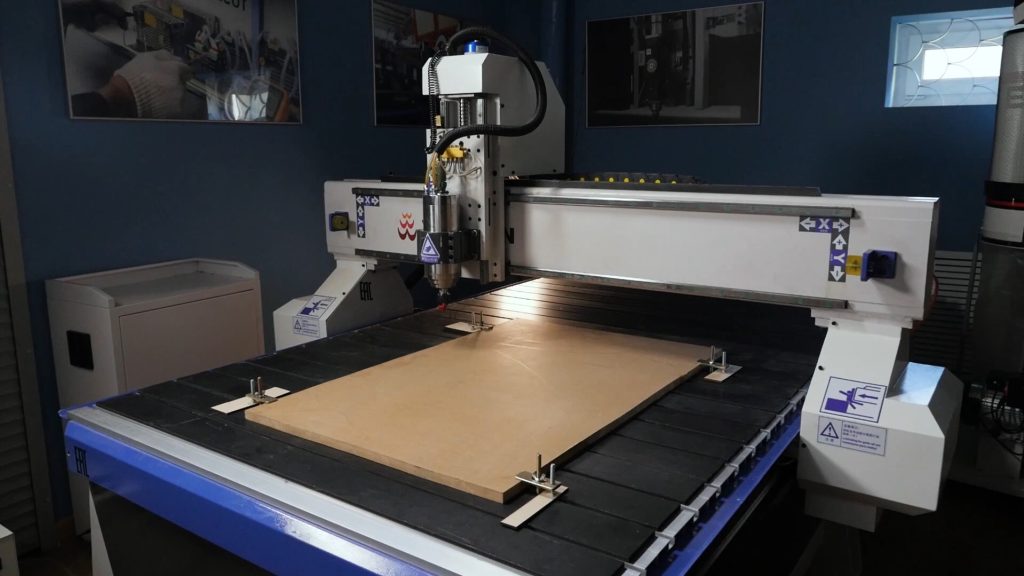
Most CNC routers use a gantry-style structure, where the cutting head moves along the X and Y axes while the spindle controls cutting depth along the Z axis. This configuration allows the machine to cover large working areas efficiently while maintaining consistent cutting accuracy.
Material is removed through operations such as profile cutting, pocketing, drilling, and engraving. Because CNC routers operate at high spindle speeds with relatively lower cutting forces, they are optimized for speed, surface finish, and efficiency rather than heavy metal removal.
How CNC Routing Works
CNC routing follows a digital manufacturing workflow that converts design data into precise cutting operations. Each stage of the process contributes to accuracy, repeatability, and stable machining performance, particularly for flat and large-format parts.
Design and File Preparation
The process begins with a digital design, typically created as a 2D vector file for sheet-based components. Common file formats include DXF and SVG. During file preparation, factors such as material thickness, tool diameter, and cutting direction are considered to ensure accurate geometry and clean edges.
Toolpath Generation
CAM software is used to convert the design file into toolpaths that control the movement of the router bit. These toolpaths define cutting depth, feed rate, spindle speed, and cutting strategy. Typical operations include profile cutting, pocketing, drilling, and engraving, all optimized to balance cutting efficiency and surface quality.
Machine Setup and Fixturing
Before routing begins, the workpiece is securely fixed to the CNC router table using clamps or a vacuum system. The machine zero point is then set to establish a consistent reference for cutting depth and position, which is critical for dimensional accuracy.
Routing Operation
Once setup is complete, the CNC router executes the programmed toolpaths. The gantry system allows smooth, high-speed movement across large working areas, making CNC routing efficient for producing flat parts with consistent results.
Post-Processing and Inspection
After machining, parts are removed and inspected for dimensional accuracy and surface finish. Depending on the material and application, post-processing such as deburring, sanding, or edge finishing may be performed to meet final requirements.
CNC Router Machine Components
Understanding the key components of a CNC router is essential for appreciating how the machine achieves precision, speed, and repeatability. Each part plays a specific role in guiding the cutting tool and supporting the workpiece.
Gantry and Frame
The gantry and frame form the structural backbone of a CNC router. The gantry moves along the X and Y axes, while the frame provides stability to minimize vibration during cutting. A rigid and well-built structure ensures dimensional accuracy, especially when working on large or heavy sheets.
Spindle and Router Motor
The spindle is the rotating component that holds the cutting tool. High-speed spindles, often ranging from 12,000 to 24,000 RPM, enable smooth material removal with minimal tear-out. The router motor drives the spindle and must be matched to the material and tool size for optimal performance.
Worktable and Fixturing System
The worktable supports the material during machining. Depending on the application, it can be a vacuum table for flat sheet materials or a clamping system for irregular shapes. Proper fixturing prevents movement and ensures consistent cut quality across the entire workpiece.
Motors, Drives, and Motion Control
Stepper or servo motors control the movement of the gantry and spindle along the X, Y, and Z axes. Motion drives, combined with precision rails and ball screws, translate digital toolpaths into smooth, accurate movements. Advanced control systems optimize acceleration, feed rates, and cutting dynamics to maintain high-quality results.
Control Software
CNC routers are operated through specialized control software that reads CAM-generated G-code. The software manages toolpaths, spindle speed, and axis movement. Modern interfaces often include features like simulation, collision detection, and real-time monitoring to improve reliability and reduce errors.
Materials Suitable for CNC Routing
| Material Type | Examples | Applications / Notes | Considerations |
| Wood & Wood Panels | Hardwood, Plywood, MDF, Particleboard | Furniture, cabinetry, decorative panels, signage | Use proper tooling & feed rates to prevent tear-out |
| Plastics & Acrylics | PVC, HDPE, Acrylic | Signage, displays, prototypes | Adjust spindle speed & bit type to avoid melting or chipping |
| Foams & Composites | Polyethylene foam, PU foam, Carbon fiber panels | Packaging inserts, prototypes, custom components | Use suitable cutting strategy to prevent delamination |
| Soft Metals | Aluminum | Low-volume parts, lightweight enclosures | Requires slower feed, specialized tooling, multiple passes |
CNC routing is highly versatile and can machine a range of materials. Choosing the right material and adjusting machine parameters ensures precise, high-quality cuts while minimizing tool wear and production time.
CNC Routing Cutting Types & Toolpaths
CNC routing allows a variety of cutting operations to create precise features on flat and sheet materials. Each cutting type requires the right toolpath strategy and bit selection to achieve optimal results.
Common Cutting Types
| Cutting Type | Description | Typical Applications | Notes / Considerations |
| Profile Cutting | Cutting along the outer or inner contour of a part | Panels, signage, enclosures | Use correct bit diameter to maintain corner accuracy |
| Pocketing | Removing material from a recessed area | Recessed features, cavities, decorative panels | Plan multiple passes for deeper pockets to reduce tool stress |
| Drilling | Creating precise holes for fasteners or mounting points | Assembly components, furniture, enclosures | Match drill bit size and depth; avoid excessive spindle speed |
| Engraving | Cutting shallow text, logos, or patterns | Signage, decorative designs | Use fine detail bits for high-resolution results |
| Through Cutting | Cutting completely through the material | Cut-out shapes, components | Support material with tabs to prevent movement or tear-out |
Toolpath Strategies
Choosing the right toolpath strategy is critical for achieving smooth cuts, minimizing tool wear, and ensuring high-quality results. Common strategies include:
Climb vs. Conventional Cutting: Climb cutting produces cleaner edges on wood and plastics by pulling the material into the bit, while conventional cutting pushes material away and may be preferable for some composites.
Single-pass vs. Multi-pass: Shallow cuts reduce stress on the tool and prevent material tear-out, especially for thicker sheets. Multi-pass cutting allows deeper pockets or through-cuts without compromising quality.
Lead-in and Lead-out: Gradual entry and exit of the cutting bit prevent chipping at corners or along edges.
Tabs: Small uncut sections hold the part in place during through cutting, preventing movement and reducing the risk of breakage.
By applying the correct toolpath strategy for the material and part geometry, manufacturers can maximize both cutting precision and surface finish.
Router Bits & Tooling Selection
The choice of router bits plays a critical role in CNC routing. Using the right bit ensures clean cuts, reduces tool wear, and improves surface finish. Bits vary in shape, size, flute count, and material, and each type is best suited for specific materials and operations.
Straight End Mills
Straight end mills have a flat cutting edge, making them ideal for vertical walls and clean edges. They are commonly used on wood, MDF, plastics, and soft metals for profiling, pocketing, and through cuts.
Spiral Bits
Spiral bits feature angled flutes that move material efficiently. Up-cut spiral bits pull chips upward, clearing the cut efficiently, which is useful for deep pockets and through cuts in wood and plastics. Down-cut spiral bits push chips downward, minimizing tear-out and providing a cleaner surface finish, particularly for laminated panels and decorative edges.
V-Bits and Engraving Bits
V-bits have an angled tip designed for engraving or chamfering. They are suitable for wood, acrylic, and soft plastics, commonly used for engraving text, logos, or decorative edges.
Ball Nose Bits
Ball nose bits have a rounded tip that allows smooth 3D surface machining. They are ideal for foams, composites, and light metals, commonly used for contours, rounded edges, and shallow 3D carving.
Key Considerations
When selecting a router bit, consider:
Material Compatibility: Hardwoods, plastics, metals, and composites require different bit geometries and flute counts.
Cutting Direction: Up-cut or down-cut flutes affect chip removal and surface finish.
Tool Diameter: Smaller bits allow fine detail but are less rigid; larger bits cut faster and are more stable.
Feed Rate and Spindle Speed: Proper pairing with machine settings ensures clean cuts and prevents overheating or burning.
By selecting the appropriate bit for the material and operation, CNC routers can achieve precise cuts, smooth surfaces, and minimal rework, maximizing both efficiency and part quality.
Design Guidelines for CNC Routing
Proper design is essential for successful CNC routing. Even the best router and tooling cannot compensate for poor design choices. Following design guidelines ensures parts are machinable, precise, and have a high-quality finish.
Minimum Internal Corner Radius
CNC routers use round bits, so internal corners cannot be perfectly sharp. Designers should account for the minimum internal corner radius, which is determined by the bit diameter. Using a radius smaller than the bit can lead to incomplete cuts or the need for additional post-processing.
Tabs and Part Stability
For through cuts, small tabs are used to hold the part in place during machining. Tabs prevent movement, reduce the risk of breakage, and maintain dimensional accuracy. Proper placement of tabs is critical—they should be positioned where they can be easily removed without affecting the part’s function or appearance.
Tool Diameter and Clearance
The diameter of the router bit impacts both the cutting path and achievable detail. Smaller bits allow finer features and tighter corners but are more fragile, while larger bits cut faster and are more rigid. Designers should consider tool clearance when planning intricate details to avoid collision or incomplete cuts.
Material Considerations
Different materials behave differently during routing. For example, laminated wood or acrylic may chip along edges, while plastics may melt if the spindle speed is too high. Designers should choose geometries and cutting directions that minimize tear-out, chipping, or surface damage.
Kerf and Cutting Allowances
The kerf, or width of material removed by the bit, should be factored into the design to maintain accurate dimensions. Proper allowances prevent parts from being too tight or loose, especially in assembly applications.
Optimizing Part Orientation
Orienting parts strategically on the router table can reduce tool travel, minimize cutting time, and improve surface quality. Aligning long edges with the gantry motion and placing features to avoid long unsupported spans enhances stability and finish.
Summary
Following these design guidelines ensures CNC routed parts are manufacturable, accurate, and visually appealing. By considering bit size, internal radii, tabs, material behavior, kerf, and part orientation during the design phase, manufacturers can reduce rework, improve efficiency, and achieve consistent, high-quality results.
CNC Routing Applications
CNC routing is a versatile manufacturing method used across a wide range of industries. Its ability to accurately cut, shape, and engrave flat and large-format materials makes it ideal for both prototyping and low-to-medium volume production.
Furniture and Cabinetry
CNC routing is widely used in furniture and cabinetry for cutting panels, decorative features, and intricate patterns. It enables consistent production of multiple parts, from custom cabinetry to large-scale furniture components, with precise joinery and clean edges.
Signage and Display
The precision and flexibility of CNC routing make it ideal for signage, display panels, and promotional materials. Acrylic, wood, and composite materials can be engraved or cut into complex shapes, allowing for high-quality graphics, logos, and lettering.
Enclosures and Housings
CNC routing is often used to produce enclosures, housings, and control panels for electronics, machinery, or equipment. The process provides accurate cutouts, mounting holes, and recesses, ensuring that parts fit together reliably without extensive post-processing.
Prototypes and Low-Volume Production
Rapid prototyping and small-batch production benefit from CNC routing’s flexibility. Designers can quickly iterate and produce functional parts without the need for expensive molds or tooling, making it an efficient solution for testing form, fit, and function.
Automotive and Interior Components
In the automotive and transportation industries, CNC routing is used for interior panels, decorative trims, and lightweight composite parts. Its ability to handle complex shapes and large sheets efficiently makes it ideal for both concept models and low-volume production.
Summary
CNC routing’s versatility across materials and industries makes it a reliable solution for precision cutting and shaping. From furniture and signage to enclosures and automotive components, CNC routing combines speed, accuracy, and flexibility, making it an essential tool in modern manufacturing and prototyping.
CNC Routing vs Other Cutting Methods
CNC routing is one of several cutting technologies available for manufacturing. Understanding the differences between CNC routing and other methods helps manufacturers choose the most efficient and cost-effective solution for their specific application.
CNC Routing vs CNC Milling
CNC milling is designed for heavier material removal and 3D shaping, often used on metals and dense materials. While milling can handle complex 3D geometries, CNC routing excels in cutting large, flat sheets with speed and precision. Routing is generally faster and more cost-effective for wood, plastics, and composites, especially for prototyping or low-volume production.
CNC Routing vs Laser Cutting
Laser cutting offers high precision and clean edges on thin materials, such as acrylic or metal sheets. However, it is limited in material thickness and part size. CNC routing, by contrast, can machine thicker sheets and large-format panels more efficiently, while also providing the ability to create pockets, engraving, and 3D contours.
CNC Routing vs Waterjet Cutting
Waterjet cutting can handle very thick materials and a wide variety of metals and composites without thermal effects. While waterjet is ideal for high-strength or heat-sensitive materials, CNC routing is faster and more practical for softer materials like wood, plastics, and foams, especially when multiple parts or decorative features are needed.
Summary
Each cutting method has its strengths, but CNC routing stands out for its versatility in handling large, flat parts across a range of materials. For applications that require speed, precision, and flexibility—particularly in wood, plastics, and lightweight metals—CNC routing is often the most efficient choice.
Advantages of CNC Routing
High Precision and Repeatability: CNC routing produces parts with consistent accuracy. Once a design is programmed, the machine can replicate the same part multiple times with minimal variation, making it ideal for applications that require tight tolerances.
Design Flexibility: CNC routing supports a wide range of designs, from simple profiles to complex engraving and pocketing. Designers can quickly adjust dimensions or add intricate patterns without needing new tooling, making it perfect for prototyping and custom fabrication.
Efficient Production of Large Parts: The gantry structure of CNC routers allows efficient machining of large sheets and panels. This capability makes routing faster and more cost-effective than other cutting methods for big flat components while maintaining precision and surface quality.
Reduced Labor and Setup Costs: Automation reduces the need for manual labor and shortens setup time. Operators can focus on programming and quality control while the machine performs repetitive cutting, lowering production costs and lead times.
Versatility Across Materials: CNC routing works on wood, plastics, composites, and soft metals. This flexibility allows manufacturers to handle diverse projects with the same equipment, eliminating the need for multiple specialized machines.
When to Use CNC Routing
Large Flat or Sheet Materials: CNC routing is ideal for panels, sheets, and large flat components where precision and repeatability are required. It is especially efficient for woodworking, plastics, and composite materials.
Prototyping and Low-Volume Production: When you need functional prototypes or small-batch production, CNC routing allows rapid iteration without expensive molds or tooling, reducing both time and cost.
Intricate Designs and Engraving: CNC routing is suitable for parts with detailed profiles, pockets, or engraved patterns. Its digital control ensures consistent replication of complex features across multiple parts.
Applications Requiring Consistent Quality: For projects that demand uniform edges, accurate holes, or precise cutouts, CNC routing provides reliable repeatability, minimizing rework and scrap.
Cost-Effective Production: CNC routing is most effective when speed, efficiency, and reduced labor costs are priorities, particularly for flat and sheet materials that would otherwise require more time-consuming manual cutting or alternative methods.
Conclusion
CNC routing is a versatile and efficient manufacturing process that excels in cutting, shaping, and engraving flat and large-format materials with precision and repeatability. Its key advantages include high accuracy, design flexibility, efficient production, reduced labor, and the ability to work with a wide range of materials such as wood, plastics, composites, and soft metals. Success in CNC routing relies on proper design considerations, including tool selection, internal corner radius, tabs, and material properties, which ensure clean cuts and consistent results. Widely used in industries such as furniture, signage, enclosures, automotive interiors, and prototyping, CNC routing combines speed, adaptability, and reliability, making it an ideal choice for both low-volume production and complex custom projects.
CNC Routing: Frequently Asked Questions
What is a CNC router and how does it work?
A CNC router is a computer-controlled cutting machine used for high-speed subtractive manufacturing. So, how does a CNC router work? It uses a high-speed spindle and various bits to follow programmed toolpaths (G-code) to cut, carve, and engrave materials. Unlike a standard C N C machine designed for small, heavy blocks, a router is optimized for large-format sheet materials.
CNC routing vs. milling: What is the main difference?
The primary difference between CNC routing vs. milling lies in the work envelope and spindle speed. CNC milling usually involves smaller, thicker parts made of hard metals, using high-torque spindles. CNC routing services, however, are best for large, flat sheets of wood, plastic, or soft metals. Routers operate at much higher RPMs, making them the superior choice for high-speed CNC machining of expansive panels.
Is CNC routing better than a laser cutter?
In the CNC router vs. laser cutter debate, the router wins when you need 3D depth, thicker materials, or specific edge profiles (like chamfers). While a laser is great for thin, intricate cuts, CNC routing services allow for physical carving and “pockets” at varying depths, which is essential for many industrial CNC machining projects.
Can you provide CNC routing PCB services?
Yes. CNC routing PCB (Printed Circuit Board) prototypes is a common application. Using a high-precision CNC router, we can mill away copper layers to create traces and drill holes without the need for chemical etching. This is a fast, clean way to handle low-volume CNC machining for electronic prototyping.
How much does a CNC routing service cost?
The cost depends on material type, tool wear, and the complexity of the design. While a hobbyist might ask how much does a CNC router cost to buy, businesses save more by outsourcing. Professional CNC routing services are typically billed by the hour or by the project. We provide an instant quote CNC machining tool to give you transparent pricing for your specific sheet-material needs.