
How Medical CNC Machining Is Evolving in 2026:Precision,Biocompatibility,and Robotics
Let’s be real: in most industries, a “tight tolerance” is a point of pride. In the medical field, it’s a legal requirement and a literal matter of life and death. Whether it’s a tiny titanium screw holding a spine together or a complex manifold for a diagnostic lab, Medical CNC Machining sits at the intersection of extreme engineering and human safety.
If you’re sourcing components for medical devices, you already know that “standard” machine shop practices don’t cut it here. But what exactly separates a medical-grade part from a high-quality industrial one? It’s not just about the shiny finish—it’s about a rigorous trifecta of biocompatible materials, validated processes, and total traceability.
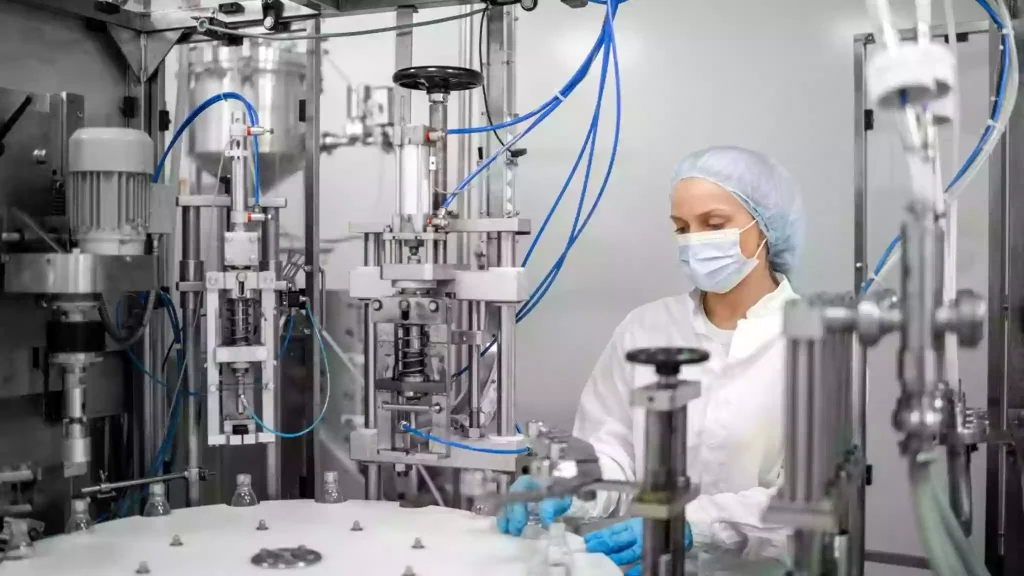
The Core Difference: Medical vs. Standard CNC Machining
If you’ve spent time in a typical machine shop, you’re used to seeing tolerances of ±0.05mm. That’s precise, sure. But in the medical world, we’re often chasing micron-level accuracy (think ±0.002mm or less).
So, what’s the big deal? Why go through the headache?
- Human Integration: Unlike an engine part, a medical implant has to live inside the human body. Any microscopic “burr” or rough edge can cause inflammation or harbor bacteria.
- Zero-Fail Reliability: Surgical robotic arms or cardiac pumps don’t get a “second chance” if a part jams. The geometry must be perfect, every single time.
- The “Clean” Factor: In standard machining, oil and coolant are just part of the job. In medical machining, we use specialized, non-toxic coolants because even a trace of industrial residue can lead to a failed biocompatibility test.
- Check out our breakdown of High-Precision CNC Machining Services to see the equipment we use to hit these tolerances.
Choosing the Right Materials: Biocompatibility is King
In the medical world, you can’t just pick a metal because it’s strong or cheap. It has to be biocompatible—meaning it won’t cause an adverse reaction when it touches human tissue or blood.
Here’s the “Big Three” you’ll see in most medical CNC projects:
Titanium (Grade 5 and Grade 23 ELI)
Titanium is the rockstar of medical machining. It’s incredibly strong, lightweight, and the body doesn’t reject it.
The Catch: It’s a nightmare to machine. It’s a poor heat conductor, which means all that friction heat stays on the cutting edge of the tool.
The Solution: We use high-pressure cooling and specialized carbide tooling to prevent the material from galling or warping.
Medical-Grade Stainless Steel (316L and 17-4 PH)
Think surgical scalpels, forceps, and bone saws. These steels are chosen for their extreme corrosion resistance—they need to survive harsh sterilization cycles (autoclaves) without rusting.
Pro Tip: We often use passivation as a post-processing step here to strip away any free iron from the surface, creating a protective oxide layer that’s 100% medical-safe.
PEEK (Polyetheretherketone)
If you need a plastic that acts like a metal, PEEK is it. It’s often used for spinal cages because its “stiffness” (modulus) is very close to human bone.
The CNC Challenge: PEEK is prone to internal stresses. If you don’t anneal the material (heat-treat it) properly before and after machining, the part can crack or “creep” out of dimension weeks later.
High-Stakes Applications: Where Precision Meets Purpose
In medical CNC machining, we aren’t just making “parts.” We’re making components that often function as extensions of a surgeon’s hands or as a permanent part of a patient’s anatomy. Here’s a look at the high-complexity projects currently driving the industry:
Surgical Robotic Components
Robotic-assisted surgery is the gold standard in 2026. These systems require hundreds of tiny, interlocking CNC-machined parts—gears, housings, and articulated joints.
The Challenge: These parts must have zero backlash. If a robotic arm mimics a surgeon’s movement, there can’t be even a micron of “play” in the mechanical assembly.
Orthopedic & Spinal Implants
From bone plates to complex vertebral cages, these parts often feature organic, non-linear geometries.
The CNC Secret: This is where 5-axis machining shines. We can machine complex curves in a single setup, ensuring that the interface between the implant and the bone is anatomically perfect.
Micro-Fluidic & Diagnostic Manifolds
Think about the machines that run blood tests. They use manifolds with internal channels as thin as a human hair to move fluids.
The “Clear” Advantage: We often machine these from transparent plastics like Acrylic or Polycarbonate. Achieving optical clarity directly off the mill—without manual polishing that could distort the dimensions—is a specialized skill.
The “Swiss” Secret for Small Parts
When a part is smaller than a matchstick—like a dental abutment or a tiny heart valve component—we move away from traditional mills and onto Swiss-type Lathes.
Unlike a standard lathe, a Swiss machine supports the workpiece right next to the cutting tool. This means we can machine incredibly long, thin parts without them bending or vibrating. If your project involves diameters under 32mm, Swiss machining is usually the fastest and most cost-effective way to hit those medical tolerances.
Quality Assurance: Beyond the Blueprint
In medical manufacturing, the industry operates under the ironclad rule that if it isn’t documented, it didn’t happen. Traceability is the invisible line that separates a dedicated medical-grade facility from a standard machine shop. We treat the ISO 13485 Gold Standard as more than just a certification; it is a fundamental commitment to a risk-based Quality Management System (QMS) that ensures every block of titanium can be traced back to its original melt batch. To guarantee precision, we employ rigorous Validation Protocols (IQ/OQ/PQ), performing Installation, Operational, and Performance Qualifications to prove that our processes are stable, repeatable, and capable of hitting micron-level targets every single time. Furthermore, for high-stress implants, we utilize Non-Destructive Testing (NDT)—such as ultrasonic or X-ray inspections—to identify any internal voids or microscopic fractures that could lead to catastrophic failure post-surgery.
The “Invisible” Post-Processing Steps
A component does not achieve “medical-grade” status the moment it leaves the CNC enclosure; rather, the post-processing phase is where biological safety is truly guaranteed. We utilize Electropolishing and Passivation for stainless steel parts, employing chemical baths to strip away free iron and surface contaminants. This process creates a hyper-smooth, corrosion-resistant surface capable of withstanding hundreds of autoclave sterilization cycles without degrading. In critical applications like cardiac pumps, where a burr the size of a grain of sand could cause a blood clot, we implement Micro-Deburring using high-magnification microscopy and specialized media blasting to ensure every edge is radiused to perfection. Finally, Ultrasonic Cleaning in multi-stage deionized water baths removes cutting fluids at a molecular level, ensuring that in 2026, “clean” means zero detectable parts per million (PPM) of industrial residue.
Future-Proofing: Trends Shaping 2026 and Beyond
Medical CNC machining is an evolving field, and staying competitive requires the integration of technologies that were once considered science fiction. We are now leveraging Hybrid Manufacturing, which combines the design freedom of 3D printing for porous bone-ingrowth structures with the precision of 5-axis CNC finishing for critical mating surfaces. To streamline production, we utilize Digital Twins to run high-fidelity simulations of the machining process before a tool ever touches metal, effectively eliminating trial and error and accelerating the Time-to-Market (TTM) for life-saving devices. Additionally, our facility has integrated AI-Driven Tool Monitoring, using real-time sensors to predict tool wear and swap out inserts before they lose their edge, ensuring the 1,000th part is just as precise as the first.
Conclusion: Partnering for Patient Outcomes
When sourcing CNC machined parts for the medical industry, you are doing more than buying components—you are managing patient risk. It is vital to have a partner who understands that a deviation of even ±0.002mm is not just a rejection on a report, but a potential surgical complication. At XTPROTO, we combine the rigor of ISO 13485 compliance with the cutting-edge speed of 5-axis and Swiss-turn technology. Whether you are prototyping a new robotic instrument or scaling up a validated implant, we provide the precision that modern patient care demands. We invite you to upload your CAD files for a comprehensive DFM (Design for Manufacturability) analysis, or consult with our engineers on biocompatible material selection to meet 2026 regulatory standards.
Medical CNC Machining: Frequently Asked Questions
Can your medical device machine shop handle complex implants and tools?
Yes. As a specialized medical machining provider, we understand the rigors of machining medical components. We work with biocompatible materials like Titanium and PEEK, ensuring every C N C machine process meets the micron-level tolerances and burr-free standards required for human health applications.
What exactly is Medical CNC Machining?
Medical CNC machining is the high-precision manufacturing of healthcare components—such as orthopedic implants, surgical instruments, and diagnostic housing—using computer-controlled technology. It ensures that life-critical parts meet the extreme biocompatibility and tolerance standards required by the medical industry.
What types of medical components can you machine?
Our medical device machine shop specializes in machining medical components with complex geometries. This includes titanium bone screws, stainless steel surgical clamps, PEEK spinal cages, and intricate aluminum enclosures for diagnostic electronics.
Which materials are most common in medical machining?
We work from an extensive CNC material list optimized for healthcare. The most common include Titanium (Grade 5) for implants, 316L Stainless Steel for surgical tools, and high-performance plastics like PEEK and Polycarbonate for their sterilization-friendly properties.