
CNC Machined Motorcycle Parts: Design and Manufacturing Guide
Motorcycle components are engineered to operate under a unique combination of mechanical stress, vibration, impact loads, and changing environmental conditions. From high-speed sport bikes and touring motorcycles to off-road and racing machines, every component must contribute to a balance of performance, durability, and rider safety.
Many modern motorcycle parts feature lightweight structures, intricate geometries, and tightly controlled dimensions that support functions such as power transmission, braking, suspension movement, and chassis stability. Components including triple clamps, rearsets, brake brackets, engine covers, and suspension mounts often require a combination of strength, weight reduction, and dimensional consistency that is difficult to achieve through traditional manufacturing approaches alone.
As motorcycle design continues to evolve, manufacturers and engineers are increasingly adopting advanced manufacturing methods to produce parts with optimized structural performance and greater design flexibility. This trend has accelerated the development of lightweight performance components, custom aftermarket products, and precision-engineered assemblies for both production motorcycles and motorsport applications.
This guide examines the design principles, material considerations, manufacturing challenges, and production methods commonly associated with modern motorcycle components, providing a practical overview of how high-performance motorcycle parts are developed from concept to finished product.
Why Motorcycle Parts Are Commonly CNC Machined
Motorcycle components are often designed with requirements that differ significantly from those of general industrial parts. In addition to supporting structural loads, many components must contribute to vehicle handling, rider control, acceleration, and overall riding performance. These demands frequently result in designs that combine lightweight construction, complex geometries, and precise dimensional requirements.
High Precision Requirements
Many motorcycle assemblies rely on accurate fitment between mating components. Bearing seats, mounting interfaces, shaft connections, and brake system components must maintain precise dimensions to ensure proper alignment and consistent operation. Even small dimensional variations can affect assembly quality, component wear, and long-term reliability.
Lightweight Performance Goals
Reducing unnecessary weight remains a major objective in motorcycle design. Lower component weight can improve acceleration, braking response, cornering behavior, and rider control. As a result, engineers often incorporate pockets, ribs, cutouts, and other weight-saving features that remove material while preserving structural strength.
Complex Functional Geometries
Modern motorcycle parts frequently include features that serve multiple purposes within a single component. A triple clamp, for example, may integrate mounting points, clamping surfaces, cable routing features, and weight-reduction pockets into one design. Similar multifunctional geometries can be found in rearsets, brake brackets, engine covers, and suspension components.
Low-Volume and Specialized Production
Unlike mass-produced automotive components, many motorcycle parts are manufactured in relatively small quantities. Performance upgrades, racing components, prototype parts, and aftermarket accessories often require flexible production methods that can accommodate frequent design changes and limited production volumes without extensive tooling investment.
These design and production requirements have significantly influenced how modern motorcycle components are manufactured, particularly for applications where performance, precision, and customization are important considerations.
Common CNC Machined Motorcycle Parts
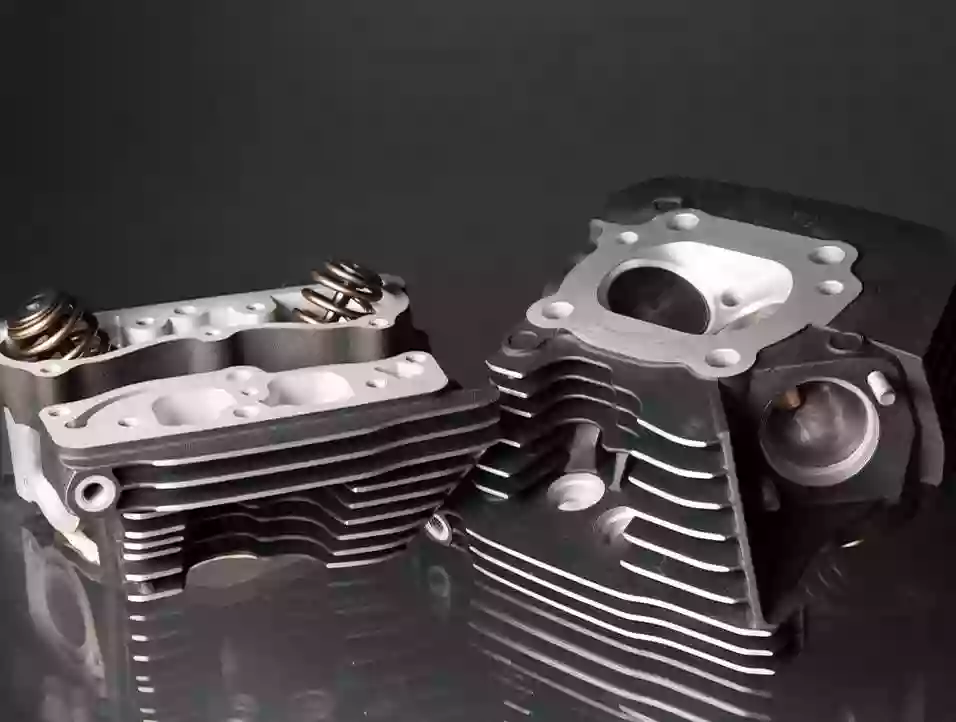
Motorcycles consist of numerous components that must withstand dynamic loads, vibration, impact, and environmental exposure while maintaining consistent performance over time. Among these, certain parts often require higher dimensional accuracy, tighter tolerances, or more complex geometries than can be achieved through basic manufacturing methods. These components are commonly found in critical systems such as the engine, suspension, braking system, and chassis.
Engine Components
Engine-related parts are exposed to continuous mechanical and thermal stresses during operation. Components such as engine covers, throttle body housings, intake adapters, and mounting brackets often contain precision-machined surfaces that support sealing, alignment, and assembly requirements.
In performance applications, engine components may also incorporate weight-reduction features and complex internal geometries to improve efficiency without compromising structural integrity.
Suspension Components
Suspension systems play a vital role in maintaining tire contact, ride stability, and handling performance. Parts such as triple clamps, fork mounts, suspension linkages, and shock mounting brackets must maintain accurate alignment while resisting repeated loading cycles.
These components often combine structural strength with lightweight design requirements, making them some of the most highly engineered parts on a motorcycle.
Brake System Components
Brake assemblies rely on precise positioning and dimensional consistency to ensure reliable stopping performance. Components such as caliper brackets, master cylinder housings, brake lever assemblies, and rotor carriers must maintain accurate relationships between moving and stationary elements.Because braking systems are directly related to rider safety, dimensional control and component reliability are especially important during manufacturing.
Chassis and Control Components
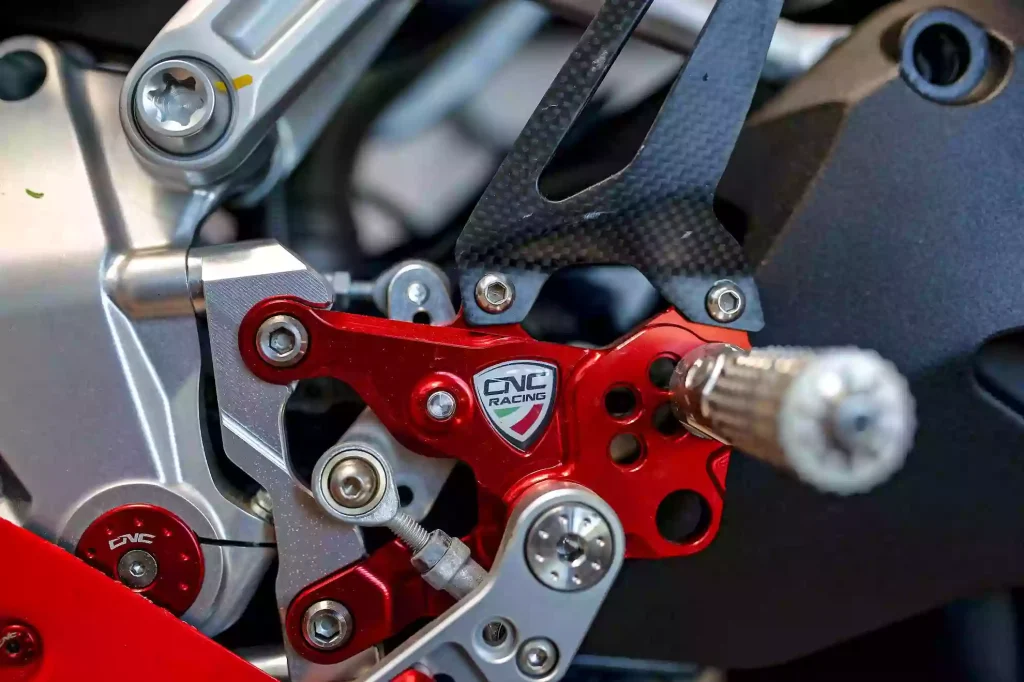
The chassis and rider control systems contain a variety of structural and ergonomic parts that influence both comfort and performance. Common examples include rearsets, foot pegs, handlebar clamps, lever mounts, and frame brackets.
These components frequently incorporate complex shapes that balance strength, weight reduction, and rider ergonomics. In the aftermarket sector, they are also among the most commonly customized motorcycle parts.
Custom and Performance Parts
Beyond standard production components, motorcycles often utilize specialized parts developed for racing, restoration, or customization projects. Examples include lightweight brackets, custom mounts, steering components, and aesthetic trim pieces.
Such parts are typically designed to meet specific performance objectives, fit unique vehicle configurations, or achieve a desired visual appearance while maintaining functional reliability.
Design Considerations for CNC Machined Motorcycle Parts
The performance of a motorcycle component is determined not only by the material selected but also by how the part is designed. Effective designs must balance strength, weight, manufacturability, and long-term durability while operating under constantly changing loads and environmental conditions.Understanding these design considerations early in the development process can help reduce production challenges and improve overall component performance.
Weight Reduction Without Compromising Strength
Weight reduction is a common objective in motorcycle engineering, particularly for performance-oriented applications. Lower component mass can contribute to improved acceleration, braking response, and handling characteristics.However, removing material indiscriminately can create weak points that reduce structural reliability. Designers often use strategies such as internal pockets, ribs, and optimized wall sections to reduce weight while maintaining sufficient stiffness and load-carrying capacity.The most effective lightweight designs remove material from low-stress regions while preserving reinforcement in areas subjected to higher mechanical loads.
Structural Rigidity and Load Distribution
Motorcycle components experience a combination of static and dynamic forces during operation. Suspension brackets, triple clamps, foot controls, and frame-mounted parts are subjected to repeated loading cycles that can lead to deformation or fatigue if loads are not distributed properly.Smooth transitions between features, adequate material thickness, and well-supported mounting locations help reduce stress concentrations and improve structural stability. Proper load distribution is particularly important for components that experience vibration or repeated impact loading.
Thin-Wall Feature Design
Lightweight motorcycle components frequently incorporate thin-wall sections to reduce mass. While effective for weight savings, thin walls can become vulnerable to deformation during both manufacturing and service.
Designers often avoid excessively tall unsupported walls and abrupt thickness changes that may create localized weak points. Maintaining consistent wall thickness where possible can improve both manufacturability and structural performance.
Tolerance Requirements
Different motorcycle components require different levels of dimensional accuracy depending on their function. Features involved in alignment, rotational motion, or bearing installation typically require tighter tolerances than cosmetic or non-critical features.
For example, bearing seats, shaft interfaces, and precision mounting surfaces often require significantly greater dimensional control than external surfaces intended primarily for appearance. Establishing realistic tolerance requirements helps balance performance objectives with manufacturing efficiency.
Design for Manufacturability (DFM)
A highly optimized design is not always easy to manufacture efficiently. Features such as extremely deep cavities, narrow slots, sharp internal corners, and inaccessible surfaces can increase production complexity and cost.
Considering manufacturing limitations during the design stage can simplify production while maintaining functional performance. Design for Manufacturability (DFM) focuses on creating components that achieve engineering objectives without introducing unnecessary manufacturing challenges.
When design and manufacturing considerations are addressed together, motorcycle components can achieve better performance, improved consistency, and more efficient production outcomes.
Material Selection for Motorcycle Components
Material selection plays a critical role in the performance, durability, and weight of motorcycle components. Different parts are exposed to different operating conditions, including vibration, impact loading, friction, temperature fluctuations, and environmental exposure. As a result, material choices are often based on the specific functional requirements of each component rather than a single universal solution.
Engineers typically evaluate factors such as strength, stiffness, weight, corrosion resistance, wear resistance, and cost when selecting materials for motorcycle applications.
6061 Aluminum
6061 aluminum is one of the most widely used materials for motorcycle components due to its balanced combination of strength, machinability, corrosion resistance, and affordability.
It is commonly used for engine covers, mounting brackets, housings, and various structural components where moderate strength and low weight are important. The material also responds well to anodizing and other surface finishing processes, making it suitable for both functional and aesthetic applications.
7075 Aluminum
7075 aluminum offers significantly higher strength than 6061 while maintaining a relatively low weight. This makes it a popular choice for performance-oriented motorcycle parts where structural rigidity is a priority.
Components such as triple clamps, rearsets, suspension mounts, and racing hardware often utilize 7075 aluminum because of its ability to withstand higher mechanical loads without a substantial increase in mass.
Stainless Steel
Stainless steel is frequently selected for components that require excellent corrosion resistance and long-term durability. It performs well in environments exposed to moisture, road debris, and varying weather conditions.
Common applications include shafts, spacers, fasteners, mounting hardware, and certain brake-related components where wear resistance and reliability are critical considerations.
Titanium
Titanium is valued for its exceptional strength-to-weight ratio and corrosion resistance. Although more expensive than aluminum and stainless steel, it provides significant weight savings while maintaining high structural performance.
Titanium is commonly found in premium aftermarket products, racing applications, and specialized performance components where reducing weight is a primary design objective.
Engineering Plastics
Not all motorcycle components require metallic materials. Engineering plastics such as POM, nylon, and PEEK are often used for bushings, guides, spacers, wear pads, and other non-structural applications.
These materials offer advantages such as low friction, chemical resistance, reduced weight, and vibration damping, making them useful in specific areas where metal components may not provide the most effective solution.
Balancing Performance and Practicality
Material selection is often a process of compromise rather than optimization around a single property. A material with the highest strength may not offer the best corrosion resistance, while the lightest material may not provide the required wear performance or cost efficiency.
Successful motorcycle component design typically involves balancing mechanical performance, environmental durability, manufacturability, and economic considerations to achieve the most appropriate solution for the intended application.
Manufacturing Challenges in Motorcycle CNC Machining
Motorcycle components are often designed with a strong focus on performance, weight reduction, and compact geometry. While these design goals improve functionality, they can also introduce significant manufacturing challenges. Many issues arise not from the manufacturing process itself, but from the interaction between part geometry, material behavior, and machining forces.
Understanding these challenges is essential for developing reliable, consistent, and high-quality motorcycle components.
Thin-Wall Deformation
Lightweight motorcycle parts frequently incorporate thin-wall structures to reduce overall mass. While effective for performance improvement, thin sections are highly sensitive to cutting forces during manufacturing.
Even small amounts of tool pressure can cause temporary or permanent deformation, leading to dimensional inaccuracy or surface inconsistencies. Components such as covers, housings, and structural brackets are particularly affected when wall thickness is reduced below stable thresholds.
Vibration and Chatter
Many motorcycle parts feature extended geometries, uneven material distribution, or deep cavities. These characteristics can increase susceptibility to vibration during CNC machining.
Chatter not only affects surface finish quality but can also impact dimensional accuracy and tool life. Parts such as triple clamps, engine mounts, and long bracket structures are especially sensitive due to their shape and rigidity variation.
Heat Accumulation and Material Behavior
During machining, localized heat is generated at the cutting interface. In materials commonly used for motorcycle components—such as aluminum alloys and titanium—heat can influence chip formation, tool wear, and surface integrity.
Thin sections and complex geometries can further amplify heat concentration in localized areas, which may affect final surface quality and dimensional stability if not properly controlled.
Complex Geometry Accessibility
Motorcycle components often include multi-surface features, internal cavities, angled faces, and integrated functional elements within a single part.
These geometries can create tool access limitations, requiring careful consideration of tool paths and machining orientation during manufacturing. Features located in deep or enclosed regions are particularly challenging due to restricted chip evacuation and limited cutting access.
Surface Finish Sensitivity
Many motorcycle parts serve both functional and aesthetic roles. Components such as visible engine covers, control levers, and structural brackets require consistent surface quality.
However, surface finish can be influenced by material type, tool condition, cutting parameters, and vibration. Achieving uniform finish quality across complex surfaces can therefore be challenging, especially on parts with mixed functional and cosmetic requirements.
Balancing Design Intent and Manufacturing Reality
One of the most common challenges in motorcycle component production is the gap between design intent and manufacturing feasibility. Designs optimized purely for performance or aesthetics may introduce features that are difficult to produce consistently.
Bridging this gap requires careful consideration of structural behavior, machining limitations, and material response during the design stage. When these factors are aligned, motorcycle components can achieve better performance, improved consistency, and higher production efficiency.
Surface Finishes for CNC Machined Motorcycle Parts
Surface finishing is an important stage in motorcycle component development because many parts must perform under both functional and visual requirements. In addition to improving appearance, surface treatments can influence corrosion resistance, wear behavior, friction characteristics, and long-term durability.
Different motorcycle components require different finishing approaches depending on their operating environment and functional role.
Anodizing for Aluminum Components
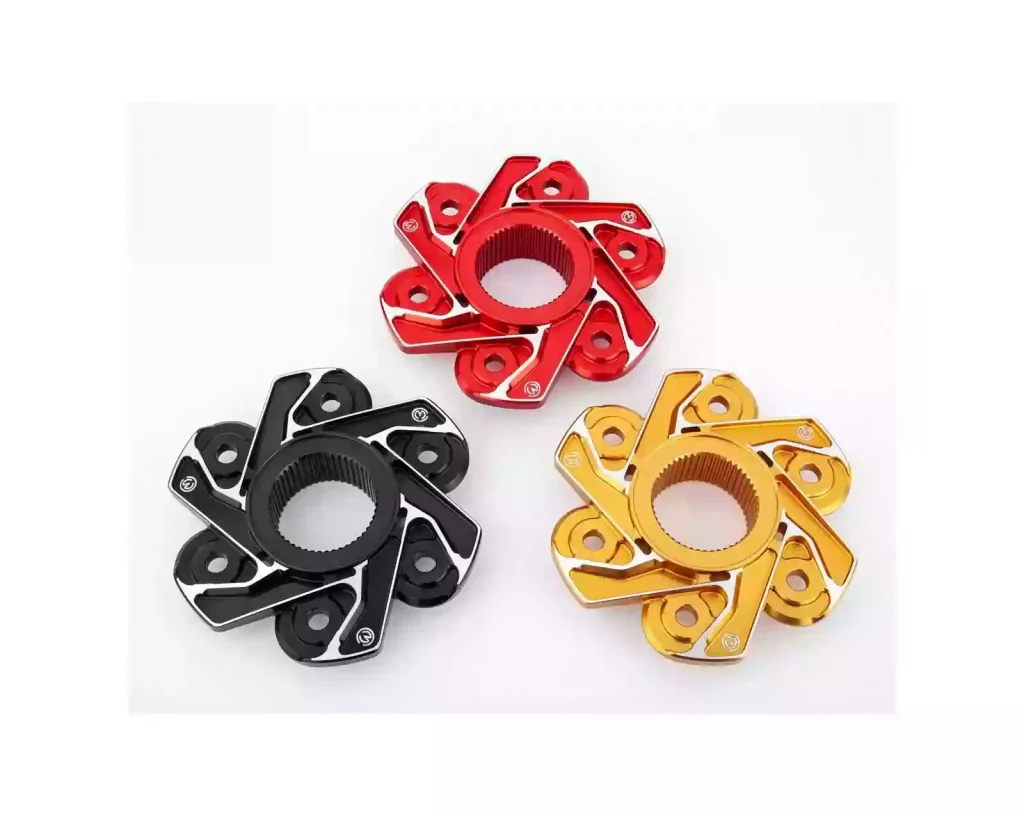
Aluminum alloys are widely used in motorcycle parts due to their lightweight properties, but they are also prone to surface oxidation. Anodizing creates a controlled oxide layer that improves corrosion resistance and surface hardness.
Beyond functional benefits, anodizing also allows for consistent coloration, which is often used in visible components such as engine covers, brackets, and control parts.
Hard Anodizing for High-Wear Applications
For components exposed to higher mechanical stress or friction, hard anodizing provides an additional layer of surface protection. This treatment increases wear resistance and improves the durability of aluminum parts used in more demanding environments.
It is commonly associated with functional components where surface degradation over time could affect performance or fitment.
Bead Blasting for Surface Uniformity
Bead blasting is used to create a consistent matte surface texture by removing minor machining marks and surface irregularities. This process is often applied before anodizing or other coatings to ensure a uniform final appearance.
It is frequently used on visible motorcycle components where aesthetic consistency is important.
Powder Coating for Protective Finishes
Powder coating provides a durable, thick protective layer that enhances resistance to corrosion, impact, and environmental exposure. Unlike thinner surface treatments, powder coating is often selected for parts that require both durability and a specific visual finish.
It is commonly used on brackets, structural components, and exterior-mounted parts.
Electropolishing for Stainless Steel Parts
Stainless steel components can undergo electropolishing to improve corrosion resistance and achieve a smoother surface finish. This process removes a thin layer of material, reducing surface roughness and improving cleanability.
It is particularly useful for parts exposed to moisture or harsh environmental conditions.
Balancing Function and Appearance
In motorcycle component design, surface finishing is not purely aesthetic. The chosen treatment often reflects a balance between mechanical performance, environmental resistance, and visual requirements.
A well-selected surface finish can extend component lifespan, improve performance stability, and enhance overall product quality.
Conclusion
Motorcycle components are the result of a careful balance between performance requirements, structural integrity, material selection, and manufacturability. Every design decision—from weight reduction strategies to surface finishing choices—directly affects how a part performs under real operating conditions.As motorcycle technology continues to advance, the demand for precision-engineered, lightweight, and application-specific components continues to grow. Understanding the relationship between design intent and manufacturing constraints helps ensure that parts are both functional and production-ready.
For teams developing motorcycle components, working with an experienced manufacturing partner can help translate complex designs into reliable physical parts while maintaining consistency in quality and performance. This is especially important for prototypes, performance upgrades, and low-volume production runs.XTPROTO provides CNC machining support for motorcycle components, helping engineers and product developers move from design concepts to functional parts. More details about our capabilities and services can be found on our Motorcycle CNC Machining Services page.