
What is Battery CNC Machining?
When discussing the advancement of electric vehicles (EVs) and energy storage systems (ESS), the conversation almost always centers on chemical compositions—such as lithium-ion, solid-state, or LFP chemistries. However, an equally critical but less discussed factor is how these volatile, high-voltage cells are physically contained, connected, and cooled. This is where Battery CNC Machining becomes essential.
At its core, battery CNC machining is the application of computer-controlled subtractive manufacturing to produce the high-precision structural, thermal, and electrical components required within a battery pack. It is not about altering the battery chemistry itself; rather, it is about machining the robust “skeleton” and critical pathways that allow the battery cells to function safely and efficiently in real-world environments.
Because battery packs demand an exceptional balance of structural rigidity, weight minimization, and electrical isolation, standard machining approaches often fall short. Components like large-scale aluminum trays, micro-channel cooling plates, and intricate copper busbars require strict adherence to tight tolerances, pristine surface finishes, and strict cleanliness standards.
In this article, we will break down the fundamental mechanics of battery CNC machining, examine the specific components it produces, and explore the precise engineering requirements that set this process apart from conventional manufacturing.
How Does Battery CNC Machining Work?
Battery CNC machining is a predictable, multi-step subtractive manufacturing process that translates digital designs into physical, close-tolerance components. While the machinery operates similarly to standard milling and turning, the workflow for battery applications is driven by strict quality control and material-specific parameters at every stage.
The standard operational workflow follows four distinct phases:
Phase 1: CAD Modeling (Computer-Aided Design)
The process begins with the creation of a highly detailed 3D digital model of the component using CAD software. Because battery packs have limited spatial allowances, these models must account for exact wall thicknesses, precise bolt hole spacing, and intricate O-ring grooves. Designers must factor in the structural requirements of the battery pack while minimizing unnecessary weight.
Phase 2: CAM Programming (Computer-Aided Manufacturing)
Once the 3D model is finalized, it is imported into CAM software. Here, a manufacturing engineer determines the exact machining strategy. The software translates the visual model into G-code—the precise numerical language that instructs the CNC machine on spindle speeds, feed rates, and tool paths. For battery components, the programming must intentionally calculate tool paths that minimize heat buildup and material deflection.
Phase 3: Workholding and Setup
Before the machine starts, the raw material (typically an aluminum extrusion, a copper plate, or an engineering plastic sheet) is secured to the machine bed. Due to the thin-walled nature of many battery components, standard mechanical clamps can crush or warp the material. Therefore, setups frequently utilize specialized vacuum chucks or custom hydraulic fixtures to distribute holding pressure evenly across the workpiece.
Phase 4: Subtractive Execution
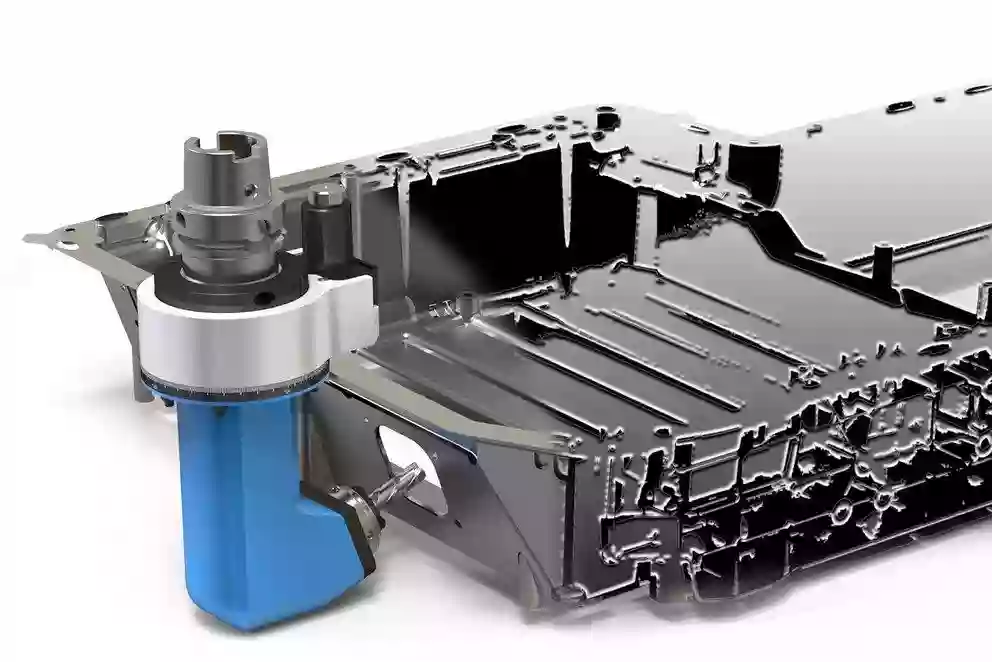
With the program loaded and the material secured, the CNC machine executes the G-code. High-speed spindles rotate cutting tools (such as end mills, drills, or reamers) at thousands of revolutions per minute, precisely shaving away excess material. Throughout this phase, specialized delivery systems apply minimal lubrication to keep the cutting zone cool, ensuring the final part matches the digital blueprint within micrometers.
Which Battery Pack Components Require CNC Machining?
A modern battery pack is a complex assembly of mechanical, thermal, and electrical systems. CNC machining is utilized for components where structural integrity, strict dimensions, and sealing are non-negotiable.
The three most common applications within a battery pack include:
1. Battery Trays and Enclosures
The battery tray acts as the main structural foundation of the pack, typically mounted to the underside of a vehicle chassis. These enclosures are large, often exceeding two meters in length, yet they must remain incredibly lightweight. CNC machines are used to mill the perimeter sealing surfaces, drill critical mounting holes, and cut precise grooves for rubber gaskets. A perfectly machined tray ensures the battery cells are protected from external impacts and completely sealed against water and dust ingress.
2. Liquid Cooling Plates
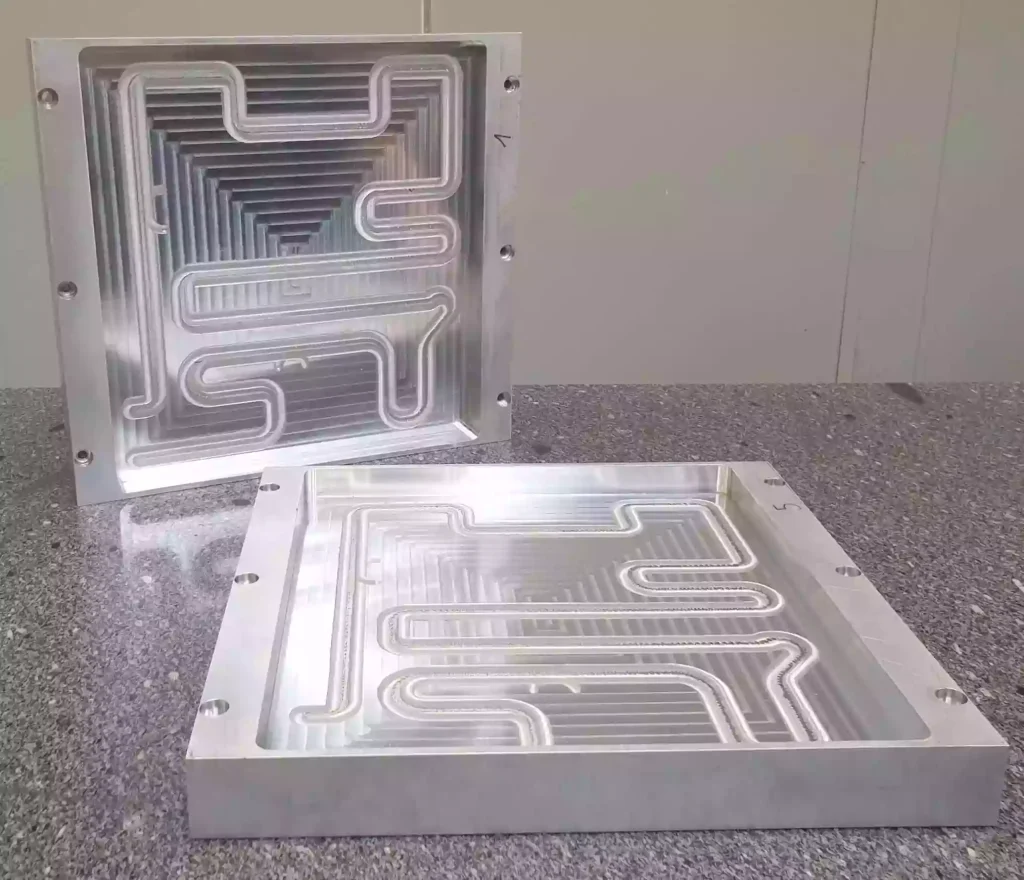
Thermal management is vital to the lifespan and safety of a battery pack. Liquid cooling plates are thin aluminum sheets placed directly beneath or between cell modules to regulate temperature during fast charging and high discharge rates. CNC milling machines carve a network of intricate, winding micro-channels into these plates. The depth and width of these channels must be perfectly uniform to ensure a consistent flow of coolant and even heat distribution across all cells.
3. Busbars and Insulation Brackets
Electrical connectivity and safety rely heavily on smaller, precision-machined parts:
- Busbars: These are thick strips of pure copper or aluminum responsible for conducting high-voltage current between individual cells. CNC machining flattens the contact surfaces to a near-mirror finish to minimize electrical resistance and optimize power transfer.
- Insulation Brackets: Made from engineered plastics or composites (such as POM or FR4), these non-conductive components are machined into specific shapes to physically isolate cells and prevent internal short circuits.
What Are the Key Advantages of CNC Machining in Battery Manufacturing?
While there are various manufacturing methods available for mass production, such as stamping or die-casting, CNC machining remains an irreplaceable process in the battery supply chain. The reasons stem from the specific physical demands of battery pack assembly.
The primary engineering advantages include:
1. Superior Dimensional Precision
Battery packs are tightly packed environments where even a fraction of a millimeter of misalignment can cause assembly failure or catastrophic short circuits. CNC machining delivers micrometer-level accuracy. This precision is especially critical for machining the interlocking joints of enclosures and the flat mating faces of electrical contacts, ensuring optimal sealing and conductive performance that alternative methods cannot consistently replicate.
2. Design Flexibility and Tooling Efficiency
Unlike stamping or injection molding, which require expensive, custom steel molds that take weeks to manufacture, CNC machining is entirely software-driven. If a battery cell layout changes or a cooling channel needs to be rerouted to improve thermal performance, engineers only need to update the CAD model and CAM program. The machine can immediately begin cutting the new design, saving significant development costs and accelerating time-to-market.
3. Broad Material Adaptability
A single battery pack requires the integration of vastly different materials—soft, conductive copper for busbars; lightweight, rigid aluminum for structural trays; and brittle, non-conductive plastics for electrical insulation. CNC machining handles this entire material spectrum seamlessly. By simply swapping the cutting tool and adjusting the spindle speed, the same machine can transition from milling structural metals to routing delicate composite insulators.
What Are the Technical Challenges of Battery CNC Machining?
Despite its clear advantages, machining parts for battery packs introduces several strict manufacturing constraints. Because these components are often large, exceptionally thin, and destined for volatile electrical environments, machinist must overcome specific physical and mechanical hurdles.
The three primary challenges include:
1. Material Deflection in Thin-Walled Components
To optimize vehicle range, battery enclosures and cooling plates must be as light as possible, which means their walls are often milled down to thicknesses of just 1.5mm to 2.0mm. Aluminum has a relatively high coefficient of thermal expansion and inherent internal stresses. When a CNC tool exerts cutting forces and generates localized heat on such thin material, the metal tends to warp, twist, or deflect away from the tool. Controlling this deformation to maintain flatness across a two-meter tray is a constant balancing act.
2. Strict Burr Control for Electrical Safety
When a cutting tool exits the edge of a metal workpiece, it naturally leaves behind small, raised ridges of displaced material known as burrs. In general mechanical engineering, minor burrs are harmless. In a high-voltage battery pack, however, they are a severe safety hazard. Over years of vehicle vibration, a tiny, sharp metallic burr on a copper busbar can gradually rub against and puncture neighboring insulation layers, leading to a short circuit, thermal runaway, or fire. Consequently, battery components require pristine, burr-free edges.
3. Contamination and Residue Management
Traditional CNC machining relies heavily on flooding the cutting zone with liquid coolants and oils to reduce friction and wash away chips. However, the oily residue left behind poses a major problem for battery assembly. The final sealing and structural bonding of a battery pack rely on high-performance adhesives. If even a microscopic layer of machining oil remains on the aluminum or plastic surfaces, the glue will fail to adhere properly, compromising the pack’s waterproof seal and structural integrity.
Which Materials Are Most Commonly Used in Battery CNC Machining?
The choice of material dictates how a battery component performs under physical stress, thermal loads, and electrical currents. Because a battery pack must simultaneously be strong, cool, and safe, CNC machines process a diverse mix of metals and non-metals, each requiring specific cutting parameters.
The three primary material categories include:
1. Aluminum Alloys (6000 and 7000 Series)
Aluminum is the dominant material for battery structural and thermal components due to its excellent strength-to-weight ratio and high thermal conductivity.
- Applications: Battery trays, outer enclosures, and liquid cooling plates.
- Machining Behavior: Alloys like 6061-T6 are highly machinable but prone to continuous chip formation. Machinists must use high spindle speeds and correct rake angles to prevent the aluminum from sticking to the cutting edge of the tool, which can ruin the surface finish.
2. Pure Copper (e.g., C101/C110)
Copper is chosen strictly for its superior electrical conductivity, which is vital for managing the immense electrical current flowing through a modern battery pack.
- Applications: High-voltage busbars and electrical terminal connectors.
- Machining Behavior: Pure copper is notoriously gummy and highly ductile. It resists clean shearing, which causes heavy tool wear and easily generates large, sharp burrs. CNC machining copper requires incredibly sharp carbide or diamond-coated tools, alongside precise feed rates, to achieve clean, burr-free cuts.
3. Engineering Plastics and Composites (POM, FR4)
Non-metallic materials are indispensable for preventing electricity from jumping between conductive components.
- Applications: Insulation spacers, cell holders, and structural brackets.
- Machining Behavior: Materials like Polyoxymethylene (POM/Delrin) machine cleanly but have low melting points, meaning excessive cutting heat can cause dimensional distortion. On the other hand, woven fiberglass composites like FR4 are highly abrasive, requiring specialized diamond-coated tools to prevent rapid tool dulling and material delamination.
Sustainable Machining: The Role of MQL in Battery CNC Processes
In traditional manufacturing, CNC machines rely on a constant flood of liquid coolants and oils to keep the cutting tools cold and to wash away metal chips. However, because battery components require absolute surface cleanliness for subsequent bonding and sealing processes, the industry has shifted toward sustainable, dry, or near-dry cutting techniques—most notably Minimum Quantity Lubrication (MQL).
How MQL Works in Battery Machining
Instead of drenching the workpiece in gallons of chemical coolant, an MQL system delivers a microscopic amount of high-performance, biodegradable lubricant directly to the cutting edge of the tool. This lubricant is atomized in a stream of high-pressure compressed air, creating a fine mist.
Why MQL is Crucial for Battery Parts
- Elimination of Residue: The tiny droplets of vegetable-based oil evaporate or are carried away by the metal chips during the cutting process. The finished aluminum or plastic component leaves the CNC machine nearly bone-dry, eliminating the risk of oil contamination interfering with the pack’s structural adhesives.
- Effective Chip Evacuation: In deep-channel milling, such as carving out fluid pathways in liquid cooling plates, metal chips can easily become trapped and recut, damaging the surface. The high-pressure air blast from the MQL nozzle instantly clears chips out of the channels.
- Environmental Alignment: Since electric vehicles and energy storage systems aim to reduce carbon footprints, using MQL reduces water and chemical waste, aligning the CNC manufacturing process with the green philosophy of the battery industry itself.
Conclusion
While battery chemistry dictates the energy potential of a vehicle or storage system, battery CNC machining serves as the essential link that turns that potential into a safe, reliable reality. From managing material deflection in thin-walled trays to enforcing strict burr control for electrical safety, precision machining remains a foundational pillar of modern battery pack development.
Navigating these tight tolerances and strict cleanliness standards requires more than just standard machining equipment—it demands specialized technical expertise. This is where XTPROTO delivers critical value.
At XTPROTO, we specialize in providing high-precision battery CNC machining services tailored specifically to the rigorous demands of the new energy sector. Whether you are developing complex micro-channel liquid cooling plates, structural aluminum enclosures, or close-tolerance copper busbars, our advanced multi-axis machining capabilities and strict quality control protocols ensure your components are delivered burr-free, contamination-free, and exactly to blueprint specifications.
As battery designs continue to evolve, achieving manufacturing precision shouldn’t be your bottleneck. Contact XTPROTO today to discuss your next project and see how our dedicated machining solutions can support your product development from prototype to production.