
Guide to Electronic CNC Machining
Electronic products have advanced rapidly in recent years, with devices becoming smaller, operating at higher frequencies, and computing power increasingly migrating to the network edge. This trend is clear, yet the corresponding manufacturing requirements are frequently underestimated.
Looking ahead to manufacturing in 2026, we will not only see the emergence of advanced products but also new challenges for traditional processes. The shift of AI tasks to network devices and the rollout of 6G bands have led to more complex product designs, such as foldable displays. Today, manufacturing tolerances must reach the micrometer level, and many conventional methods can no longer ensure the required stability. In this context, CNC machining is indispensable. Although not a new technology, it still provides the necessary precision control.
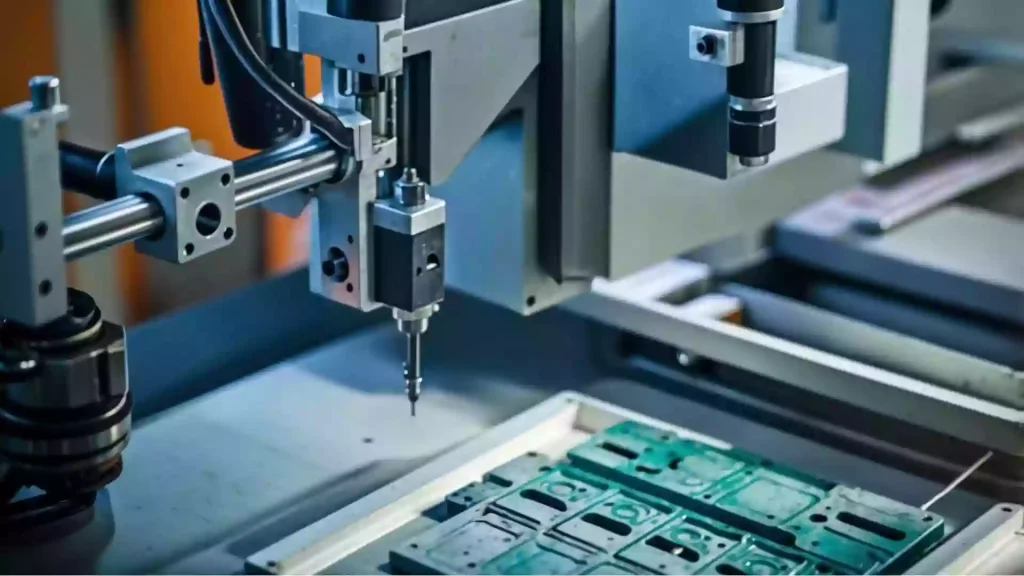
Why CNC Machining Remains Critical in Electronics Manufacturing
The core challenge lies in balancing space constraints, heat dissipation, and signal shielding. In the highly compact internal structures of smartphones or AI servers, even minor deviations are critical, with typical tolerances required to be within ±0.005 millimeters. Poor fit can result in defective component assembly and potential high‑frequency signal interference.
CNC machining effectively addresses this issue by ensuring repeatability and precise positioning across production batches, maintaining accuracy even at high spindle speeds. This consistency guarantees uniformity for thousands of connectors, brackets, and small components—a level of consistency that standard 3D printing and die‑casting cannot achieve.
Material selection is another often‑overlooked factor. Engineers currently choose between metals and plastics based on functional requirements. CNC machining simplifies this process as it does not fundamentally alter material properties. High‑strength 7075 aluminum alloys, oxygen‑free copper, and high‑temperature‑resistant plastics such as PEEK can be efficiently processed, which is particularly important in environments with unstable thermal and electromagnetic conditions.
Deep Integration of Thermal Management and Electromagnetic Shielding
Thermal management has become a central challenge in electronic design. As chip performance improves, conventional heat sinks often reach their limits, driving more complex designs and evolving manufacturing processes. Multi‑axis CNC machining enables the production of ultra‑thin cooling fins and internal cooling channels from a single piece of material.
This approach enhances efficiency by reducing thermal resistance and increasing heat dissipation per unit volume, with some designs achieving wall thicknesses as low as 0.2 mm. Such precision is difficult to attain with assembled structures. Integrated CNC‑machined components typically outperform conventional welded modules in service life, especially under thermal stress.
Signal interference is another critical factor. At high frequencies, shielding is no longer optional but an integral design element. CNC machining enables the production of precise cavity structures that, when combined with conductive materials or sealing methods, form complete shielding systems. This design helps maintain signal stability in complex environments, functioning as a controlled enclosed space rather than merely a protective casing.
From Conductive Metals to High‑Performance Polymers
Electronic materials are no longer limited to metals. Aluminum remains widely used in enclosures due to its cost‑effectiveness and ease of anodization. However, plastics are growing in importance, especially for insulation and weight reduction.
PEEK and PTFE, for example, are frequently used in demanding applications due to their heat resistance and favorable dielectric properties. However, machining these materials is challenging, as high temperatures can cause deformation and internal stress. Manufacturers address these issues through multi‑stage stress‑relief annealing or optimized cutting parameters, such as high cutting speeds and low feed rates. Properly processed parts maintain dimensional stability over long‑term use.
Surface Finishes
For CNC‑machined electronic components, there is a growing shift toward eco‑friendly alternatives such as Minimum Quantity Lubrication (MQL). This reduces waste and lowers contamination risks for electronic parts, a trend likely to continue due to regulatory requirements and cost savings.
How to Choose a Precision Manufacturing Partner
Selecting a CNC supplier today depends less on equipment and more on design expertise. Experienced manufacturers quickly identify potential issues in drawings, such as overly sharp internal corners or thin walls prone to vibration.
Early design‑for‑manufacturability (DFM) feedback saves significant time and cost. Evaluating a supplier’s DFM capabilities is more indicative of their expertise than simply comparing prices or equipment lists.
In the competitive electronics market, converting a design into a reliable product is challenging. CNC machining remains essential to this process. While not a standalone solution, it is a critical part of the broader manufacturing system.