
CNC Machining Copper: The Ultimate Guide to Grades, Techniques, and Industry Applications
In the 2026 manufacturing landscape, copper has moved from a basic commodity to a critical high-tech component. As the backbone of Electric Vehicles (EVs), renewable energy storage, and 6G telecommunications, the demand for high-precision CNC machining copper parts has reached an unprecedented scale. However, copper is notoriously difficult to process. Its high ductility and thermal conductivity require specialized engineering strategies to avoid “gumming” and dimensional drift.
Why is Copper Essential for Precision CNC Machining?
Copper’s physical properties make it irreplaceable where thermal and electrical performance are non-negotiable. With an electrical conductivity of 101% IACS, it remains the global standard for power distribution. Beyond its conductivity, copper offers superior heat dissipation—nearly double that of aluminum—which is vital for the high-performance heat sinks used in modern AI data centers. Furthermore, its natural corrosion resistance and antimicrobial properties (killing 99.9% of bacteria within two hours) make it indispensable for medical hardware and marine environments.
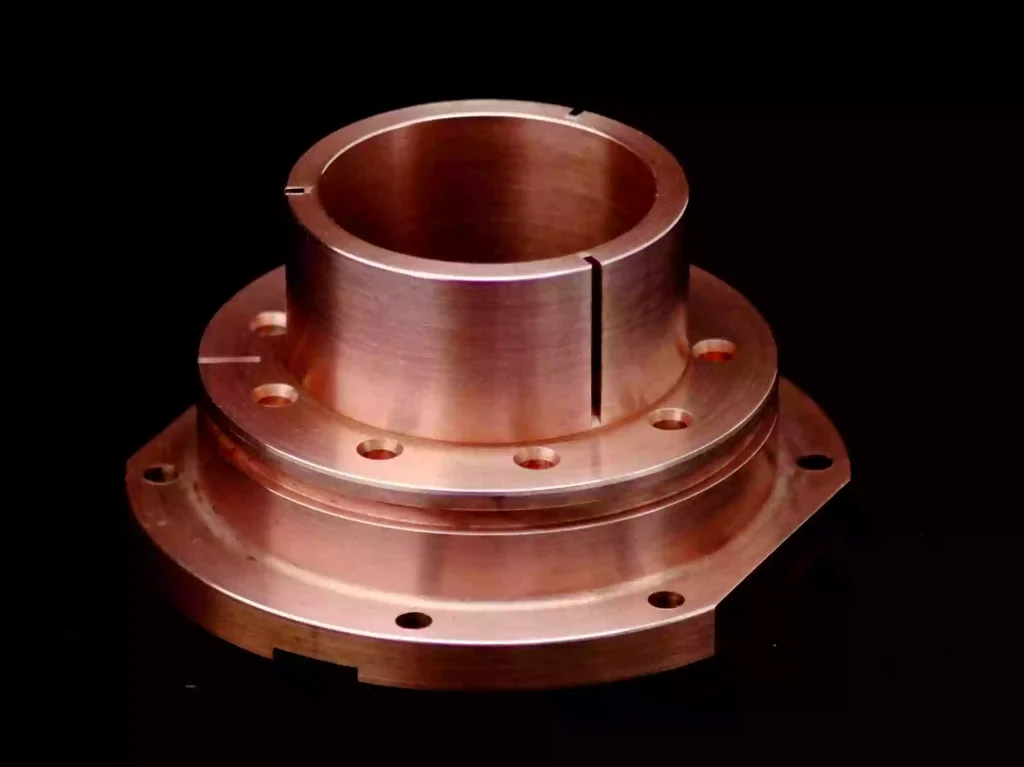
Selecting the Right Copper Grade for Your Project
Choosing the correct grade is the most significant factor in balancing part performance with manufacturing costs.
C101 (Oxygen-Free): With 99.99% purity, this is the premium choice for vacuum electronics and semiconductors where impurities could cause outgassing. However, its extreme softness makes it the most challenging to machine.
C110 (ETP): The universal standard for busbars and electrical terminals. It offers excellent conductivity but requires expert handling to prevent smearing during https://xtproto.com/services/cnc-machining/milling.
C145 (Tellurium Copper): Often called the “Machinist’s Favorite,” the addition of a small amount of tellurium transforms the material’s behavior. It allows for superior chip breaking and significantly faster cycle times, offering 85% machinability while retaining high conductivity.
C172 (Beryllium Copper): Used when the project requires the strength of high-alloy steel combined with the thermal benefits of copper, such as in aerospace bushings or non-sparking safety tools.
Top 5 Challenges in CNC Machining Copper (and How to Solve Them)
The primary adversary in the machine shop is copper’s “Gummy” Nature. Because it is so ductile, copper tends to weld itself to the tool’s cutting edge—a phenomenon known as Built-up Edge (BUE). To solve this, machinists must use DLC (Diamond-Like Carbon) coated tools or highly polished carbide inserts that act as a molecular lubricant.
High Ductility also leads to persistent burring. Instead of cleanly shearing, the metal deforms under the tool, leaving heavy edges. The solution lies in maintaining extremely sharp rake angles and utilizing Climb Milling to ensure the tool slices through the grain structure. Additionally, Thermal Expansion remains a silent killer of tolerances. With a coefficient of 16.5 × 10⁻⁶ m/m·K, even a minor temperature spike can cause a part to “grow” out of spec. High-pressure, sulfur-free flood coolant is essential to stabilize the part’s temperature during long production runs.
Best Practices for High-Precision Copper Machining
To achieve micron-level accuracy, the tooling geometry must be aggressive. We recommend a high rake angle of 15° to 20° to reduce cutting force. In terms of parameters, for a standard C110 alloy, a Surface Feet per Minute (SFM) of 200–500 is the “sweet spot,” while the free-machining C145 can be pushed beyond 700 SFM for high-volume efficiency. The coolant strategy is equally critical: synthetic fluids provide the necessary lubricity without the risk of staining the copper’s aesthetic finish.
Copper vs. Brass: Which One Should You Choose?
The decision between copper and brass often comes down to the Total Cost of Ownership (TCO). Brass (typically C360) is roughly four times faster to machine, which dramatically lowers labor costs for high-volume parts. However, brass contains zinc, which reduces its electrical conductivity to about 28% IACS and makes it unsuitable for vacuum environments due to outgassing. If your application involves high-voltage power transmission or intense heat dissipation, pure copper is non-negotiable despite its manufacturing premium.
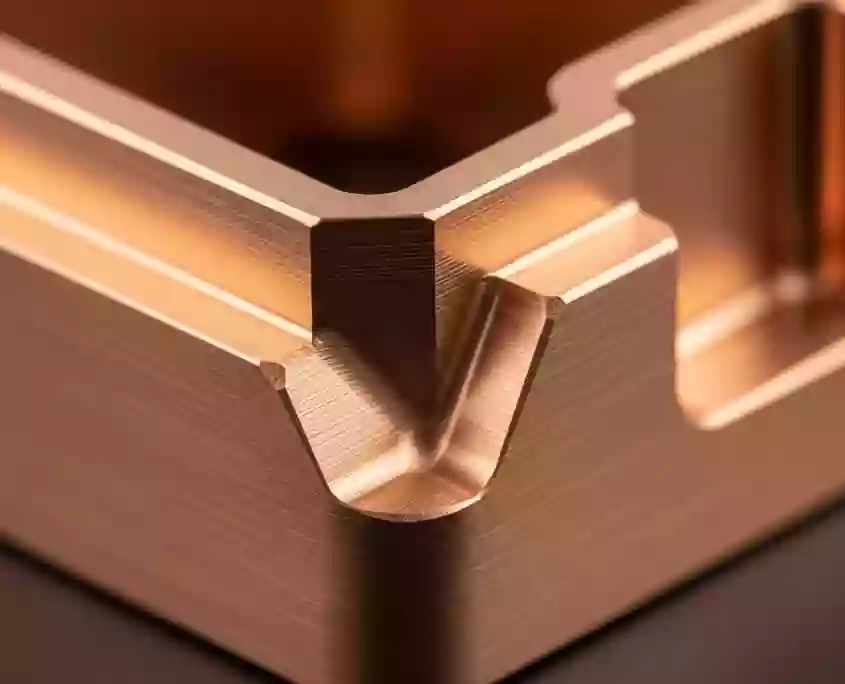
High-Performance Applications of Machined Copper Components
In the modern manufacturing landscape, copper has transitioned from a basic commodity to a critical high-tech component. As the backbone of Electric Vehicles (EVs), renewable energy systems, and advanced telecommunications. In Telecommunications, the transition to 6G requires complex, multi-stage copper CNC machining heat sinks to manage the heat of high-frequency RF chips. Finally, in the Medical Sector, the antimicrobial properties of copper are being utilized for high-touch surgical components where hygiene is as critical as precision.
Conclusion
Mastering CNC machining copper is an exercise in balancing material purity with mechanical pragmatism. Because of copper’s high ductility and thermal conductivity, achieving a flawless finish requires more than just standard equipment; it demands a specialized approach to CNC machining. By selecting the right alloy—such as Tellurium Copper for complex geometries—and employing advanced DLC-coated tooling, engineers can achieve high-performance results without sacrificing production efficiency.
As industries move toward more efficient electrification and thermal management, the demand for precision CNC machining of copper components continues to grow. Whether you are developing high-voltage connectors or intricate heat exchangers, understanding the nuances of chip control and tool pressure is essential for success.
Ready to start your next copper project? We offer high-end CNC machining services specifically optimized for the unique challenges of copper alloys. Our state-of-the-art facility ensures tight tolerances and superior conductivity for every part we produce.
Upload your CAD files today for an instant quote and let our experts handle your most demanding CNC machining requirements.
CNC Machining Copper: Frequently Asked Questions
Why is copper considered a challenging material for CNC machining?
Copper is known for its high ductility and thermal conductivity. During the CNC machining process, copper can be “gummy,” leading to excessive tool wear and chip evacuation issues. To overcome this, we use specialized speeds, feeds, and sharp, often DLC-coated (Diamond-Like Carbon) tooling to ensure a clean cut and prevent material buildup on the tool.
Which copper alloys are best for CNC machining services?
While pure copper (like C101 or C110) offers the best conductivity, it is harder to machine. For complex CNC machining projects, we often recommend Tellurium Copper (C145). It maintains excellent electrical properties while significantly improving machinability, allowing for faster production and tighter tolerances.
Does CNC machining copper affect its electrical conductivity?
No, the CNC machining process itself does not change the inherent conductivity of the metal. However, choosing the right grade is crucial. Our team helps you select the optimal alloy from our CNC material list to ensure your part meets both the mechanical strength and the electrical performance required for your specific CNC machining project.