
How to Choose the Right Material for Marine CNC Machining
The marine environment imposes extreme conditions on engineered components. Parts that perform reliably in industrial or automotive applications may fail rapidly in seawater due to chloride exposure, pressure variation, and long-term immersion.
In marine CNC machining, material selection is not only a mechanical decision. Corrosion resistance under chloride-rich environments becomes the primary constraint, followed by machinability and dimensional stability under tight tolerances.
Seawater exposure involves continuous electrochemical interaction between the alloy surface and dissolved salts. This accelerates localized corrosion mechanisms such as pitting and crevice corrosion, especially in areas affected by machining marks or residual stress.
Material selection therefore requires evaluating both alloy behavior in marine conditions and how the CNC process influences surface integrity. Machining parameters, surface finish, and post-processing all directly affect long-term corrosion performance.
This guide summarizes the key engineering factors used to select marine CNC materials based on real service conditions rather than nominal specifications.
Understanding the Main Failure Mechanisms in Marine Environments
In marine CNC machining, most failures are not the result of simple mechanical overload. In actual field use, what we see more often is the combination of chloride exposure and pre-existing stress conditions introduced during design or machining. These effects develop slowly, and in many cases the part looks completely normal until it reaches a certain point in service where degradation becomes visible.
Pitting Corrosion
Pitting corrosion is one of the most frequent issues in seawater exposure, especially for stainless steels and aluminum alloys. It typically starts from very small defects in the passive layer, and once the initiation happens, the corrosion does not spread uniformly but concentrates in a localized area and progresses inward. In real inspection cases, the starting points are often related to machining marks, minor surface damage during handling, or areas where surface finish was not adequately controlled. This is why surface roughness is not treated as a cosmetic parameter in marine components. A rougher surface simply increases the number of initiation sites for chloride attack, and in service this usually shows up later as leakage, localized weakening, or sudden failure under load.
Galvanic Corrosion
Galvanic corrosion is more of an assembly-level problem than a single-material issue. It occurs when two dissimilar metals are electrically connected in a conductive environment such as seawater, causing one material to act as the anode and corrode preferentially. In practical applications, a very common situation is stainless steel fasteners used directly on aluminum housings without proper electrical isolation. Immediately after assembly, the system appears stable and often passes initial checks, but once exposed to salt spray or offshore conditions, corrosion typically begins at the interface around the fastener and gradually propagates under the contact surface. In most real-world cases, the failure is not due to the individual materials themselves but due to how the materials are paired and assembled without considering long-term electrochemical interaction.
Stress Corrosion Cracking
Stress corrosion cracking is less visible during early stages but tends to be more severe because it can result in sudden fracture without significant plastic deformation. It only occurs when tensile stress, a corrosive environment, and a susceptible material exist at the same time, which is common in offshore applications. In practice, one factor that is often underestimated is the residual stress introduced during CNC machining. If cutting conditions generate excessive heat or leave high surface stress, the component may still meet dimensional requirements but will gradually accumulate vulnerability in service. In several real cases observed in marine environments, parts that initially performed within specification developed cracks after a period of exposure, and machining-induced stress combined with surface condition was identified as one of the contributing factors.
Detailed Material Breakdown: The “Marine-Grade” Contenders
Not all metals labeled as “marine-grade” behave the same once they are actually in seawater conditions. In marine CNC machining, material selection is always a balance between corrosion resistance, mechanical strength, and how stable the material remains during processing. In practice, what matters is not just the datasheet values, but how the material behaves under machining stress and long-term exposure.
Stainless Steels
In stainless steels, 316L is often treated as the default marine option, but in real engineering work we rarely rely on grade alone. A more reliable way to evaluate corrosion resistance is through the PREN value, which relates the alloy composition to its resistance against pitting in chloride environments.
316L remains widely used because of its predictable behavior and good balance between machinability and corrosion resistance. The molybdenum content plays an important role in improving chloride resistance, and in machining work we often prefer 316L for welded structures because the low carbon content reduces the risk of sensitization along grain boundaries after heat exposure.
When the environment becomes more demanding, Duplex 2205 is usually the next step. In offshore applications we’ve worked on, it consistently performs better under combined stress and chloride exposure compared to standard austenitic stainless steels. The higher strength allows thinner sections in design, but more importantly, its resistance to stress corrosion cracking makes it more stable in long-term submerged or splash-zone conditions. From a machining perspective, it is less forgiving than 316L, but the performance trade-off is usually worth it in critical applications.
Aluminum Alloys
Aluminum is commonly used in marine structures where weight reduction is important, but not all aluminum alloys are suitable for seawater exposure. In real applications, the difference between alloy series becomes very noticeable over time.
5083 is the alloy we most often associate with marine structural parts. In actual service conditions, it holds up well in direct seawater exposure, especially in large welded or structural components. It maintains stability over long periods and does not rely heavily on surface treatments to remain corrosion resistant, which makes it reliable in environments where maintenance is limited.
6061-T6, on the other hand, is more commonly used for general structural and machined parts where corrosion exposure is less severe or controlled. In marine use, it almost always requires surface protection. In our machining practice, we typically recommend hard anodizing when 6061 is used in saltwater environments, because the natural oxide layer alone is not sufficient for long-term protection.
Copper-Based Alloys
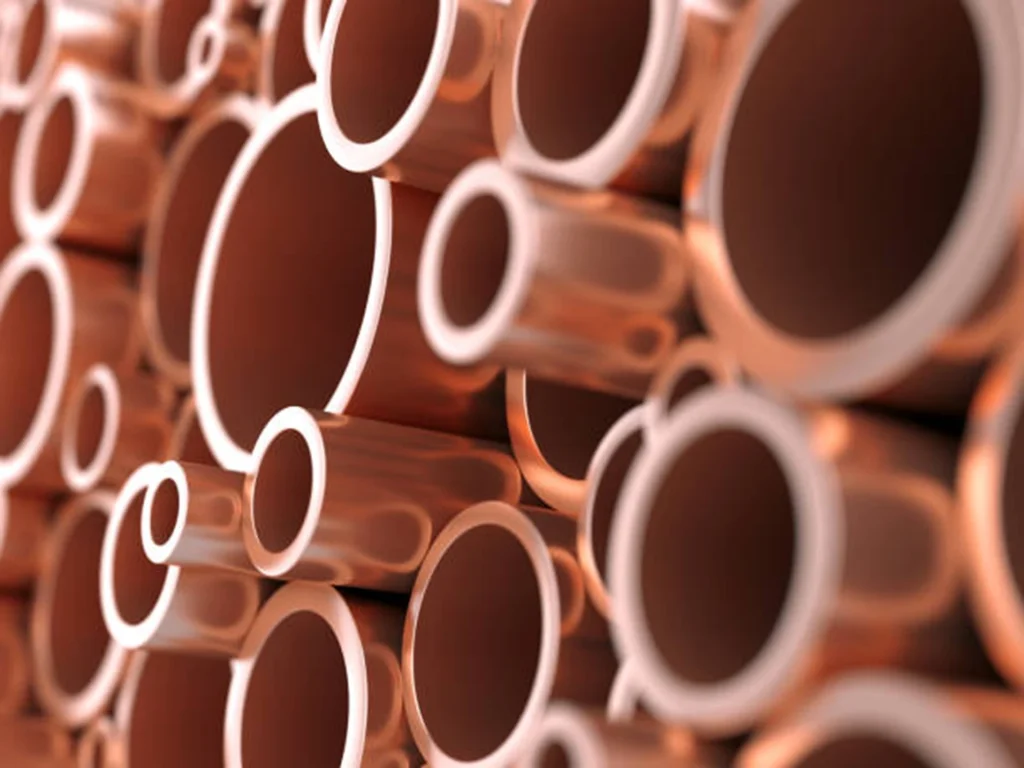
Copper alloys behave differently compared to steels and aluminum because they naturally resist biological attachment in seawater. In practical terms, this means they tend to avoid the buildup of marine growth such as barnacles, which is a major issue in fluid systems and submerged components.
Aluminum bronze, especially high-strength grades like C954, is commonly used in applications where both mechanical wear resistance and seawater exposure are present. In real field conditions, it performs well in components exposed to flowing seawater, particularly where cavitation and erosion are concerns. We often see it used in bushings and fluid-handling parts where steel would degrade much faster under the same conditions.
Titanium Grade 5
Titanium Grade 5 is usually selected when failure is not acceptable and the environment is highly aggressive. In seawater, it is essentially immune to corrosion across normal operating conditions, which is why it is often used in critical offshore and deep-sea applications.
The main challenge with titanium is not its performance in service, but its behavior during machining. It retains heat instead of dissipating it, which makes tool wear and temperature control a constant consideration. In practice, machining titanium requires stable setups, controlled cutting parameters, and effective cooling strategies. Shops that handle titanium regularly usually have a very different process discipline compared to general machining environments, because small variations in heat or tool condition can significantly affect tool life and surface integrity.
Matching Material to Environment
In marine CNC machining, material selection is always a trade-off between cost, performance, and risk. Over-engineering will drive unnecessary cost, but under-engineering usually shows up later as field failure. In real projects, the first thing we try to understand is not the material itself, but the actual environment where the part will operate, because the same material can behave very differently depending on exposure conditions.
Exposure Zones in Marine Environments
In practice, marine environments are usually divided by exposure level rather than by industry definitions. Parts that sit above the deck and are only exposed to air tend to behave very differently from those that are continuously submerged or located in splash zones. Atmospheric areas are mainly affected by salt spray, humidity, and UV exposure, and in most cases standard corrosion-resistant materials like 316L stainless or anodized 6061 aluminum are sufficient. Once you move into splash zones, conditions become significantly more aggressive because the surface is constantly cycling between wet and dry states, which concentrates chloride salts and accelerates localized corrosion. This is where we typically start moving toward Duplex stainless, marine-grade aluminum like 5083, or titanium when long-term stability is required. Submerged conditions introduce another layer of complexity because oxygen levels drop, galvanic coupling becomes more stable, and pressure begins to matter. In those cases, materials like 316L with proper cathodic protection, aluminum bronze, or titanium are usually selected depending on the system design. Internal systems such as engine rooms or fuel-related components behave differently again, since temperature, chemical exposure, and vibration often dominate over direct seawater corrosion, which is why more traditional stainless grades or specialized bronzes are still widely used there.
Structural Load Considerations
Once the exposure environment is understood, the next step is always mechanical loading. In real applications, this is where material mistakes often happen, especially when designers prioritize only corrosion resistance without considering flow conditions or stress concentration. For components exposed to high-velocity seawater, such as pump housings or flow channels, softer materials tend to degrade faster due to cavitation and erosion. In these cases, aluminum bronze performs consistently better in practice because it holds up under repeated surface impact and fluid-induced wear. On the other hand, for static structural components where the main goal is weight reduction rather than extreme wear resistance, 5083 aluminum is often used because it provides a stable balance between mechanical strength and corrosion resistance without adding unnecessary mass.
Galvanic Compatibility in Real Assemblies
One of the most common issues we still see in marine assemblies is galvanic mismatch between connected components. In theory, this is well understood, but in practice it is often ignored during design or simplified too early. The problem usually appears when a more noble material like stainless steel is directly fastened to aluminum in a seawater environment. Initially the assembly performs normally, but over time corrosion develops at the interface and spreads under the contact area. In real engineering work, this is not treated as a material problem alone but as a system-level design issue. The key consideration is always the relationship between anodic and cathodic surface areas, because an unfavorable ratio can significantly accelerate degradation. In practical builds, we always ensure electrical isolation between dissimilar metals using coatings or non-conductive barriers such as nylon-based isolators or dielectric compounds, especially in long-term submerged or splash-zone applications.
Manufacturing Reality and Cost Boundaries
After all environmental and mechanical considerations, the final constraint is always manufacturability. A material may perform well in theory, but if it cannot be machined efficiently or consistently, it becomes impractical for production. Titanium is a good example of this trade-off. It offers near-total corrosion resistance and excellent strength-to-weight performance, but in machining it behaves in a way that significantly increases cycle time and tool wear, which directly affects cost and production planning. Stainless 316L, by comparison, is far more forgiving in machining operations and remains one of the most widely used materials in marine applications simply because it offers a stable balance between cost, availability, and performance. In most real-world marine projects, it still covers the majority of use cases where extreme conditions are not the dominant factor.
CNC Manufacturing Standards for Marine Reliability
Material selection is only part of what determines whether a marine component will survive in service. In practice, even a correct alloy can fail if it is not processed and finished correctly during CNC machining. What we see in real applications is that long-term reliability is usually defined more by manufacturing discipline than by material grade alone.
Surface Integrity and Finish Control
Surface condition is one of the most sensitive factors in marine environments. In theory, a smoother surface reduces corrosion risk, but in actual machining work this becomes a process control issue rather than a cosmetic target. Rough surfaces tend to retain moisture and salt after exposure, and even after cleaning, micro-areas can still trap contaminants that accelerate localized attack over time. This is why surface finish is always treated as a functional requirement for offshore components rather than an aesthetic one. In production, we generally control finishing levels down to fine machining or polishing stages depending on the part, because once the surface is too rough, no coating or passivation can fully compensate for the underlying geometry.
Residual Stress and Machining Heat
Another issue that often appears in field failures is residual stress introduced during machining. This is usually not visible at the inspection stage, but it becomes critical once the part is exposed to a corrosive and loaded environment. High cutting forces, poor tool condition, or excessive heat buildup can leave stress concentrated near the surface, which later interacts with chloride exposure and becomes a trigger for cracking. In actual production environments, we avoid this by keeping cutting conditions stable and maintaining proper cooling throughout the process. For certain complex or high-risk components, stress relief treatment after machining is sometimes necessary, especially when the geometry or material is sensitive to cracking under long-term load.
Edge Design and Real Coating Behavior
Sharp edges are another detail that is often underestimated in design reviews. In practice, coatings do not behave uniformly at edges and corners, and this is something that becomes obvious only after parts have been in service. Thin coating coverage at sharp transitions and accumulation of salt in tight corners are both common failure initiation points in marine conditions. Because of this, in machining practice we tend to break edges and introduce small radii wherever possible. This is not just for durability of the base material, but also to ensure that any protective coating applied later can maintain consistent thickness across the entire surface.
Post-Machining Surface Protection
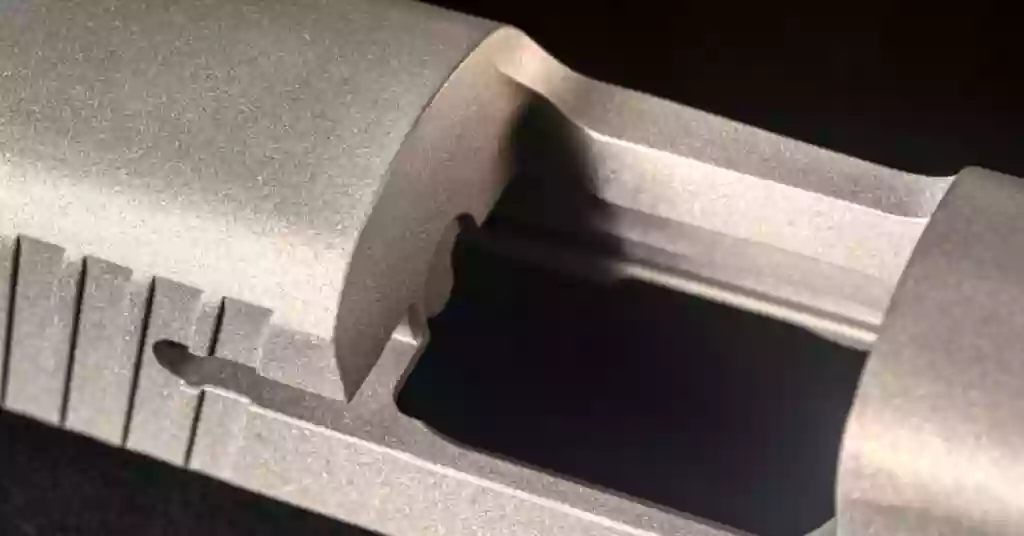
The machining process does not really end when the part reaches final dimensions. For marine applications, the surface still needs to be stabilized before it can be considered complete. In stainless steel components, passivation is used to remove surface contamination introduced during machining and to restore the natural protective oxide layer of the material. In aluminum parts, surface treatment becomes even more important, and the choice between anodizing or chemical conversion coating depends on the alloy being used and the intended exposure conditions. In practice, compatibility between the alloy and the treatment process is critical, because an incorrect combination can lead to uneven coating or reduced protection performance. This is usually handled at the manufacturing planning stage rather than after machining, since it directly affects long-term corrosion behavior.
Why “Standard” Material Selection Often Fails
Even when the basic material selection rules are followed, failures still happen in marine projects more often than expected. In most cases, the issue is not that the material choice is completely wrong, but that small details in grade selection, assembly, or machining process were underestimated. These are the kinds of problems that usually only show up after the parts have been in service for some time.
Stainless Steel Misconceptions
One of the most common misunderstandings is the assumption that stainless steel is inherently corrosion-proof. In practice, this usually comes from treating all stainless grades as interchangeable. Grade 304 is a typical example of this issue. It performs reasonably well in indoor or dry environments, but in marine exposure it tends to degrade quickly because it does not contain molybdenum, which is critical for chloride resistance. In real field conditions, we often see 304 develop surface staining quite early in splash or coastal environments, followed by localized pitting if exposure continues. For this reason, 316L is generally treated as the baseline for marine use, and when conditions become more severe or load-bearing, Duplex grades are usually considered instead.
Galvanic Interaction in Fastened Assemblies
Another recurring issue appears not in the machined part itself, but in how it is assembled. A typical case is aluminum housings combined with stainless steel fasteners. At first glance this is a common and acceptable pairing, but in seawater conditions the electrochemical difference becomes a long-term problem. In actual service, corrosion often starts at the interface around the fastener and spreads into the aluminum base material over time, especially in splash zones where wet and dry cycles accelerate the process. What makes this more problematic is the geometry effect, where a small fastener connected to a larger aluminum body increases the corrosion rate on the anodic side. In practical engineering work, this is usually addressed through isolation materials or coatings rather than changing the entire design, but it has to be considered early because it is difficult to fix once the system is in service.
Cross-Contamination from Machining Processes
A less obvious but very real issue in marine CNC production is surface contamination from previous machining operations. This typically happens when machining equipment is used for different material types without strict separation or cleaning control. Microscopic particles from carbon steel tools or previous operations can remain on the surface of stainless or aluminum parts, even if the material itself is correct. In marine exposure, these embedded particles act as initiation points for corrosion because they disrupt the passive layer locally. In practice, this shows up as unexpected small rust spots that later expand into deeper pitting, even though the base material should not normally behave that way. This is why controlled machining environments and dedicated tool management become important in high-reliability marine manufacturing, especially when components are expected to operate in long-term salt exposure.
Engineering the Future of Offshore Reliability
In marine environments, reliability is never determined by a single factor. It is the result of how material selection, machining process, and surface protection work together over time under real exposure conditions. In most long-term applications, failures are rarely caused by one obvious mistake, but by small design or process decisions that accumulate under seawater exposure.
Selecting the right alloy is only the starting point. Materials like 316L, 5083 aluminum, and titanium each have their own operating limits, and in practice their performance depends heavily on how they are processed and how they are integrated into the final assembly. What usually makes the difference in service life is not the nominal grade, but whether surface condition, residual stress, and post-processing treatment are properly controlled during manufacturing.
In real offshore projects, we see that long-term performance is usually defined at the machining stage rather than at the design stage alone. Surface finish, edge condition, stress control, and post-machining treatment all play a role in how the part behaves once it is exposed to seawater. These details are often not visible in drawings, but they become critical over time in service.
For this reason, marine CNC machining is not just about producing parts to dimension. It requires understanding how those parts will behave in a corrosive and mechanically loaded environment after they leave the workshop. In practice, the goal is always the same: ensure that the component performs consistently throughout its service life under real operating conditions.
To ensure your components possess enduring longevity under harsh operating conditions, XTPROTO integrates deep marine engineering insight into every stage of our process—from electrochemical compatibility reviews to rigorous surface finish control down to Ra 0.8μm. We do not merely manufacture parts for you; through comprehensive technical consultation and manufacturing solution assessments, we help you mitigate offshore risks and build marine engineering assets that stand the test of time. Contact our team of experts today to obtain a professional review of material and manufacturing feasibility for your project—making reliability truly within your reach.
FAQ
Why is Stainless Steel 316L preferred over 316 for marine CNC parts?
The main difference is the carbon content. In real machining and welding conditions, 316 can suffer from carbide precipitation in the heat-affected zones, which reduces corrosion resistance locally. With 316L, the lower carbon content helps avoid that issue, so the material behaves more consistently after welding or thermal exposure. In marine applications, that consistency is usually more important than small differences in base mechanical strength, which is why 316L is generally the default choice.
Can I use Aluminum 6061 for underwater applications?
It can be used, but only under controlled protection conditions. In direct or long-term seawater exposure, 6061 will start to show pitting, especially in stagnant or low-flow areas. In practice, we only recommend it if there is a proper surface protection system in place, such as hard anodizing or sacrificial protection. If the part is going to stay submerged for long periods without maintenance, 5083 is usually the more stable option because it doesn’t rely as heavily on coatings to survive.
What is the best surface finish to prevent saltwater corrosion?
There isn’t a single “best” finish, but in marine work we usually aim for a fine machined surface, typically around Ra 0.8 μm or better, because rough surfaces tend to hold moisture and salt after exposure. In real applications, the issue is less about the number itself and more about eliminating micro-cavities where chloride can sit. For critical parts, electropolishing is sometimes used because it removes surface irregularities and improves the stability of the passive layer, but it depends on the geometry and cost level of the part.
How do I prevent galvanic corrosion when bolting different metals together?
In most real assemblies, the key is breaking electrical continuity between the metals. When stainless fasteners are used on aluminum structures, the problem is not immediate but develops over time at the interface once seawater is present. In practice, we usually solve it with isolation materials like nylon washers, coatings, or dielectric compounds. The important thing is not just the material pairing, but making sure the electrical path is interrupted before the assembly goes into service.
Is Titanium Grade 5 worth the extra cost for marine projects?
It depends on how critical the part is and what failure means in context. Titanium is expensive to machine, and that cost is real, not theoretical, because of tool wear and cycle time. But in seawater it is extremely stable, almost no maintenance requirement over long periods. So in high-risk applications—deep-sea equipment, critical fasteners, or components that are hard to access after installation—it often makes sense over the full lifecycle, not just initial cost.