
How to Reduce CNC Machining Costs: 13 Proven Strategies for Lower-Cost Parts
CNC machining offers superior precision, flexibility, and repeatability, making it the preferred manufacturing method for prototyping and custom-produced parts across numerous industries. However, the cost of CNC-machined parts varies significantly depending on factors such as part design, material selection, machining complexity, tolerances, surface finish, and production requirements.
Reducing CNC machining costs is crucial for engineers and manufacturers, as it helps improve production efficiency while maintaining part quality and performance. Many unnecessary expenses can be avoided before manufacturing begins by applying design optimization principles, selecting appropriate materials, streamlining machining processes, and collaborating with experienced manufacturing partners.
Reducing CNC machining costs does not mean sacrificing quality or opting for low-end solutions. Rather, it means making more informed decisions throughout product development to minimize machining time, reduce unnecessary steps, and improve overall manufacturing efficiency.
In this guide, we will explore practical strategies for reducing CNC machining costs, including manufacturing-oriented design improvements, material selection, tolerance optimization, process tuning, and production planning methods that help create more cost-effective CNC parts.
What Factors Affect CNC Machining Costs?
The cost of CNC machining is influenced by multiple factors throughout the manufacturing process. While machine rates and material prices contribute to the final price, the biggest cost drivers are often related to part design, machining requirements, and production complexity.
Understanding these factors is the first step to effectively reduce CNC machining costs. By identifying where additional time, resources, or processing requirements are introduced, engineers can make better decisions during the design and manufacturing stages.
1. Part Complexity and Machining Time
Part complexity is one of the primary factors affecting CNC machining costs. Parts with complicated geometries, deep pockets, thin walls, tight internal features, or multiple machining orientations typically require more programming time, additional setups, and longer cutting cycles.
For example, a simple three-axis milling operation may require only one setup, while a complex component with features on multiple sides may need several setups or multi-axis machining. Each additional operation increases machine time and labor costs.
Optimizing part geometry and reducing unnecessary features can help shorten machining time and improve cost efficiency.
2. Material Selection and Machinability
Material choice has a direct impact on CNC machining costs. Different materials vary in raw material price, cutting difficulty, tool wear, and required machining parameters.
Common materials such as aluminum are generally easier to machine and allow higher cutting speeds, while harder materials like titanium and nickel alloys often require specialized tooling and slower machining processes.
Selecting the right material based on functional requirements, rather than choosing excessive material properties, can help manufacturers avoid unnecessary machining expenses.
3. Tolerance and Surface Finish Requirements
Tighter tolerances and more demanding surface finishes usually increase CNC machining costs because they require greater process control, additional machining operations, and more detailed inspection.
For example, achieving precision tolerances may require:
- Slower cutting speeds for improved accuracy
- Additional finishing passes
- Advanced inspection equipment
Similarly, secondary processes such as polishing, coating, anodizing, or plating add extra steps after machining.
Applying precision requirements only where necessary is an effective way to maintain performance while controlling costs.
4. Production Volume and Setup Requirements
Production volume plays an important role in determining the cost per CNC machined part. Low-volume projects often have higher unit costs because programming, tooling preparation, and machine setup expenses are distributed across fewer parts.
For larger production runs, these fixed costs can be spread over more units, reducing the average cost.
However, even prototype and low-volume parts can achieve lower costs by minimizing setups, using standard tooling, and optimizing the manufacturing process.
5. Additional Processes and Post-Processing
CNC machining is often combined with secondary operations to achieve specific functional or aesthetic requirements. Processes such as heat treatment, surface finishing, deburring, and assembly can increase the total manufacturing cost.
While these processes may be necessary for certain applications, unnecessary finishing requirements or complex post-processing steps can add avoidable expenses.
Choosing the appropriate level of post-processing based on the actual application helps maintain a balance between performance and cost.
CNC machining costs are mainly driven by machining time, material selection, design complexity, tolerance requirements, production volume, and additional processing needs. By understanding these cost factors, engineers can identify opportunities to optimize designs and manufacturing strategies before production begins.
The following sections will explore practical methods to reduce CNC machining costs through design optimization, material selection, process improvements, and smarter production planning.
How to Reduce CNC Machining Costs?
Reducing CNC machining costs is not as simple as choosing a lower-cost supplier or downsizing parts. The most effective approach is to identify unnecessary expenses throughout the design and manufacturing process and optimize them without compromising the functionality, quality, or performance of the final part.
Many machining costs are determined before production begins. Complex designs may require additional setup, specialized tools, longer machining cycles, and more inspection steps. Similarly, inappropriate material selection, excessively high tolerances, and unnecessary secondary machining can significantly increase overall manufacturing costs.
To reduce CNC machining costs, engineers should focus on improving manufacturability, simplifying production requirements, and selecting the most efficient manufacturing strategies. By making cost-conscious decisions early in the design phase, companies can reduce machining time, decrease production complexity, and achieve greater cost-effectiveness.
The following strategies outline practical methods for reducing CNC machining costs, covering aspects from optimizing part design and selecting appropriate materials to improving machining processes and production planning.
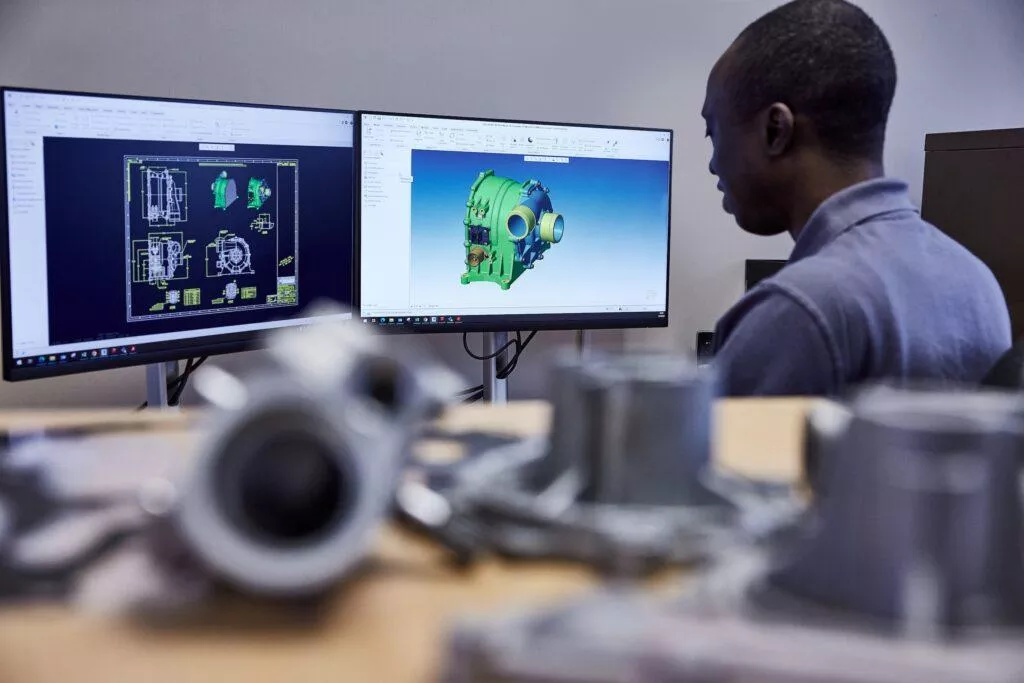
1. Optimize Part Design with DFM Principles
Design optimization is one of the most effective ways to reduce CNC machining costs. Many manufacturing expenses are determined during the design stage, before a part reaches the CNC machine. A complex design may require additional setups, custom tooling, longer machining cycles, and more inspection processes, all of which increase the overall production cost.
By applying Design for Manufacturability (DFM) principles, engineers can create parts that are easier to machine, require fewer manufacturing operations, and achieve better cost efficiency without compromising functionality.
Simplify Complex Geometries
Complex geometries often increase machining difficulty and production time. Features such as unnecessary contours, deep cavities, difficult-to-access areas, and excessive surface details may require specialized tools, additional setups, or slower machining speeds.
To improve manufacturability and lower machining costs:
- Remove unnecessary features that do not contribute to part functionality
- Simplify complex shapes whenever possible
- Reduce the number of machining operations and setups
- Design features that can be produced using standard cutting tools
A simpler part design allows manufacturers to reduce programming time, shorten machining cycles, and improve overall production efficiency.
Use Standard Features and Design Specifications
Using standard design features helps manufacturers avoid unnecessary tooling and processing requirements. Custom features often require special tools, additional programming, or extra machining steps, which can increase production costs.
Consider the following design practices:
- Use standard hole sizes and thread specifications whenever possible
- Apply consistent internal corner radii
- Avoid unnecessary custom features that require special tooling
- Use standard material thicknesses and commonly available stock sizes
Standardized designs improve manufacturing efficiency and allow parts to be produced with more predictable costs.
Minimize Material Waste
Part design also affects material utilization and raw material costs. Poorly optimized designs may require larger stock sizes or create excessive material waste during machining.
To improve material efficiency:
- Optimize part orientation within the raw material
- Avoid unnecessary oversized features
- Select appropriate stock dimensions based on the final part geometry
Reducing material waste helps lower both material expenses and machining time.
Evaluate Additional Manufacturing Requirements
Additional requirements such as special surface finishes, coatings, heat treatments, or secondary operations can increase the total cost of CNC machined parts.
Before adding these requirements, consider whether they are necessary for the part’s actual application. For example, applying a high-end surface treatment to non-critical areas may increase cost without providing meaningful performance benefits.
By specifying only the required features, finishes, and treatments, engineers can avoid unnecessary processing steps and maintain better cost control.
Consider Alternative Manufacturing Methods
Although CNC machining is suitable for many precision components, it is not always the most economical option for every design or production volume.
Depending on the part requirements, alternative processes such as sheet metal fabrication, precision casting, stamping, or additive manufacturing may provide a more cost-effective solution for certain applications.
Selecting the right manufacturing approach during the design stage can help optimize production costs while meeting performance requirements.
Optimizing part design through DFM principles is one of the most effective ways to reduce CNC machining costs. By simplifying geometries, using standard features, minimizing material waste, and avoiding unnecessary requirem
2.Avoid Unnecessary Tight Tolerances
Tolerance requirements have a significant impact on CNC machining costs. While tight tolerances are essential for certain critical features, applying precision requirements to every dimension can increase manufacturing difficulty, machining time, and inspection costs.
When a part requires extremely tight tolerances, manufacturers may need slower machining speeds, additional finishing operations, more precise fixturing, and advanced measurement equipment to achieve the required accuracy. These additional steps increase production time and overall costs.
To reduce CNC machining costs, engineers should define tolerances based on the actual functional requirements of each feature rather than specifying the highest possible precision throughout the entire part.
Apply Tight Tolerances Only Where Necessary
Not every feature on a CNC machined part requires the same level of accuracy. Critical areas such as mating surfaces, bearing bores, sealing features, and alignment points may require tighter tolerances, while non-functional features can often use standard tolerances.
Instead of applying strict tolerances across the entire drawing:
- Identify critical dimensions that affect part performance
- Assign tighter tolerances only to functional features
- Use general tolerances for non-critical areas
This approach helps manufacturers avoid unnecessary machining steps while ensuring the part performs as required.
Avoid Over-Specified Geometric Tolerances
Geometric tolerances such as flatness, parallelism, perpendicularity, and true position provide better control over part accuracy. However, overly restrictive geometric requirements can increase production complexity.
Excessive GD&T requirements may require:
- More precise machining processes
- Additional setups and adjustments
- Longer inspection procedures
- Higher rejection and rework risks
Before adding strict geometric requirements, engineers should evaluate whether each tolerance provides a real functional benefit.
Use Standard Tolerance Guidelines
Following commonly accepted tolerance standards can help balance precision and cost. Instead of specifying custom tolerances for every feature, engineers can use general tolerance classes for dimensions where high accuracy is not required.
Standard tolerances allow manufacturers to:
- Use more efficient machining parameters
- Reduce manual adjustments
- Simplify quality inspection
- Improve production consistency
This makes the manufacturing process more predictable and cost-effective.
Consider the Impact on Inspection Costs
Tighter tolerances do not only affect machining; they also increase quality control requirements. Parts with strict dimensional requirements may require additional inspection time and more advanced measurement equipment.
For example, achieving and verifying high-precision features may involve:
- Coordinate Measuring Machines (CMM)
- Additional measurement points
- More frequent inspection checks
By focusing inspection efforts on critical features instead of every dimension, manufacturers can maintain quality while controlling costs.
3.Choose Cost-Effective Materials
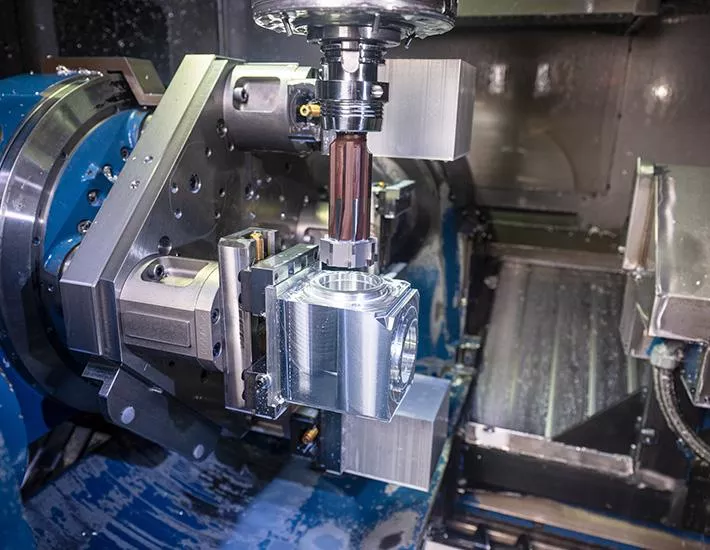
Material selection plays an important role in determining CNC machining costs. The cost of a CNC machined part is not only affected by the raw material price but also by the material’s machinability, cutting speed, tool wear, and processing requirements.
Choosing the most expensive or highest-performance material is not always the most cost-effective solution. To reduce CNC machining costs, engineers should select materials that meet the required mechanical properties and application requirements while also offering good machinability and availability.
Consider Material Machinability
Different materials behave differently during CNC machining. Some materials can be cut quickly with standard tools, while others require slower machining parameters, specialized tooling, and additional processing steps.
For example:
- Aluminum alloys are generally easy to machine, allowing higher cutting speeds and shorter cycle times.
- Stainless steels provide excellent corrosion resistance but typically require more machining effort than aluminum.
- Titanium and nickel-based alloys offer superior performance but often require specialized tools and slower cutting conditions.
Selecting a material with suitable machinability can reduce machining time, extend tool life, and lower overall production costs.
Avoid Over-Specifying Material Requirements
Engineers sometimes select materials with higher performance capabilities than the application actually requires. While premium materials may provide additional strength, heat resistance, or corrosion resistance, they can also significantly increase manufacturing expenses.
Before choosing a material, consider:
- Required strength and durability
- Operating environment
- Temperature and corrosion requirements
- Weight limitations
- Regulatory requirements
Using a material that matches the actual performance needs of the part helps avoid unnecessary material and machining costs.
Balance Material Cost and Processing Cost
A lower material price does not always result in lower overall manufacturing costs. Some inexpensive materials may be more difficult to machine, increasing cycle time and tooling expenses.
When evaluating material options, consider the total manufacturing impact, including:
- Raw material cost
- Machining time
- Tool consumption
- Scrap rate
- Required finishing processes
For example, a slightly more expensive material with better machinability may reduce total production costs by shortening machining time and improving manufacturing efficiency.
Use Readily Available Materials
Material availability can also affect CNC machining costs. Commonly available materials are usually easier to source and can reduce procurement time and material waste.
Using standard grades and readily available stock sizes can help:
- Reduce material lead times
- Avoid special-order costs
- Improve production scheduling
- Minimize supply chain delays
Whenever possible, selecting widely used materials helps manufacturers achieve more predictable pricing and faster production.
4.Reduce the Number of CNC Setups
The number of CNC setups required for a part has a direct impact on machining costs. Each setup requires additional preparation time, including fixture installation, workpiece alignment, tool verification, and program adjustment. Parts that require multiple setups typically take longer to produce and increase labor costs.
To reduce CNC machining costs, engineers should consider setup requirements during the design stage and create parts that can be machined efficiently with fewer repositioning steps.
Design Parts for Fewer Machining Orientations
Every time a part is repositioned, the machine operator must realign the workpiece and confirm the new setup before machining can continue. Multiple orientations increase production time and may introduce additional alignment challenges.
To minimize setups:
- Combine features that can be machined in the same orientation
- Avoid unnecessary features located on different surfaces
- Design parts with better tool accessibility
- Consider how the part will be fixtured before finalizing the design
A design that allows more features to be completed in a single setup can significantly improve machining efficiency.
5.Avoid Unnecessary Repositioning
Some parts require repeated clamping and repositioning because features are difficult to access. While certain complex components may require multiple setups, unnecessary repositioning should be avoided whenever possible.
Reducing repositioning helps:
- Shorten preparation time
- Improve dimensional consistency
- Reduce operator involvement
- Lower the risk of setup-related errors
Simplifying feature locations and machining sequences can make production more efficient and cost-effective.
Consider Multi-Axis Machining When Appropriate
For some complex parts, using multi-axis CNC machining can help reduce the number of setups. Although multi-axis machines may have higher hourly rates, they can complete multiple operations in fewer setups, reducing overall production time.
For example:
- A 3-axis machine may require several repositioning steps to access different surfaces
- A 5-axis machine may complete the same features with fewer setups
The most cost-effective approach depends on part complexity, production volume, and required tolerances. The goal is not always to use the most advanced machine, but to select the process that minimizes total manufacturing effort.
Optimize Fixture Design
Fixtures play an important role in reducing setup time. A well-designed fixture allows parts to be positioned quickly, securely, and consistently.
Effective fixture strategies include:
- Using standard fixtures whenever possible
- Designing parts with suitable clamping surfaces
- Avoiding difficult-to-hold geometries
- Reducing fixture changes during production
Efficient fixturing improves workflow and helps maintain consistent quality throughout production.
6. Avoid Deep Cavities and Thin Walls
Deep cavities and thin walls are two common machining design features that increase the difficulty and cost of CNC machining. These features typically require specialized tools, slower cutting parameters, additional machining steps, and stricter process control to achieve the required precision.
The challenge of machining deep cavities lies in the fact that they usually require longer tools. However, longer tools are more prone to vibration and deformation during machining, which affects surface quality and dimensional accuracy. To maintain stability, manufacturers may need to reduce cutting speeds or use multiple machining passes, increasing cycle time and production costs.
Engineers should avoid unnecessary deep cavities and maintain a reasonable depth-to-width ratio. If deep cavities must be machined, design improvements such as stepped cavities or modified tool entry and exit methods can simplify machining.
Thin walls also increase CNC machining costs because they are more susceptible to deformation due to cutting forces. Machining thin walls typically requires lower machining speeds, additional support strategies, and stricter inspection to ensure dimensional accuracy.
Increasing wall thickness or adding structural support features such as reinforcing ribs can improve part rigidity and make machining more reliable. By designing parts with practical wall thicknesses and ease of machining, manufacturers can reduce machining difficulty and lower CNC machining costs.
7. Use Standard Features and Dimensions
Using standard features and dimensions is an effective way to improve CNC machining efficiency and reduce CNC machining costs. Custom features often require special tools, additional programming, or unique manufacturing processes, which can increase machining time and production expenses.
Whenever possible, engineers should design parts using commonly available specifications, such as standard hole sizes, thread sizes, material thicknesses, and corner radii. Standard features allow manufacturers to use readily available cutting tools and established machining processes, reducing the need for custom solutions.
For example, non-standard hole diameters may require special drills or additional machining operations, while uncommon thread specifications may require custom taps or inserts. By selecting widely used sizes and specifications, manufacturers can simplify production and avoid unnecessary tooling costs.
Standardizing design elements also improves repeatability during production. When similar features are used across multiple parts, manufacturers can optimize machining programs, reduce setup time, and improve overall process efficiency.
However, standardization should not limit part functionality. The goal is to use standard manufacturing practices where possible while maintaining the performance requirements of the final component. By balancing design requirements with manufacturing efficiency, engineers can create more cost-effective CNC machined parts.
8.Optimize Internal Corner Radii
Internal corner radius is an often-overlooked design factor that can significantly affect CNC machining efficiency and cost. Since standard CNC milling tools are cylindrical, they naturally create rounded internal corners when cutting inside pockets or cavities.
When a design requires very small internal corner radii, manufacturers must use smaller cutting tools to achieve the required geometry. Smaller tools have lower cutting capacity and are more prone to vibration or breakage, which can result in slower machining speeds, additional passes, and longer production cycles.
For cost-effective CNC machining, engineers should use the largest practical internal corner radius that the part design allows. Larger radii enable the use of larger cutting tools, which can remove material faster and provide better machining stability.
A few design practices can help optimize internal corner radii:
- Avoid unnecessarily small internal corners
- Keep corner radii consistent throughout the part when possible
- Match internal radii with standard cutting tool sizes
- Consider the required function before specifying small corner features
For example, a pocket with a larger internal radius can often be machined using a larger end mill, reducing tool changes and machining time compared with a design requiring multiple small tools.
By considering tool accessibility and cutter geometry during the design stage, engineers can simplify machining operations and reduce CNC machining costs while maintaining the required part functionality.
9. Minimize Secondary Operations
Secondary operations can add significant costs to CNC machined parts. While processes such as deburring, surface finishing, coating, heat treatment, and additional inspection may improve part performance or appearance, they also increase production time, labor requirements, and overall manufacturing expenses.
To reduce CNC machining costs, engineers should carefully evaluate whether each secondary process is truly necessary. Adding unnecessary finishing requirements or post-processing steps can increase the total part cost without providing meaningful functional benefits.
Common secondary operations that may increase CNC machining costs include:
- Deburring: Required for removing sharp edges, but excessive edge finishing requirements can increase labor time.
- Surface finishing: Processes such as polishing, anodizing, plating, or coating add extra processing steps and lead time.
- Heat treatment: Improves material properties but may require additional handling and inspection.
- Additional inspection: More complex quality requirements can increase measurement and verification time.
A cost-effective approach is to specify secondary operations only where they are needed for the part’s function, durability, or appearance. For example, a surface finish requirement on a sealing surface or mating area may be essential, while applying the same finish across non-critical areas may create unnecessary costs.
Engineers should also consider whether certain requirements can be achieved during the machining process itself. For example, selecting an appropriate machining strategy and tool path may reduce the need for extensive finishing operations later.
By minimizing unnecessary secondary processes and clearly defining required specifications, manufacturers can simplify production workflows, shorten lead times, and reduce CNC machining costs without affecting the final part quality.
10. Select the Right CNC Machining Process
Choosing the right CNC machining process is essential for achieving a balance between part requirements and manufacturing costs. While advanced machining technologies can provide greater flexibility and precision, they are not always the most economical choice for every component.
Using a more complex machining process than necessary can increase machine costs, programming time, and production expenses. For example, a simple part that can be completed with 3-axis milling may become unnecessarily expensive if it is produced using a 5-axis machining center without a clear functional need.
The most cost-effective process depends on factors such as part geometry, material, tolerance requirements, production volume, and required features.
When selecting a CNC machining process, consider:
- Part geometry: Simple prismatic parts may be suitable for 3-axis milling, while complex surfaces or multi-sided features may benefit from 4-axis or 5-axis machining.
- Part shape: Rotational components are often more economical to produce with CNC turning rather than milling.
- Production requirements: High-volume parts may benefit from automated processes or specialized equipment to improve efficiency.
- Tolerance and surface requirements: Higher precision requirements may require more advanced machining capabilities.
In some cases, alternative manufacturing methods may also provide a more cost-effective solution. For example, sheet metal fabrication, casting, stamping, or additive manufacturing may be more suitable for certain designs or production quantities.
The goal is not to select the most advanced machining technology, but to choose the process that can meet the required specifications with the least unnecessary complexity. By matching the manufacturing process to the actual needs of the part, companies can improve efficiency and reduce CNC machining costs.
11. Optimize Production Volume
Production volume has a major impact on the unit cost of CNC machined parts. Unlike processes with high tooling costs, CNC machining is flexible for prototypes and low-volume production, but the cost per part can often be reduced as quantities increase because fixed costs are distributed across more units.
Setup, programming, fixture preparation, and tooling costs are usually required regardless of the number of parts produced. For a single prototype, these costs are applied to one part, resulting in a higher unit price. However, when producing larger quantities, the same initial costs can be spread across multiple parts, lowering the average cost.
To optimize CNC machining costs, consider the actual production requirements rather than ordering parts one at a time whenever possible. For example, producing a small batch instead of repeated individual orders can reduce setup frequency and improve manufacturing efficiency.
When planning production volume, consider:
- Prototype and testing stage: Low-volume CNC machining provides flexibility and allows design validation before full production.
- Small-batch production: Increasing quantities can help distribute setup and programming costs across more parts.
- Production runs: Larger volumes may justify process optimization, dedicated fixtures, or automation to further reduce unit costs.
However, increasing production volume is not always the best solution. Excess inventory, storage costs, and design changes can create additional expenses. The ideal production quantity depends on demand, product lifecycle, and project requirements.
By selecting the right production volume and planning manufacturing batches efficiently, companies can balance flexibility and cost efficiency while helping to reduce CNC machining costs.
12. Provide Complete Manufacturing Information
Providing complete and accurate manufacturing information can help avoid unnecessary costs caused by miscommunication, design revisions, and production delays. Before machining begins, manufacturers need clear details about the part requirements, including dimensions, materials, tolerances, surface finishes, and inspection specifications.
Incomplete drawings or unclear requirements can lead to additional engineering communication, incorrect assumptions, rework, or even scrapped parts. These issues not only increase production costs but can also extend project timelines.
To improve manufacturing efficiency, engineers should provide:
- Complete 3D CAD models and 2D drawings
- Material specifications and required grades
- Critical dimensions and tolerance requirements
- Surface finish requirements
- Thread specifications and special features
- Inspection or quality requirements
Clear documentation also allows manufacturers to provide more accurate quotes and recommend cost-saving improvements before production starts. For example, a CNC machining supplier may identify unnecessary tolerances, difficult-to-machine features, or alternative processes that can lower manufacturing costs.
In addition, involving manufacturers early in the design process allows engineers to benefit from practical machining experience. Early feedback can help optimize part designs, simplify production steps, and prevent expensive changes after manufacturing begins.
By providing complete manufacturing information and maintaining clear communication with the machining supplier, companies can reduce errors, improve production efficiency, and achieve more predictable CNC machining costs.
13. Work With an Experienced CNC Manufacturer
Choosing the right CNC machining partner can have a significant impact on overall manufacturing costs. An experienced manufacturer does more than simply produce parts; they can provide engineering support, optimize machining strategies, and identify cost-saving opportunities throughout the entire manufacturing process.
A reliable CNC machining partner can help reduce costs before production begins through Design for Manufacturability (DFM) analysis. By reviewing part designs, manufacturers can identify potential issues such as unnecessary tight tolerances, difficult-to-machine features, excessive setups, or inefficient manufacturing processes.
When selecting a CNC machining supplier, consider factors such as:
- CNC machining capabilities and available equipment
- Experience with different materials and part complexities
- Quality control systems and inspection capabilities
- Engineering support and DFM feedback
- Ability to support both prototypes and production volumes
Working with a manufacturer that provides multiple capabilities under one roof can also reduce overall project costs. Managing machining, surface finishing, inspection, and other secondary operations through multiple suppliers can increase coordination efforts, lead times, and potential delays.
Xtproto helps customers optimize CNC machining projects from design review to final production. With extensive CNC machining capabilities, advanced inspection equipment, and experienced engineering support, Xtproto provides DFM feedback to help identify opportunities for reducing unnecessary machining steps, improving manufacturability, and controlling production costs.
By combining precision machining expertise with efficient manufacturing processes, Xtproto supports prototypes, low-volume production, and scalable manufacturing while maintaining consistent quality and cost efficiency.
Conclusion
Reducing CNC machining costs does not mean lowering part quality or sacrificing performance. The most effective cost reduction strategies focus on improving manufacturability, eliminating unnecessary processes, and making smarter decisions throughout the product development process.
From optimizing part designs and selecting suitable materials to reducing setups, simplifying machining requirements, and choosing the right manufacturing partner, every stage of the CNC machining process can provide opportunities for cost improvement.
By considering manufacturing requirements early and working closely with an experienced CNC machining supplier, companies can avoid unnecessary expenses, improve production efficiency, and achieve better value from their CNC machined parts.
With professional machining expertise and DFM support, Xtproto helps customers optimize designs, streamline production processes, and develop cost-effective solutions for prototypes and production parts.
Whether you need a single prototype or high-volume CNC machining, Xtproto provides engineering support and manufacturing capabilities to help bring your designs to production efficiently.