
Surface Treatments to Prevent Corrosion on Aluminum Parts
In industrial manufacturing, a common misconception is that “aluminum is naturally rust-resistant and requires no specific anti-corrosion measures.” In reality, however, aluminum parts frequently suffer from surface white spots, pitting, and even structural cracking due to exposure to moisture, salt spray, or contact with dissimilar metals.
For businesses, aluminum corrosion entails more than just cosmetic damage; it leads to high hidden costs associated with the return of entire ocean-freight shipments, product recalls, and premature product failure.
Anti-corrosion treatment for aluminum is not as simple as merely applying a coat of paint; it is a systematic process. This article provides a practical, objective guide to making anti-corrosion decisions by examining four key aspects: corrosion mechanisms, design-stage prevention, a comparison of five major surface treatment processes, and considerations regarding cost and environmental impact.
Root Causes and Common Types of Aluminum Corrosion
Although aluminum naturally forms a thin, dense oxide layer upon contact with air—which provides sufficient protection in standard dry environments—this natural barrier is highly susceptible to localized breakdown when exposed to harsh industrial conditions, such as humidity, salt spray, or acidic/alkaline media. Once this protective film is compromised, corrosion occurs. In practical engineering, the four most common types of corrosion include:
1. Pitting Corrosion
Pitting is the most prevalent and damaging form of localized corrosion for aluminum alloys. It is triggered when chloride ions (present in marine atmospheres, road salts, or human sweat) penetrate and rupture the aluminum’s natural oxide film. The damaged spot acts as an active anode while the surrounding intact film acts as a cathode. This creates a “small anode, large cathode” micro-galvanic cell, causing the corrosion to propagate rapidly deep into the metal in a needle-like fashion. Pitting is extremely deceptive; while the surface may only show tiny white specks or micro-cavities, the internal structure can be severely hollowed out, leading to sudden, catastrophic structural failure without warning.
2. Galvanic Corrosion
Galvanic corrosion commonly occurs when aluminum parts are assembled with other metallic materials. Due to its low electrode potential, aluminum is highly active. When an aluminum part comes into direct contact with a noble metal of higher potential (such as stainless steel, copper, or brass) in the presence of an electrolyte like humid air, rainwater, or condensation, a galvanic cell is formed. In this coupling, aluminum acts as the sacrificial anode and corrodes at an accelerated rate. This is frequently observed around aluminum joints fastened with stainless steel bolts, leading to rapid powdering and crumbling of the aluminum around the bolt holes, which eventually causes joint loosening and structural failure.
3. Crevice Corrosion
Crevice corrosion is a localized attack occurring within narrow gaps or shielded areas, such as the lap joints of two overlapping aluminum parts, underneath washers, or within threaded connections. When water becomes trapped inside these crevices and cannot circulate, the dissolved oxygen inside the gap is quickly depleted. This creates an oxygen concentration cell with a “depleted zone (inside the crevice)” and a “rich zone (outside the crevice),” driving accelerated corrosion inside the gap. Because this process occurs entirely out of sight, it is virtually impossible to detect from the outside, making it a highly dangerous latent failure mode.
4. Filiform Corrosion
Filiform corrosion is a unique form of localized corrosion that initiates beneath protective coatings, such as paint, powder coatings, or inadequately sealed anodized layers. When the coating surface sustains minor scratches or defects under high relative humidity (typically between 60% and 95%), moisture and oxygen penetrate through these imperfections. The corrosion then propagates horizontally along the interface between the coating and the metal substrate, appearing as thread-like or spider-web-like tracks. This undermines the coating, resulting in blistering, bubbling, and widespread peeling, which severely compromises both the aesthetic quality and the protective lifespan of the part.
Designing Against Corrosion in the Drafting Stage
Before selecting any surface treatment process, corrosion prevention measures must be integrated into the product design and material selection stages. Addressing these issues during the drafting phase is far more cost-effective than relying on post-manufacturing coatings to compensate for design oversights.
1. Targeted Material Selection for Aluminum Alloys
Selecting the appropriate aluminum alloy grade is the first line of defense against corrosion. Not all aluminum alloys perform equally regarding resistance to environmental corrosion. While high-strength alloys—such as the 2xxx series (Al-Cu) and 7xxx series (Al-Zn, e.g., 7075)—offer excellent mechanical properties, they are highly susceptible to atmospheric corrosion and stress corrosion cracking (SCC). These grades typically require high-specification surface treatments. In contrast, the 5xxx series (Al-Mg) and 6xxx series (Al-Mg-Si, e.g., 6061) possess outstanding natural corrosion resistance, making them the preferred materials for demanding applications such as marine, architectural, and outdoor structures.
2. Isolating Dissimilar Metals to Prevent Galvanic Corrosion
Galvanic corrosion occurs when two dissimilar metals come into physical contact in the presence of an electrolyte; therefore, the design must physically break this conductive circuit. When aluminum components are used in conjunction with stainless steel fasteners or copper connectors, engineers should design non-conductive isolation barriers—such as washers, sleeves, and gaskets made of PTFE (Teflon) or nylon. Additionally, applying jointing compounds, zinc chromate primers, or elastomeric sealants at the contact interface effectively prevents moisture from forming a conductive bridge between the metals, thereby ensuring the aluminum does not act as a sacrificial anode.
3. Eliminating Water-Pooling Areas and Crevices through Geometric Design
Poor geometric design is a hidden cause of crevice corrosion and pitting. Component designs should ensure natural drainage and prevent water accumulation. This means avoiding sharp, upward-facing grooves, cavities, or channels, as these areas tend to trap moisture and road debris. If such geometries are structurally unavoidable, drainage holes must be incorporated at critical locations. In addition, lap joints and overlapping seams should be continuously welded or fully sealed with industrial adhesives to prevent moisture from penetrating into minute gaps, thereby eliminating the conditions required for crevice corrosion.
Selecting the Right Shield: 5 Key Surface Treatments for Aluminum Parts
After optimizing a part during the design phase, applying an engineered surface treatment is crucial to ensuring long-term corrosion resistance. Different operating environments and alloy materials require specific surface treatment methods. Based on industry standards and performance requirements, the following are five of the most effective surface treatment processes for protecting aluminum parts:
Anodizing (Electrochemical Protection)
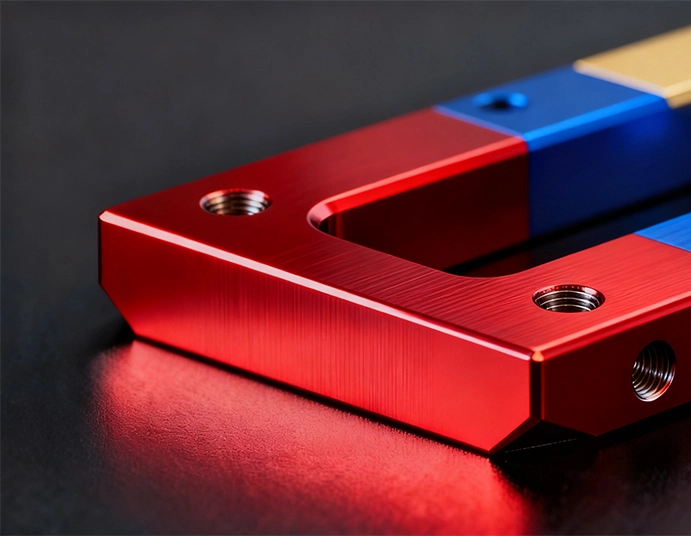
Anodizing is an electrochemical process that transforms the aluminum surface into a highly durable, corrosion-resistant anodic oxide layer. Unlike paint, this oxide layer is not merely an applied coating but is fully integrated with the aluminum substrate; consequently, it will not crack, peel, or delaminate over time. For extreme environments, Type III hard-coat anodizing (compliant with AMS 2469 standards) is the industry benchmark. For instance, hard-coat anodizing 6063 extruded tubing ensures exceptional durability for offshore platform applications involving prolonged exposure to salt spray. Additionally, the porous nature of the anodic film prior to sealing allows for easy coloring, thereby meeting aesthetic requirements.
Polyester Powder Coating (Robust Physical Barrier)
The powder coating process uses electrostatic force to apply charged dry powder to aluminum parts, which are then cured in an oven to form a thick, uniform protective layer. This process is an environmentally friendly alternative to traditional wet paint, delivering a high-quality finish free from runs, drips, or brush marks, regardless of the part’s geometry. For high-strength 7075 aluminum alloy forged rings deployed in harsh desert or coastal regions, polyester powder coating offers excellent chemical and UV resistance. When treating architectural or façade components, it is essential to ensure the powder meets AAMA 2604 standards to guarantee long-lasting color vibrancy and superior weather resistance.
Chemical Conversion Coating (Precision Primer)
Chemical conversion coating (often referred to by brand names such as Alodine) involves forming a thin chromate or chrome-free film on the aluminum surface. This process is highly regarded because it enhances corrosion resistance and the adhesion of subsequent coatings without altering the dimensional tolerances of high-precision components. Widely used on 6061 aluminum alloy rods in the electronics industry, it prevents performance degradation caused by moisture while maintaining excellent electrical conductivity and fully complying with ASTM B449 standards.
Liquid Polymer Coatings (Flexible Moisture Barrier)
Upon curing, liquid polymer coatings (such as high-performance polyurethane) form a highly flexible, water-resistant protective layer on the aluminum surface. This flexibility is particularly advantageous for automotive extruded profiles, which are subjected to physical stress, vibration, and corrosive road de-icing salts during service. These polymer coatings absorb the impact of road debris without cracking, thereby extending the service life of vehicle structural and chassis components. Utilizing an ISO 14001-certified coating process ensures that environmental impact is minimized during application.
Electropolishing (Surface Finishing)
Electropolishing is an electrochemical process that selectively smooths out microscopic asperities and surface defects by removing an extremely thin layer of material from the aluminum surface. Eliminating these microscopic crevices removes attachment points for moisture and contaminants, thereby significantly reducing the potential sites for pitting corrosion. For aerospace forgings used at high altitudes, electropolishing yields a pristine, ultra-clean surface that effectively resists the aggressive moisture found in high-altitude environments. Combining this process with precision CNC machining capabilities ensures strict adherence to mechanical tolerances while maximizing corrosion resistance.
Cost vs. Green: How to Pick a Treatment That Fits Your Budget and the Law
Selecting the ideal surface treatment is not purely a technical decision; it is a commercial balancing act. In real-world manufacturing, engineers and procurement teams must weigh the upfront processing costs against the long-term return on investment (ROI), while strictly adhering to increasingly stringent global environmental regulations.
Cost versus Lifespan (The ROI of Anti-Corrosion)
While leaving aluminum untreated or opting for a basic solvent wash offers the lowest initial cost, it often leads to catastrophic financial consequences down the line, including bulk marine shipment rejections, warranty claims, and premature product failures. When budgeting, it is helpful to understand the relative cost hierarchy of these treatments. Chemical conversion coatings and standard anodizing generally offer the most economical protection for high-volume parts. Powder coating represents a mid-range investment with exceptional durability, while Type III hardcoat anodizing and highly specialized polymer or electropolished finishes sit at the higher end of the cost spectrum. Investing in the correct high-tier coating upfront dramatically reduces aftermarket service costs and safeguards brand reputation.
Environmental Regulations and Global Compliance (RoHS & REACH)
Navigating international environmental laws is critical for any product destined for global markets. Historically, chemical conversion coatings relied heavily on hexavalent chromium (CrVI), which provides superb corrosion resistance but is a known carcinogen. Under modern environmental frameworks like Europe’s RoHS (Restriction of Hazardous Substances) and REACH (Registration, Evaluation, Authorisation and Restriction of Chemicals) directives, hexavalent chromium is heavily restricted or banned. Manufacturers must transition to compliant alternatives, such as trivalent chromium (CrIII) or completely chrome-free conversion coatings. Furthermore, adopting eco-friendly processes like solvent-free polyester powder coatings and working with manufacturers utilizing ISO 14001 certified environmental management systems ensures that your supply chain remains legally compliant and future-proof.
Routine Maintenance and Cleaning Guidelines for Aluminum Parts
Regardless of how advanced the surface treatment process or how high the quality of the finish, the way aluminum components are maintained during use plays a crucial role in their lifespan. Improper cleaning methods or accidental contact with incompatible chemicals can cause the protective coating to degrade or even fail completely in a very short time. To maximize the service life of aluminum components, the following three maintenance principles must be strictly observed:
Avoid using strong acids, strong alkalis, and high-chlorine cleaners
Aluminum is an amphoteric metal, meaning it is highly reactive to both strong acids and strong alkalis. During routine maintenance, strictly avoid industrial cleaners containing potent ingredients such as sodium hydroxide (caustic soda), hydrochloric acid, or sulfuric acid; these substances can instantly dissolve anodic oxide layers and strip away organic coatings. Additionally, avoid high-concentration chlorine-based disinfectants (such as bleach or sodium hypochlorite), as chloride ions are a primary cause of localized pitting corrosion.
Best practice: Always choose mild, neutral cleaners (ideally with a pH between 6 and 8)—such as warm water mixed with mild soap—and wipe surfaces with a soft cloth.
Avoid using highly abrasive cleaning tools
Although surface treatments like anodizing increase the surface hardness of aluminum, the protective layer remains susceptible to severe physical abrasion. Never use steel wool, wire brushes, or coarse sandpaper to remove stubborn dirt, limescale, or grease. These abrasive tools can scratch or wear down the thin protective layer, creating micro-scratches that provide a direct pathway for moisture and salt spray to penetrate the underlying aluminum substrate.
Best practice: For stubborn dirt, first soak the area with a neutral cleaning solution to soften the grime, then gently wipe it clean using a microfiber cloth, lint-free wipe, or soft sponge.
Regularly inspect and remove accumulated water at joints and fasteners
As noted in discussions regarding crevice corrosion and galvanic corrosion, the most vulnerable areas of aluminum assemblies are often hidden, narrow spaces where air circulation is restricted and moisture tends to accumulate. Even the highest-performance protective coatings cannot indefinitely withstand the corrosive effects of pooled or trapped moisture.
Best practice: Establish a regular inspection schedule, particularly for components used outdoors or in high-humidity environments. Pay close attention to bolted connections, gasket interfaces, and recessed areas where moisture or debris tends to accumulate, and ensure these zones remain dry. If white powdery oxidation appears around stainless steel fasteners, disassemble the connection, remove the corrosion products, and reapply an anti-galvanic isolation paste or joint sealant.
Conclusion
Preventing aluminum corrosion is not a single-step fix, but a continuous engineering effort that spans from the initial CAD drawing to the final surface treatment and routine maintenance. By matching the specific corrosion risks of your operating environment with the right defense mechanism, you can ensure your products perform flawlessly for years to come.
At Xtproto, we don’t just machining aluminum parts—we deliver engineered solutions built to last. As a dedicated contract manufacturer specializing in custom Thin-Wall aluminum CNC machining, our experts are here to help you select the ideal alloy grade and recommend the absolute best protective surface treatments, such as anodizing, to stop corrosion before it even starts.
Let’s collaborate to build high-quality components that truly stand the test of time. Reach out to the Xtproto team today to discuss your next project!