
Types of Surface Treatment for CNC Machining
In CNC machining, achieving precise dimensions and complex geometries is only one part of producing high-quality parts. The surface condition of the finished part also plays a crucial role in its appearance, durability, function, and overall performance. Because machining operations often leave tool marks or specific surface textures, additional surface treatment processes are typically employed to improve the final properties of CNC-machined parts.
CNC surface treatment refers to a series of post-processing techniques used to alter or enhance the surface properties of machined parts. These processes can improve corrosion resistance, enhance wear resistance, increase surface hardness, create specific visual effects, and provide additional protection for parts used in harsh environments.
Different applications require different surface treatments. For example, aluminum parts can be anodized to improve corrosion resistance and appearance, while stainless steel parts may require passivation or polishing for better surface quality and durability. Functional parts subjected to friction or harsh environments may require coatings or electroplating to improve wear resistance and service life.
Choosing the appropriate surface treatment depends on a variety of factors, including material type, application requirements, environmental conditions, dimensional tolerances, and desired appearance. Understanding the available CNC machining surface treatment processes helps engineers select the most suitable option to achieve both functional and aesthetic goals.
This guide will introduce some of the most common surface treatment methods in CNC machining, explain their advantages and applications, and guide you on how to select the appropriate surface treatment process for different CNC machined parts.
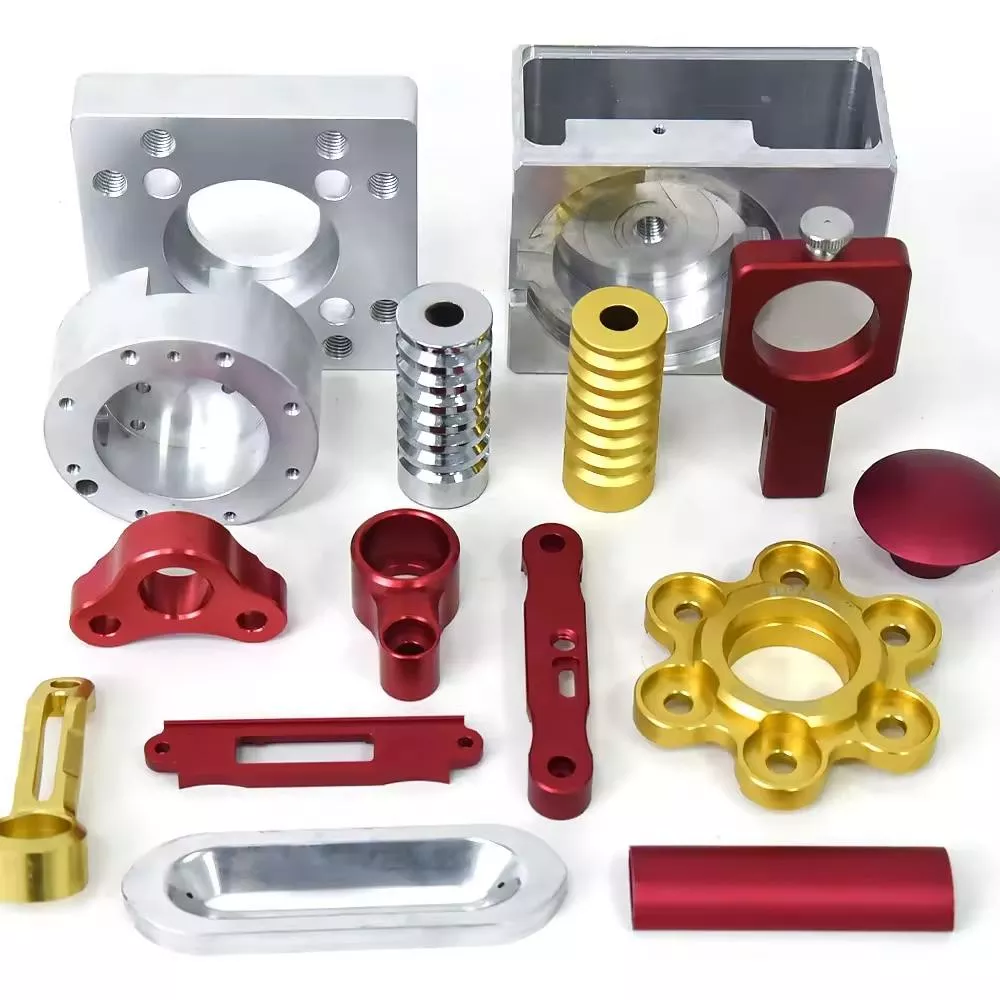
What Is Surface Treatment in CNC Machining?
Surface treatment in CNC machining refers to the additional processes performed after machining to modify, improve, or protect the surface of a finished part. While CNC machining focuses on creating accurate dimensions, complex geometries, and functional features, surface treatment enhances the characteristics of the outer layer of the component to meet specific performance or appearance requirements.
During CNC machining, cutting tools remove material from a workpiece to achieve the desired shape. However, the machining process may leave visible tool marks, minor surface irregularities, or a surface texture that may not be suitable for the final application. Surface treatment helps optimize these characteristics by changing the surface condition without significantly affecting the overall part geometry.
Common goals of CNC surface treatment include:
- Improving corrosion resistance: Protecting metal parts from oxidation, moisture, and chemical exposure.
- Enhancing wear resistance: Increasing surface durability for components exposed to friction or repeated use.
- Improving appearance: Creating specific textures, colors, or finishes for visible components.
- Increasing surface hardness: Enhancing resistance to scratches, impact, and mechanical stress.
- Supporting functional requirements: Improving properties such as lubrication performance, electrical conductivity, or cleanliness.
CNC surface treatments can be divided into several categories, including mechanical finishing, chemical treatments, coatings, and protective processes. Common examples include anodizing, bead blasting, polishing, electroplating, powder coating, passivation, and heat treatment.
The selection of a suitable surface treatment depends on factors such as the material being machined, required surface roughness, operating environment, dimensional tolerance requirements, and final application. By choosing the appropriate finishing process, manufacturers can ensure CNC machined parts achieve the required balance between performance, durability, and appearance.
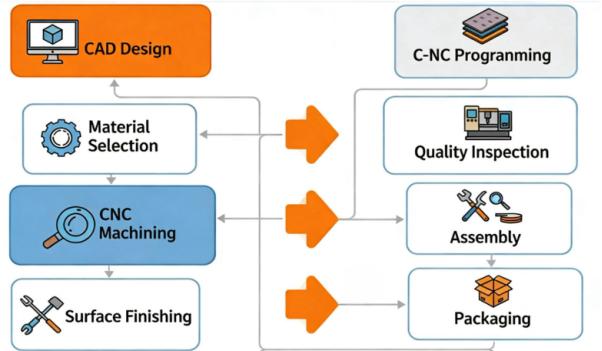
Common Types of Surface Treatment for CNC Machined Parts
After CNC machining, different surface treatment processes can be applied to improve part performance, appearance, and service life. The ideal finishing method depends on the material, functional requirements, environmental conditions, and desired surface characteristics.
Common CNC surface treatments include mechanical finishing, surface coatings, chemical treatments, and protective processes. The following are the most widely used options for CNC machined components.
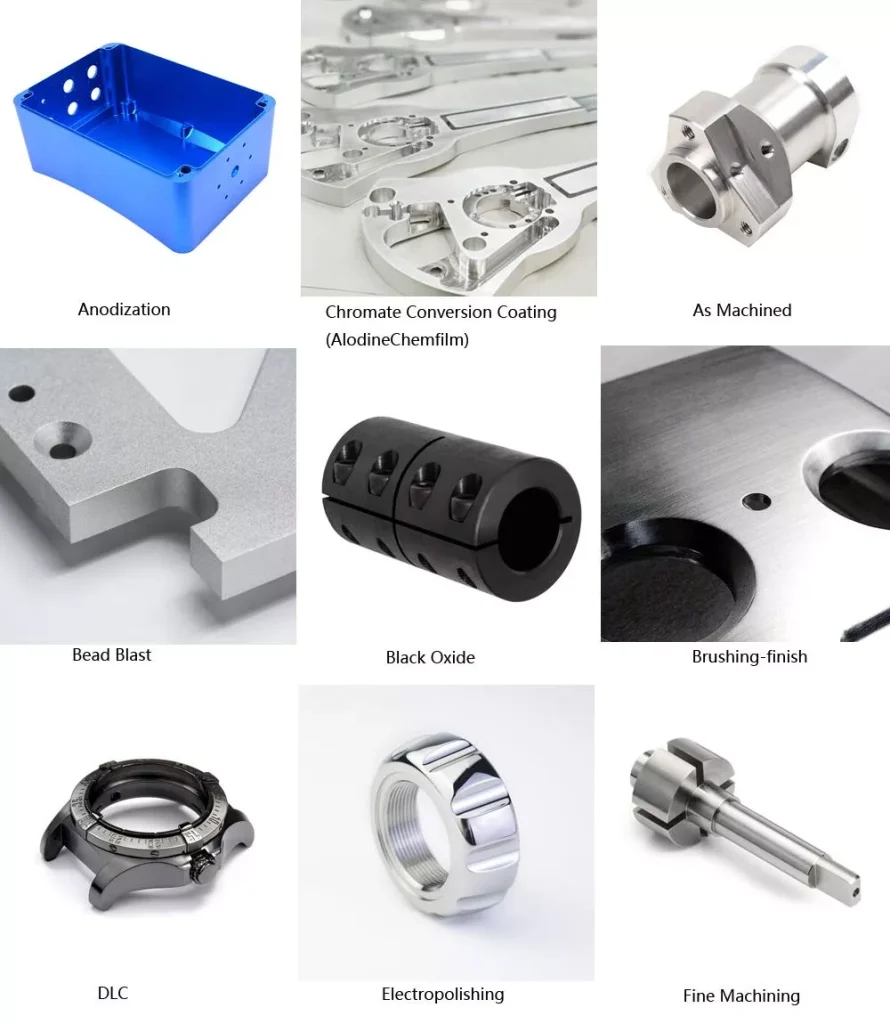
1.As-Machined Finish
As-machined finish is the standard surface condition directly produced after CNC machining without additional post-processing. During milling or turning operations, tool marks and machining patterns remain visible on the part surface.
This finish is often selected for functional components where appearance is not the primary concern. It provides a cost-effective solution while maintaining dimensional accuracy because no additional material is added or removed during finishing.
Advantages of As-Machined Finish:
- Lowest processing cost compared with additional surface treatments
- Shorter production lead time
- Maintains tight dimensional tolerances
- Suitable for functional and internal components
Typical Applications:
As-machined finishes are commonly used for prototypes, mechanical components, fixtures, brackets, and parts where surface appearance is not critical.
For standard CNC machining, as-machined surfaces typically achieve a surface roughness around Ra 3.2 μm, while finer finishes can be achieved through optimized machining parameters or additional finishing operations.
2.Bead Blasting
Bead blasting is a mechanical surface treatment process that uses high-pressure abrasive media to impact the surface of CNC machined parts. This process removes visible machining marks and creates a consistent matte or satin texture.
Compared with untreated machined surfaces, bead blasting provides a more uniform appearance and helps improve the visual quality of finished components.
Advantages of Bead Blasting:
- Creates a smooth, uniform matte appearance
- Removes minor surface imperfections and tool marks
- Improves surface consistency
- Suitable for complex geometries
Common Materials:
- Aluminum
- Stainless steel
- Titanium
- Brass
Considerations:
Although bead blasting has minimal impact on part dimensions, it may slightly affect critical surfaces. Areas requiring tight tolerances, threads, or precision fits should be properly masked before treatment.Bead blasting is widely used for CNC machined housings, enclosures, consumer products, and precision components requiring a clean and professional appearance.
3.Anodizing
Anodizing is one of the most widely used surface treatments for CNC machined aluminum parts. It is an electrochemical process that converts the natural oxide layer on the aluminum surface into a thicker, more durable protective coating. This process improves corrosion resistance, surface hardness, and appearance while maintaining the dimensional accuracy of the machined component.Unlike paint or other coatings, anodizing creates a surface layer that becomes part of the aluminum material itself. This provides better adhesion, durability, and resistance to peeling or chipping.
Anodizing is mainly applied to aluminum alloys, including 6061 aluminum, 7075 aluminum, 5052 aluminum, and other commonly machined aluminum materials.
Types of Anodizing for CNC Machined Parts
Type II Anodizing
Type II anodizing, also known as sulfuric acid anodizing, is the most common anodizing method for CNC machined aluminum parts. It provides good corrosion protection and allows for a wide range of colors, making it suitable for both functional and decorative applications.
Key characteristics:
- Good corrosion resistance
- Available in various colors
- Smooth and attractive surface finish
- Suitable for visible aluminum components
Common applications:
- Electronics housings
- Consumer products
- Aluminum brackets
- Precision machined enclosures
Type III Hardcoat Anodizing
Type III anodizing, also known as hardcoat anodizing, produces a significantly thicker and harder oxide layer compared with Type II anodizing. It is designed for applications requiring improved wear resistance, durability, and protection under demanding operating conditions.
Key characteristics:
- Higher surface hardness
- Improved wear resistance
- Enhanced corrosion protection
- Better performance in harsh environments
Common applications:
- Aerospace components
- Mechanical parts
- Precision aluminum components
- Parts exposed to friction or repeated contact
Advantages of Anodizing CNC Parts
Anodizing provides several benefits for CNC machined aluminum components:
- Improved corrosion resistance: Protects aluminum surfaces from oxidation and environmental exposure.
- Enhanced surface durability: Increases resistance to scratches and wear.
- Better appearance: Provides consistent colors and finishes for visible components.
- Maintained dimensional stability: The anodized layer has minimal impact when properly considered during design and machining.
- Electrical insulation: The oxide layer can provide non-conductive properties.
Considerations for Anodized CNC Parts
When designing CNC parts that require anodizing, engineers should consider coating thickness and tolerance requirements. Critical mating surfaces, threaded holes, and precision features may require masking or dimensional compensation before anodizing.
Anodizing is an ideal surface treatment for CNC aluminum parts that require a combination of appearance, corrosion protection, and long-term durability. It is widely used in industries where lightweight materials and high-performance surface properties are essential.
4.Powder Coating
Powder coating is a surface finishing process that applies a dry powder material to the surface of CNC machined parts through electrostatic spraying. After application, the coated part is heated in an oven, allowing the powder to melt and form a durable protective layer.
Compared with traditional liquid painting, powder coating provides a thicker and more uniform finish with excellent resistance to impact, corrosion, and environmental exposure. It is commonly used when both surface protection and a wide range of color options are required.
Advantages of Powder Coating:
- Excellent corrosion and chemical resistance
- Durable protective surface layer
- Wide selection of colors and textures
- Good resistance to impact and scratches
- Environmentally friendly finishing process
Common Materials:
- Aluminum
- Steel
- Stainless steel
Considerations:
Powder coating adds a relatively thick surface layer, which may affect tight-tolerance features or precision mating areas. Critical dimensions, threads, and contact surfaces may need masking before coating.
Powder coating is commonly used for CNC machined enclosures, industrial equipment components, brackets, frames, and parts requiring a durable decorative finish.
5.Electroplating
Electroplating is a surface treatment process that deposits a thin layer of metal onto the surface of CNC machined parts through an electrochemical reaction. The added metal layer improves surface properties such as corrosion resistance, hardness, wear resistance, and appearance. Common plating materials include nickel, chrome, zinc, and gold, with the selection depending on the required performance and application environment.
Nickel Plating
Nickel plating is widely used for CNC machined metal parts because it provides excellent corrosion resistance, improved hardness, and a smooth surface finish.
Benefits:
- Increased wear resistance
- Improved corrosion protection
- Enhanced surface appearance
- Better dimensional stability compared with thicker coatings
Chrome Plating
Chrome plating provides a hard, low-friction surface that improves wear resistance and durability. It is often selected for components exposed to repeated movement or mechanical contact.
Benefits:
- High surface hardness
- Excellent wear resistance
- Low friction characteristics
- Improved appearance
Common Applications:
Electroplating is commonly used for:
- Steel components
- Precision mechanical parts
- Automotive components
- Industrial equipment parts
Considerations:
The thickness of the plating layer should be considered during CNC part design, especially for components with tight tolerances or precision fits.
6.Polishing
Polishing is a mechanical surface finishing process that removes small surface imperfections to create a smoother and more refined appearance. It can range from improving surface smoothness to achieving a mirror-like finish depending on the polishing method and requirements.For CNC machined parts, polishing is often selected when appearance, cleanliness, or reduced surface friction is important.
Advantages of Polishing:
- Creates a smooth and attractive surface
- Reduces surface roughness
- Improves cleanability
- Reduces friction between contacting surfaces
- Provides a premium appearance
Common Materials:
- Stainless steel
- Aluminum
- Brass
- Copper
Types of Polishing:
Mechanical Polishing:
Uses abrasive materials to gradually smooth the surface and remove machining marks.
Mirror Polishing:
Uses finer polishing processes to achieve a highly reflective surface finish.
Common Applications:
Polishing is widely used for:
- Medical components
- Consumer products
- Decorative metal parts
- Food processing equipment
- Precision components requiring smooth surfaces
7.Brushing
Brushing is a mechanical finishing process that creates a directional texture on the surface of CNC machined parts. During this process, abrasive brushes are used to create consistent linear patterns while reducing visible machining marks.Unlike polishing, which aims for a smooth reflective surface, brushing produces a uniform satin appearance with visible grain lines.
Advantages of Brushing:
- Creates a consistent surface texture
- Reduces the visibility of minor scratches
- Provides an attractive satin finish
- Improves visual consistency
Common Materials:
- Aluminum
- Stainless steel
- Brass
Common Applications:
Brushed finishes are often used for:
- Electronic enclosures
- Decorative panels
- Appliance components
- Consumer products
Brushing is especially suitable for visible CNC machined parts where a clean industrial appearance is required.
8.Passivation
Passivation is a chemical surface treatment primarily used for stainless steel CNC machined parts. The process removes free iron contaminants and improves the natural chromium oxide layer on the stainless steel surface, enhancing corrosion resistance.Unlike coatings or plating, passivation does not add a visible layer to the part surface, which makes it suitable for precision components where dimensional changes must be minimized.
Advantages of Passivation:
- Improves corrosion resistance
- Maintains original part dimensions
- Removes surface contaminants from machining
- Suitable for precision stainless steel components
Common Materials:
- Stainless steel 304
- Stainless steel 316
- Other corrosion-resistant alloys
Common Applications:
Passivation is commonly used for:
- Medical devices
- Aerospace components
- Food processing equipment
- Precision stainless steel parts
9.Heat Treatment
Heat treatment is a process used to modify the mechanical properties of CNC machined parts by controlling heating and cooling cycles. Although it does not primarily change the appearance of a part surface, it can significantly improve hardness, strength, and wear resistance.
Common heat treatment methods include:
- Hardening
- Carburizing
- Nitriding
- Annealing
Advantages of Heat Treatment:
- Increases material hardness
- Improves wear resistance
- Enhances mechanical strength
- Extends component service life
Common Materials:
- Carbon steel
- Alloy steel
- Stainless steel
- Tool steel
Common Applications:
Heat treatment is widely used for:
- Gears
- Shafts
- Mechanical components
- High-wear parts
For CNC machined components requiring high mechanical performance, heat treatment is often combined with precision machining and other surface finishing processes to achieve the required properties.
CNC Surface Finish Comparison Table
Choosing the right surface treatment for CNC machined parts depends on the required appearance, performance, material compatibility, and application requirements. The table below compares the most common CNC surface finishes and their primary benefits.
| Surface Treatment | Key Benefits | Common Materials |
| As-Machined Finish | Lowest cost, fast processing, maintains dimensional accuracy | Aluminum, Stainless Steel, Steel, Plastics |
| Bead Blasting | Creates a uniform matte finish and removes visible machining marks | Aluminum, Stainless Steel, Titanium |
| Type II Anodizing | Improves corrosion resistance and provides decorative color options | Aluminum alloys |
| Hardcoat Anodizing | Increases surface hardness and wear resistance | Aluminum alloys |
| Powder Coating | Provides durable protection with excellent color options | Aluminum, Steel, Stainless Steel |
| Electroplating | Enhances corrosion resistance, hardness, and wear performance | Steel, Copper, Aluminum |
| Polishing | Creates a smooth surface with improved appearance and cleanliness | Stainless Steel, Aluminum, Brass, Copper |
| Brushing | Produces a consistent satin texture and hides minor scratches | Aluminum, Stainless Steel, Brass |
| Passivation | Improves corrosion resistance without changing part dimensions | Stainless Steel |
| Heat Treatment | Increases hardness, strength, and wear resistance | Steel, Stainless Steel, Tool Steel |
How to Choose the Right CNC Surface Finish for Your Parts?
Selecting the right CNC surface finish requires more than choosing a process based on appearance alone. The ideal finishing option depends on multiple factors, including material type, functional requirements, surface appearance, dimensional tolerances, and production costs.A suitable CNC surface finish should not only improve the appearance of machined parts but also provide the required performance, such as corrosion resistance, wear resistance, hardness, or durability. By considering the following factors, engineers can choose the most appropriate surface treatment for their CNC machined components.
1.Consider the Part Material
Different materials have different surface characteristics and respond differently to finishing processes. Selecting a surface finish that matches the material helps achieve better performance and long-term reliability.
Aluminum
Aluminum is one of the most commonly used materials for CNC machining due to its lightweight properties and excellent machinability. It is highly compatible with various surface finishing processes.Common CNC surface finishes for aluminum include:
- Anodizing: Improves corrosion resistance, surface hardness, and appearance while providing color options.
- Bead blasting: Creates a uniform matte texture and removes visible machining marks.
- Polishing: Produces a smoother and more reflective surface.
Typical applications include aluminum housings, electronic enclosures, brackets, and precision components.
Stainless Steel
Stainless steel already offers good corrosion resistance, but additional surface finishing can further improve surface quality, cleanliness, and durability.
Common CNC surface finishes for stainless steel include:
- Passivation: Enhances corrosion resistance by removing surface contaminants without adding a coating.
- Polishing: Improves smoothness and creates a high-quality appearance.
- Brushing: Provides a consistent satin texture for visible components.
These finishes are commonly used for medical parts, food processing components, and precision industrial applications.
Steel and Alloy Steel
Steel parts often require surface treatments to improve corrosion protection, hardness, and wear resistance.
Common CNC surface finishes for steel include:
- Electroplating: Provides corrosion protection and improves surface properties.
- Powder coating: Creates a durable protective layer against environmental exposure.
- Heat treatment: Increases hardness and improves mechanical performance.
3.Consider Functional Requirements
The intended function and operating environment of a CNC machined part are important factors when selecting a surface finish.
Corrosion Resistance
For components exposed to moisture, chemicals, or outdoor environments, corrosion-resistant finishes can extend service life.
Recommended options:
- Anodizing for aluminum parts
- Passivation for stainless steel components
- Powder coating for steel parts
- Electroplating for additional protection
Wear Resistance
Parts exposed to friction, repeated movement, or mechanical contact require finishes that improve surface durability.
Recommended options:
- Hardcoat anodizing: Increases surface hardness and wear resistance for aluminum parts.
- Nickel plating: Provides a durable surface layer with improved wear performance.
- Heat treatment: Enhances hardness and strength for steel components.
Cleanability and Low Friction
Some applications require smoother surfaces that reduce friction or make cleaning easier.
Recommended options:
- Polishing
- Electropolishing
- Smooth anodized finishes
These are commonly used for precision components, medical parts, and equipment requiring high surface quality.
3.Consider Appearance Requirements
For visible CNC machined parts, surface finish selection also depends on the desired visual effect.
Different finishing processes create different textures and appearances:
Matte Finish
Suitable processes:
- Bead blasting
- Hardcoat anodizing
Provides a uniform, non-reflective appearance and helps hide minor surface imperfections.
Satin Finish
Suitable processes:
- Brushing
- Fine bead blasting
Creates a smooth industrial appearance with consistent surface texture.
Gloss or Mirror Finish
Suitable processes:
- Polishing
Provides a highly smooth and reflective surface for decorative or premium applications.
Colored Finish
Suitable process:
- Anodizing
Allows aluminum CNC parts to achieve different colors while maintaining corrosion protection.
4.Consider Tolerances and Production Costs
Surface finishing processes can affect the final dimensions of CNC machined parts. Engineers should consider finishing requirements during the design stage to avoid tolerance issues.
Important factors include:
- Coating thickness
- Critical dimensions
- Threaded holes
- Mating surfaces
- Areas requiring masking
For example, anodizing, plating, and powder coating add a surface layer, which may slightly increase part dimensions. Precision areas may require masking or machining allowances before finishing.
Cost and lead time should also be considered when selecting a CNC surface finish.
- As-machined finishes are usually the most economical option for functional parts.
- Bead blasting and simple finishing processes provide improved appearance at moderate cost.
- Specialized treatments such as hardcoat anodizing, plating, or polishing may require additional processing time and investment.
The best CNC surface finish is the one that achieves the required balance between performance, appearance, dimensional accuracy, and manufacturing cost.
How Surface Treatment Affects CNC Machining Tolerances?
Surface treatment is often considered a final step after CNC machining, but it can directly influence the dimensional accuracy and fit of finished parts. While CNC machining controls the geometry and dimensions of a component, certain finishing processes may add or remove material from the surface, which can affect critical features and final tolerances.For precision CNC machined parts, surface finishing requirements should be considered during the design and machining stages rather than treated as a separate post-processing step.
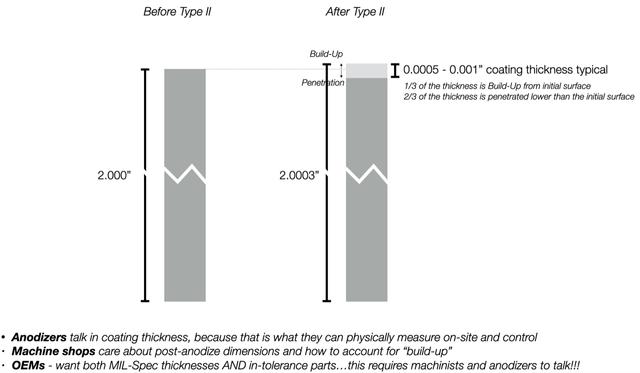
Surface Coating Thickness Can Affect Final Dimensions
Some CNC surface finishing processes create an additional layer on the part surface. Although these layers are usually very thin, they can influence the final dimensions of precision components.
Processes such as anodizing, electroplating, and powder coating add material to the surface. For example, anodizing aluminum creates an oxide layer that improves corrosion resistance and surface durability. However, when applied to parts with tight tolerances, engineers need to consider the thickness of the anodized layer to ensure critical dimensions remain within specification.
Similarly, electroplating adds a metallic coating that can affect features such as holes, threads, and mating surfaces. For high-precision components, the expected coating thickness should be included during the CNC machining design process.
Critical Features May Require Masking Before Finishing
Not every surface of a CNC machined part requires the same finishing treatment. Some areas may need to remain untreated to maintain precise assembly requirements.
For example, threaded holes, bearing fits, sealing surfaces, and contact areas may require masking before anodizing, plating, or coating. This prevents unwanted material buildup and ensures that the finished component maintains proper fit and function.
By identifying critical areas before surface treatment, manufacturers can avoid tolerance issues and reduce the need for additional machining after finishing.
Some Finishing Processes Remove Small Amounts of Material
While coatings and plating add material to the surface, certain finishing processes can slightly remove material.
Polishing is a typical example. During polishing, abrasive materials remove small surface imperfections to create a smoother finish. This process is beneficial for improving appearance and reducing surface roughness, but excessive polishing may affect sharp edges, fine details, or dimensional accuracy.
For components with strict tolerance requirements, the amount of material removed during finishing should be considered during part design.
Design Considerations for CNC Parts With Surface Finishing
To achieve consistent results, engineers should include surface finishing requirements when preparing CNC part designs and technical drawings.
Important considerations include:
- Specify whether dimensions are required before or after finishing
- Identify critical surfaces that require masking
- Consider coating thickness when defining tolerances
- Communicate surface finish requirements clearly
A well-planned manufacturing process ensures that CNC machining and surface treatment work together to achieve the required combination of precision, appearance, and performance.
Xtproto’s CNC Machining Surface Finishing Services
Choosing the right surface finish process is crucial for achieving the desired appearance, performance, and durability of CNC machined parts. However, managing CNC machining and surface finish separately increases production complexity, lead times, and quality control challenges. An integrated manufacturing approach allows surface finish requirements to be considered from the very beginning of the machining process.
Xtproto offers comprehensive CNC machining and surface finish solutions to help customers produce consistently high-quality, dimensionally accurate finished parts. By combining advanced CNC machining capabilities with professional post-processing services, Xtproto supports a wide range of projects, from prototyping to mass production.
Leveraging its extensive experience in precision CNC machining, Xtproto offers a variety of surface finish options, including anodizing, sandblasting, polishing, electroplating, passivation, powder coating, and other custom surface finish processes. These treatments help improve the corrosion resistance, wear resistance, surface appearance, and overall performance of parts.
For aluminum CNC parts, Xtproto offers surface treatment solutions such as Type II anodizing, hard anodizing, and sandblasting to enhance surface protection and visual appeal. For stainless steel components, processes like passivation and polishing help improve corrosion resistance and achieve the desired surface finish.
Surface treatment requirements are carefully considered throughout the entire manufacturing process. From material selection and CNC machining to surface treatment and inspection, Xtproto is committed to ensuring that treated parts maintain the required tolerances and meet customer specifications.
By providing precision CNC machining and integrated surface treatment services, Xtproto offers a streamlined solution for customers seeking high-quality CNC machined parts, reliable performance, consistent appearance, and reduced production complexity.
Conclusion
CNC machining determines the shape, size, and functional characteristics of parts, while appropriate surface treatment helps optimize properties such as corrosion resistance, wear resistance, hardness, and visual quality. Due to the variety of surface treatment methods, selecting the most suitable CNC surface treatment requires careful consideration of factors such as material type, application requirements, environmental conditions, dimensional tolerances, and cost. For example, anodizing is widely used for aluminum parts to improve their corrosion resistance and appearance; while passivation is often used for stainless steel parts that require enhanced corrosion resistance without affecting dimensions.
Understanding how different surface treatment methods affect CNC-machined parts helps engineers make better design and manufacturing decisions. By considering surface treatment requirements early in the machining process, manufacturers can achieve an ideal balance between accuracy, functionality, appearance, and production efficiency. Choosing the appropriate surface treatment method not only ensures that CNC-machined parts meet technical specifications but also guarantees their long-term stable operation in the intended application.