
What Is CNC Boring? Process, Machines, Tools, Types, Costs, and Applications
In precision manufacturing, many components require not only the machining of holes but also the assurance of positional accuracy, dimensional consistency, and surface quality. CNC boring is a high-precision machining process that enlarges, corrects, and finishes existing holes to achieve tighter controls on diameter tolerances, coaxiality, and roundness. Unlike drilling, boring is primarily used to enhance the precision and performance of holes and is widely applied in sectors such as aerospace, automotive, medical equipment, energy, and industrial machinery.
Relying on advanced CNC boring machines, precision cutting tools, and stable machining parameters, CNC boring can handle complex hole-machining requirements ranging from small precision parts to large structural components. This article outlines the working principles, equipment, common tools, process types, cost factors, and design considerations associated with CNC boring, helping you make informed decisions when selecting the right boring solution.
What is CNC Boring?
CNC boring is a precision machining process that uses CNC machine tools to enlarge, correct, and finish existing holes. By rotating a boring tool to remove excess material from within the hole, the process improves dimensional accuracy, roundness, coaxiality, and surface quality. While drilling is primarily used to create an initial hole, boring is typically employed to process an existing hole to meet higher precision requirements. CNC boring is widely used for components requiring precise hole fits, such as bearing housings, casings, engine parts, hydraulic components, and large mechanical structural parts.
What is the working principle of CNC boring?
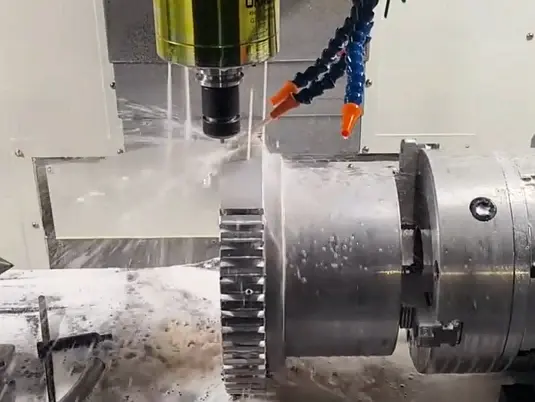
CNC boring involves using a rotating boring tool to machine an existing hole, thereby enlarging its diameter, correcting positional errors, and improving dimensional accuracy, roundness, and surface quality. During the process, the boring tool moves along the axis of the hole while its cutting edge removes material from the inner wall. Depending on the part’s structure and machining requirements, CNC boring typically includes:
- Blind hole boring: Machining performed from one side of the hole; suitable for hole structures that do not need to pass entirely through the part.
- Through-hole boring: The tool passes through the entire length of the hole; used for machining through-holes and improving dimensional consistency.
To ensure machining stability, cutting speed, feed rate, depth of cut, and tool overhang must be properly controlled. Excessive cutting parameters or excessive tool overhang can lead to vibration, tool deflection, and reduced hole accuracy.
Different boring applications employ various machining methods; for instance, line boring is used for large mechanical components where coaxiality across multiple holes must be maintained, while precision boring achieves superior dimensional accuracy through specialized tools and rigorous process control.
In actual production, factors such as tool material, machining parameters, cooling methods, and machine tool rigidity directly affect the final machining results. By optimizing these factors, CNC boring can consistently achieve high-precision internal hole machining.
Types of CNC Boring Machines
CNC boring machines are designed with high-rigidity structures, precision spindles, multi-axis control systems, and advanced tooling capabilities to achieve accurate internal machining. Different machine configurations are selected based on part size, bore requirements, complexity, and production needs.
- Horizontal Boring Machine: Equipped with a horizontal spindle and rigid workholding system, these machines are ideal for large and heavy components requiring deep holes, precise alignment, and complex internal features. They are widely used for industrial equipment, automotive components, and large castings.
- Vertical Boring Machine: Featuring a vertically oriented spindle and stable worktable design, vertical boring machines are suitable for large-diameter and heavy cylindrical parts. They provide excellent stability when machining large structural components.
- Jig Boring Machine: Designed for ultra-precision hole positioning, jig boring machines use high-accuracy spindle systems and precise positioning control to manufacture molds, tooling, and components requiring tight positional tolerances.
- Line Boring Machine: Used for machining multiple holes along a common axis, line boring machines are commonly applied in heavy machinery, engine blocks, and large assemblies where accurate hole alignment is critical.
- CNC Machining Centers with Boring Capability: These machines integrate boring with milling, drilling, and multi-axis machining. Equipped with CNC control, automatic tool changers, and advanced inspection systems, they provide flexible solutions for complex parts and low-to-high volume production.
What Are the Different Types of CNC Boring?
CNC boring operations vary depending on part size, hole geometry, accuracy requirements, and machining applications. Different boring methods are selected to achieve the required hole diameter, alignment, and surface finish.
- Horizontal Boring:
Uses a horizontally oriented spindle to machine deep holes and large components. It is commonly used for heavy equipment, industrial machinery, and large structural parts. - Vertical Boring:
Uses a vertical spindle configuration and is suitable for large-diameter holes and heavy cylindrical components, such as housings and large castings. - Jig Boring:
Designed for ultra-precise hole positioning, jig boring provides exceptional accuracy for molds, tooling, and precision components. - Line Boring:
Machines multiple holes along a single axis to maintain accurate alignment. It is widely used for heavy machinery parts, engine blocks, and equipment repair. - Deep Hole Boring:
Used for machining long internal holes while maintaining dimensional accuracy and surface quality. Proper tooling and process control are essential to reduce tool deflection. - Fine Boring:
A precision finishing process used to achieve tight tolerances and improved surface finishes after rough boring operations. - Back Boring:
Machines internal features from the opposite side of an existing hole, often used when access is limited or specific internal profiles are required. - CNC Boring:
Uses computer-controlled machining systems to automate boring operations, enabling consistent accuracy, multi-axis machining, and efficient production.
Common CNC Boring Tools
The choice of boring tools directly affects machining accuracy, surface finish, and tool life. Common tools include:
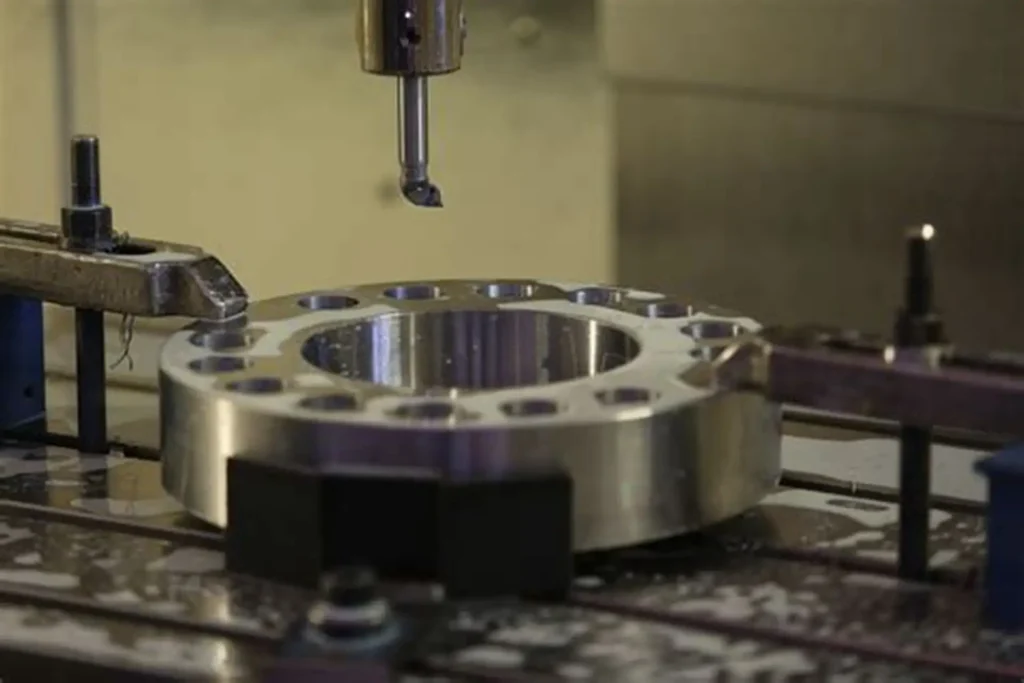
- Boring Bars: Used to hold cutting inserts and remove material from internal surfaces while maintaining stability.
- Boring Heads: Adjustable tools that allow precise diameter control for different hole sizes and finishing requirements.
- Cutting Inserts: Replaceable carbide, ceramic, or diamond inserts selected based on material and machining conditions.
- Inspection Tools: Micrometers, bore gauges, depth gauges, and digital probes are used to verify hole size, depth, and accuracy.
- Automatic Tool Changers: Used in CNC machines to switch tools automatically, improving efficiency and reducing setup time.
CNC Boring vs Other Machining Processes
CNC boring differs from other machining methods mainly in its purpose, accuracy, and application. The right process depends on whether the goal is creating a hole, improving hole accuracy, or achieving a specific surface finish.
| Process | Key Difference | Common Applications |
| CNC Boring | Enlarges existing holes and improves diameter accuracy, alignment, and surface finish | Precision bores, bearing housings, engine components |
| CNC Drilling | Creates new holes quickly but provides lower accuracy than boring | Fastener holes, mounting holes, general hole machining |
| Reaming | Finishes existing holes with improved size accuracy and surface quality | Precision fitting holes, shafts, pins |
| CNC Milling | Creates external features such as pockets, slots, and contours | Complex parts, structural components, housings |
| Honing | Focuses on ultra-smooth internal surfaces and fine finishing | Hydraulic cylinders, high-precision internal surfaces |
CNC Boring Tolerances and Surface Finishes
CNC boring is widely used for precision internal machining where tight dimensional control and consistent surface quality are required. The achievable tolerance and surface finish depend on factors such as machine rigidity, tooling selection, material properties, and machining parameters.
CNC Boring Tolerances
Typical CNC boring tolerances include:
- Standard Tolerance: ±0.10 mm, suitable for general machining applications.
- Precision Tolerance: ±0.05 mm to ±0.02 mm, used for critical components requiring higher accuracy.
- Geometric Accuracy: CNC boring can achieve excellent control over concentricity, roundness, and cylindricity for complex parts.
CNC Boring Surface Finishes
Different finishing options can be applied based on performance requirements:
- As-Machined Finish: Standard finish directly after boring operations.
- Precision Machined Finish: Improved surface quality for tighter requirements.
- Grinding: Used when extremely smooth surfaces and high dimensional accuracy are required.
- Polishing: Provides a smoother internal surface for reduced friction and improved appearance.
Materials Supported for CNC Boring
CNC boring can be performed on a wide range of engineering materials. With the right tooling and machining parameters, it can achieve accurate hole dimensions and consistent surface quality across different material types.
Common materials include:
- Steel: Widely used in automotive, industrial equipment, and structural applications where high strength and durability are required.
- Aluminum Alloys: Lightweight and highly machinable, making them ideal for aerospace, automotive, and precision components.
- Stainless Steel: Provides excellent corrosion resistance and is commonly used for medical equipment, food processing, and industrial parts.
- Cast Iron: Frequently used for engine blocks and heavy machinery components, where precise bore alignment and durability are critical.
- Titanium Alloys: Known for high strength-to-weight ratio and excellent performance in aerospace and medical applications.
- Copper Alloys: Including copper, brass, and bronze, these materials are selected for electrical conductivity, wear resistance, and corrosion resistance.
- Engineering Plastics: Materials such as PEEK, POM, and Nylon are suitable for lightweight components requiring chemical resistance, insulation, or low friction.
By selecting suitable cutting tools and optimizing machining parameters, CNC boring can deliver precise internal features across a broad range of metals and plastics.
Advantages and Limitations of CNC Boring
CNC boring provides excellent precision, flexibility, and reliability for machining accurate internal features. However, like any machining process, it also has certain limitations that should be considered when selecting the right manufacturing method.
Advantages of CNC Boring
- High Precision and Accuracy: CNC boring can achieve tight tolerances and excellent control over hole diameter, alignment, roundness, and cylindricity.
- Improved Surface Finish: The process produces smooth internal surfaces, making it suitable for components where reduced friction and reliable performance are required.
- Wide Material Compatibility: CNC boring can process various metals and engineering plastics, including steel, aluminum, stainless steel, titanium, and more.
- Corrects Machining Errors: It can refine existing holes and correct dimensional or alignment errors from previous operations such as drilling or casting.
- Flexible Hole Sizes: CNC boring is suitable for machining both small precision holes and large-diameter bores.
- Consistent Production Quality: With CNC control and optimized tooling, boring operations provide repeatable results for prototype and production applications.
Limitations of CNC Boring
- Higher Equipment Investment: CNC boring machines require significant investment due to their advanced control systems, rigid structures, and precision capabilities.
- Requires Skilled Programming and Setup: Proper tool selection, machining parameters, and fixture setup are essential to achieve the desired accuracy.
- Machine Rigidity Requirements: Poor stability or excessive vibration can affect bore accuracy, especially during deep-hole machining.
- Tool Wear in Difficult Materials: Hard materials and high-temperature alloys may increase tool wear and require specialized cutting tools.
- Maintenance Requirements: Regular machine maintenance and tool management are necessary to maintain consistent performance.
- Large Space Requirements: Heavy-duty boring machines, especially horizontal and floor-type models, require substantial workspace.
CNC boring is an effective solution for precision internal machining when accuracy, consistency, and surface quality are critical. Proper equipment selection and process control help overcome its limitations and ensure reliable results.
Factors Affecting CNC Boring Cost
The cost of CNC boring depends on various factors, including machine requirements, material properties, tooling selection, labor, and production volume. Understanding these factors helps manufacturers choose the right process and optimize overall machining costs.
- Machine Type and Capability:
The selected boring equipment affects machining costs. Advanced CNC boring machines provide higher accuracy and automation but require greater investment compared with conventional machines. - Material Type:
Material hardness, machinability, and cutting performance directly influence tool wear and machining time. Difficult-to-machine materials such as hardened steel, titanium, and nickel alloys may require specialized tooling and slower cutting speeds. - Tooling Requirements:
Boring bars, cutting inserts, and precision tools vary depending on the application. High-performance tooling can improve accuracy and tool life but may increase machining costs. - Part Complexity:
Complex geometries, deep bores, tight tolerances, and difficult-to-access features require additional programming, setup, and process control. - Labor and Setup Time:
Skilled operators and engineers are required for programming, machine setup, and quality inspection, especially for precision boring applications. - Production Volume:
Large production runs can reduce the cost per part through optimized setups and efficient machining cycles, while prototypes and low-volume orders may have higher unit costs due to setup requirements. - Maintenance and Machine Downtime:
Regular maintenance and proper machine management help maintain accuracy and prevent unexpected downtime that can affect production efficiency.
CNC Boring Process Time and Efficiency Factors
The time required for CNC boring depends on factors such as material type, bore size, hole depth, tolerance requirements, and machining complexity. Simple boring operations may take only a few minutes per hole, while large or precision components may require longer machining cycles due to additional setup, tooling, and inspection requirements.Several factors affect CNC boring efficiency and accuracy:
- Machine Rigidity: A stable and rigid machine structure helps reduce vibration and tool deflection, improving bore accuracy and surface quality.
- Tool Selection: Choosing the right boring bars, cutting inserts, and precision tools based on material and hole requirements helps maintain consistent performance.
- Cutting Parameters: Optimized spindle speed, feed rate, and cutting depth improve machining efficiency while extending tool life.
- Cooling and Lubrication: Proper coolant application controls heat generation, reduces tool wear, and improves surface finish.
- Quality Inspection: Measuring tools such as bore gauges and CMM systems help verify hole dimensions and ensure parts meet required tolerances.
- Machine Maintenance: Regular inspection of tooling, alignment, lubrication systems, and machine components helps prevent downtime and maintain long-term machining accuracy.
CNC Boring Design Considerations
A well-designed part helps achieve better accuracy, efficiency, and cost control during CNC boring operations. Important design factors include hole diameter, depth, location, tolerance requirements, and tool accessibility. Deep or narrow bores may require specialized tooling and additional process control to minimize tool deflection and vibration. Proper wall thickness and part rigidity help prevent deformation during machining, while realistic tolerance requirements can reduce unnecessary processing steps and inspection costs. Designers should also consider tool access and avoid overly complex internal features that may increase machining difficulty. By optimizing part design before production, CNC boring can deliver consistent dimensions, reliable performance, and high-quality internal features.
When to Use CNC Boring?
CNC boring is typically used when existing holes require higher accuracy, better alignment, or improved surface quality than standard drilling can provide. It is ideal for applications where precise hole dimensions and reliable fitting are critical.
This process is commonly used for components with precision fit requirements, such as bearing housings, engine blocks, hydraulic cylinders, and gearbox components. In these applications, accurate bore diameter, concentricity, and surface finish are essential for proper assembly and long-term performance.
CNC boring is also suitable for large and complex parts where maintaining hole alignment is challenging, including aerospace structures, industrial machinery components, and heavy equipment parts. By refining pre-machined holes, CNC boring helps correct positioning errors and achieve the accuracy required for demanding applications.For parts that require tight tolerances, smooth internal surfaces, and consistent hole quality, CNC boring provides a reliable solution for precision manufacturing.
How to Choose a CNC Boring Service Provider
Choosing the right CNC boring service provider is essential for achieving accurate, reliable, and cost-effective machined parts. A qualified manufacturer should have advanced machining equipment, experienced engineers, strong process control, and reliable quality inspection capabilities.
At XTPROTO, our CNC boring services are supported by advanced CNC machining equipment, professional engineering teams, and comprehensive manufacturing capabilities. We handle a wide range of materials and part requirements, from precision prototypes to production-scale orders, while maintaining strict control over bore accuracy, alignment, and surface quality.
When selecting a CNC boring partner, it is important to consider machining capability, tolerance control, material expertise, and inspection standards. XTPROTO uses precision tooling, optimized machining processes, and advanced inspection equipment, including CMM systems, to verify critical features and ensure consistent part quality.
Industry experience and production capacity are also important factors when choosing a supplier. With experience serving industries such as aerospace, automotive, medical, and precision machinery, XTPROTO provides reliable CNC boring solutions for complex components, tight-tolerance features, and demanding production requirements.