
What is CNC Machining Polypropylene (PP)?
CNC machining polypropylene (PP) is essentially the process of cutting solid PP stock—whether it’s sheet, rod, or block—into a finished part using computer-controlled tools. Unlike injection molding or 3D printing, nothing is being formed or melted into shape. The material starts solid, and everything you get in the final part comes from removing material, not reshaping it.
That difference matters more than it sounds. When you’re working with PP, molding often runs into limits pretty quickly. Thick sections tend to sink, internal features get restricted by tooling, and dimensional control can drift because of shrinkage during cooling. Machining avoids most of that. You’re working from fully dense material, so what you design is much closer to what you actually get, especially when tolerances start getting tight—around ±0.125 mm or so.
In practice, this is why engineers switch to CNC for PP parts that can’t be reliably molded. It’s not just about geometry, it’s also about consistency. Parts cut from extruded stock don’t have the same risk of internal voids or uneven density, which becomes important in applications where chemical resistance or structural reliability matters.
The other reason is more practical. Injection molding introduces internal stress as the material cools in the mold, and that stress doesn’t just disappear—it shows up later as warping or dimensional drift. With CNC machining, especially if the material is annealed, that problem is largely reduced. The part stays stable, even when temperatures change or when it’s under load.
There’s also the cost and timeline side of it. If you’re not running high volumes, molding doesn’t make much sense. Tooling alone can take weeks and cost well into five figures. CNC machining skips that entirely. You go straight from CAD to parts, usually within days, which makes it the more practical choice for prototyping and low-volume production.
Material Core: What Makes PP Unique for Machining?
Polypropylene doesn’t machine like Acetal (POM) or Nylon. On paper, it looks like a simple, low-cost plastic, but on the CNC table, it is notoriously temperamental. Most dimensional errors and burr issues in PP aren’t just process errors—they are direct consequences of the material’s unique physical DNA.
The Semi-Crystalline Challenge: Why PP Doesn’t “Cut Clean”
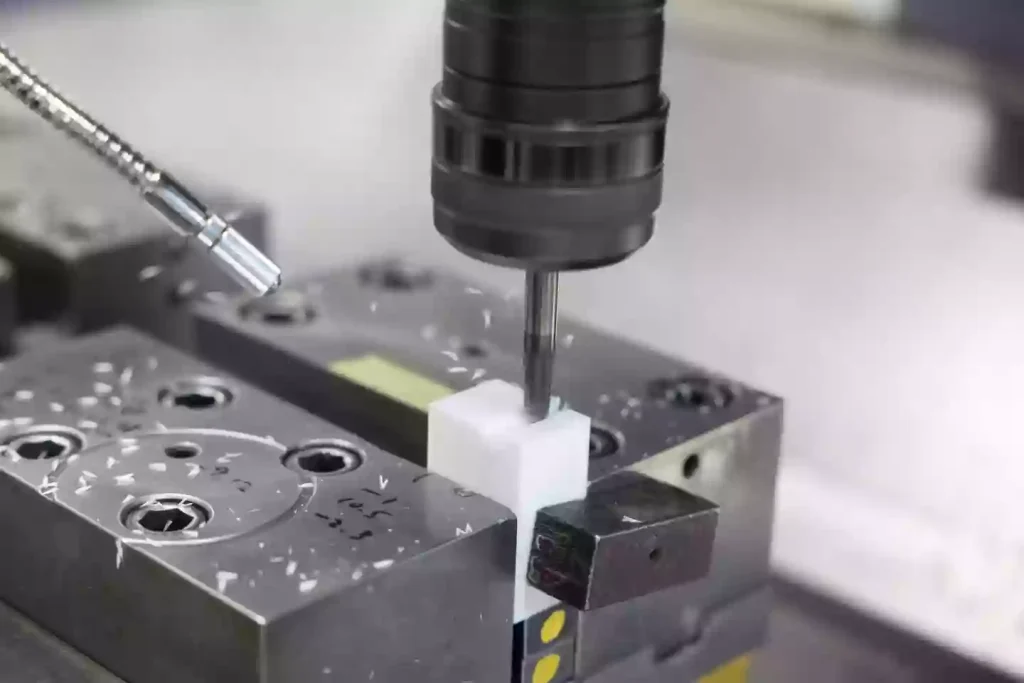
As a semi-crystalline material, PP possesses a dense molecular structure combined with high elasticity. This creates a specific phenomenon known as Elastic Recovery.
- The Spring-Back Effect: Unlike Acrylic, which suffers brittle fracture during cutting, PP compresses under the tool’s pressure and then springs back. This is why a drilled hole often measures smaller than the drill bit itself. It’s not an inaccurate tool; it’s the material recoiling.
- Residual Stress & Warping: PP has high internal stress. If the material removal is uneven—such as machining a deep pocket on only one side of a large plate—the part will “potato chip” or warp over the following 24 hours as those stresses reach a new equilibrium. This is a critical factor for large-scale industrial components.
Homopolymer vs. Copolymer: The Make-or-Break Selection
In the world of CNC, choosing the wrong grade of PP is the fastest way to fail a project.
- Homopolymer PP (PPH): Stiffer, more stable, and more “predictable.” PPH produces cleaner chips and allows for tighter dimensional control. For structural plates or rigid industrial components, PPH is the engineering standard.
- Copolymer PP (PPC): Softer and superior in impact resistance, but a nightmare for machinists. PPC is significantly more “gummy.” It tends to create long, stringy burrs rather than clean chips. If the feed rates aren’t perfect, the material will smear and weld itself back onto the part or the tool. Its primary CNC use is for parts requiring Living Hinges, where its flexibility is an asset.
The Narrow Thermal Window: Heat is the Real Enemy
PP’s machining difficulties stem largely from its poor thermal management capabilities.
- Viscoelastic State: At room temperature, PP is technically in a “viscoelastic” state—it’s not fully rigid. This makes it prone to tearing or pulling rather than clean shearing.
- Low Melting Point: With a melting point between 160°C and 171°C, the margin for error is razor-thin. If chip evacuation is poor or the tool edge is even slightly dull, heat accumulates instantly. The PP will soften, become “sticky,” and eventually melt, destroying the surface finish and potentially snapping the tool.
- “Deflection” under Pressure: Because of its low modulus of elasticity, PP parts tend to “push away” from the tool (deflection) if not supported by custom jigs or vacuum tables, leading to inconsistent wall thicknesses.
Chemical Resistance: A Benefit and a Limitation
PP’s legendary chemical stability is why it dominates the medical and chemical processing sectors. However, from a manufacturing standpoint, this inertness is a double-edged sword.
- No Secondary “Fixes”: You cannot easily glue, paint, or solvent-bond Polypropylene. Most surface finishes and coatings simply won’t stick.
- The “One-Shot” Rule: Because post-processing is nearly impossible, the CNC finish must be perfect right off the machine. There is no “sanding and painting” to hide machining marks later. Your toolpaths and parameters must be optimized for a final finish on the first pass.
The Manufacturing Process: How PP Is Actually Machined
PP machining is really about controlling heat and internal stress. If those two aren’t managed properly, you’ll see dimensional drift and poor surface finish. Everything in the process is basically built around keeping those variables under control.
Pre-machining: deal with internal stress first
Starting machining immediately on raw PP stock is risky because it carries internal stress from extrusion, and once you remove material—especially with deep pockets or uneven cuts—that balance is broken, causing the part to warp either during machining or after it’s off the machine; this is why annealing is often used, where the material is heated and slowly cooled in a controlled way to relieve stress, resulting in much better dimensional stability, particularly for large plates and thin-walled parts.
Roughing: don’t let heat build up
During roughing, the main goal isn’t just removing material quickly, but preventing heat from building up, because PP has poor thermal conductivity and any retained heat will soften the material, leading to smearing or even tool adhesion; in practice, higher feed rates are used to keep the tool moving and let the chips carry heat away, and in many cases, high-pressure air works better than liquid coolant since it keeps the cutting zone cool without creating a slippery surface that complicates re-clamping.
Surface Finishing: this pass decides everything
PP offers very limited post-processing options, so the final surface quality is determined during finishing, which is why only a small stock allowance—typically around 0.2–0.3 mm—is left to minimize cutting forces and avoid material deflection, and climb milling is generally preferred because it produces a cleaner cut with less edge tearing, resulting in a more consistent surface finish.
Deburring: the annoying part
PP tends to form soft, stringy burrs that don’t break off easily and often deform instead of snapping, so deburring usually requires manual work with sharp tools to carefully remove them without damaging the surface, and while cryogenic deburring can be used for complex batch parts by making the burrs brittle before removal, manual finishing is still the most reliable method for high-quality components.
Tooling and Equipment Selection for PP Machining
During the CNC machining of PP, the choice of cutting tools and machine tools fundamentally determines whether the result is a stable, finished part or merely a mass of heat-deformed plastic. PP inherently possesses poor thermal conductivity and is a relatively soft material; therefore, the equipment used must satisfy two core criteria: the cutting action must be crisp and decisive, and heat must not be allowed to linger within the material.
Tool geometry: why 1-flute is your best friend
PP does not respond well to the multi-flute tooling logic typically applied to metals; the most common—and most stable—choice is a single-flute cutter or an O-flute end mill. The critical factor here is not “how much is cut,” but rather “how quickly it is evacuated.” Since PP heats up rapidly during cutting, insufficient chip evacuation space causes chips to accumulate within the tool flutes, where they quickly soften. This ultimately leads to chip adhesion (sticking), stringing, and even a melted, smeared surface finish. The primary advantage of a single-flute cutter lies in its expansive chip evacuation space, which allows chips to rapidly carry heat away and prevents clogging. Concurrently, it is imperative that the cutting edge remains razor-sharp and highly polished; otherwise, even the slightest friction will cause heat to accumulate with alarming speed.
Spindle & feed rates: the physics of high-speed cutting
The underlying logic for machining PP is “cut in fast, get out fast.” High spindle speeds—typically ranging from 15,000 to 20,000 RPM—serve as the foundation; however, the truly critical element is matching the feed rate appropriately. If the feed rate is too slow, the cutting tool will merely rub against the material’s surface rather than performing a true cutting action. This friction directly drives up localized temperatures, causing the material to soften and adhere to the tool. A more effective approach involves maintaining a steady and sufficiently high feed rate to ensure the tool executes a genuine shearing action. This allows the chips to carry the heat away, preventing it from becoming trapped within the workpiece—a strategy essential for maintaining clean edges and dimensional stability.
Workholding: the soft touch for soft plastic
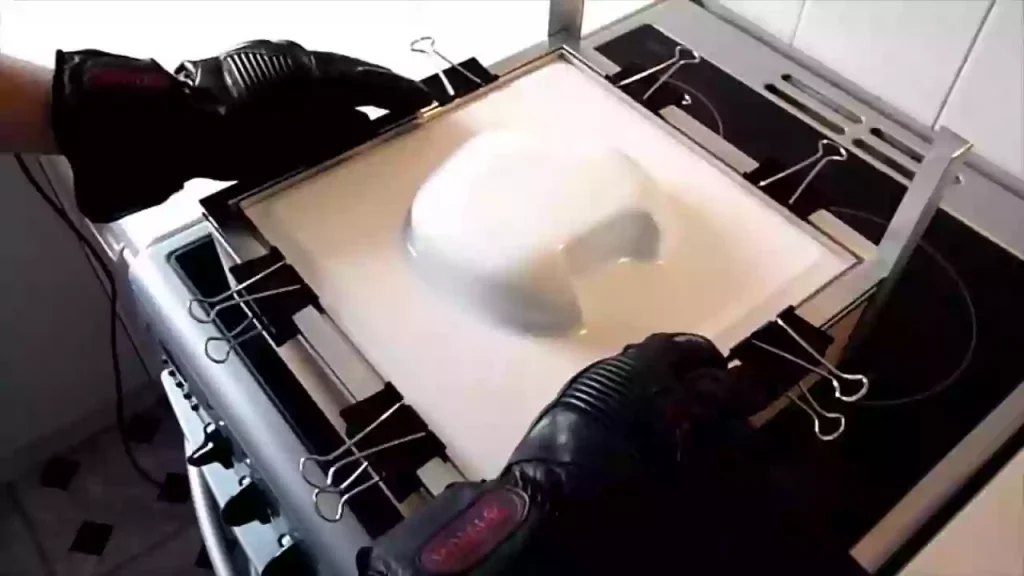
Workholding is perhaps the most frequently underestimated aspect of machining PP. Because the material is inherently soft and elastic, clamping it with the same high force typically applied to metals will cause the part to deform under pressure during machining. Consequently, once the clamps are released, the part will spring back to its original shape, resulting in significant dimensional deviation. Thin-walled parts typically utilize vacuum adsorption to ensure uniform force distribution, while parts with complex geometries employ soft jaws or custom fixtures to disperse clamping pressure. For structures that are particularly susceptible to deformation, temporary support structures must also be added during machining to prevent cutting forces from causing the part to be “pulled away” or suffer localized collapse during the process.
Programming & CAM Strategies: The Secret Sauce
In CNC machining, CAM programming is essentially the critical factor that determines success or failure. PP is a soft, somewhat elastic material that is prone to heat buildup; if one attempts to program it using the same mindset applied to metals, the result is typically dimensional instability, melted or smeared edges, or material deformation. Effective toolpath design goes beyond merely “cutting the shape”—more importantly, it involves controlling heat generation and mechanical stress.
Heat Control via Toolpaths: Using Trochoidal Milling
The greatest challenge in machining PP is preventing heat accumulation. Consequently, toolpaths generally avoid “full-width cuts” (engaging the cutter across its entire diameter), as this approach keeps the tool fully engaged with the material for extended periods, making it difficult for heat to dissipate.
A more commonly adopted approach involves Trochoidal Milling or Dynamic Milling paths. These toolpaths are characterized by a relatively stable cutting load and feature continuous, brief intervals of “air cutting” (cutting through empty space), allowing both the tool and the material sufficient time to cool down. As a result, even during the machining of deep cavities or long paths, issues such as softened edges, material rollover, or localized melting are significantly less likely to occur.
Climb vs. Conventional: Why Climb Milling Wins
When machining PP, Climb Milling is almost always the default choice, barring any specific exceptional circumstances.
The inherent problem with Conventional Milling is that the cutting edge first “rubs” against the material before biting into it. This process generates additional frictional heat and significantly increases the likelihood of surface burrs and localized whitening. Given PP’s inherent softness, the adverse effects of this friction are particularly pronounced.
In contrast, Climb Milling involves the tool cutting directly into the material at its thickest point. The cutting action is cleaner and more decisive, allowing heat to be efficiently carried away by the chips. The result is a cleaner surface finish, sharper edges, and a marked reduction in burring.
Living Hinge Programming: The 1-Million-Cycle Target
One of the quintessential applications for PP is the “living hinge”—a thin, flexible section designed to bend repeatedly. However, creating a living hinge via CNC machining that can withstand long-term use hinges critically on precise toolpath control.
The hinge zone is typically machined to a thickness ranging between 0.25 mm and 0.5 mm; if the section is too thick, it will resist bending, whereas if it is too thin, it becomes susceptible to fatigue failure.
From a programming perspective, the toolpath’s cutting direction (and the resulting surface texture) is generally oriented perpendicular to the intended fold line. This strategy prevents the formation of stress concentrations aligned with the hinge axis, thereby ensuring the hinge’s durability and longevity. Additionally, the sides of the hinge require a rounded transition rather than sharp right angles; this significantly reduces the risk of cracking during repeated opening and closing cycles. When executed properly, this structural design can withstand an exceptionally high number of cycles without failure.
Cost & Financial Analysis: The Economics of Machining
When evaluating the feasibility of a CNC machining project using PP (polypropylene), cost often exerts a more direct influence on decision-making than the technical aspects themselves. While PP is an inherently inexpensive material, the overall machining cost is primarily determined by labor hours, structural complexity, and production scale—factors that can cause costs to fluctuate significantly.
Material Costs: Why PP is the most budget-friendly engineering plastic
Among engineering plastics, PP consistently ranks in the lowest tier in terms of material cost.
Its price typically ranges from $2.00 to $3.50 per kilogram. Compared to materials like PEEK or PTFE, this cost is almost negligible. Even in scenarios where material utilization is low—such as when extensive slotting or large-scale material removal is required—the overall material budget remains under no significant strain.
Consequently, PP is particularly well-suited for large-format structural components, chemical storage vessels, and prototyping projects requiring frequent design iterations; it is almost always the first choice in scenarios where material costs are a critical concern.
Operation Fees: How scale reduces cost per part
Machining fees typically far exceed material costs, and this component of the expense depends primarily on the factory’s equipment scale and production methodology.
In factories equipped with a large-scale machine park (e.g., 200+ CNC machines), the allocated cost per individual part decreases significantly. This is not merely due to the sheer number of machines, but because the entire production workflow can be standardized: production scheduling becomes more flexible, machine changeovers are faster, and cutting tools and consumables can be procured in bulk—all of which continuously drive down the unit cost.
Conversely, in smaller machine shops with limited equipment, the cost of producing the exact same PP part may be quoted higher simply because it occupies valuable machine time for a longer duration.
Labor Costs: Setup Time vs. Runtime
Within the cost structure of PP machining, labor costs are primarily concentrated in the initial preparation and post-processing stages, rather than in the actual cutting process itself.
The “setup” phase typically encompasses programming, fixture design, and first-part validation. For structurally complex PP parts (such as those featuring living hinges or thin-wall geometries), this process may require anywhere from 2 to 5 hours of engineering time. For small-batch orders, this labor cost is directly reflected in the unit price; however, as the production batch size increases, the impact of this amortized cost on the final unit price diminishes significantly.
Post-processing represents another critical cost factor. PP is prone to developing burrs or slight stringing during machining, meaning that complex geometries often require additional manual finishing to achieve the desired quality standard. If the design features deep slots, thin walls, or areas with stringent surface finish requirements, the deburring time may exceed the machining time; this is one of the primary reasons for the increased cost of complex PP parts.
Common Components and Accessories: From Labs to Factories
PP (Polypropylene) machined parts span a wide range of sectors—from chemicals and medical devices to consumer electronics. The primary reason for its widespread adoption is the excellent balance it strikes between chemical resistance, low water absorption, and cost-effectiveness; consequently, it is the material of choice in numerous scenarios requiring stable contact with liquids or long-term operational durability.
Industrial: Chemical tanks, manifolds, and pump impellers
In the industrial sector—particularly within chemical processing and fluid handling systems—PP is an extremely common material choice.
- Chemical Tanks: Small-scale storage vessels designed for holding acidic or alkaline media. The key advantage of CNC machining in this context is its ability to produce uniform wall thicknesses and precise drainage angles—features that are often difficult to achieve consistently using injection molding or welded fabrication methods.
- Manifolds: Complex fluid manifolds are ubiquitous in semiconductor manufacturing and chemical processing equipment. By directly CNC machining multi-channel fluid pathways into PP sheets or blocks, manufacturers can significantly reduce the risk of leaks while ensuring smooth internal surfaces, thereby minimizing fluid flow resistance.
- Pump Impellers: Impellers designed for the conveyance of corrosive liquids. Compared to their metal counterparts, PP impellers are lighter in weight and possess superior corrosion resistance; this combination helps reduce motor load and lower operational noise levels.
Medical: Sterilization trays and diagnostic tools
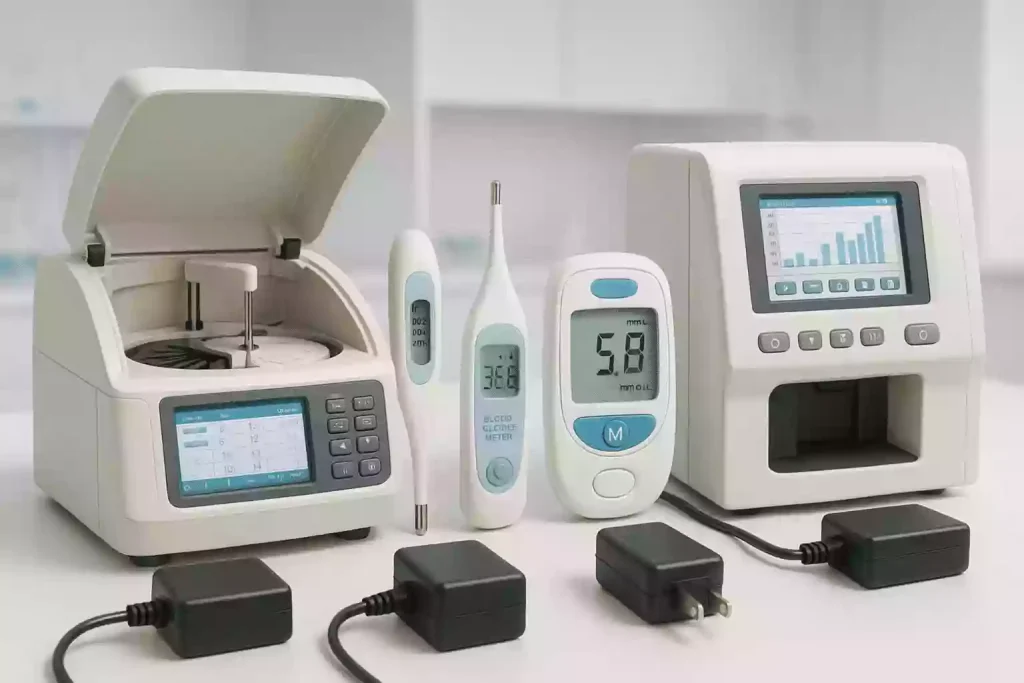
In medical and laboratory applications, PP’s primary advantages lie in its resistance to chemical cleaning agents and its consistent, stable material performance.
- Sterilization Trays: Trays used for the sterilization and storage of medical instruments. CNC machining allows for the creation of custom-fitted slots tailored to the specific shapes of the instruments. Furthermore, PP material can withstand high-temperature and high-pressure sterilization processes (autoclaving) without undergoing significant deformation or leaching contaminants.
- Diagnostic Tools: In in vitro diagnostic (IVD) equipment, PP is frequently used for components that come into direct contact with chemical reagents. Its low water absorption rate helps maintain the stability and accuracy of diagnostic tests, while its low material cost makes it an ideal choice for components requiring frequent replacement or single-use applications.
Living hinge cases and custom containers
In the realm of consumer electronics and product development, one of PP’s most iconic applications is the “living hinge” structure.
- Living Hinge Cases: By using CNC machining to precisely control the thickness of a specific hinge area (typically between 0.25 and 0.5 mm), it is possible to fabricate a single, monolithic flip-top or hinged structure. This type of structure can withstand repeated bending cycles over extended periods, making it highly suitable for use during the product validation and functional testing phases.
- Custom Containers: Specialized vessels designed for holding specific media—such as oils or chemical reagents—often utilized for packaging purposes. During small-batch or prototyping stages, CNC machining of PP is typically faster than injection molding, while offering greater reliability in terms of sealing and structural stability compared to 3D printing.
Technical Challenges: Why PP is Hard to Machine
While PP may appear easy to machine, it proves to be far from “friendly” in actual CNC operations. Unlike metals, which tend to produce stable, predictable chips, PP is prone to issues such as heat buildup, deformation, and stringing. These problems directly compromise both dimensional accuracy and surface finish. The root cause lies in PP’s poor thermal conductivity, low melting point, and high toughness—characteristics that make it difficult to rapidly dissipate the heat and stress generated during the cutting process.
The Gumming Problem: Dealing with a Low Melting Point
PP has a melting point of approximately 160°C, coupled with very poor thermal conductivity. Consequently, the heat generated during cutting tends to concentrate at the tool tip rather than dissipating into the surrounding material. If spindle speeds are too high or feed rates are insufficient, the localized temperature can rise into the material’s softening range. At this point, the PP transitions into a semi-molten state and adheres to the tool’s flutes—a phenomenon known as “tool gumming.” Once this occurs, the cutting action ceases to be a clean shearing process; instead, it devolves into friction and extrusion. This results in surface defects such as melt marks and stringing, while also significantly increasing the load on the cutting tool. Fundamentally, machining PP is a task of heat management, rather than simply a pursuit of maximum efficiency.
The Burr Dilemma: Achieving Clean Edges on a Ductile Material
Due to its high toughness, PP is more prone to elastic deformation than brittle fracture during the cutting process. As a cutting tool passes through the material, the plastic is first pushed aside and then springs back. This elastic recovery process creates continuous, flexible burrs along the cut edges. Unlike the burrs produced in metals—which tend to snap off easily—these plastic burrs remain attached to the surface, compromising both the aesthetic appearance and the assembly precision of the part. Mitigating this issue typically requires the use of exceptionally sharp cutting tools combined with a well-optimized cutting strategy. By reducing the chip load per pass and refining the toolpath, the “tearing” effect on the material can be minimized; failure to do so will inevitably result in significantly higher labor costs for post-machining deburring operations.
Thermal Expansion: Maintaining a ±0.125 mm Tolerance
PP exhibits a relatively high coefficient of thermal expansion and is highly sensitive to temperature fluctuations; during the manufacturing process, even minor temperature variations can result in dimensional changes. When cutting heat is unevenly distributed or ambient temperatures are unstable, parts are prone to slight warping or dimensional drift. A common scenario involves parts passing inspection on the machine tool, only to exhibit dimensional deviations after cooling. Consequently, high-precision PP components typically require processing in a relatively stable environment; furthermore, following machining, they are often allowed to rest for a specific period before final re-measurement to ensure dimensional stability.
Conclusion
CNC machining PP is not about pushing speed or chasing aggressive cutting strategies, but about controlling heat, stress, and material behavior in a very narrow process window. When these factors are managed properly, PP becomes a highly practical material for everything from chemical systems and medical components to functional prototypes and low-volume production parts. Its low cost, corrosion resistance, and design flexibility make it especially valuable when injection molding is either too expensive or too slow for iteration.
In practice, successful PP machining always comes down to experience with the material—knowing how it reacts under heat, how it deforms under load, and how it behaves after cutting. This is where process control, tooling strategy, and real-world machining experience matter more than theory.
At XTPROTO, we focus on exactly this type of engineering challenge. With in-house CNC capabilities across 3-axis, 4-axis, and 5-axis machining, we help clients turn PP designs into stable, production-ready parts with tight tolerances and consistent quality, from early prototypes to small-batch production.