
What is Space CNC Machining?
Space CNC machining refers to the manufacturing of components for spacecraft, satellites, and launch vehicles using Computer Numerical Control (CNC) technology. Because these components must operate in environments characterized by vacuum, radiation, and extreme thermal cycling, space CNC machining operates under strict technical constraints that separate it from standard industrial manufacturing.
Why Space Demands More: The Environmental Drivers Behind Space CNC Specifications
The technical requirements for space-grade machining are directly dictated by the orbital and deep-space environments. Standard manufacturing practices often fail to meet these demands due to three primary environmental factors:
Thermal Expansion and Contraction
In low Earth orbit (LEO), components alternate between extreme sunlight and shade, experiencing temperatures ranging from -150°C to +150°C within 90-minute intervals. Because metals expand and contract with temperature shifts, space machining requires materials with a low Coefficient of Thermal Expansion (CTE). Machinists must maintain micron-level dimensional stability to prevent mechanical binding or optical misalignment under these conditions.

Outgassing in a Vacuum
In a vacuum environment, volatile organic compounds and volatile elements within metals or plastics evaporate. This process, known as outgassing, can cause condensed films to form on optical lenses, solar arrays, and electronic sensors, degrading mission performance. Consequently, space CNC machining requires specific material selection (such as specific grades of aluminum, titanium, or PEEK) and clean machining processes to eliminate standard cutting fluids or lubricants that could cause outgassing.
Mechanical Stress During Launch
During the launch phase, components are subjected to high static G-forces and intense acoustic vibrations. Any structural weakness, internal material stress, or sharp internal corners left by incorrect toolpath programming can become failure points under stress. Space components require high structural integrity, which often necessitates machining parts out of a single solid block of material (monolithic manufacturing) to eliminate weak joints.
Technical Standards and Quality Tolerance
In standard commercial CNC machining, tolerances generally range from ±0.05mm to ±0.1mm. In contrast, space-grade components frequently require tolerances down to ±0.005mm (5 microns) or tighter, particularly for mating surfaces, seals, and propulsion parts.
Because space hardware cannot be serviced or repaired after deployment, the industry operates on a zero-defect principle. This strict requirement shifts the focus of CNC machining from high-volume throughput to high-precision verification. Every machining operation must be mapped against strict quality standards, ensuring that raw material certification, tool wear tracking, and post-process dimensional inspection are completely aligned before a part is cleared for assembly.
Advanced Materials in Space CNC Machining
Material selection in space manufacturing is driven by strength-to-weight ratios, thermal stability, and corrosion resistance. However, the properties that make these materials ideal for space environments also make them highly difficult to machine.
Titanium Alloys (e.g., Ti-6Al-4V)
Titanium is widely used for structural components, fasteners, and cryogenic applications due to its high strength, low density, and excellent resistance to extreme temperatures.
- Machining Challenge: Titanium has very low thermal conductivity. During the cutting process, the heat generated does not dissipate with the chips; instead, it concentrates at the cutting edge of the tool. This high thermal concentration accelerates tool wear, leads to work hardening of the material, and risks causing dimensional distortion if heat is not managed properly via specialized tool geometries and coatings.
Nickel-Based Superalloys (e.g., Inconel 718)
Inconel alloys maintain high tensile, fatigue, and creep-rupture strength at temperatures up to 700°C. This makes them standard for rocket propulsion systems, exhaust ducts, and combustion chambers.
- Machining Challenge: Inconel is categorized as a difficult-to-machine material (DTMM). It work-hardens rapidly during the shearing process. The combination of high abrasive resistance and cutting forces creates extreme stress on the CNC machine’s spindle and cutting tools, requiring high-rigidity machine setups, low cutting speeds, and precise feed rates to prevent tool breakage.
High-Performance Plastics (e.g., PEEK and Torlon)
For electrical insulation, thermal isolation, or lightweight bushings, space engineers often substitute metals with advanced polymers like Polyetheretherketone (PEEK) or Torlon.
- Machining Challenge: Unlike metals, engineering plastics have low melting points and high coefficients of thermal expansion. Excessive cutting speeds can cause the material to soften, deform, or smear against the tool, resulting in a loss of dimensional accuracy. Additionally, these materials generate high static electricity during milling, which attracts airborne contaminants and requires specialized chip removal methods.
Summary of Material Properties and Machining Impacts
| Material Group | Common Space Application | Primary Machining Risk |
| Titanium (Ti-6Al-4V) | Structural frames, brackets | Extreme heat concentration at tool tip |
| Inconel 718 | Rocket engine components | Rapid work hardening, high tool wear |
| PEEK / Polymers | Insulators, bushings | Thermal deformation during cutting |
Core Machinery: Equipment Requirements for Space CNC Machining
Producing aerospace and space-grade components requires machine tools with exceptional rigidity, thermal stability, and advanced multi-axis functionality. Compared with conventional manufacturing equipment, space machining demands significantly higher precision and process control. The key equipment used in this field includes:
Multi-Axis CNC Milling Centers (4-Axis and 5-Axis)
Traditional 3-axis machining is often inadequate for aerospace components because lightweight designs frequently involve highly complex geometries.
Technical Necessity:
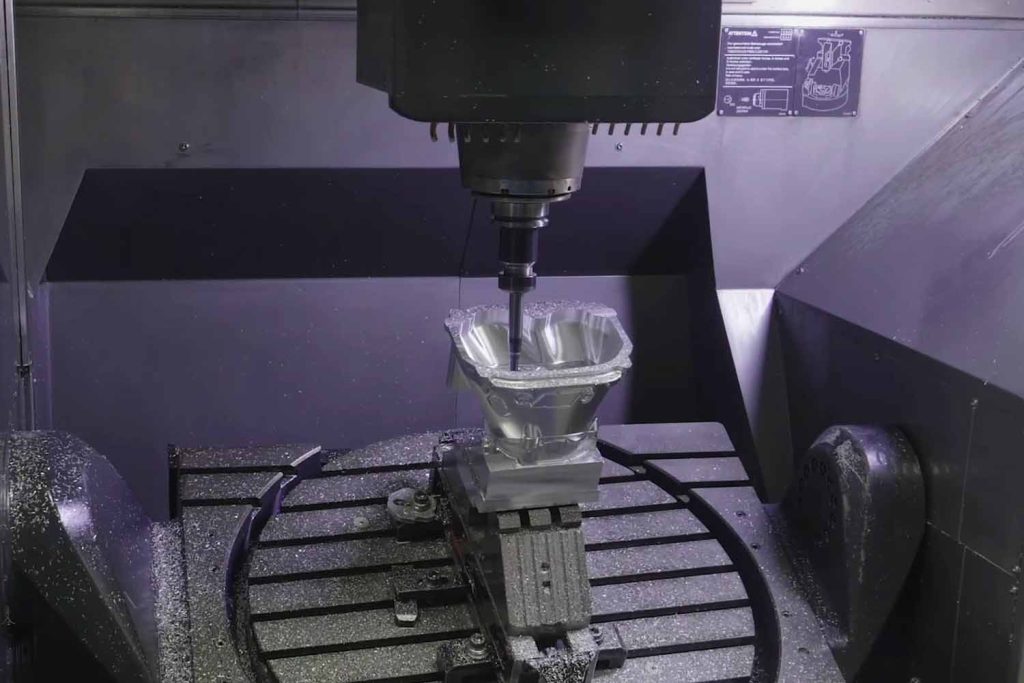
5-axis CNC milling machines enable simultaneous movement of both the cutting tool and workpiece along five axes. This capability allows manufacturers to machine intricate features such as undercuts, deep pockets, and thin-wall monolithic structures in a single setup. Reducing multiple fixturing operations helps minimize cumulative positioning errors and improves geometric accuracy throughout the entire component.
High-Precision Turn-Mill Multi-Tasking Machines
Many aerospace components, including rocket engine nozzles, valve housings, and sensor bodies, require both turning and milling operations.
Technical Necessity:
Turn-mill multi-tasking centers combine turning and milling processes within one machine platform. Completing the entire machining cycle in a single setup eliminates alignment deviations that can occur when transferring parts between separate machines. This integrated approach is essential for maintaining tight concentricity and perpendicularity requirements, often within:
±0.005 mm
Metrology and Quality Verification Equipment
In aerospace manufacturing, inspection systems are just as important as the machining equipment itself. Every machined component must undergo rigorous verification to ensure compliance with mission-critical standards.
Coordinate Measuring Machines (CMMs):
Operating in temperature-controlled inspection environments, CMMs use tactile probes or laser scanning systems to compare manufactured parts against their original CAD models with micron-level measurement accuracy.
Non-Destructive Testing (NDT):
Following machining operations, components are inspected using techniques such as ultrasonic testing and X-ray analysis. These methods help identify hidden defects, including micro-cracks, internal voids, and residual stress concentrations that could lead to failure during launch or operation.
| Machine Type | Primary Aerospace Application | Critical Capability |
| 5-Axis CNC Milling Center | Lightweight structural components, complex brackets | Multi-surface machining with high geometric accuracy |
| Turn-Mill Multi-Tasking Center | Engine nozzles, valves, sensor housings | Concentricity control within ±0.005 mm |
| CMM & NDT Systems | Dimensional verification and defect detection | Micron-level measurement and subsurface inspection |
Operational Controls and Environmental Requirements
Space CNC machining involves far more than advanced machine tools. The entire manufacturing environment must be tightly controlled to ensure dimensional stability, process consistency, and component reliability. These operational requirements contribute significantly to the overall cost and complexity of aerospace production.
Facility Environmental Control (Climate Regulation)
Temperature fluctuations within the production environment can cause thermal expansion and contraction in both machine tools and workpieces, directly affecting machining accuracy.
Technical Standard:
To consistently maintain dimensional tolerances below:
0.005 mm
space manufacturing facilities operate under strict climate-control systems. Production areas are typically maintained at:
20°C ± 0.5°C
with continuous humidity monitoring. Even minor temperature variations can cause large aluminum or titanium aerospace components to expand beyond acceptable tolerance limits, potentially resulting in part rejection and increased production costs.
Quality Management and AS9100 Compliance
For space-flight hardware, standard quality systems alone are not sufficient. Manufacturers must comply with AS9100, the internationally recognized quality management standard specifically developed for the aerospace, space, and defense sectors.
Operational Impact:
AS9100 requires comprehensive risk assessment procedures, configuration management controls, and First Article Inspection (FAI) verification. Every manufacturing operation must be documented and validated. Any deviation from an approved manufacturing process must undergo formal engineering review and approval before production can continue.
Material Traceability and Record Retention
Every component intended for space applications must be supported by complete traceability documentation throughout its entire lifecycle.
Traceability Protocols:
Manufacturers are required to maintain records that connect each finished component to its original raw material batch through mill test reports. Documentation must also identify the CNC machine used, cutting tools and inserts employed, machine operators involved, and calibration records for all inspection equipment. To support future failure analysis and anomaly investigations, these records are commonly retained for periods ranging from 10 to 15 years or longer.
| Control Area | Primary Requirement | Operational Purpose |
| Climate-Controlled Facility | Stable temperature and humidity conditions | Prevent thermal distortion and maintain machining accuracy |
| AS9100 Quality System | Risk management, FAI, and process validation | Ensure aerospace compliance and production consistency |
| Material Traceability | Complete manufacturing and inspection records | Support quality assurance and long-term failure investigations |
Cost Analysis: Drivers of Space-Grade Machining Overheads
The cost of space-grade CNC machining is significantly higher than that of conventional commercial manufacturing. These elevated costs are driven by measurable engineering challenges, material utilization rates, tooling consumption, and extensive process planning requirements rather than simple profit margins.
High Buy-to-Fly Ratios
Weight reduction is a primary objective in spacecraft design because lower mass directly reduces launch costs. To achieve this, aerospace components are often heavily pocketed and optimized for minimum weight, resulting in a high buy-to-fly ratio—the relationship between the weight of the raw material and the weight of the finished flight-ready component.
Cost Impact:
Aerospace components commonly have buy-to-fly ratios of 20:1 or higher. In practical terms, a manufacturer may begin with a 100 kg block of titanium or Inconel and machine it down to a finished component weighing only 5 kg. Nearly 95% of the original material is removed during machining, meaning the cost of the entire raw material billet must be absorbed by a relatively small finished part.
Tooling Consumption and Wear Rates
As discussed previously, aerospace alloys such as titanium and nickel-based superalloys are extremely challenging to machine due to their high strength, heat resistance, and tendency to work harden.
Cost Impact:
These materials accelerate tool wear and significantly reduce cutting tool life. Specialized solid-carbide cutters, advanced coatings, and frequent tool replacements are required to maintain dimensional accuracy and surface quality. As a result, tooling expenses represent a substantial portion of the total manufacturing cost for many aerospace components.
Extensive CAM Programming and Simulation Overheads
Long before machining begins, considerable engineering effort is invested in process development and virtual verification.
Cost Impact:
Manufacturing engineers must create highly optimized CAM programs that carefully manage cutting forces, heat generation, vibration, and material stress. These machining strategies are then validated using advanced simulation software to detect potential collisions, tool failures, or process errors before production starts. Because aerospace materials are expensive and part failure can result in significant financial losses, the programming and simulation phase often accounts for a considerable share of project costs.
Cost Driver Comparison
| Cost Factor | Commercial CNC Machining | Space CNC Machining |
| Material Utilization | Low scrap generation and efficient material usage | Extremely high material removal rates, often exceeding 95% |
| Tool Life | Extended tool life on common steels and aluminum | Rapid tool wear when machining titanium and superalloys |
| Production Preparation | Basic setup with limited process verification | Extensive CAM programming and simulation validation |
| Raw Material Investment | Moderate material consumption | High-value aerospace alloys with significant material waste |
| Manufacturing Risk | Relatively low cost impact from errors | High financial exposure due to expensive materials and strict quality requirements |
The Evolution of Space Machining: Future Industry Trends
The shift from traditional government-funded space programs to commercial space companies (NewSpace) is reshaping the demands placed on space CNC machining. Historically, the industry focused on low-volume production where achieving perfection was more important than production speed. Today, commercial space organizations require manufacturing processes that can deliver both high precision and scalable output.

Rise of Hybrid Manufacturing (AM + CNC)
To address the significant material waste and extended machining times caused by high buy-to-fly ratios, aerospace manufacturers are increasingly implementing hybrid manufacturing methods.
Technical Integration: This manufacturing strategy combines metal additive manufacturing (AM) with conventional CNC machining processes. Using technologies such as Direct Energy Deposition (DED) and Powder Bed Fusion (PBF), manufacturers can produce near-net-shape parts containing complex internal channels and geometries that cannot be created through traditional milling. Once the part is printed, a 5-axis CNC machine is used to finish critical interfaces, mating surfaces, and high-precision bores. This approach can reduce raw material waste by as much as 70% while still achieving micron-level accuracy where necessary.
Implementation of Digital Twins and Closed-Loop Machining
To meet zero-defect manufacturing goals without relying heavily on physical testing and repeated trial-and-error, machine shops are increasingly adopting digital twin technologies.
Technical Integration: A digital twin provides a complete virtual model of the CNC machine, fixturing systems, cutting tools, and material characteristics within the CAM environment. Real-time sensor data collected from the machine spindle can track cutting forces, thermal deformation, and tool vibration. When excessive tool wear or abnormal temperature increases are detected, the CNC system can automatically modify feed rates or tool paths during machining to prevent dimensional deviations and reduce the risk of scrapped parts.
Transition from Custom Prototypes to Constellation Batch Production
The expansion of large satellite constellations in low Earth orbit is creating demand for hundreds of identical components, driving the industry away from traditional one-off manufacturing approaches.
Technical Integration: To support this change, space CNC machining operations must incorporate higher levels of automation, including robotic pallet changers, modular fixturing solutions, and standardized inspection procedures. Production processes must be optimized for repeatability so that every component produced, including the hundredth part, matches the dimensional accuracy and structural performance of the first qualified article.
Conclusion
Space CNC machining is defined by its intolerance for compromise. From managing the extreme thermal expansion of Titanium in low Earth orbit to maintaining AS9100-level process traceability, every phase of manufacturing demands absolute precision. As commercial space flight and satellite constellations continue to scale, the success of a mission relies entirely on the technical capability and quality control of the manufacturing floor.
Achieving this level of precision requires more than advanced machinery—it requires deep engineering expertise in handling challenging superalloys and complex multi-axis toolpaths.
At XTPROTO, we specialize in bridge-manufacturing the critical components that power modern aerospace exploration. Equipped with state-of-the-art 5-axis CNC machining centers, climate-controlled inspection laboratories, and an unyielding commitment to rigorous quality validation, we transform highly complex designs into flight-ready hardware.
Whether you are developing next-generation CubeSat structures, custom fluid valves, or high-temperature propulsion components, our team ensures your parts meet strict aerospace standards with predictable lead times.
Ready to bring your aerospace project to life? Explore our specialized Space CNC Machining Services to view our full equipment capabilities, or contact our engineering team today to receive a comprehensive manufacturing assessment for your design.