
The Ultimate Guide to ABS CNC Machining: Precision, Efficiency, and Applications
ABS is a versatile engineering plastic with excellent impact resistance and machinability. If you need to create CNC-machined ABS prototypes for electronics or perform high-precision CNC milling of ABS parts for robots, tight tolerances are key to achieving optimal performance.
While 3D printing allows for rapid modifications, a comparison between CNC-machined and 3D-printed ABS parts shows that CNC machining typically offers higher strength and surface quality. This method enables small-batch production of CNC-machined flame-retardant ABS parts that meet stringent safety standards without the high costs of injection molds. By selecting appropriate material grades and post-processing methods, manufacturers can produce robust, high-quality parts suitable for harsh environments.
Understanding ABS as a CNC Machining Powerhouse
Acrylonitrile-Butadiene-Styrene (ABS) copolymer is hailed as a “workhorse” of the manufacturing industry. Unlike soft plastics that tend to clog cutting tools, or brittle plastics that are prone to shattering, ABS strikes an exceptional balance between toughness and machinability. Its amorphous structure facilitates the production of clean chips during the cutting process. This results in superior dimensional stability and smooth surface finishes that require little to no post-processing.
Why Choose ABS for Your Project?
Engineers favor ABS primarily for three key physical properties: high impact resistance, excellent tensile strength, and reliable chemical stability. These characteristics make it an ideal material for parts that must withstand the rigors of daily wear and tear.
One significant advantage is that impact-resistant, CNC-machined ABS components are highly durable and well-suited for outdoor environments. While many plastics become brittle when exposed to environmental stresses, high-quality grades of ABS can maintain their structural integrity through UV stabilization treatments. Whether used for protective sensor housings or rugged enclosures for handheld devices, CNC-machined ABS ensures that internal components remain safeguarded against both physical impact and harsh weather conditions.
Glass fiber reinforced ABS, CNC machined for enhanced structural strength
Standard ABS offers excellent performance, but some industrial applications demand even higher performance. This is where glass fiber reinforced ABS comes in. By selecting CNC-machined glass fiber reinforced ABS to enhance structural strength, manufacturers can significantly improve the material’s flexural modulus and heat distortion temperature.
The addition of glass fiber transforms the plastic into a high-rigidity matrix, enabling it to replace heavier metal alloys in structural applications. This makes it ideal for heavy-duty applications such as internal supports, load-bearing frames, or aerospace interior components. In these applications, weight reduction is just as important as maintaining heat resistance and mechanical stiffness.
Key CNC Machining Processes for ABS Plastics
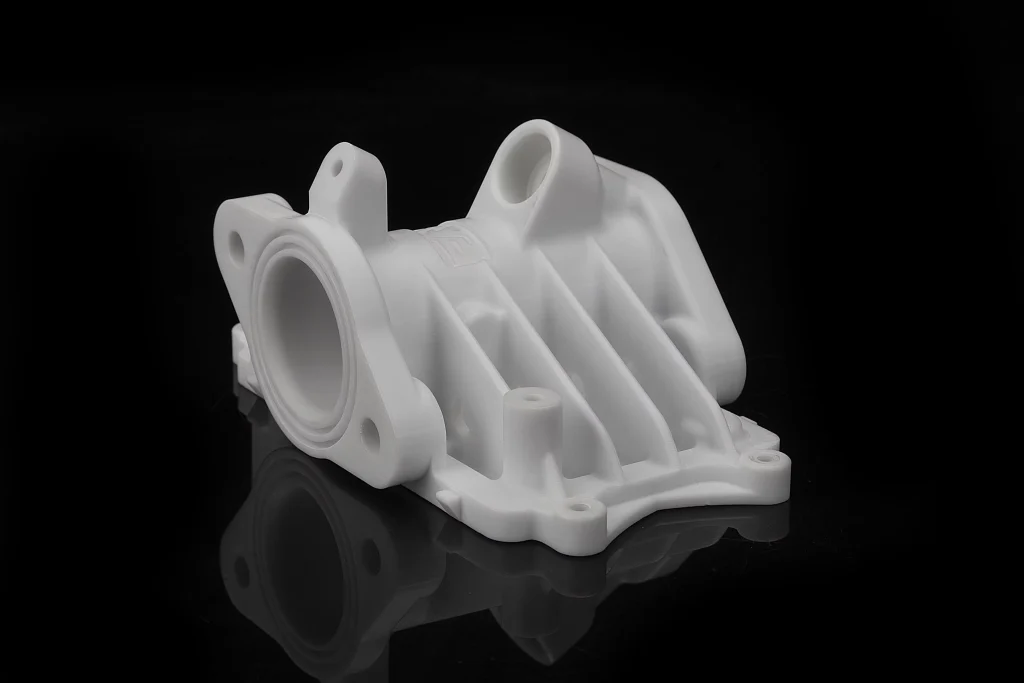
The versatility of ABS plastics is best realized through specialized machining techniques tailored to the geometry and end use of the parts. Different CNC machining methods are required depending on whether the part is structural, cylindrical, or planar, to ensure the material maintains its integrity while meeting high-performance standards.
High-Precision ABS CNC Milling Services for Robotic Components
In automation, weight reduction and geometric complexity reduction are crucial. Manufacturing robotic components using high-precision ABS CNC milling services allows for the creation of complex multi-axis parts such as joints, sensor supports, and lightweight internal frames. Unlike traditional injection molding, CNC milling enables the sharp chamfers and precise grooves required to accommodate precision electronic components and high-speed actuators. This precision is critical in the robotics industry in 2026, as even sub-millimeter deviations can affect the synchronization and balance of automated systems.
High-Precision ABS CNC Turning for Medical Device Housings
For cylindrical parts such as handheld diagnostic tools, valves, or laboratory equipment components, CNC turning is the optimal choice. High-precision ABS CNC turning ensures excellent airtightness of threaded connections and seamless connection of snap-fit components. Given the stringent standards of the healthcare industry, ABS’s ability to maintain precise dimensions at varying temperatures makes it an ideal biocompatible substrate for sterile environments where precision is critical and can even save lives.
ABS Sheet Metal Machining for Industrial Equipment
In addition to complex 3D parts, large-scale industrial protection often requires the machining of sheet material. CNC machining of ABS sheets for industrial equipment is a cost-effective method for producing heavy-duty protective shields, control panels, and structural baffles. By using high-speed milling machines and specialized vacuum chucks, manufacturers can machine large ABS sheets with minimal vibration, resulting in clean, burr-free edges that can be assembled directly in the factory environment.
Strategic Manufacturing: From Prototype to Mass Production
In the product development lifecycle, the transition from a digital concept to a physical product requires a strategic approach to mold and material selection. CNC machining of ABS resin offers a unique “bridging” solution that delivers mass-production-level quality right from the initial design stages.
Custom CNC-Machined ABS Prototypes for Electronics
In the consumer electronics industry, the “feel” and fit of a device are just as critical as its circuit performance. By utilizing custom CNC-machined ABS prototypes for electronics, designers can test complex enclosures, precision snap-fits, and tactile UI components with mechanical properties identical to those of the final product. Unlike basic mockups, these CNC-machined prototypes can undergo rigorous drop tests and thermal cycling tests, allowing for the perfect fine-tuning of assembly logic and internal clearances before mass production begins.
Low-Volume Production of Flame-Retardant ABS Parts via CNC Machining
Many specialized industries—such as aerospace and public infrastructure—require the low-volume production of parts that meet strict safety certifications. Low-volume machining of flame-retardant ABS parts (typically meeting the UL94 V-0 standard) via CNC machining offers a solution that ensures high compliance without incurring the initial costs—often exceeding $10,000—associated with injection molding tooling. This approach is particularly effective for “bridge manufacturing,” where companies require a batch of 50 to 500 parts to fulfill an initial contract or to conduct field testing while permanent tooling is being fabricated.
CNC-Machined ABS Parts vs. 3D-Printed ABS Parts
A common dilemma for engineers involves comparing CNC-machined ABS parts with 3D-printed ABS parts. While FDM-based 3D printing offers the advantage of rapid shape visualization, it can introduce issues such as porosity and structural weaknesses resulting from anisotropy (visible layer lines). In contrast, CNC machining carves parts directly from solid blocks of extruded ABS resin, resulting in fully isotropic strength and a superior surface finish. When precision and structural reliability are essential—such as in functional testing or high-stress applications—CNC machining remains the best choice.
Cost Optimization and Industrial Applications
Manufacturing efficiency involves not merely speed, but also the maximization of material utilization and the minimization of secondary processing. In high-demand sectors such as the automotive industry, optimizing CNC machining processes is key to balancing high quality with budgetary constraints.
Cost-Efficient ABS CNC Machining for Automotive Interior Components
Automotive manufacturers frequently face the need to mass-produce interior components—such as dashboard vents, ergonomic knobs, and trim panels—in large volumes. To achieve cost-efficient ABS CNC machining, two factors are essential: optimizing toolpaths to shorten machining cycles, and utilizing high-speed spindles to prevent material melting. By selecting the appropriate grade of ABS resin and optimizing their machining strategies, manufacturers can produce parts that rival expensive injection-molded components in both aesthetics and durability, while significantly reducing initial setup costs. This approach is particularly effective for limited-production luxury models—where mold amortization costs would otherwise be prohibitive—and for aftermarket upgrade components.
How to Select a Certified CNC Machining Facility in China
When sourcing parts from overseas, it is crucial to ensure that technical expertise is paired with rigorous management standards. When selecting a certified CNC machining facility in China, simply choosing the lowest-priced option is insufficient; you must gain a thorough understanding of their quality control systems.
Your partner facility should hold certifications such as ISO 9001:2015 or IATF 16949 to ensure consistent product quality. Furthermore, material traceability is indispensable. A reliable facility will provide Material Test Reports (MTRs) to verify that the processed ABS resin is “virgin” material—rather than a blend of recycled resins that could compromise structural integrity. Finally, look for facilities that offer in-house inspection services—utilizing CMM (Coordinate Measuring Machines) and OMM (Optical Measuring Machines)—to guarantee that all part dimensions align perfectly with the CAD model prior to shipment.
Post-Processing and Surface Finishing
While the precision of CNC machine tools dictates the dimensional accuracy of parts, post-processing steps are crucial in determining their final aesthetics and functionality. ABS resin is highly amenable to a variety of surface treatment processes, allowing for a seamless transition from a “machined component” to a “finished product.”
Vapor Smoothing and Post-Processing for CNC-Machined ABS
One of the significant advantages ABS resin holds over other plastics is its solubility in acetone. By subjecting CNC-machined ABS parts to vapor smoothing and post-processing, it is possible to achieve a surface finish so smooth and high-gloss that it becomes virtually indistinguishable from injection-molded plastic. This process involves exposing the part to controlled solvent vapors, which causes the surface to melt slightly; this effectively eliminates tool marks and seals any microscopic pores. This benefit is not merely aesthetic: vapor smoothing eliminates crevices where bacteria could otherwise proliferate, thereby enhancing the part’s hygiene—making it an ideal choice for food-contact components and medical prototypes.
Polishing, Painting, and Electromagnetic Shielding
For projects requiring a matte or textured finish, mechanical post-processing opens up a world of possibilities. Standard polishing removes surface scratches, while sandblasting creates a uniform, non-reflective surface—perfect for interfaces in industrial applications.
Furthermore, ABS resin serves as an ideal substrate for secondary coatings. In electronic enclosures, for instance, an electromagnetic shielding layer (a conductive coating) is typically applied to the interior surfaces to prevent electromagnetic interference. Thanks to its excellent adhesion with specialized primers, ABS can be painted to match specific color codes—such as automotive paint schemes or metallic finishes—imparting a premium, high-end look to consumer goods.
Key Considerations for ABS Machining
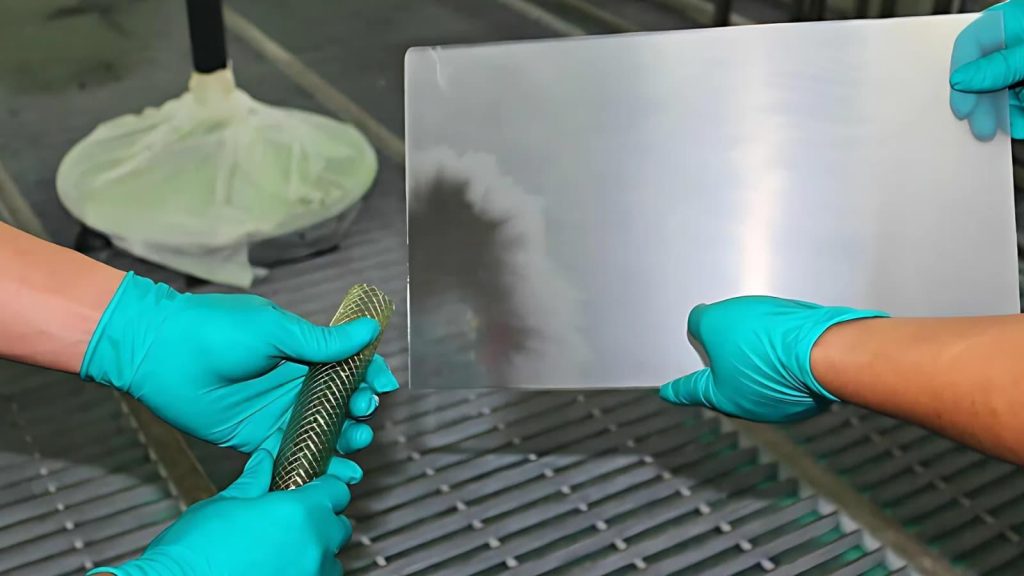
The precision of ABS machining depends not only on strict adherence to CAD data but also—to a significant degree—on a thorough understanding of the material’s thermodynamic and mechanical properties. Since ABS has a relatively low glass transition temperature (approximately 105°C), the use of inappropriate machining methods can easily lead to surface melting or structural deformation.
Controlling Heat and Stress: Preventing Deformation
The most common challenge in ABS machining is localized overheating. Excessive heat can cause the plastic to melt and adhere to the cutting tool. To prevent this, specialized tools designed for cutting plastics are employed. These typically consist of sharp, single-flute or double-flute “O-flute” end mills. Characterized by high rake angles and polished flute geometries, these tools facilitate rapid chip evacuation and heat dissipation, thereby preventing deformation of the workpiece.
Beyond tool selection, establishing appropriate feed rates and spindle speeds is crucial. If the spindle speed is too high or the feed rate is too low, friction can generate sufficient heat to melt the material. In offline machining operations, an excessively high feed rate can induce mechanical stress, potentially leading to the formation of micro-cracks. For high-precision applications, it is common practice to subject the ABS blank to a “stress relief”—or annealing—process, in which it is heated to a specific temperature prior to final finishing. This ensures that the finished part maintains strict dimensional tolerances—free from springback or warping—even after being removed from the workholding fixture.
Tool Selection and Coolant Requirements
While selecting the appropriate tool geometry is the critical first step, controlling the cutting interface is key to achieving a mirror-like surface finish. High-Speed Steel (HSS) tools or uncoated carbide tools are generally preferred over coated tools, as their sharp cutting edges help minimize friction.
Although ABS can be machined using a “dry” process—relying on a strong blast of air to clear chips—the use of a coolant becomes essential for deep-hole drilling or heavy-duty cutting operations. In such instances, the use of water-based coolants or spray cooling systems is strongly recommended. These not only dissipate heat but also lubricate the cutting surface and prevent ABS resin from adhering to the tool flutes. This is a common cause of catastrophic tool failure in plastic processing.
Elevate Your Project with Professional ABS Machining
ABS CNC machining is a foundational technology in modern manufacturing, offering a perfect blend of structural integrity, aesthetic appeal, and cost-efficiency. From rapid machining of ABS components for electronics—facilitated by custom CNC machining—to high-precision ABS CNC milling for robotic parts, selecting the right manufacturing partner is the critical final step toward project success.
By combining advanced tooling techniques with strategic post-processing, we bridge the gap between initial design and mass production. Whether your project requires small-batch production of flame-retardant ABS parts via CNC machining, or robust glass-fiber-reinforced ABS CNC machining to enhance structural strength, the right technology elevates product performance across every market sector. Are you ready to bring your designs to life? Unlock the full potential of ABS by prioritizing precision requirements and certified quality.
FAQ
What is ABS machining and why is it popular?
ABS machining involves using computer-controlled tools to cut Acrylonitrile Butadiene Styrene, a versatile thermoplastic. It is highly sought after because ABS is easy to machine, offers excellent impact resistance, and provides a great surface finish, making it a staple in CNC machining plastic for automotive and consumer goods.
How machinable is ABS compared to other plastics?
ABS is exceptionally machinable. Unlike some materials in our CNC material list that may gum up or chip, ABS chips cleanly and holds its shape well under cutting forces. It is more forgiving than polycarbonate CNC machining in terms of stress cracking, though it has a lower heat resistance than PEEK CNC or PTFE CNC machining.
Can ABS be CNC cut for high-precision parts?
Yes, ABS can be CNC cut to very tight tolerances. While it is a softer material, professional CNC machining plastic techniques ensure that dimensions remain stable. It is ideal for prototypes, housing enclosures, and structural components that require a balance of toughness and affordability.