
CNC Machining Rubber vs. Injection Molding Rubber: Which is Right for Your Project?
For decades, a prevailing assumption has circulated within the engineering field: the manufacturing of rubber parts is inextricably linked to the use of molds. It was long believed that the inherent properties of soft, elastic materials were too unstable to withstand precision machining. Consequently, projects involving elastomer components often had to contend with exorbitant tooling costs, protracted lead times, and a distinct lack of flexibility regarding design modifications.
Today, however, the landscape has shifted dramatically. Rapid technological advancements have fundamentally reshaped the manufacturing sector. As specialists in the precision machining of rubber components, XTPROTO is now able to machine rubber parts directly—entirely without the need for molds—achieving exceptional tolerance accuracy and a burr-free surface finish, even when dealing with complex geometries.
When weighing the choice between CNC machining and injection molding for the production of rubber parts, the deciding factors are no longer dictated solely by the inherent properties of the material itself. Instead, the critical consideration now lies in identifying the optimal balance between cost, part complexity, and production volume.
In this article, we will delve into why CNC machining is rapidly emerging as the preferred solution for manufacturing high-precision, small-to-medium batch parts. Furthermore, we will analyze the specific scenarios in which CNC machining offers distinct advantages over traditional mold-based manufacturing processes.
The “No-Mold” Advantage
In traditional manufacturing, the primary barrier to entry is not raw materials, but tooling. Even for standard gaskets or seals, specialized injection molds are typically required; these can cost anywhere from $3,000 to over $15,000, with lead times ranging from 4 to 8 weeks. Should the design require even minor adjustments after the initial trial run, you face steep mold modification fees—or worse, the necessity of scrapping the original mold entirely and starting over from scratch. When comparing CNC-machined rubber parts against injection-molded ones, the CNC process leverages three core advantages to completely eliminate this barrier to entry:
Elimination of Upfront Tooling Costs
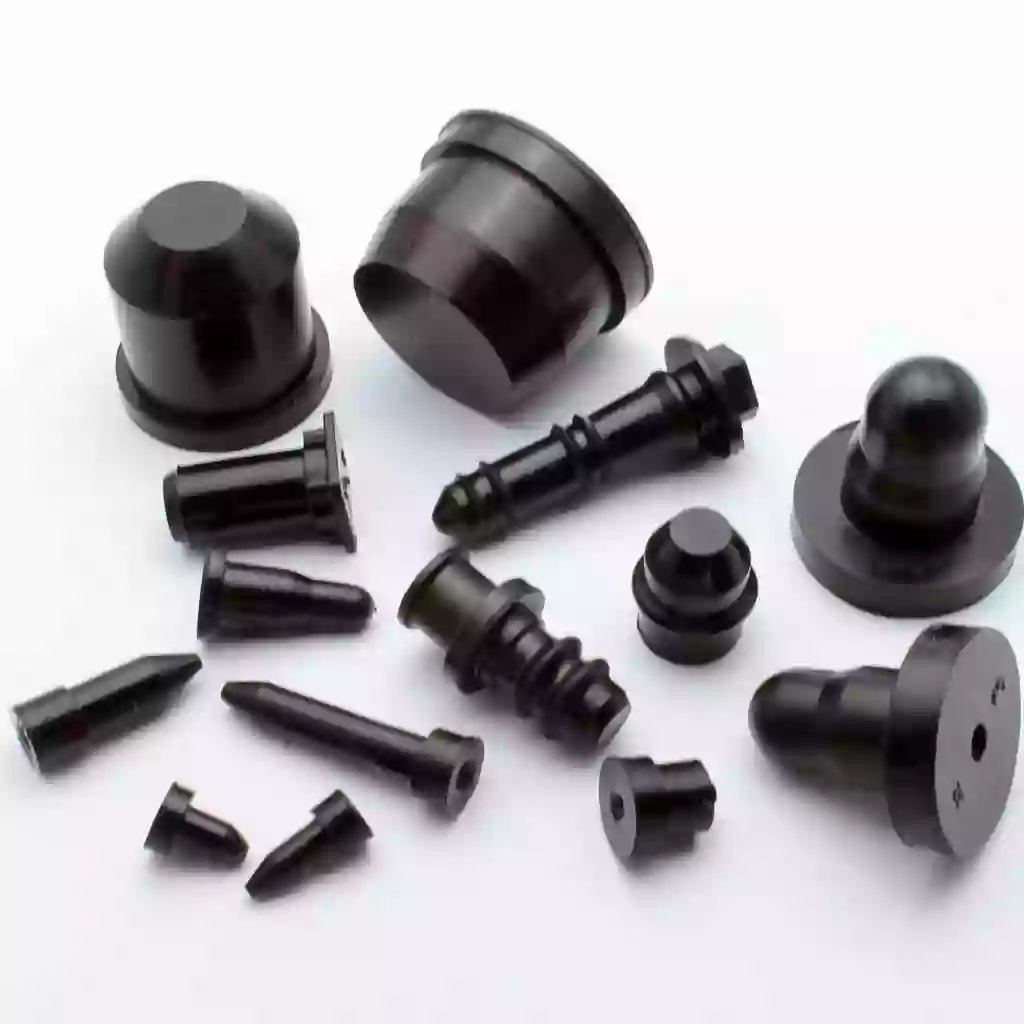
As specialists in precision rubber part manufacturing, we machine components directly from solid rods or sheets of vulcanized rubber. By completely eliminating tooling fees, CNC machining emerges as the most cost-effective solution for creating prototypes and executing small-to-medium batch production runs (typically ranging from 1 to 5,000 units), allowing you to significantly reduce your budget.
Accelerated Time-to-Market
Why wait months just to obtain a mold? XTPROTO’s production facility, equipped with over 600 CNC machines, can transform CAD design files into finished parts in as little as 24 to 48 hours. For industries where “being first to market” is a core competitive advantage, this exceptional processing speed is absolutely critical.
Unlimited Design Iterations
Product development is, by its very nature, a continuous process of iteration and optimization. With CNC machining, updating a design is as simple as revising a software file version. Engineers can fine-tune geometries, adjust tolerances with a precision of ±0.05 mm (±0.002 in.), or optimize material hardness at any time—without incurring the delays or sunk costs associated with physically remaking a mold.
By eliminating this critical pain point, the CNC machining process empowers businesses to transform initial concepts into tangible industrial products with significantly reduced risk and a more streamlined investment.
Precision and Design Freedom Beyond Molding Limitations
While injection molding is highly efficient for mass production, it is inherently constrained by the underlying physics of the process. Material shrinkage, parting line flash, and the necessity for draft angles often compel engineers to compromise on their original designs. For high-performance applications, the precision and design freedom offered by CNC machining are simply unmatched by traditional molding processes.
High-Precision Tolerance Control (±0.05 mm / ±0.002”)
Due to the inherent elasticity of rubber, machining it has historically been a difficult challenge. XTPROTO has successfully overcome this hurdle through the use of cryogenic-assisted machining techniques and ultra-high-speed spindles; we are able to achieve repeatable tolerance precision of up to ±0.05 mm (±0.002”). This level of precision far exceeds the limits typically attainable with injection-molded elastomer parts.
Unconstrained Complex Geometries
The design of injection-molded parts must accommodate ejection requirements, thereby restricting geometric shapes to configurations that facilitate easy mold release—a limitation that often curtails design complexity. CNC machining completely eliminates these constraints. As a “subtractive manufacturing” process, it requires no complex multi-part molds and can effortlessly produce deep internal grooves and undercut features. Free from the limitations of molding flow dynamics, we can achieve sharp internal corners and intricate cavity structures; simultaneously, thin-wall features are precisely controlled, completely eliminating the risks of short shots or warping commonly associated with injection molding. This exceptional degree of geometric freedom empowers engineers to design based solely on “performance” requirements, rather than being restricted by the feasibility limitations of the manufacturing process.
Superior Surface Finish
Injection molding processes often leave behind gate marks and parting lines on parts, necessitating secondary surface finishing operations. In contrast, CNC machining delivers a finished product in a single step, yielding parts with clean edges and a uniform, consistent surface finish. It achieves machining precision on flexible materials that rivals that of metal components, allowing parts to be assembled and used immediately—right out of the box. Opting for rubber CNC machining over injection molding means engineers gain true design freedom—no longer constrained by the limitations of the manufacturing process, but free to dedicate themselves wholeheartedly to designing for exceptional performance.
Expanded Material Options
In the injection molding process, material selection is often constrained by a material’s flow characteristics within the mold. Certain high-performance elastomers are notoriously difficult to process consistently, which can lead to elevated scrap rates and inconsistent part quality.
CNC machining eliminates these limitations by directly cutting fully cured rubber blanks. This approach helps preserve the material’s original properties, thereby avoiding the thermal stresses, uneven curing, or contamination risks that can arise during the injection molding process.
Wide Hardness Range (30A–90A)
From ultra-soft silicones (30A) used in sealing applications to high-hardness polyurethanes (90A) used for load-bearing components, CNC machining supports an exceptionally wide range of material hardnesses. Even ultra-soft materials—which are typically extremely difficult to machine—can be processed with stability and high precision using this method.
High-Performance Elastomers (FKM / Viton™)
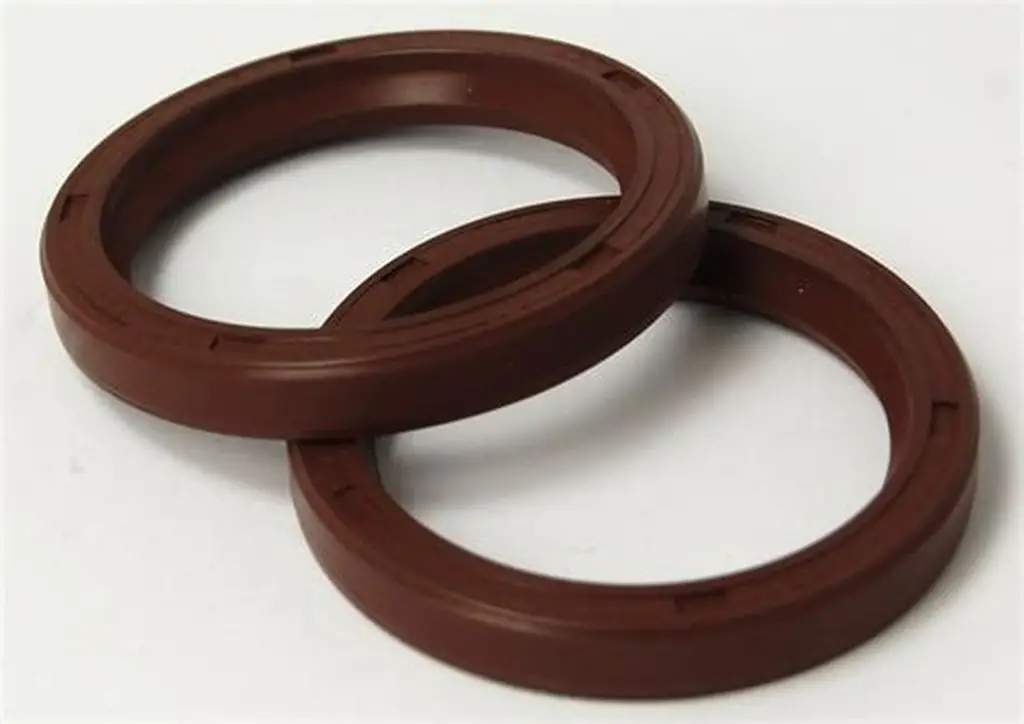
For applications requiring exceptional heat and chemical resistance, FKM (fluorocarbon rubber) is often the material of choice. The CNC machining process is particularly well-suited for such materials, as it bypasses the high tooling costs and complex processing challenges frequently associated with injection molding.
Other Materials
CNC machining also facilitates the seamless integration of rubber with rigid materials—such as PEEK and PTFE—within a single component. This capability is invaluable for manufacturing composite assemblies that require both flexibility and structural rigidity, while ensuring that all component sections maintain strict dimensional tolerances.
Compared to injection molding, CNC machining offers engineers a significantly broader spectrum of material choices—liberating them entirely from the inherent limitations of traditional mold-based manufacturing processes.
Faster Lead Times: 24–48 Hours vs. 4–8 Weeks
In today’s industrial landscape, speed is no longer merely an advantage; it has become a fundamental requirement. For the injection molding process, the traditional workflow—spanning mold design, mold manufacturing, and T1 (first-shot) trials—often constitutes the greatest bottleneck in product development, with lead times typically stretching to 4–8 weeks or even longer. Should any design modifications be required following the initial mold trials, it invariably necessitates reworking the mold itself, leading to additional costs and project delays.
When comparing rubber CNC machining against injection molding, lead time stands out as arguably the most significant difference between the two processes.
From CAD Drawings to Finished Parts in Just 48 Hours
At XTPROTO, production begins the moment your design is finalized. Leveraging a fleet of over 600 active CNC machining centers, we guarantee the delivery of most high-precision rubber parts within 24 to 48 hours. This allows engineers to test and iteratively optimize their designs long before the mold manufacturing phase—a prerequisite for traditional mold-based processes—has even been completed.
Ample Production Capacity
Our machining capabilities extend far beyond mere prototyping. Utilizing the very same production infrastructure, we are fully equipped to support batch production runs of up to 5,000 units, enabling a seamless transition from prototype validation to low-volume manufacturing. Whether you require a single seal or a full pilot production batch, your parts orders enter the production pipeline immediately, without any delays caused by queuing or waiting lists.
Faster Iteration Cycles
In mold-based manufacturing, lengthy lead times often heighten the risks associated with product development. If a part fails testing after weeks of waiting, the entire project timeline can be severely compromised. In contrast, CNC machining facilitates much faster design iterations. You can implement design updates and re-validate your parts in a matter of days—effectively mitigating development risks and significantly accelerating the overall product development cycle. By partnering with a CNC machining provider like XTPROTO—one boasting robust production capabilities—you gain far more than just the parts you need. Crucially, you will save weeks of valuable lead time while completely avoiding the high costs and inherent delays associated with traditional mold-making processes.
Choosing the Right Process for Rubber Parts
Choosing between CNC machining rubber vs. injection molding is no longer just about material capability,It is a decision based on cost, speed, and design requirements across the product lifecycle.
Injection molding remains the preferred choice for high-volume production (10,000+ units), while CNC machining has become the standard solution for prototypes and low-to-medium volume precision parts.
Quick Comparison
| Feature | CNC Machining Rubber | Injection Molding Rubber |
| Upfront Tooling Cost | Zero | High ($3,000–$15,000+) |
| Lead Time | 24–48 Hours | 4–8 Weeks |
| Design Flexibility | Unlimited (no draft angles required) | Limited by mold design |
| Precision | High (±0.05 mm / ±0.002”) | Dependent on process & shrinkage |
| Design Iteration | Fast and low cost | Slow and expensive |
CNC machining is particularly well-suited for fast-paced development cycles, complex geometries, and low-to-medium volume production scenarios where precision and rapid iteration are paramount.
At XTPROTO, we are dedicated to bridging the gap between conceptualization and mass production. Whether you require a single prototype or up to 5,000 functional components, we provide industrial-grade precision machining services—eliminating the need for costly tooling while significantly accelerating lead times. Additionally, we also offer injection molding services.
The Future of Rubber Manufacturing
As demand for high-performance elastomers continues to rise across industries such as aerospace, medical, and robotics, the traditional mindset—that one “must rely on mold manufacturing”—is being re-evaluated. In a modern manufacturing landscape that places a premium on speed and precision, processes capable of bypassing the molding stage are emerging as a significant competitive advantage.
When comparing rubber CNC machining against rubber injection molding, the ultimate choice often hinges on the specific stage of the product’s lifecycle. Injection molding remains the ideal solution for high-volume, stable production scenarios, whereas CNC machining is better suited for projects where design flexibility, iteration speed, and development costs are critical considerations.
At XTPROTO, we facilitate a rapid transformation from design concept to physical reality by combining digital CNC manufacturing with industrial-grade elastomer materials. By eliminating the need for upfront mold investment, we can machine and deliver high-precision rubber components in a short timeframe—thereby significantly shortening the overall development cycle.
If your project is currently being held back by lengthy molding lead times, now is the time to re-evaluate your manufacturing strategy. Upload your CAD files today to receive a rapid manufacturability analysis and a detailed quote; let us help you move your high-precision rubber components into the physical validation phase in as little as 24 to 48 hours.
Frequently Asked Questions
Can all types of rubber be CNC machined?
Most industrial-grade elastomers can be CNC machined, including Silicone, FKM (Viton™), EPDM, NBR, and polyurethane. The key factor is material hardness. While we specialize in a broad range from 30A to 90A, very soft materials may require cryogenic-assisted machining to maintain dimensional stability.
How does CNC machining compare to injection molding in cost?
For quantities between 1 and 5,000 units, CNC machining is usually more cost-effective because it eliminates the $3,000–$15,000+ tooling cost. For high-volume production (10,000+ units), injection molding becomes more economical due to lower per-part cost at scale.
Is the surface finish comparable to molded parts?
In many cases, CNC machining produces a superior surface finish. Unlike molded parts, which may have parting lines, flash, or gate marks, CNC-machined components feature clean edges and consistent surfaces directly from the machining process.
How fast can I receive my parts?
Unlike injection molding, which requires 4–8 weeks for tooling, CNC machining is a direct manufacturing process. With 600+ CNC machines in operation, most parts can be produced and shipped within 24–48 hours after design approval.