
HDPE vs. UHMW-PE: Differences, Machining Challenges, and Selection Guide
Choosing between HDPE and UHMW-PE is a common decision in plastic part design. Although both are polyethylene, they behave very differently in real machining and application conditions.
The key is not just comparing material data, but understanding how molecular weight affects machining stability, tolerance control, and long-term wear performance.
Quick Selection Guide
If you need a quick answer, the choice usually depends on how the part is used—whether it needs to stay rigid or handle continuous wear.
- Choose HDPE if you need a cost-effective, rigid material with stable machinability. It is commonly used for structural parts, tanks, and components requiring tighter tolerances.
- Choose UHMW-PE if the part is exposed to constant friction, sliding, or impact. It provides excellent wear resistance and low friction, but is more difficult to machine and less dimensionally stable.
In short, HDPE is better for structure and precision, while UHMW-PE is better for wear and motion.
How Does UHMW-PE Differ from HDPE?
The fundamental difference between HDPE and UHMW-PE lies in their molecular weight. Although both are polyethylene materials, UHMW-PE possesses significantly longer molecular chains—typically 10 to 30 times the length of those found in HDPE.
This distinction directly impacts how the materials behave during mechanical processing. HDPE features a denser and more stable structure, which allows for clean, crisp cuts during machining and enables the material to retain its original shape under the influence of cutting forces. Consequently, it is easier to machine and is better suited for manufacturing components with tight tolerance requirements and complex geometries.
In contrast, UHMW-PE’s ultra-long molecular chains cause it to deform under stress rather than shearing cleanly like HDPE. During machining, the material tends to stretch and smear, failing to produce distinct, uniform chips; this often results in the formation of burrs and can even lead to thermal deformation.
In practical applications, the very characteristics that endow UHMW-PE with its exceptional wear resistance and impact strength also make it more challenging to machine with precision. Compared to HDPE, maintaining stable machining tolerances typically requires much stricter control over cutting parameters and the tooling employed.
Key Property Comparison (HDPE vs UHMW-PE)
Although HDPE and UHMW-PE share similar chemical resistance and low moisture absorption, their mechanical behavior differs significantly in real-world applications.
HDPE offers higher rigidity and better dimensional stability under machining conditions. It performs well in structural applications where predictable tolerances and stable geometry are required.
UHMW-PE, on the other hand, is designed for performance under movement and load. It provides significantly higher abrasion resistance and impact strength, especially in continuous sliding or high-wear environments. However, this performance comes at the cost of lower stiffness and reduced dimensional stability during machining.
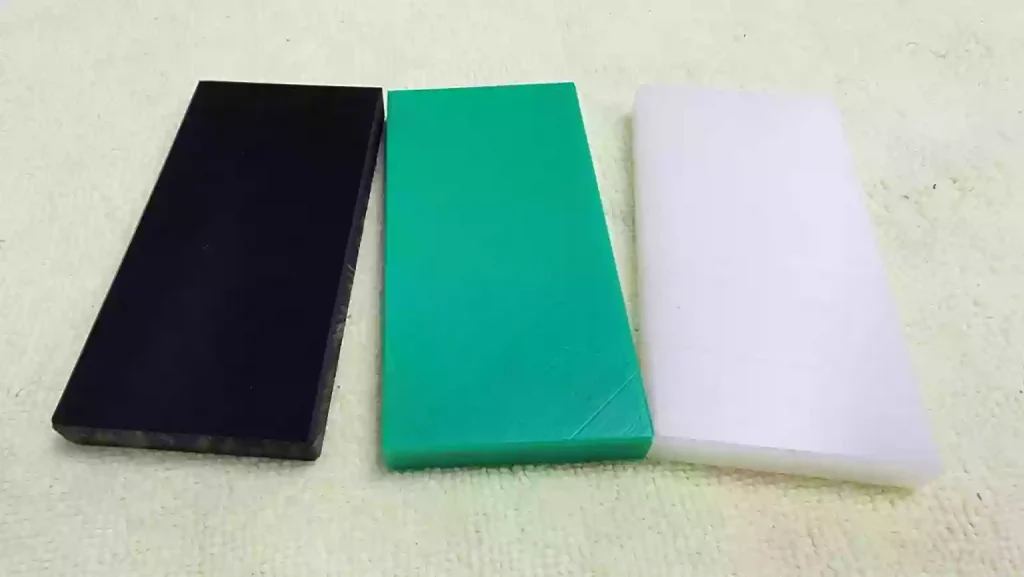
From a design perspective, HDPE is typically selected when precision and structural integrity are the priority, while UHMW-PE is chosen when wear resistance and service life are more critical than tight tolerances.
| Feature | HDPE (High Density) | UHMW-PE (Ultra-High Molecular Weight) |
| Abrasion Resistance | Good | Superior (Industry Leading) |
| Coefficient of Friction | Low | Ultra-Low (Self-Lubricating) |
| Rigidity (Stiffness) | Higher | Lower (More Flexible) |
| Impact Strength | High | Extreme (Nearly Unbreakable) |
| Machinability | Excellent/Stable | Challenging/Prone to Stress |
| Relative Cost | $ (Budget Friendly) | $$$ (Premium Performance) |
Machining Differences: What Happens on the CNC Machine
The difference between HDPE and UHMW-PE becomes clear as soon as the tool engages the material. In a CNC environment, they require very different machining behavior and control strategies.
HDPE: The Stable Performer
HDPE behaves in a predictable way during milling and turning. It produces clean, consistent chips and handles heat relatively well, which helps maintain dimensional accuracy over long production runs. Because of this stability, HDPE is easier to machine and better suited for parts with complex geometry or tighter tolerances.
UHMW-PE: The Machining Challenge
UHMW-PE requires more controlled machining conditions. Unlike HDPE, it tends to deform rather than shear cleanly.
Chip formation:
It produces long, stringy chips that can wrap around tooling if not properly managed.
Heat control:
Friction builds up quickly, and localized heat can cause surface softening or slight deformation. This is typically controlled using sharp tooling and optimized cutting parameters.
Stress behavior:
UHMW also has a tendency to release internal stress after machining, which can lead to slight warping in larger or thin-walled parts if not properly managed.
HDPE is generally compatible with standard CNC machining practices. UHMW-PE, however, requires tighter control of cutting conditions, tooling, and process strategy to achieve stable and accurate results.
Common Applications of HDPE and UHMW-PE
While HDPE and UHMW-PE are often used in similar industries, they serve very different roles in actual applications. The selection usually depends on whether the component is structural or wear-related.
HDPE: Structural and Chemical-Resistant Components
HDPE is commonly used for stationary parts where rigidity, chemical resistance, and cost efficiency are more important than wear performance. It performs well in applications where the component must maintain its shape under load without deformation.
Typical applications include chemical and fluid handling components such as manifolds, pump housings, and tank fittings. It is also used in structural parts like mounting blocks, protective covers, and insulating spacers, as well as outdoor and marine components exposed to moisture and UV conditions.
In these cases, HDPE is primarily used as a stable, load-supporting material.
UHMW-PE: Wear and Motion Components
UHMW-PE is used in applications where continuous movement, friction, or impact is present. It is selected less for structural strength and more for its ability to reduce wear and extend service life.
Common applications include conveyor wear strips, chain guides, chute liners, and belt support components in material handling systems. In the food and beverage industry, it is often used in star wheels, timing screws, and guide rails where low friction and clean operation are required. It is also widely used in heavy-duty industrial environments where impact absorption is critical.
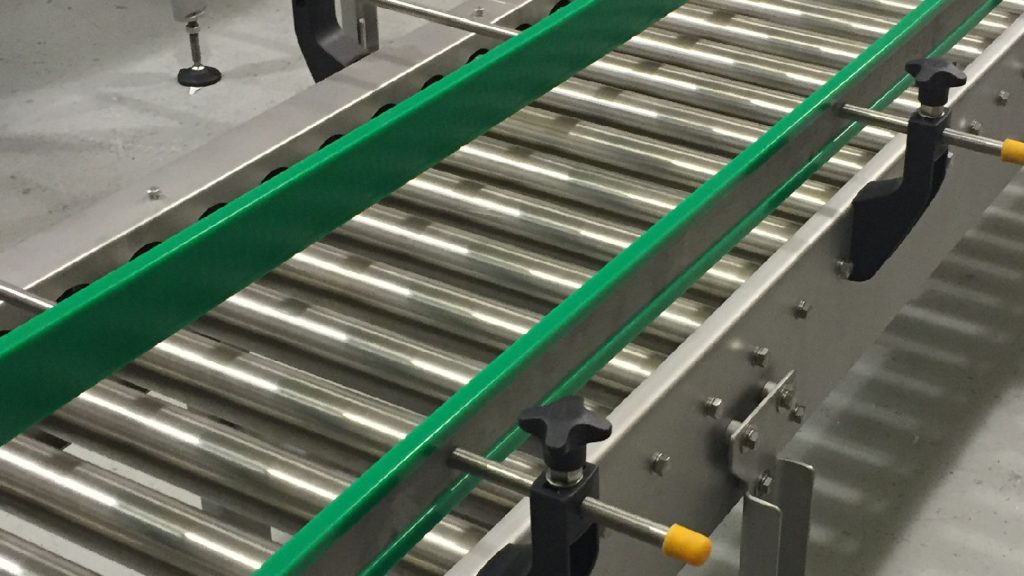
Practical Selection Guideline
In most engineering cases, HDPE is used for static or structural components, while UHMW-PE is used for sliding, rotating, or high-wear contact surfaces. The key factor is not the industry, but the type of mechanical interaction the part will experience.
The Trade-off Between Cost and Performance
Choosing between HDPE and UHMW-PE is not merely a decision regarding materials; it is, fundamentally, a decision concerning costs and the entire product lifecycle. In many real-world applications, the material with the lowest initial procurement cost does not necessarily prove to be the most economical choice over time.
HDPE typically offers a superior cost-performance ratio and is easier to process, making it an ideal choice for the mass production of structural components or for applications where wear resistance is not a primary concern. It helps reduce processing costs and shorten production cycles—particularly in scenarios requiring high dimensional precision.
In contrast, UHMW-PE entails relatively higher material and processing costs due to its exceptional toughness and the more rigorous manufacturing processes it requires. However, in harsh environments characterized by high friction or high impact forces, UHMW-PE often delivers a significantly longer service life. In many instances, this effectively reduces the frequency of component replacement and minimizes downtime associated with maintenance—benefits that are often sufficient to offset the higher initial investment costs.
From a project planning perspective, if initial budget constraints and ease of processing are the primary considerations, HDPE is typically the preferred choice; conversely, if long-term wear resistance and reduced maintenance requirements are of greater importance, priority should be given to UHMW-PE.
The true trade-off is not confined solely to the materials themselves—HDPE versus UHMW-PE—but rather lies in balancing short-term cost efficiency against long-term operational performance.
Common Pitfalls When Choosing Between HDPE and UHMW-PE
In practical applications, many material selection issues do not stem from the materials themselves, but rather from erroneous assumptions made during the design phase.
A common misconception is selecting HDPE for applications involving high abrasion or continuous sliding conditions. Although HDPE exhibits strong structural performance, it can experience rapid wear under the influence of constant friction, potentially leading to premature component failure or increased maintenance requirements.
Another frequent issue involves specifying UHMW-PE for components with tight tolerance requirements or thin-walled structures. While UHMW-PE boasts excellent abrasion resistance, it possesses relatively poor dimensional stability; consequently, it is prone to warping or deformation following machining—a problem that is particularly pronounced in large-scale or unsupported components.
The effects of thermal expansion are also frequently overlooked. Both materials expand when exposed to heat; however, during the machining process, UHMW-PE demonstrates a higher sensitivity to temperature fluctuations. Without appropriate clearance design, components may fail to achieve the intended fit once deployed in their actual operating environments.
In most instances, the aforementioned issues can be effectively avoided by closely aligning material selection with actual operating conditions, rather than basing decisions solely on the mechanical property parameters listed in material data sheets.
Design & Selection Guidelines
Material selection between HDPE and UHMW-PE should be based on actual operating conditions rather than material data sheets alone. In CNC applications, the choice typically comes down to rigidity versus wear performance.
The checklist below is commonly used during engineering review to align material behavior with part function:
Use HDPE when:
- Tight Tolerances Required:The part needs stable dimensions and consistent geometry, typically within ±0.05 mm depending on design and machining conditions.
- Structural Support:The component carries load or maintains assembly alignment with minimal deformation under stress.
- Cost-Efficient Machining:Cycle time and machining stability are important factors in production efficiency.
- Static Operation:The part has limited sliding or friction contact during use, such as housings, fixtures, or structural supports.
Use UHMW-PE when:
- High Wear Conditions:The part is exposed to continuous sliding or abrasion, such as guides, liners, or conveyor components.
- Impact Resistance Needed:The application involves repeated shock loads or vibration over long service cycles.
- Low-Friction Operation:Reducing friction or eliminating lubrication is a functional requirement in motion systems.
- Service Life Priority Over Precision:Slight dimensional variation is acceptable in exchange for significantly longer wear performance.
No Best Material, Only the Right One
Whether to choose HDPE or UHMW-PE ultimately depends on the specific requirements of your application. Generally, this involves striking a balance between load-bearing capacity, frictional properties, and budgetary constraints.
For structural applications where dimensional stability, ease of processing, and cost-effectiveness are the primary considerations, HDPE is typically the more ideal choice. UHMW-PE, conversely, is better suited for environments involving severe abrasion—situations where sliding contact performance, impact resistance, and service life take precedence over the need for extremely tight dimensional tolerances.
In practical engineering projects, proper material selection involves more than just evaluating a material’s intrinsic properties in isolation; it is fundamentally about how the component performs holistically under actual operating conditions.
Do you need expert advice on polyethylene processing?
Choosing between HDPE and UHMW-PE is just one step in the overall process. A component’s ultimate performance also hinges on the specific manufacturing processes employed, the strategies used to manage stress, and design optimizations tailored to the production phase.
At XTPROTO, we specialize in the precision CNC machining of engineering plastics—including both HDPE and UHMW-PE—and maintain full, in-house control over our entire production workflow.
Explore our PE CNC machining services.Upload your CAD files to receive a rapid Design for Manufacturability (DFM) analysis and a custom quote.
FAQs
What are the main differences between HDPE and UHMW-PE in terms of strength?
This depends on the type of load applied. HDPE possesses higher stiffness and tensile strength, making it perform better in static or structural applications where dimensional stability is a critical requirement. In contrast, UHMW-PE excels in resisting impact and abrasion. It can absorb repeated impact loads without cracking and retains its toughness even in low-temperature environments where other plastics might become brittle.
Which is more expensive: HDPE or UHMW-PE?
UHMW-PE is generally more expensive than HDPE, both in terms of raw material costs and processing costs. Because its processing requires slower cutting speeds and stricter control over machining conditions, production times are increased, thereby driving up the overall cost of the finished parts.
What are the main disadvantages of UHMW-PE?
Compared to HDPE, UHMW-PE exhibits poorer dimensional stability—primarily due to its higher internal stresses and higher coefficient of thermal expansion, which make it difficult to maintain tight tolerances. Additionally, its heat resistance is somewhat limited; it typically begins to soften at around 80°C. Furthermore, due to its low surface energy, it is difficult to bond using adhesives or coatings; therefore, mechanical fastening methods are typically required for joining purposes.
How can I distinguish between HDPE and UHMW-PE?
Visually, the two materials appear very similar, so they are typically distinguished by observing their material characteristics. HDPE feels slightly harder when cut or scratched, and the chips produced during machining tend to be uniform and regular. UHMW-PE, on the other hand, has a more waxy feel; when machined, it tends to produce long, continuous strands rather than uniform, fragmented chips.
UHMW, HDPE, and Delrin (POM)—How do I choose?
When an application requires high stiffness and machining precision, Delrin (POM) is typically the preferred choice. For applications involving significant abrasion—where a low coefficient of friction and a long service life are more critical than strict dimensional tolerances—UHMW-PE should be given priority. HDPE falls somewhere between the two; as a structural material that combines excellent chemical resistance with moderate mechanical properties, it represents a highly cost-effective choice.
In terms of UV resistance, which material—HDPE or UHMW—performs better?
In their natural, unmodified state, both materials exhibit relatively limited UV resistance; prolonged exposure to sunlight will lead to material aging and degradation. Consequently, for outdoor applications, both HDPE and UHMW-PE are typically specified in black, UV-resistant grades containing carbon black, as carbon black significantly enhances the materials’ long-term stability against UV radiation.
How do these two materials differ in terms of density?
Both materials are lightweight, with densities lower than that of water; therefore, both are capable of floating. The density of HDPE typically ranges from 0.95 to 0.97 g/cm³, whereas the density of UHMW-PE is slightly lower, at approximately 0.93 to 0.94 g/cm³. In most engineering applications, this difference in density does not influence the choice of material.
UHMW-PE vs. PTFE (Teflon): Which is better suited for sliding applications?
PTFE possesses a lower coefficient of friction and superior thermal resistance, making it suitable for environments involving high temperatures or chemical corrosion. In contrast, UHMW-PE offers significantly superior abrasion resistance at a lower cost; as such, it is typically the preferred material for applications at ambient temperatures that involve severe wear or continuous mechanical contact.