
Carbon Fiber Machining Cost: The Definitive Guide to Pricing and Optimization
Carbon fiber reinforced polymer (CFRP) has become the material of choice for high-performance applications due to its exceptional strength-to-weight ratio. However, when transitioning from aluminum or steel to carbon fiber, the most immediate challenge for engineers is the significant increase in machining costs.
Unlike homogeneous metals, carbon fiber is a composite of high-modulus fibers and a resin matrix. This unique structure makes it highly abrasive and prone to defects like delamination or fiber breakout if not handled correctly. Consequently, pricing for carbon fiber CNC machining is not solely based on material weight, but rather a complex combination of specialized tooling, slower feed rates, and rigorous dust management.
Understanding these cost drivers is essential for optimizing your project budget. In this guide, we will break down the primary factors that influence the final quote and provide actionable strategies to reduce costs without compromising structural integrity.
Material Selection: The Foundation of Your Quote
The raw material cost is the most significant baseline for any carbon fiber project. The price of a CFRP component is primarily determined by the fiber grade and how efficiently that material is utilized during the cutting process.
Carbon Fiber Grades and Modulus
The mechanical properties you require will directly dictate the material cost.
- Standard Modulus (T300/T400): This is the industry standard for general industrial and sports equipment. It offers the best balance between performance and price.
- Intermediate/High Modulus (T700/T800+): Often required for aerospace and high-end racing, these grades offer superior stiffness but come at a significant price premium due to the specialized manufacturing process of the raw fibers.
Material Utilization (The Nesting Factor)
One of the most overlooked aspects of pricing is material nesting efficiency. Since carbon fiber is typically supplied in fixed plate sizes (e.g., 1500 × 2500 mm), the geometry of your part determines how much “scrap” material is generated.
Large, irregularly shaped parts often result in a high “buy-to-fly” ratio, where you are paying for the entire rectangular area even if 40% of it becomes waste. Choosing part dimensions that align with standard plate sizes or allowing for nested layouts can significantly lower the per-part material cost.
Tooling Costs: The Hidden Expense of Abrasiveness
One of the most significant differences between machining metals and carbon fiber is the rate of tool wear. Carbon fibers are extremely abrasive. In a high-speed CNC environment, they act like a grinding medium, rapidly dulling standard cutting edges.
Carbide vs. PCD (Diamond) Tooling
Standard carbide tools, while inexpensive, lose their sharp edge within a very short period when cutting CFRP. Once a tool becomes dull, it no longer cuts the fibers cleanly; instead, it begins to push them, leading to “delamination” (the separation of composite layers) or “fiber breakout” at the exit point of the cut.
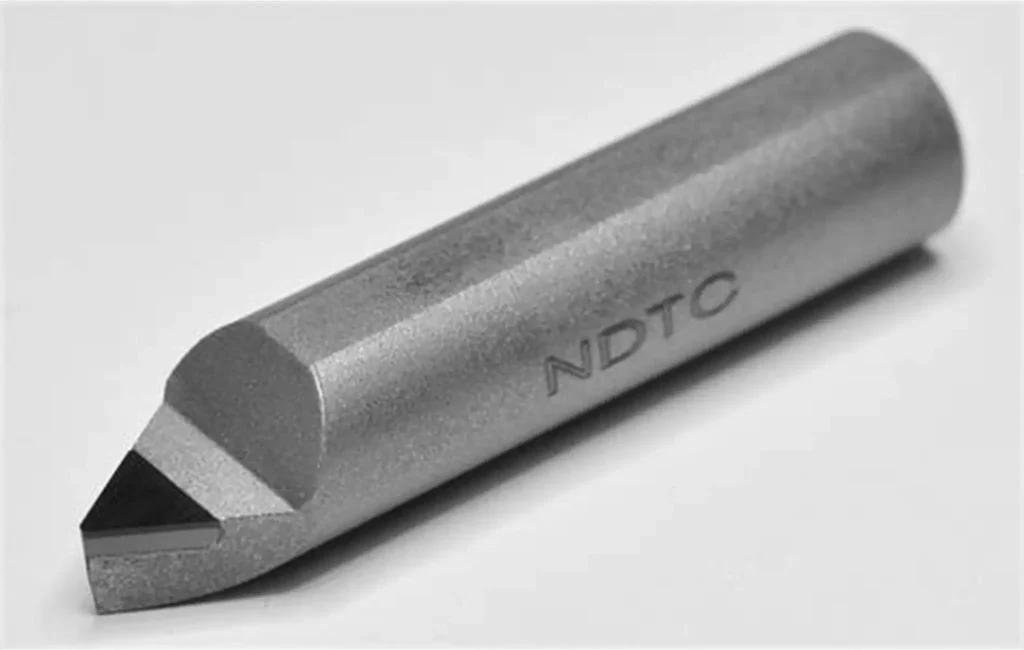
To maintain the tolerances specified in your CAD files, professional shops utilize PCD (Polycrystalline Diamond) tipped tools. While a PCD cutter can cost ten times more than a carbide equivalent, it offers the thermal stability and hardness required to maintain a crisp edge over long production runs. When reviewing a quote, it is important to realize that a portion of the price accounts for this high-performance tooling, which ensures that the structural integrity of your part is not compromised by tool-induced stress.
Machine Time and Operational Overhead
Machine time for carbon fiber is generally longer than for aluminum, despite the material being lighter. This is due to the specific physical limitations of the composite structure.
Feed Rates and Heat Management
In metal machining, high feed rates help carry heat away through the chips. Carbon fiber, however, does not dissipate heat well. If the spindle speed or feed rate is too aggressive, the friction can cause the resin matrix to reach its Glass Transition Temperature (Tg). If the resin softens during machining, the dimensional accuracy of the part drifts, and the mechanical properties are permanently degraded. Consequently, CNC machining programs for CFRP must be carefully optimized with conservative feed rates and dynamic tool paths to manage thermal buildup.
Conductive Dust and Facility Maintenance
The “hidden” operational cost of carbon fiber machining lies in dust management. Carbon dust is highly conductive and microscopic. If it enters the CNC machine’s electrical cabinets, it causes short circuits. Operating a dedicated CFRP facility requires industrial-grade HEPA extraction systems and regular specialized maintenance of the machine’s ball screws and encoders. These overhead costs are reflected in the hourly machine rate but are necessary to ensure a stable and reliable manufacturing environment.
Design for Manufacturing (DFM): Strategies to Reduce Costs
The design of your part has a direct impact on the machining complexity and, by extension, the final price. Small adjustments in the CAD phase can lead to substantial savings.
Internal Corner Radii
CNC milling uses rotating cylindrical tools. This means it is physically impossible to machine a perfectly sharp 90-degree internal corner. If a design specifies a sharp internal corner, it may require a secondary EDM process or extremely small diameter tools, both of which increase costs. By specifying a radius that allows for a standard tool size (e.g., a 2mm radius for a 4mm cutter), you reduce the need for specialized tooling and shorten the machining cycle.
Tolerance Realism
While our facility can maintain tolerances as tight as 0.02mm, achieving this level of precision across the entire part is time-consuming and increases the risk of scrap. We recommend a “tiered” approach: apply tight tolerances only to critical mating surfaces or bearing seats, and use standard commercial tolerances (e.g., 0.1mmto 0.2mm) for the overall profile. This reduces inspection time and the likelihood of costly re-runs.
Post-Processing: Aesthetics and Structural Longevity
The machining process does not end when the CNC spindle stops. Carbon fiber requires specific post-processing steps to ensure both aesthetic quality and long-term durability, each of which adds to the labor hours involved.
Edge Finishing and Manual Sanding
Even with high-precision PCD tooling, cut edges can occasionally retain microscopic burrs or sharp points. For high-end consumer products or components that will be handled frequently, manual sanding is often required to achieve a smooth, ergonomic finish. Furthermore, specifying a chamfered or radiused edge adds a secondary machining operation, which increases the total cycle time per part.
Surface Coatings and UV Protection
The epoxy resins used in CFRP are sensitive to ultraviolet (UV) radiation. If the component will be exposed to sunlight for extended periods—such as in aerospace or marine applications—a UV-protective clear coat is necessary to prevent yellowing or degradation of the resin matrix. The choice between a matte, satin, or high-gloss finish also impacts cost, as high-gloss finishes require multiple stages of polishing to achieve a mirror-like depth.
Edge Sealing
In certain environments, exposed carbon fiber edges can absorb moisture or chemicals through capillary action, leading to long-term delamination. Edge sealing involves applying a thin layer of specialized resin to all cut surfaces. While this adds a layer of protection, it is a meticulous, labor-intensive process that is reflected in the final quote.
Scaling and Batch Size: The Economy of Volume
The most effective way to reduce the unit cost of a carbon fiber part is through volume. The pricing structure for CNC machining is heavily front-loaded due to the preparation required before the first chip is even cut.
Non-Recurring Engineering (NRE) Costs
Every new project incurs “fixed” costs, regardless of whether you order one part or one thousand. These include:
- CAD/CAM Programming: Translating your 3D model into optimized tool paths.
- Fixture Design: Engineering specialized vacuum jigs or mechanical clamps to hold the carbon fiber plate securely without vibrating.
- Machine Setup: The physical labor of calibrating the machine and loading the correct tooling.
In a prototype run of a single part, 100% of these costs are applied to that one unit. In a production run, these expenses are amortized across the entire batch, drastically reducing the price per piece.
Material Waste and Nesting Efficiency
As discussed in the material section, larger batches allow for more sophisticated nesting. By grouping dozens of different parts onto a single large-format plate, we can minimize the gaps between components, reducing the amount of paid-for scrap and lowering the material cost contribution for every part in the set.
Conclusion: Evaluating Your Quote
When evaluating the cost of carbon fiber CNC machining, it is important to look beyond the initial price per part. A lower quote may indicate compromises in dust management, tool quality, or material traceability—factors that can lead to catastrophic part failure in high-stress applications.
By focusing on Design for Manufacturing (DFM) optimizations—such as standardizing hole sizes, relaxing non-critical tolerances, and choosing appropriate fiber grades—you can achieve a high-performance result that remains within your project’s financial constraints. Our engineering team is available to review your CAD files and provide specific recommendations to ensure your design is as cost-effective as it is functional.
Case Study: Balancing Performance and Cost
To illustrate how these variables interact, consider a standard UAV center plate project. A client initially requested a design with zero-radius internal corners, ultra-tight tolerances on all dimensions, and a high-gloss finish for a batch of 5 pieces.
- Initial Design: High complexity required multiple tool changes, a secondary EDM process for the sharp corners, and extensive manual polishing. The buy-to-fly ratio was high due to isolated part placement.
- Optimized Design: By introducing 2mm radii to internal corners, tiering the tolerances, and choosing a matte finish, the machine time was reduced by 35%. Furthermore, by increasing the order to 20 pieces, we were able to nest the parts more efficiently on a single T700 plate.
The result was a 45% reduction in unit cost without any loss in flight performance or structural rigidity. This highlights the importance of the consultation phase in the procurement process.
Summary of Cost-Saving Strategies
For engineers looking to optimize their carbon fiber CNC budget, the following checklist provides a roadmap:
- Standardize Material Thickness: Designing around stock plate thicknesses (e.g., 2.0mm, 3.0mm) avoids the premium costs of custom-ground laminates.
- Simplify Geometry: Minimize the need for 5-axis operations or specialized micro-tooling by maintaining accessible feature geometries.
- Functional Finishing: Only specify high-gloss or UV-coatings if the application strictly requires aesthetic or environmental protection.
- Batch Consolidation: Combine multiple small orders into a single production run to amortize the setup and programming fees.
Final Considerations
Choosing a partner for carbon fiber machining is a decision that impacts the entire lifecycle of your product. While raw material and machine time are the visible drivers of cost, the value of a specialized facility lies in its ability to prevent hidden failures. Proper fiber alignment, delamination-free edges, and electronic-grade cleanliness are the hallmarks of a professional operation.
When you request a quote, you are not just paying for a cutting service; you are investing in the technical expertise required to translate advanced composite theory into a high-performance physical component. By applying the DFM principles outlined in this guide, you can ensure that your project remains both technologically superior and commercially viable.