Copper CNC Machining Service

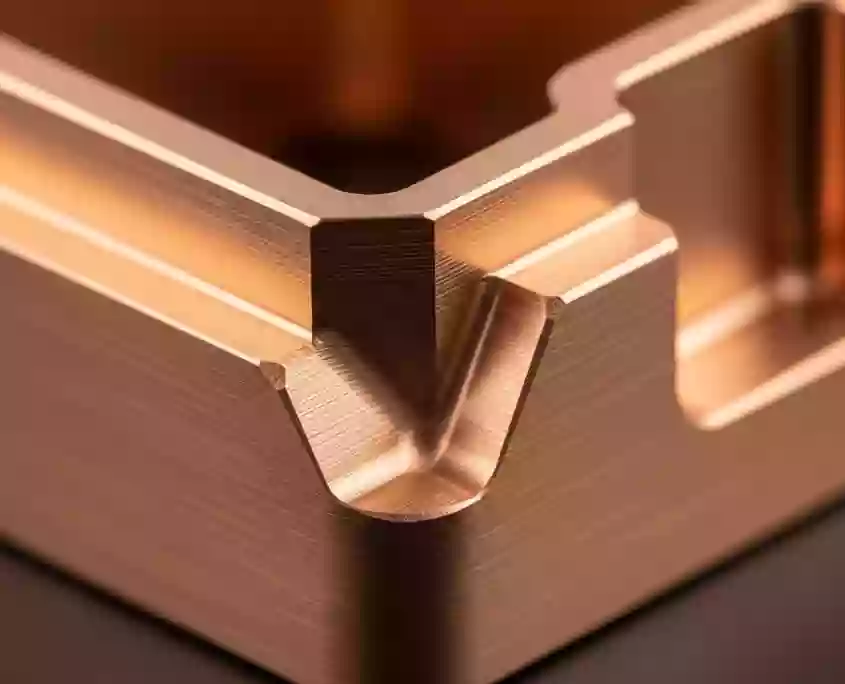
Achieve tight tolerances up to ±0.005 mm with optimized machining strategies for copper—minimizing burrs, improving surface finish, and ensuring stable results from prototyping to production.

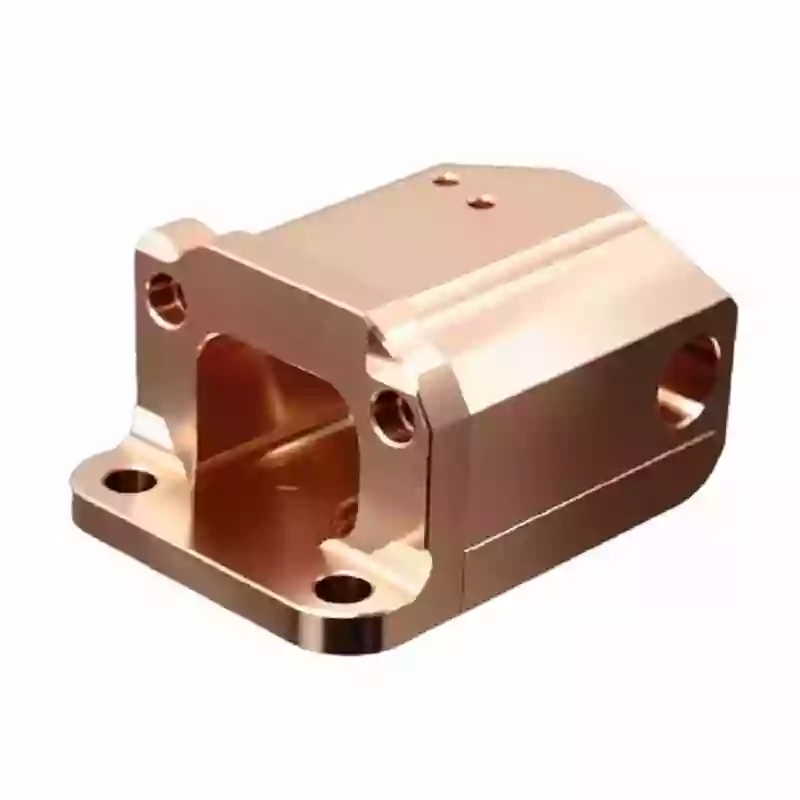
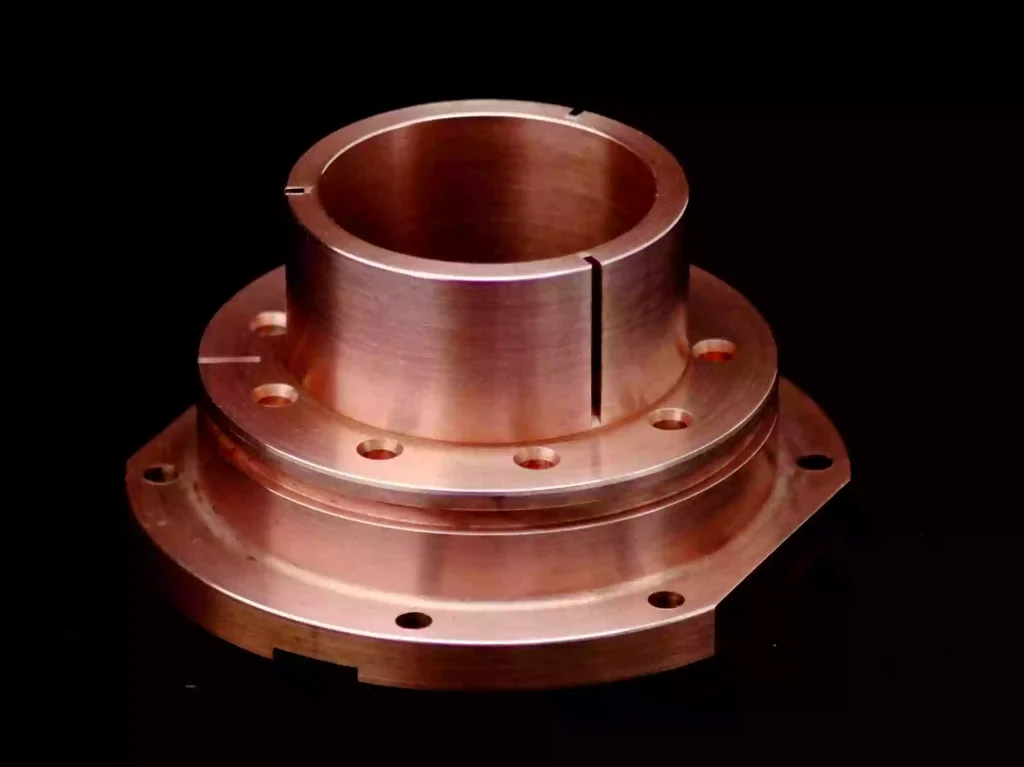
Copper 101 CNC Machining Part

Copper CNC Machining Solutions

Copper machining requires more than standard CNC capability. Its softness, ductility, and high conductivity demand precise control over cutting parameters, tooling, and heat management to achieve stable, repeatable results.

With extensive experience across multiple copper grades, our processes are optimized to minimize burr formation, maintain tight tolerances down to ±0.005 mm, and deliver clean, high-quality surface finishes. From simple conductive components to complex precision parts, every project is engineered for consistency, performance, and production readiness.

What is Copper CNC Machining?

Copper CNC machining is a high-precision subtractive manufacturing process that uses computer-controlled cutting tools to shape raw copper into functional components. Unlike casting or stamping, CNC machining excels at producing complex geometries with tight tolerances and superior surface finishes. It is the preferred method for high-conductivity parts like busbars and heat sinks, where preserving the material’s thermal and electrical integrity is critical. By optimizing cutting parameters, we overcome copper’s natural softness and “gumminess” to deliver consistent, burr-free precision.

Advantages of Copper Machining

  • High Precision & Tight Tolerances– Achieve complex geometries with reliable repeatability.
  • Consistent Surface Quality– Burr-free, polished, and assembly-ready finishes.
  • Material Efficiency– Optimized cutting reduces waste, preserving costly copper grades.
  • Rapid Prototyping & Scalable Production– From single prototypes to high-volume runs.
  • Complex Geometry Capability– Thin walls, micro-features, and intricate designs handled reliably.
  • Cross-Industry Applicability– Suitable for electronics, power, automotive, industrial, and aerospace applications.
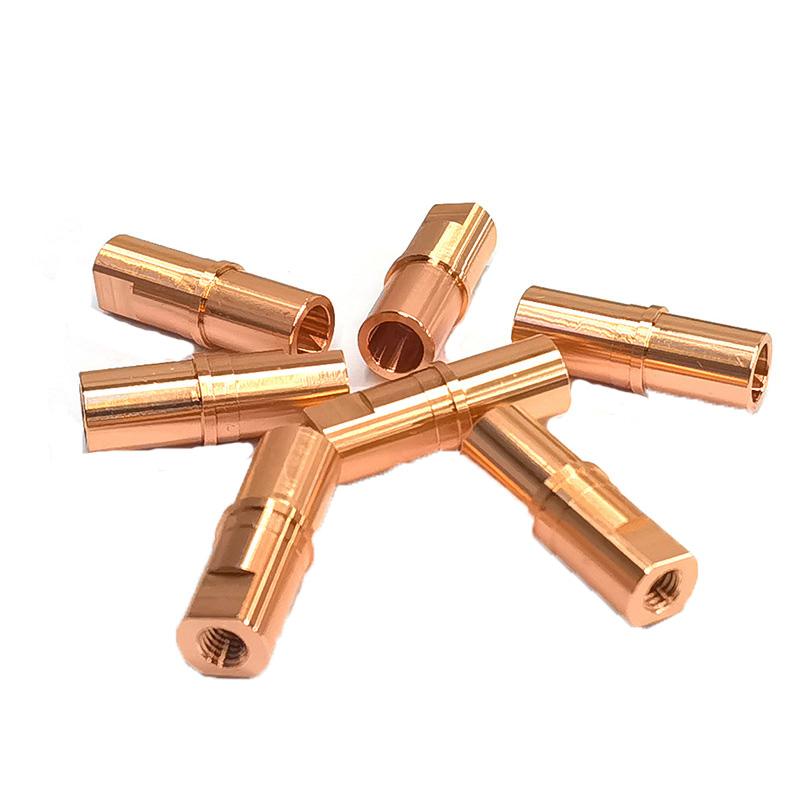
70.1 Copper Lathed Milled Semiconductor Part 1
Copper Based Alloys

Common Copper Grades

  • C101 (Oxygen-Free Copper)– High-purity copper for maximum electrical and thermal conductivity. Best for RF, electronics, and high-performance conductive parts.
  • C110 (ETP Copper)– General-purpose copper with balanced conductivity and machinability. Most commonly used for industrial electrical components.
  • C145 (Tellurium Copper)– Machining-optimized grade designed to reduce burrs and improve chip control during CNC machining.
  • C172 (Beryllium Copper)– High-strength copper alloy used for structural and wear-resistant applications where mechanical performance is critical.

Machined Copper Material Properties

The table below compares key copper grades used in CNC machining, focusing on mechanical strength, conductivity, and machining behavior to help guide material selection.

Copper Grade

Mechanical & Physical Properties

Machining Notes

C101 (Oxygen-Free Copper)

Tensile Strength: 41 ksi (283 MPa)
Yield Strength: 60–240 MPa
Hardness: ~40 HRB
Electrical Conductivity: 96.5% IACS
Thermal Conductivity: 390–398 W/(m·K)

Highest purity copper with excellent conductivity. Soft and ductile, prone to deformation under clamping but ideal for RF and high-performance electrical parts.

C110 (ETP Copper)

Tensile Strength: 32–41 ksi (220–280 MPa)
Yield Strength: 60–240 MPa
Hardness: ~95 HRB
Electrical Conductivity: 101.5% IACS
Thermal Conductivity: 380–388 W/(m·K)

Balanced general-purpose grade. Slightly harder than C101, offering stable machinability and cost efficiency for industrial electrical components.

C145 (Tellurium Copper)

Tensile Strength: 35–45 ksi (240–310 MPa)
Yield Strength: 70–275 MPa
Hardness: ~60 HRB
Electrical Conductivity: 90–95% IACS
Thermal Conductivity: 380–390 W/(m·K)

Designed for machinability. Significantly reduces burr formation and tool sticking, making it ideal for precision CNC parts.

C172 (Beryllium Copper)

Tensile Strength: 80–130 ksi (550–900 MPa)
Yield Strength: 415–760 MPa
Hardness: ~35–45 HRC
Electrical Conductivity: 22–30% IACS
Thermal Conductivity: 105–125 W/(m·K)

High-strength alloy for mechanical applications. Excellent wear resistance but lower conductivity, used in demanding structural components.

Machining Challenges & Process Control in Copper CNC Machining

Copper tends to stick to cutting tools, producing burrs that require additional finishing.
We use optimized tooling, controlled feeds, and chip management strategies to minimize burr formation, ensuring clean edges, smooth surfaces, and reduced post-processing for all parts.

Soft copper can deform during machining, especially thin walls or intricate geometries.
With specialized fixturing, precise toolpath planning, and controlled cutting parameters, we maintain dimensional accuracy and tight tolerances down to ±0.005 mm, even on complex components.

Copper’s high thermal conductivity can lead to heat buildup, causing surface imperfections and dimensional instability.
We apply cooling strategies, optimized cutting speeds, and heat control techniques to deliver stable, repeatable machining with superior surface finish.

Different copper grades (C101, C110, C145, C172) behave differently during machining, affecting tolerances, burr formation, and surface quality.
Our material expertise guides grade selection and custom machining strategies for each part, ensuring optimal performance, conductivity, and manufacturability.

Intricate copper components are prone to deformation and uneven surfaces.
Using multi-axis CNC machining, precise fixturing, and process optimization, we consistently achieve accurate, high-quality parts ready for production.

copper processing types

Copper CNC Machining Capabilities

CNC Milling Services

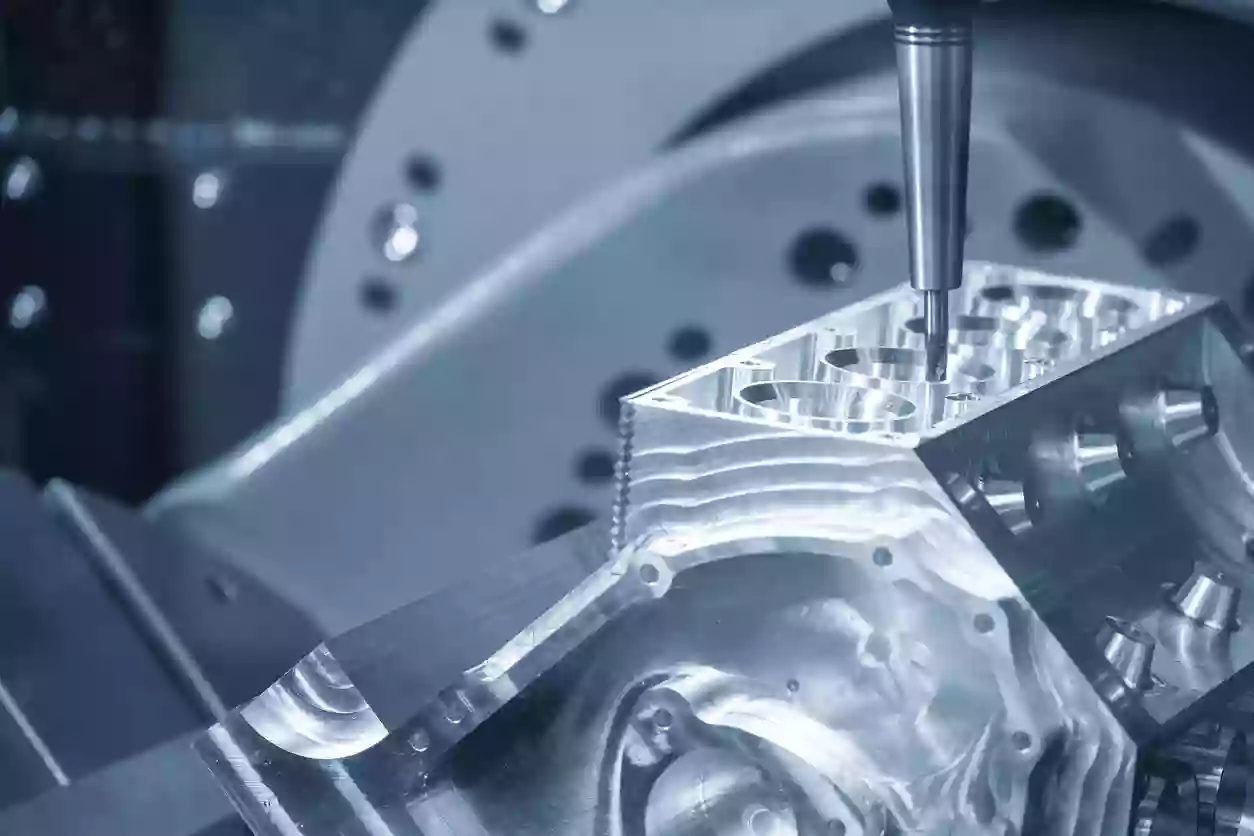
CNC Milling

Precision cutting of copper and other metals for complex 3D geometries.
What Is Automotive CNC Machining

CNC Machining

High-precision machining for complex copper parts and components with tight tolerances and fast lead times.
CNC Turning Services.jpeg

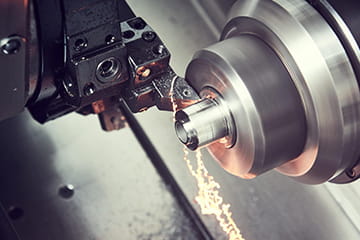
CNC Turning

High-accuracy lathe operations for round and cylindrical copper components.
CNC Grinding Services

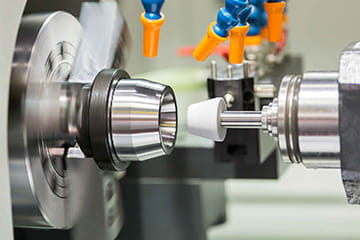
CNC Grinding

Fine finishing and high-precision surfaces for thin-walled or micro components.
Through Holes an blind hole tapping

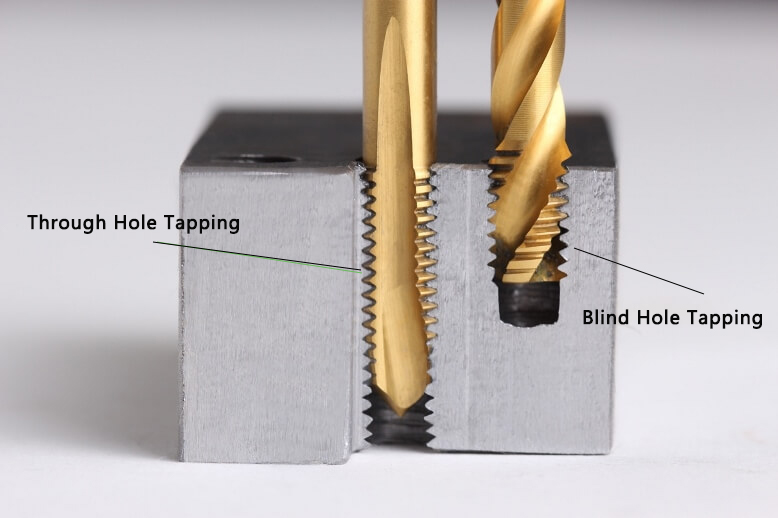
CNC Tapping

Internal threads with tight tolerances for assembly-ready parts.
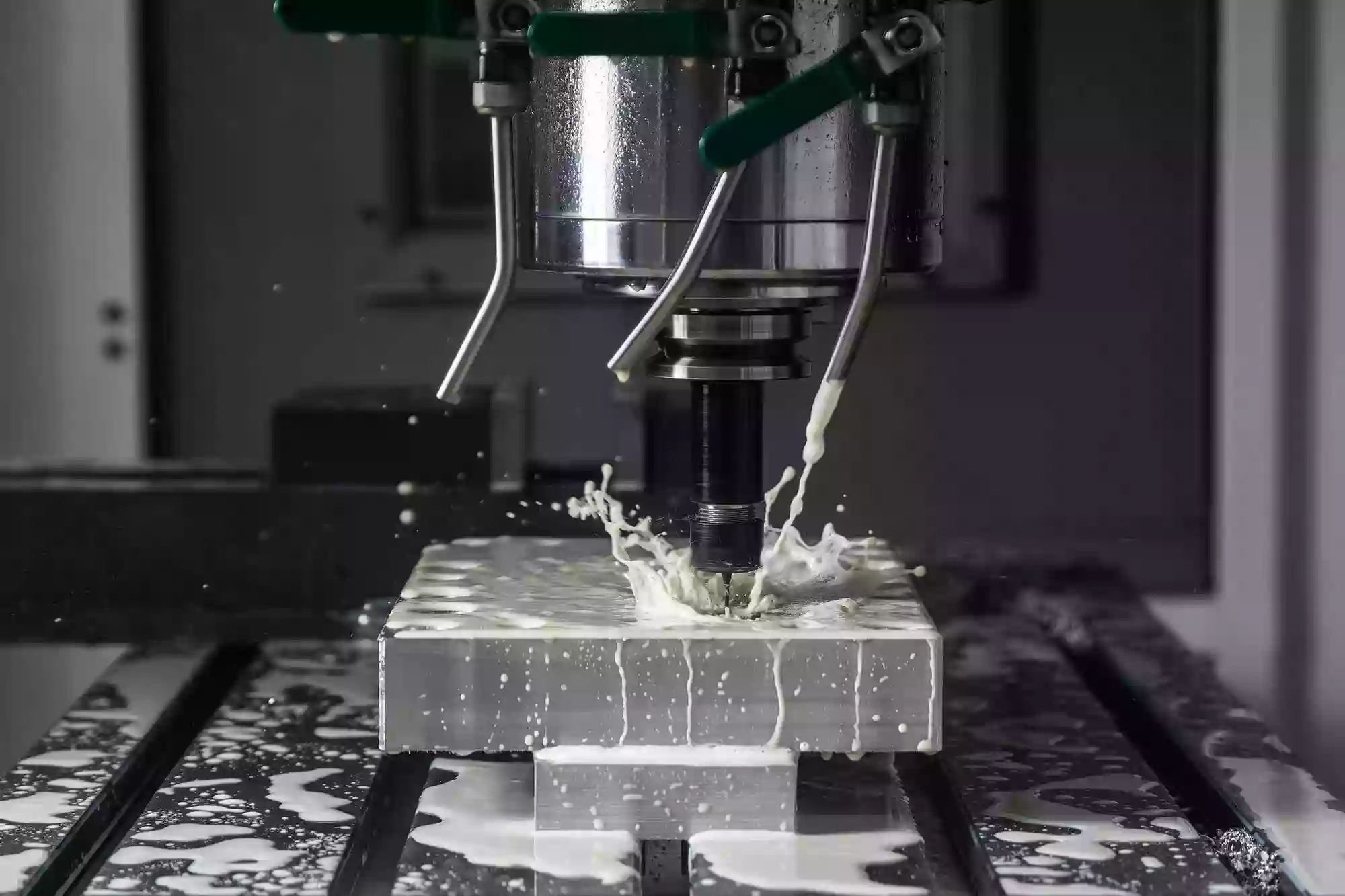
CNC Threading service 1

CNC Threading

External threads and precision screw features for copper components.
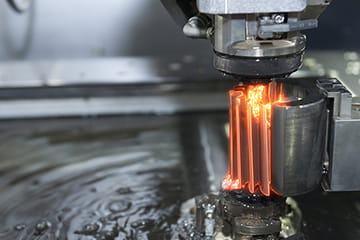
EDM and Wire Cutting Services

EDM Wire Cutting

Intricate features and micro-structures with wire electrical discharge machining.
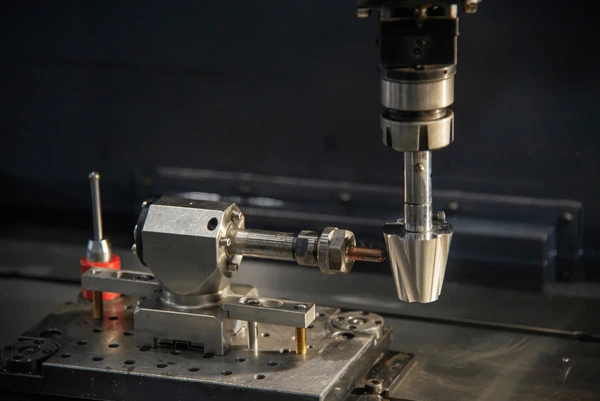
sinker edm machine simulation operation 600nw 1493173133

EDM Sinker

Complex cavities and delicate geometries impossible with conventional milling.
5 axis cnc machining 1

5-Axis CNC Machining

Simultaneous multi-axis machining for complex copper geometries, enabling high precision and reduced setups for intricate components.
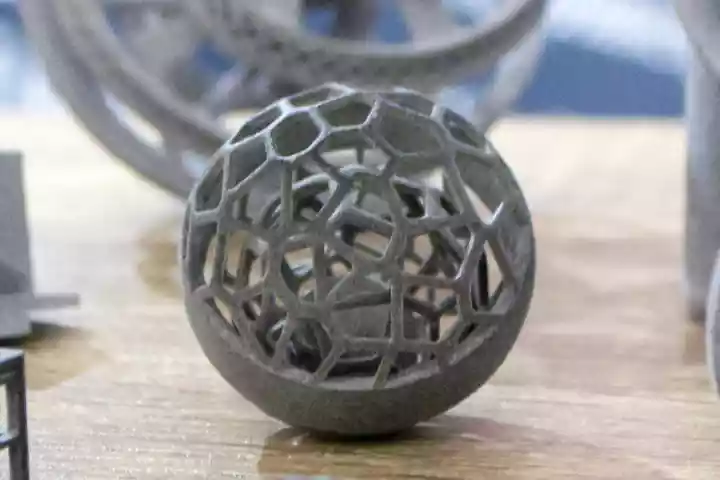
6 Excellent Reasons To Give Rapid Prototyping A Try

Rapid Machining

Fast turnaround for single or small-batch prototypes.
low volume production for advantage

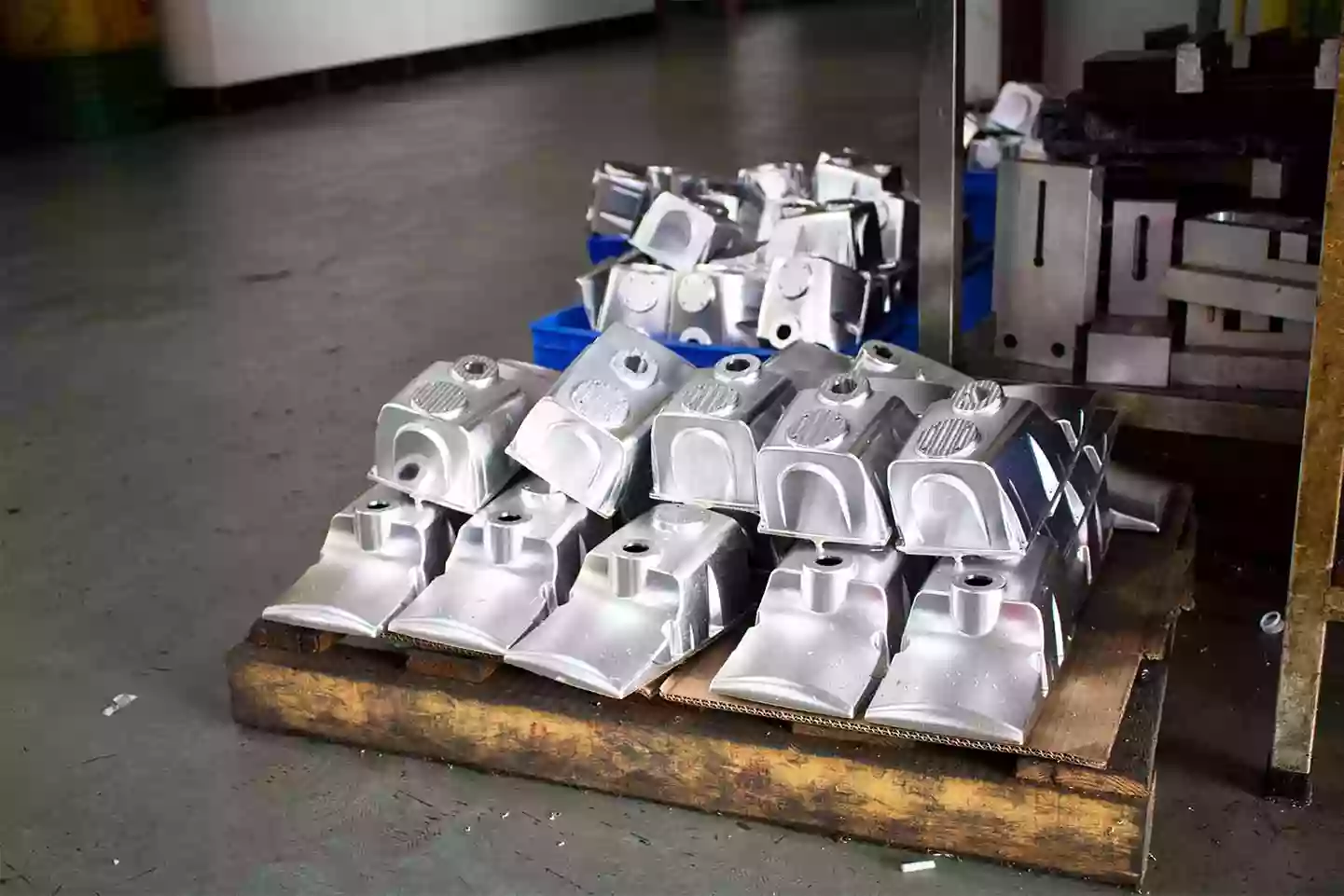
Low-Volume Production

Efficient small-batch production runs with consistent quality.
High volume Production sheet metal parts

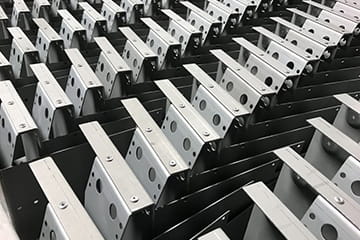
High-Volume Production

Scalable mass production of copper parts with consistent quality and assembly-ready finishes.

Advanced Copper Machining Technologies

Copper is difficult to machine because it builds heat quickly, sticks to cutting tools, and tends to form burrs that affect both precision and surface quality. To solve this, we use high-speed spindles with cryogenic cooling to control temperature during cutting, along with adaptive feed control and real-time tool wear monitoring to reduce built-up edge and maintain stable cutting conditions. For complex geometries like thin-wall heat sinks and busbars, we apply 5-axis machining and Swiss-type systems to ensure stable chip evacuation and consistent geometry, while in-process probing and thermal compensation allow us to hold tight tolerances up to ±0.005 mm and achieve fine surface finishes down to Ra ≤ 0.4 μm. The result is stable, burr-controlled copper parts that are ready for functional use without heavy secondary finishing.

Custom Copper CNC Machining 1
Custom Copper CNC Machining part 3 1

Micron-Level Precision & Thermal Stability in Copper

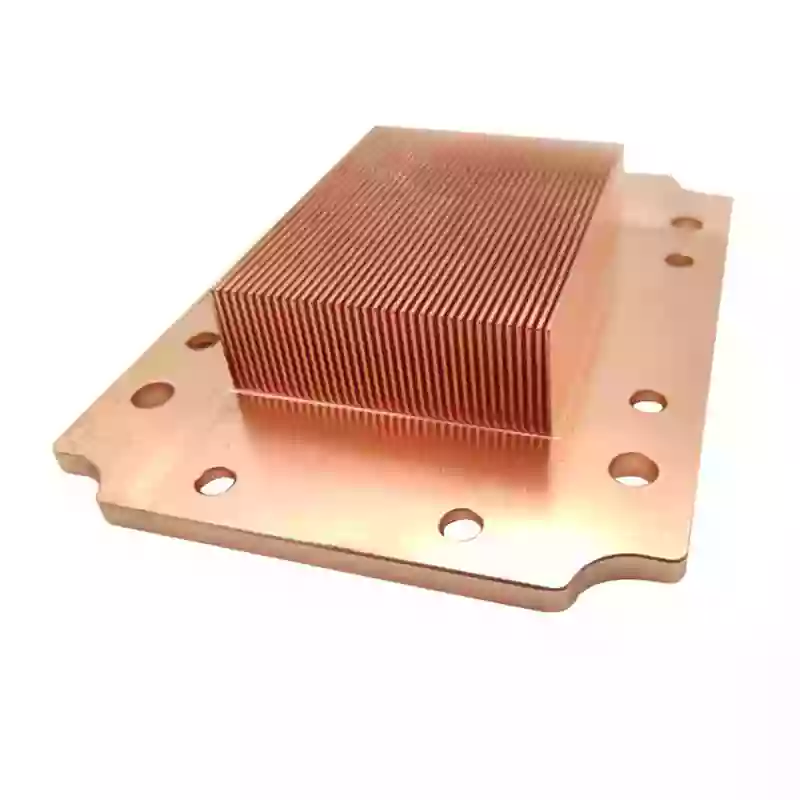
In copper CNC machining, thermal expansion and material softness make dimensional stability difficult to maintain, especially in thin-wall and high-detail structures introduced in copper machining applications. To address this, we use real-time thermal control and machining strategies that stabilize heat distribution during cutting, combined with in-process measurement and stress-reduction cycles to minimize deformation caused by material recovery. This is particularly important when producing copper components such as heat sinks, RF housings, and electrical connectors, where geometry must remain stable to ensure proper assembly and functional performance in electronic and thermal systems.

High-Performance Surface Engineering for Copper

Copper is highly sensitive to oxidation and surface instability after machining, which often leads to conductivity loss, poor solderability, and inconsistent assembly performance. Unlike standard finishing workflows, we integrate surface control directly into the machining process to stabilize copper behavior from the start.

Instead of applying generic post-processing, we select and combine mechanical finishing, chemical passivation, and electroplating based on part function and operating environment. This allows us to control surface reactivity, reduce contact resistance, and maintain consistent electrical performance across RF components, busbars, and thermal parts.

The result is not just a finished surface, but a stable, function-ready copper interface that performs consistently in real electrical and thermal conditions without additional rework.

copper cnc machining 2

XTPROTO Facility

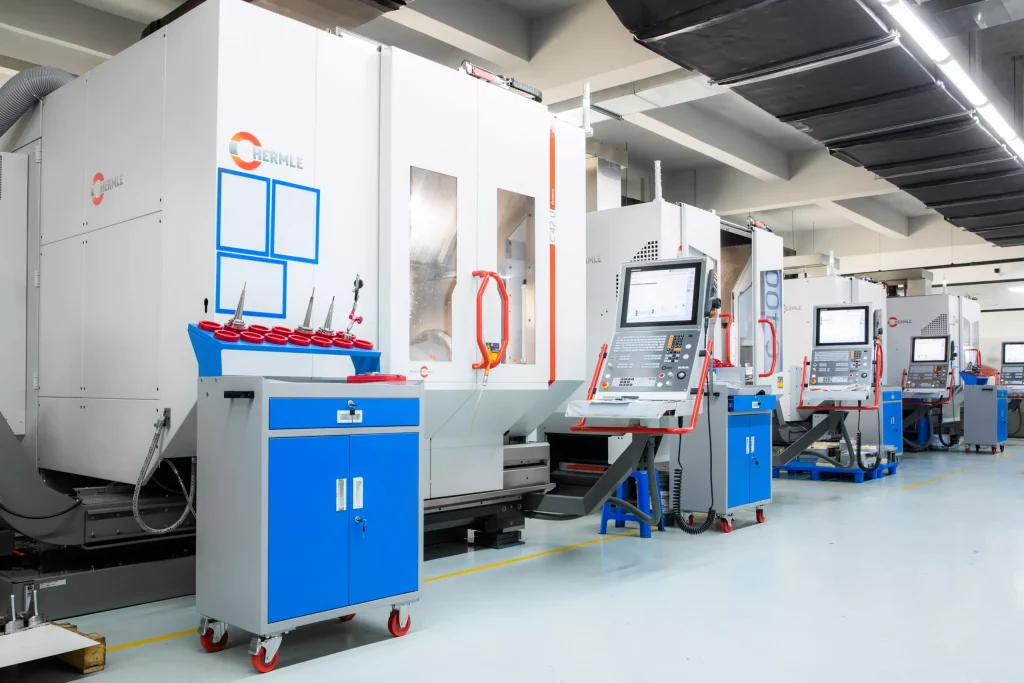
Our copper CNC operations are supported by a state-of-the-art facility spanning 160,000 sq ft, designed for efficient workflow, material handling, and high-volume machining.

The facility is staffed with 500+ skilled technicians and 120+ engineering specialists, organized to manage every stage of production—from prototyping to full-scale manufacturing—ensuring projects are completed on time and to specification.

xtproto is an ISO 13485 2016 certified factory
Xtproto cnc machining workshop

Production and Delivery of Copper Components

Dedicated production zones and inspection labs allow simultaneous handling of multiple projects, reducing lead times while maintaining consistent quality. Advanced material storage, logistics, and process management ensure that delicate copper components are safely handled throughout the production cycle, minimizing risk of damage or contamination.

From small-batch prototypes to complex high-volume orders, our manufacturing infrastructure provides the capacity, organization, and reliability needed to deliver precision copper components across diverse industries.

Shop Floor & Material Protection

Our production floor is optimized for copper’s unique physical sensitivities. By maintaining dedicated copper-only machining zones, we prevent cross-contamination from ferrous metals, preserving the material purity required for high-conductivity applications. Every workstation is equipped with non-marring handling systems and custom soft-jaw fixturing to protect delicate copper surfaces from mechanical scarring. This controlled workflow, integrated with on-site ultrasonic cleaning and vacuum-sealed packaging, ensures that every component is delivered with zero oxidation and absolute geometric consistency.

Engineer mechanician operating and controlling CNC machine
engeneer work

Strategic DFM & Engineering Excellence for Copper

Copper parts are often difficult to manufacture due to deformation, heat sensitivity, and tool interaction issues. Our engineering team reviews designs early in the DFM stage to identify risks before production starts.We optimize geometry, toolpath strategy, and structural stability to reduce machining issues such as distortion, poor surface finish, and instability in thin or complex features. This ensures copper parts can be produced more reliably and consistently.
The result is faster development, fewer production issues, and smoother transition from design to mass production.

Multi-Dimensional Quality Inspection

We ensure copper part quality through comprehensive inspection across geometry, material, and surface condition:

  • Quality System Certification:ISO 9001 certified quality management system ensuring process control and traceability
  • Dimensional Inspection:CMM and laser scanning for geometry verification
  • Material Verification:Conductivity testing to confirm copper grade performance
  • Surface Inspection:Surface roughness and defect detection for finishing quality
  • Coating Check:Plating thickness verification for electroplated parts
  • Process Control:Batch inspection to maintain production consistency
CNC Quality Inspection

Copper CNC Machining Tolerances

Typical machining capabilities for copper parts across standard and high-precision production:
Feature Standard CNC High-Precision CNC / Swiss-Type
Linear Tolerance ±0.05 mm ±0.005 mm
Minimum Wall Thickness 1.0 mm 0.5 mm
Maximum Part Size 560 × 355 × 95 mm 648 × 648 × 300 mm
Minimum Feature Size 0.5 mm 0.2 mm

CNC Machined Copper Parts

Copper CNC Machining Applications & Industries

Electronics

Electronics & RF Modules

Micro-channel heat sinks, connectors, and thermal components High conductivity, precise geometries, thermal management

Energy cnc milling 1

Power & Energy

Busbars, conductive blocks, distribution components High current capacity, thermal stability, scalable production

Automotive

Automotive & Transportation

EV copper components, thermal management parts, high-performance connectors Thin-wall features, heat resistance, reliability

Industrial Equipment

Industrial & Manufacturing

Machinery components, tooling inserts, complex assemblies Precision, wear resistance, repeatable production

Aerospace

Telecommunications & Aerospace

RF connectors, intricate copper modules, high-reliability components Micro-features, tight tolerances, superior surface finish

Medical

Medical & Scientific Equipment

Precision instruments, conductive components, thermal control parts High accuracy, clean machining, stable performance

FAQ: Precision Copper CNC Machining

Which copper grade is best for electrical conductivity?

C101 (Oxygen-Free) and C110 (ETP) are the industry standards for maximum conductivity, offering over 100% IACS. While C101 is superior for vacuum and high-power applications due to its purity, C110 is more cost-effective for general busbars and electrical connectors.

Why is copper considered difficult to machine compared to aluminum?

Copper’s high ductility and thermal conductivity lead to "gumming"—where the material sticks to the cutting tool, causing rapid wear and burr formation. We overcome this using specialized high-speed toolpaths, diamond-coated tooling, and synchronized cooling to maintain sharp cuts and prevent material tearing.

How do you prevent copper parts from tarnishing or oxidizing after production?

Copper reacts quickly with oxygen and skin oils. We mitigate this through chemical passivation, anti-tarnish dips, or functional electroplating (Nickel, Silver, or Gold). For shipping, we use vacuum-sealed packaging with desiccants to ensure parts arrive in pristine, assembly-ready condition.

Can you achieve tight tolerances on soft, pure copper?

Yes. While pure copper is prone to "spring-back" and thermal expansion, our real-time thermal compensation and stress-relief machining cycles allow us to hold linear tolerances as tight as ±0.005 mm. For ultra-complex features, we utilize Wire EDM to eliminate mechanical stress entirely.

Does CNC machining affect the thermal properties of the copper?

No. Unlike casting or welding, CNC machining is a cold process that preserves the material’s original grain structure and thermal/electrical integrity. This makes it the ideal choice for performance-critical heat sinks and RF components.

Precision Copper Parts, From Prototype to Production.

Stuck on a complex thermal design? Our engineers provide Free DFM Feedback within 24 hours to optimize your copper components for better manufacturability and lower costs.

Scroll to Top