
The Ultimate 2026 Guide to CNC Machined Parts & Precision Manufacturing
In the rapidly evolving landscape of global manufacturing, the demand for precision has never been higher. Whether it is a critical component for a satellite propulsion system or a bespoke titanium implant for a medical procedure, CNC machined parts serve as the foundational building blocks of modern innovation.
What are CNC Machined Parts?
CNC (Computer Numerical Control) machined parts are components created through a subtractive manufacturing process. Unlike 3D printing, which adds material layer by layer, CNC machining starts with a solid block of material—known as a workpiece or “blank”—and uses high-speed, computer-guided cutting tools to remove material until the final geometry is achieved.
This process translates a digital 3D model (CAD) into a series of numerical commands (G-code), ensuring that every cut, drill, and bore is executed with micron-level accuracy.
Why Precision Matters in 2026
As we navigate 2026, the industry has shifted. “Good enough” is no longer the standard. Today’s engineers and procurement professionals prioritize CNC machined parts for three primary reasons:
Complexity without Compromise: Modern 5-axis machines allow for the creation of intricate geometries that were once considered “unmachinable,” reducing the need for multi-part assemblies.
Material Integrity: Unlike cast or printed parts, machined parts maintain the full mechanical properties of the original raw material, providing superior strength and thermal resistance.
Speed to Market: With AI-optimized toolpathing and automated setups, the transition from a prototype to a functional, end-use CNC part is faster than ever, allowing companies to iterate and launch products in record time.
The Problem We Are Solving
Navigating the world of custom manufacturing can be a “black box.” High costs, unexpected lead times, and “out-of-tolerance” parts are common pain points for product teams. This guide is designed to demystify the process of sourcing CNC machined parts, providing you with the technical insights needed to optimize your designs for manufacturability (DFM) and choose the right machining partner for your specific industry needs.
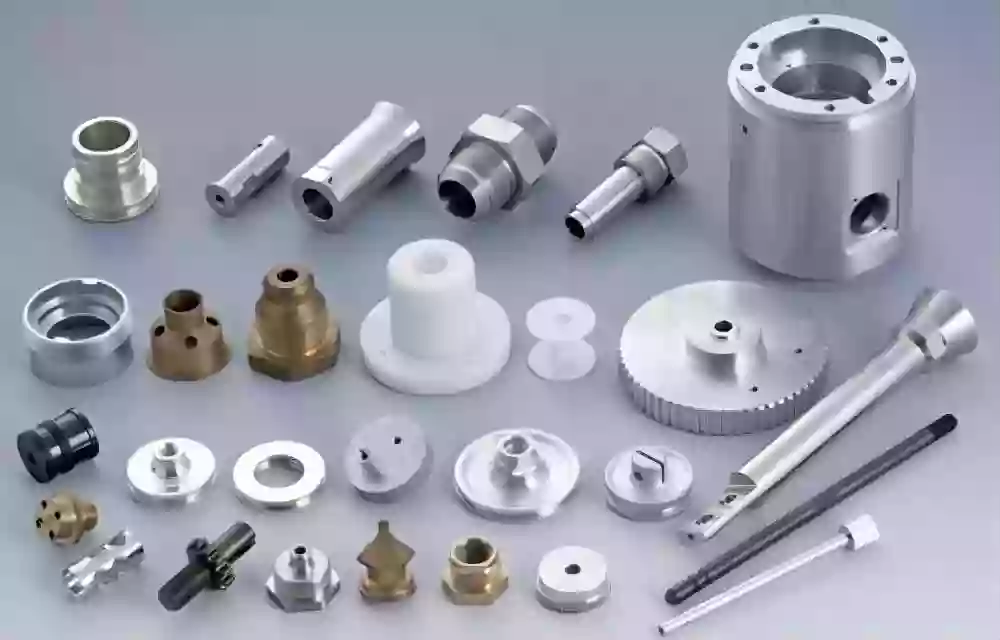
Core Processes: How CNC Machined Parts are Created
Understanding the specific process used to create a part is essential for both cost control and functional integrity. While “CNC machining” is an umbrella term, the industry is primarily driven by three distinct methodologies.
CNC Milling: For Prismatic and Complex Geometries
CNC Milling is the most common method for producing CNC machined parts. In this process, the workpiece remains stationary (or moves along specific axes) while a high-speed rotating cutting tool removes material.
Best for: Square or rectangular blocks, brackets, engine components, and parts with complex surface contours.
Capability: Modern mills can handle everything from simple 3-axis operations to complex 5-axis movements, allowing for deep cvities and intricate underside cuts.
CNC Turning: For Cylindrical and Symmetrical Parts
In CNC Turning, the workpiece rotates at high speeds while a stationary cutting tool shears material away. This is typically performed on a CNC Lathe.
Best for: Shafts, bolts, nozzles, spacers, and any part that is radially symmetrical.
Advantage: Turning is generally faster and more cost-effective than milling for cylindrical parts, providing superior surface finishes on rounded exteriors.
Multi-Axis Machining: The Gold Standard for Precision
To meet the demands of 2026’s aerospace and medical sectors, 5-axis CNC machining has become the industry standard for high-performance parts.
Unlike traditional 3-axis machines ($X, Y, \text{and } Z$ axes), 5-axis machines add two rotational axes ($A \text{ and } B$). This allows the cutting tool to approach the part from every direction simultaneously.
Reduced Setups: Finish a complex part in a “single hit,” eliminating the manual repositioning that causes human error.
Superior Surface Finish: By maintaining the optimal “angle of attack” between the tool and the part, 5-axis machining minimizes tool vibration and chatter.
Swiss Machining: High-Volume Micro Precision
For extremely small, high-volume CNC machined parts (like those found in watches or surgical tools), Swiss Machining is utilized. These machines use a sliding headstock that supports the workpiece right next to the cutting tool, preventing the part from bending under pressure.
Summary Table: Choosing Your Process
| Feature | CNC Milling | CNC Turning | 5-Axis Machining |
| Part Shape | Flat/Prismatic | Cylindrical/Round | Highly Complex/Organic |
| Material Waste | Moderate | Low | Moderate |
| Standard Tolerance | $\pm 0.05$ mm | $\pm 0.025$ mm | $\pm 0.01$ mm |
| Best Application | Brackets, Housings | Shafts, Pins | Impellers, Bone Plat |
Material Selection: Choosing the Right Substrate
Selecting the right material for CNC machined parts is a delicate balance between mechanical performance and production cost. In 2026, material science has advanced, offering highly specialized alloys and “super-plastics” that can often replace metals.
Metals: The Industry Workhorses
Metals remain the most common choice for parts requiring high strength, conductivity, and heat resistance.
Aluminum 6061 & 7075: The “standard” for CNC machining. 6061 offers excellent machinability and corrosion resistance, while 7075 provides aircraft-grade strength.
Stainless Steel (304 & 316): Essential for medical and marine applications due to its high corrosion resistance. 316 is the “marine grade” choice, offering superior protection against chlorides.
Titanium (Ti-6Al-4V): The darling of aerospace and medical implants. It offers an incredible strength-to-weight ratio but is notoriously difficult to machine, requiring specialized tooling.
Brass & Copper: Favored for electrical components due to their high conductivity and aesthetic “gold-like” finish.
Engineering Plastics: Lightweight and Versatile
Modern plastics are no longer just for prototyping; they are frequently used for end-use functional parts.
POM (Delrin): High stiffness, low friction, and excellent dimensional stability make it the best plastic for precision gears and bearings.

PEEK: A “high-performance” plastic that can withstand extreme temperatures and chemicals, often used to replace metal parts in aerospace to reduce weight.
ABS & Polycarbonate: Cost-effective options for housings, enclosures, and impact-resistant components.
CNC Material Comparison Table
| Material | Strength | Machinability | Typical Cost | Key Benefit |
| Aluminum 6061 | Medium | Excellent | Low | Most versatile and cost-effective |
| Stainless 316 | High | Moderate | Medium | Superior corrosion resistance |
| Titanium (Gr 5) | Very High | Difficult | High | Highest strength-to-weight ratio |
| POM (Delrin) | Moderate | Excellent | Low | High precision, low friction |
| PEEK | High | Moderate | Very High | Extreme heat/chemical resistance |
Factors to Consider in 2026
When sourcing CNC machined parts, your material choice affects more than just the part’s strength:
Thermal Expansion: Does the part need to maintain tolerances in varying temperatures?
Surface Finish Compatibility: Some materials (like Aluminum) anodize beautifully, while others (like Stainless Steel) are better suited for electropolishing.
Sustainability: In 2026, many OEMs are moving toward Recycled Aluminum, which retains 95% of its original properties while significantly reducing the carbon footprint of the manufacturing process.
Design for Manufacturability (DFM): Optimizing CNC Machined Parts
Designing a part that looks good in CAD is one thing; designing a part that is cost-effective to machine is another. Design for Manufacturability (DFM) is the practice of optimizing your part’s geometry to reduce machining time and tool wear.
Essential DFM Tips for CNC Machining
Avoid Sharp Internal Corners: CNC cutting tools are round (end mills). If your design has a 90° internal vertical corner, a tool cannot reach it perfectly.
Solution: Add a radius (fillet) to all internal corners. A good rule of thumb is to make the radius at least $1.1 \times$ the tool radius to allow for smooth movement.
Limit Cavity Depth: Deep, narrow pockets require long, fragile tools that are prone to “chatter” (vibration) and breakage.
Solution: Limit the depth of a cavity to no more than 4x its width.
Standardize Hole Sizes: While CNC machines can interpolate almost any hole size, using standard drill bit sizes (metric or imperial) significantly speeds up production.
Wall Thickness: Thin walls are susceptible to warping during the machining process due to material stress.
Minimum Recommendation: Keep metal walls above 0.8 mm and plastic walls above 1.5 mm.
Understanding Tolerances
Tolerances define the acceptable deviation from the nominal dimension. While tighter is “better” for performance, it is exponentially more expensive.
Standard Tolerance: Typically $\pm 0.125$ mm. Suitable for most non-mating parts.
Precision Tolerance: $\pm 0.025$ mm to $\pm 0.01$ mm. Required for press-fits, bearings, and high-speed rotating assemblies.
Pro Tip: Only specify tight tolerances on critical features (like a bearing seat). Applying a global $\pm 0.01$ mm tolerance to a non-critical bracket can triple the part’s cost.
Surface Finishes for CNC Parts
Once the machining is complete, the surface finish determines the part’s final durability and appearance.
As-Machined: Visible tool marks ($Ra$ 3.2 to 1.6 $\mu$m). Most economical.
Bead Blasting: Creates a uniform matte finish and hides tool marks.
Anodizing (Type II or III): Specific to Aluminum. Increases corrosion resistance and allows for color dyeing (Type II) or extreme wear resistance (Type III – Hardcoat).
Electropolishing: Common for Stainless Steel CNC machined parts in the medical industry to create a mirror-like, sterile surface.
DFM Checklist for Engineers
| Feature | Best Practice | Why? |
| Internal Corners | Use Fillets | Tools are round; prevents tool breakage. |
| Threads | Limit length to $3 \times$ diameter | Longer threads provide no extra grip and increase tap breakage. |
| Text | Engrave (recessed) | Raised text requires removing all material around the letters—very slow. |
| Setup | Minimize orientations | Every time the machinist flips the part, cost and error risk increase. |
Industry Applications: Where CNC Machined Parts Excel
The versatility of CNC machined parts makes them indispensable across virtually every high-tech sector. Because CNC machining can handle exotic metals and maintain tight tolerances, it is the go-to solution for mission-critical applications.
Aerospace & Defense
In an industry where failure is not an option, CNC machining provides the structural integrity required for extreme environments.
Common Parts: Turbine blades, housings, manifold components, and landing gear parts.
Materials: Titanium, Kovar, and 7075 Aluminum.
Key Requirement: High strength-to-weight ratios and resistance to extreme thermal cycling.
Medical & Life Sciences
The medical field relies on CNC machining for its ability to produce biocompatible parts with complex, organic geometries.
Common Parts: Orthopedic implants (hip/knee replacements), surgical instruments, and MRI scanner components.
Materials: PEEK, Stainless Steel 316L, and Titanium Grade 5.
Key Requirement: Burr-free finishes and strict adherence to ISO 13485 standards.
Automotive & Electric Vehicles (EV)
From high-performance internal combustion engines to the lightweight frames of modern EVs, CNC parts are everywhere.
Common Parts: Cylinder heads, drive shafts, gearbox housings, and custom battery enclosures for EVs.
Materials: Aluminum alloys and high-strength steels.
Key Requirement: Durability under high vibration and high-volume repeatability.
Electronics & Semi-conductors
As devices get smaller and more powerful, managing heat and EMI (Electromagnetic Interference) becomes a machining challenge.
Common Parts: Heat sinks, microwave components, and semiconductor wafer handling equipment.
Materials: Copper, Aluminum (Anodized), and specialized plastics.
Key Requirement: Excellent surface conductivity and micro-precision.
The 2026 Edge: Smart Manufacturing & AI Integration
The “CNC machined parts” market in 2026 is no longer just about cutting metal; it’s about data. The integration of AI and IoT has revolutionized the workshop floor.
AI-Optimized Toolpaths
Modern CAM (Computer-Aided Manufacturing) software now uses machine learning to predict tool wear. By adjusting cutting speeds in real-time, AI reduces the risk of part failure and ensures a more consistent surface finish across a 1,000-part run.
The Digital Twin Concept
Before a single chip is cut, a “Digital Twin” of the CNC machine simulates the entire process. This eliminates “crashes” and ensures that the first part produced is as perfect as the last, significantly reducing material waste and lead times.
Sustainability and the Circular Economy
In 2026, many top-tier CNC providers offer “Green Machining” options. This includes:
Closed-loop recycling: 100% of metal chips are collected, cleaned, and sent back for smelting.
Vegetable-based coolants: Replacing petroleum-based fluids with biodegradable alternatives to reduce environmental impact.
Strategic Sourcing: How to Choose a CNC Machining Partner
Selecting the right vendor for your CNC machined parts is just as critical as the design itself. In 2026, the global supply chain favors partners who offer transparency, technical depth, and verified quality.
Quality Certifications: The Baseline
Don’t just take a supplier’s word for it. Look for industry-standard certifications that prove their quality management systems are robust:
ISO 9001: The global standard for general quality management.
AS9100: Essential if you are sourcing parts for the Aerospace or Defense sectors.
ISO 13485: The gold standard for Medical device manufacturing.
IATF 16949: Required for high-level Automotive supply chains.
Transparency and DFM Feedback
A great CNC shop does more than just “cut to print.” They should act as an extension of your engineering team.
Automated Quoting: Modern platforms provide instant quotes with built-in DFM feedback, flagging thin walls or unreachable corners before you even place an order.
Communication: Does the shop suggest material alternatives to save you 15% on costs? That is a partner, not just a vendor.
Prototyping vs. Production Scale
Ensure your partner can grow with you.
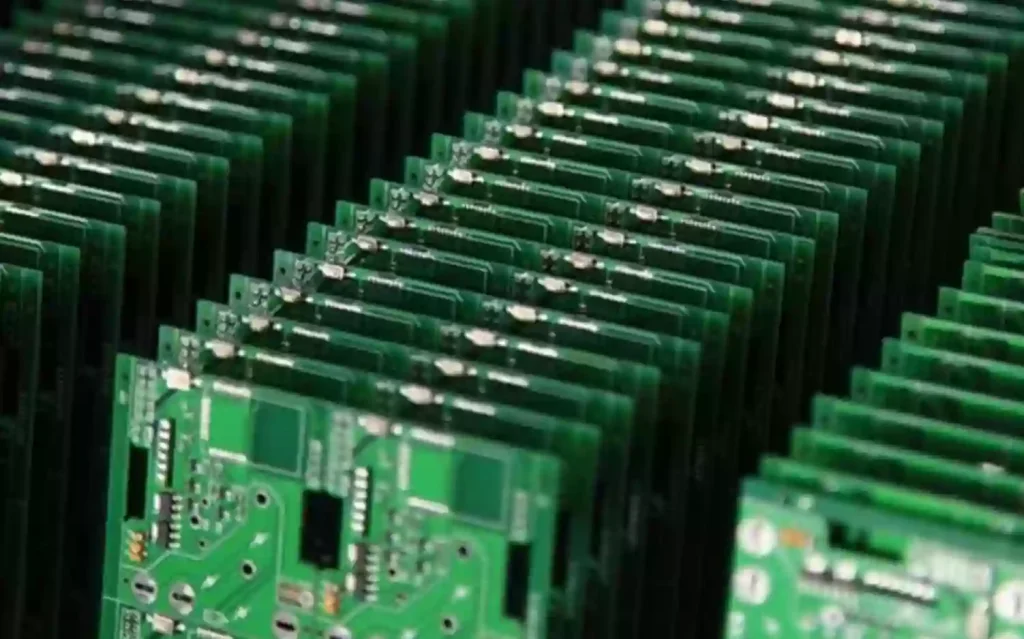
Bridge Production: Some shops excel at 1–10 units (prototyping), while others are optimized for 10,000+ units (mass production).
Hybrid Manufacturing: In 2026, many leading CNC firms also offer 3D printing and Injection Molding, allowing you to source all your mechanical components from a single “Smart Factory.”
Conclusion: The Future of Precision
As we have explored, CNC machined parts remain the gold standard for high-performance, high-precision engineering. From the initial CAD design and material selection to the advanced 5-axis toolpaths of 2026, the process is a perfect blend of digital intelligence and physical craftsmanship.
Whether you are developing a revolutionary EV powertrain or a life-saving surgical tool, understanding the nuances of CNC machining—from DFM optimization to smart material sourcing—is your competitive advantage.
Ready to Bring Your Design to Life?
The world of manufacturing moves fast. By choosing the right processes and staying informed on the latest DFM trends, you ensure your project stays on schedule and under budget.
FAQ: Quick Hits for CNC Machined Parts
How much do CNC machined parts cost?
Prices vary based on material, complexity, and volume. Small aluminum brackets might cost $50 for a prototype, while complex titanium aerospace parts can cost thousands.
What is the typical lead time?
For prototypes, 3–7 business days. For production runs, 2–4 weeks depending on finishing requirements like anodizing.
Can CNC machining replace 3D printing?
For end-use parts requiring high strength and tight tolerances, CNC is still superior to most 3D printing methods.