
ABS Plastic: How to Select the ABS Material
If you work with ABS, you are likely already familiar with their versatility. As one of today’s most widely used materials, ABS combines lightweight properties, durability, and cost-effectiveness, playing a vital role across various industries. However, the performance characteristics of different ABS materials vary. Whether you are a seasoned professional or a DIY enthusiast, knowing which material best meets your needs is crucial.
To help you make an informed decision, this article explores the pros and cons of different types of ABS materials and offers specific purchasing recommendations. Mastering these key factors will help ensure the success of your project.
What is ABS Plastic?
ABS (Acrylonitrile-Butadiene-Styrene) is a widely used thermoplastic engineering material, renowned for its excellent balance of strength and toughness, as well as its superior processability. The material softens when heated—allowing it to be easily molded into complex shapes—and hardens upon cooling, making it suitable for processes such as injection molding, CNC machining, and 3D printing.
The properties of ABS stem from the combination of its three constituent monomers: acrylonitrile provides chemical resistance, hardness, and thermal stability; butadiene contributes toughness and impact resistance; and styrene enhances rigidity, surface gloss, and processability. By adjusting the ratios of these monomers and incorporating functional additives, ABS can be produced in various grades to meet diverse application requirements.
In terms of production, ABS is typically manufactured using emulsion polymerization or continuous mass polymerization, processes that chemically combine the three monomers into a stable copolymer structure. The resulting material is usually supplied as opaque, ivory-colored pellets and can be modified with colorants or additives to achieve customized aesthetic and performance characteristics.
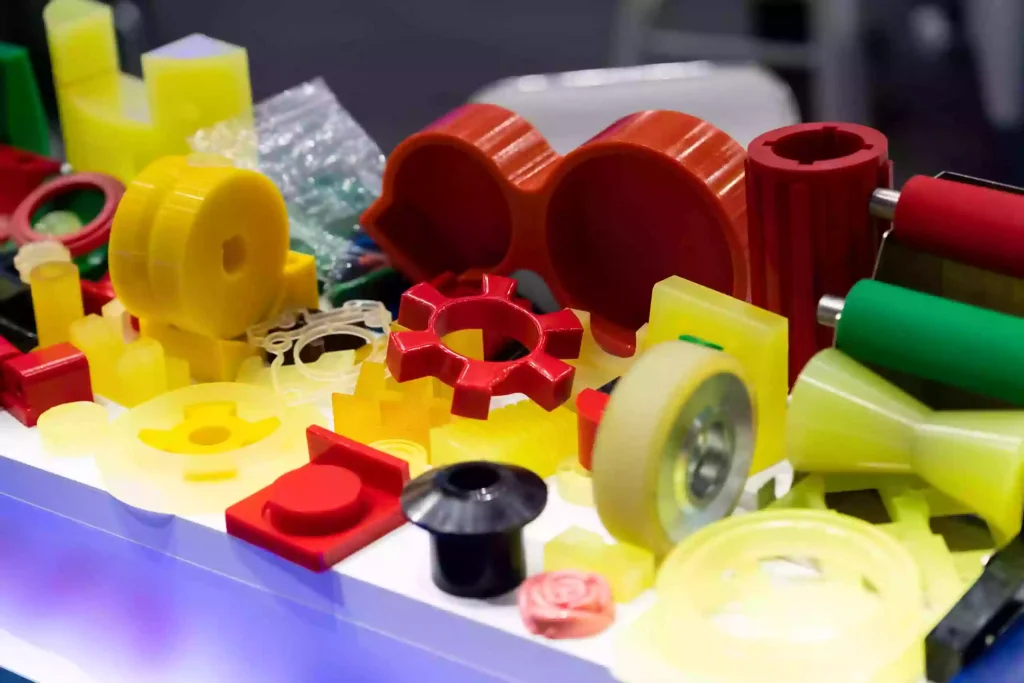
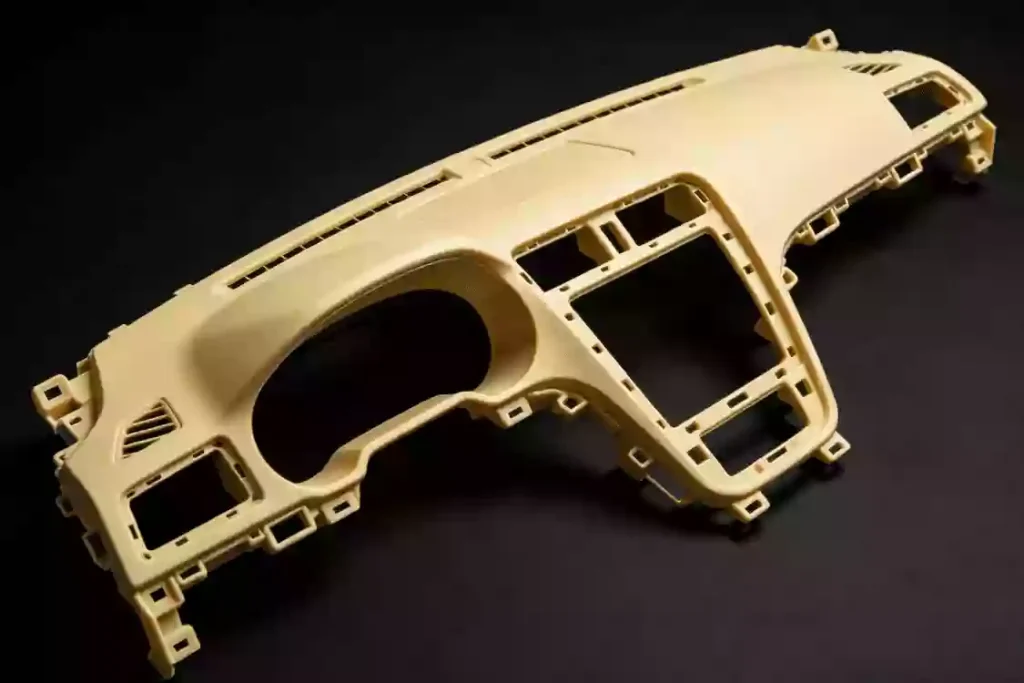
Thanks to its balanced properties and high design flexibility, ABS is widely used in automotive components, electronic housings, industrial parts, and consumer goods, making it one of the most commonly used engineering plastics today.
Why Selecting the Right ABS Plastic Is Crucial?
Choosing the right ABS material involves more than just cost considerations; it is vital for long-term performance, safety, and ease of installation. Although ABS is a versatile material, different grades can vary significantly in terms of impact strength, heat resistance, surface quality, and chemical resistance. Selecting an unsuitable grade can lead to component failure, excessive wear, or unnecessary increases in production costs.
For instance, using general-purpose ABS in high-temperature or outdoor environments may result in material deformation, discoloration, or a decline in mechanical properties over time. Conversely, selecting a grade that exceeds requirements—specifying a material with capabilities far beyond actual needs—increases material costs without delivering any tangible functional benefits.
Proper material selection also directly impacts manufacturability and post-processing quality, including the stability of CNC machining, injection molding performance, and the final surface finish. Therefore, selecting the correct ABS grade is not merely a material choice but a critical factor in ensuring the success of the product throughout the entire process, from design to production.
Key Factors in Selecting ABS Materials
Selecting the right ABS material requires considering various factors, requirements, and applications. A comprehensive evaluation of technical, aesthetic, and commercial factors is essential to ensure the final part meets performance, cost, and manufacturing requirements.
1. Part Geometry and Dimensions
Part dimensions, wall thickness, and overall geometry are primary considerations. Large or load-bearing parts often require thicker cross-sections to ensure structural stability, whereas small or precision parts may prioritize strict dimensional control and machining accuracy.
2. Mechanical Property Requirements
Different applications have varying requirements for strength, toughness, and impact resistance. It is crucial to determine whether the part will be subjected to static loads, cyclic stress, or sudden impacts during use, as this directly influences material selection.
3. Thermal Properties and Environmental Conditions
Operating temperatures and environmental exposure play a critical role in material performance. The appropriate ABS grade should be selected based on the part’s operating environment—whether indoors, outdoors, or in high-temperature settings that could cause deformation or degradation.
4. Chemical and UV Exposure
Contact with chemicals such as oils, solvents, or cleaning agents can affect material stability. Similarly, UV exposure in outdoor environments can lead to discoloration or surface degradation; therefore, UV-resistant grades are essential for applications requiring long-term durability.
5. Surface Appearance Requirements
For consumer-facing products or decorative parts, aesthetic quality is paramount. Requirements may include surface smoothness, high-gloss or matte finishes, and suitability for painting, plating, or other surface treatments.
6. Manufacturing Process Compatibility
ABS performance can vary depending on the manufacturing process. Processes such as CNC machining, injection molding, vacuum forming, and 3D printing have distinct requirements regarding dimensional stability, flow characteristics, and surface finish quality.
7. Regulatory and Compliance Requirements
Certain applications require materials to meet specific industry standards, such as those for flame retardancy, electrical safety certification, or food contact regulations. These requirements may limit the range of available ABS grades.
8. Cost and Production Scale
Material selection must strike a balance between performance requirements and budget constraints. High-performance grades may increase costs, whereas large-scale production can help reduce the unit price. In addition, the scale of production also influences whether machining or molding is more economical.
How to Select the Right ABS Material
Selecting the appropriate ABS (acrylonitrile-butadiene-styrene) material is a critical optimization step in materials engineering, requiring a comprehensive assessment of application requirements, material limitations, performance grades, and manufacturing processes. Proper material selection ensures mechanical reliability, cost-effectiveness, and consistent production quality.
A reliable selection process must adhere to a rigorous, step-by-step decision-making workflow: defining stress conditions for the specific application, establishing regulatory compliance boundaries, optimizing the polymer microstructure, and finally matching melt rheological properties with the manufacturing process.
Step 1:Application Requirements (Define What the Part Must Withstand)
The first and most important step is to clearly define how the part will be used in real conditions. This determines all subsequent material decisions.Key evaluation points include:
Mechanical loading conditions
- Whether the part is load-bearing or non-structural
- Static loads (constant stress over time) vs dynamic loads (impact, vibration, repeated stress)
- Required stiffness vs flexibility balance
Working environment
- Indoor controlled environment or outdoor exposure
- Exposure to sunlight, moisture, or weather changes
- Presence of mechanical wear or friction
Service life expectations
- Short-term prototype use
- Medium-term consumer products
- Long-term industrial or structural applications
Functional vs aesthetic priority
- Structural parts prioritize strength and stability
- Consumer-facing parts require surface quality and appearance
Step 2:Material Specification Requirements (Physical, Visual, and Commercial Constraints)
After defining application needs, the next step is to set practical constraints that limit material options.
Dimensions and thickness
ABS sheets and parts must be selected based on:
- Thin-wall parts (lightweight, flexible structures)
- Medium thickness (general-purpose components)
- Thick sections (load-bearing or structural parts)
- Available sheet sizes or custom machining blanks
Surface appearance requirements
Surface quality often determines final product suitability:
- High-gloss surfaces for decorative or consumer products
- Matte finishes for industrial or technical parts
- Textured surfaces for grip, scratch resistance, or aesthetics
Color requirements
ABS can be supplied in:
- Standard colors (black, white, natural)
- Custom color matching for branding or product design consistency
Environmental compliance
Depending on application:
- UV resistance for outdoor exposure
- Flame retardancy for electrical or safety applications
- Food-contact or regulatory compliance where required
Cost and procurement constraints
- Budget limitations per part or per batch
- Material availability and lead time
- Stability of long-term supply for production projects
Step 3:Performance-Based ABS Grade Selection (Match Material Properties to Requirements)
Once constraints are defined, the next step is selecting the correct ABS grade based on performance requirements.Different ABS grades are engineered to optimize specific properties:
General Purpose ABS
Balanced mechanical strength, impact resistance, and processability.
Used for standard housings, enclosures, and general industrial parts.
High Impact ABS
Improved toughness and resistance to sudden mechanical shock.
Suitable for protective housings, tool casings, and parts exposed to drops or vibration.
Heat Resistant ABS
Enhanced thermal stability under elevated temperatures.
Used in automotive interiors, electronic housings, and heat-exposed environments.
UV Resistant / Weatherable ABS
Formulated to resist sunlight and outdoor aging.
Prevents yellowing, surface degradation, and loss of impact strength in outdoor applications.
Flame Retardant ABS (FR-ABS)
Designed for electrical safety and fire resistance requirements.
Common in electrical enclosures, appliances, and safety-critical components.
Reinforced ABS (e.g., glass fiber filled)
Improved stiffness, dimensional stability, and load-bearing capacity.
Used in structural parts requiring high rigidity and reduced deformation.
Each grade represents a trade-off between strength, toughness, heat resistance, cost, and surface quality.
Step 4: Manufacturing Process Compatibility (Material-to-Process Matching)
The final step in ABS material selection is ensuring that the chosen grade is fully compatible with the intended manufacturing process. Even a well-selected material grade can fail in production if its flow behavior, thermal stability, or internal stress characteristics do not align with the processing method.In real manufacturing scenarios, ABS is commonly processed through several different production routes, each placing specific demands on the material.
CNC Machining
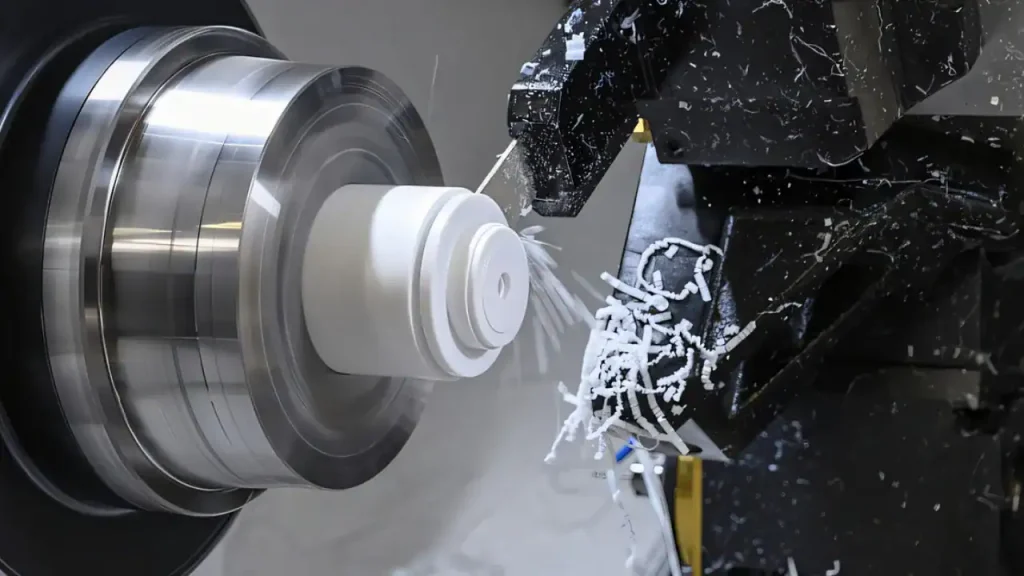
CNC machining is widely used to produce ABS parts from solid raw material stock; it is particularly well-suited for low-volume production, prototyping, and custom-engineered components. This subtractive manufacturing process is an ideal choice when high dimensional accuracy and rapid design iteration are required.
Since the material is removed via mechanical cutting rather than molding, the internal stress state of the raw ABS stock is critical. High-quality machined ABS parts typically require extruded or stress-relieved material blocks to minimize deformation during cutting and ensure dimensional stability after machining.
Injection Molding
Injection molding is the most common and efficient method for the mass production of ABS parts. It enables the high-volume manufacture of components with complex geometries, offering excellent repeatability and consistent surface quality.
In this process, the material must exhibit stable melt-flow characteristics and predictable shrinkage behavior to ensure complete mold filling and dimensional consistency upon cooling. Injection molding is typically selected when the primary goals are reducing per-unit costs and achieving production scalability.
Vacuum Forming / Thermoforming
Vacuum forming is commonly used to produce large, thin-walled ABS parts such as panels, housings, covers, and interior components. It is particularly suitable for medium-volume production runs where mold costs need to be controlled.
During the process, the ABS sheet is heated until soft and then formed over a mold using vacuum pressure. Material performance depends heavily on thermoforming stability, melt strength, and sheet thickness uniformity to prevent excessive sagging or thinning during the forming process.
Extrusion
The ABS extrusion process is used to produce continuous profiles, such as sheets, rods, and tubes. These semi-finished products can serve as raw materials for further processing or be used directly in industrial applications.
Extrusion requires the material to exhibit stable melt behavior and consistent flow characteristics to maintain a uniform cross-sectional geometry. Proper cooling control is also crucial to prevent the buildup of internal stresses that could compromise subsequent processing or forming performance.
3D Printing (FDM / Additive Manufacturing)
ABS is widely used in FDM 3D printing, making it particularly suitable for functional prototypes and parts with complex geometries that are difficult to produce using traditional manufacturing methods.In this process, material properties are significantly influenced by thermal shrinkage behavior and interlayer adhesion. Controlled cooling and stable extrusion are crucial to preventing warping, delamination, or dimensional distortion during printing. This method is primarily used for early-stage design validation and small-batch custom production.
ABS can be processed through multiple manufacturing routes, including CNC machining, injection molding, thermoforming, extrusion, and additive manufacturing. Each process places different demands on material behavior, meaning that manufacturing selection is an integral part of the overall material selection strategy rather than a separate decision.
Summary
ABS material selection is a structured, multi-step engineering decision process rather than a single-factor choice. In real applications, it requires a systematic evaluation from end-use requirements to material constraints, performance characteristics, and manufacturing feasibility.
Application Requirements → Material Specifications → ABS Grade Selection → Manufacturing Process
Each stage progressively refines the selection, ensuring that the final material not only meets functional and environmental demands, but can also be manufactured efficiently and consistently at scale.
A reliable selection is always the result of balancing performance requirements, physical and regulatory constraints, and process compatibility—rather than optimizing a single property in isolation.
Common Pitfalls in Selecting ABS
Although ABS is a widely used engineering thermoplastic, errors in material selection still frequently occur in practical applications. These mistakes often lead to performance failures, increased costs, or manufacturing issues—problems that could have been avoided during the initial design phase.
1. Selecting ABS Based Solely on Price
One of the most common errors is choosing the lowest-cost ABS grade without considering application requirements. While standard-grade materials may lower initial material costs, they often lack the necessary impact resistance, thermal stability, or environmental durability for demanding applications. This frequently results in premature component failure or additional redesign costs.
2. Ignoring Environmental Conditions
ABS performance is highly susceptible to environmental factors, particularly UV radiation, temperature fluctuations, and chemical exposure. Using standard-grade ABS in outdoor or chemically corrosive environments can lead to yellowing, surface cracking, or a decline in mechanical strength over time. UV-resistant or modified ABS grades should be selected for such conditions.
3. Mismatch Between Material Grade and Application Loads
Another common issue is underestimating mechanical stress conditions. For example, using general-purpose ABS for load-bearing or impact-prone components can lead to deformation or brittle fracture. When structural performance is required, high-impact or reinforced ABS grades must be selected.
4. Ignoring Manufacturing Process Requirements
Different ABS grades behave differently during CNC machining, injection molding, or thermoforming. Failure to consider process compatibility during material selection can result in warping, poor surface finish, or inconsistent dimensional accuracy. Therefore, material properties should always be evaluated in conjunction with the manufacturing method.
5. Overlooking Long-Term Performance Trade-offs
Certain modified ABS grades may sacrifice one performance attribute to enhance another; for instance, flame-retardant or glass-fiber-reinforced ABS grades might compromise impact toughness or surface quality. Failure to fully consider these trade-offs can result in components that meet specific requirements but fail to function properly in the actual operating environment. Most material selection errors involving ABS do not stem from the inherent limitations of the material itself, but rather from an inadequate assessment of application conditions, performance trade-offs, and manufacturing constraints. Adopting a systematic approach to material selection can significantly reduce risk and enhance the reliability of the final product.
XTPROTO: Your Trusted ABS Contract Manufacturer
XTPROTO offers end-to-end services for ABS material selection and manufacturing, covering every stage from initial assessment to final part production.
We assist clients in selecting the most suitable ABS grade based on critical application requirements such as strength, heat resistance, surface finish, and cost. Clients may either supply the material themselves or source it through our procurement network. Thanks to long-standing partnerships with renowned suppliers, we ensure consistent material quality and competitive pricing.
Our manufacturing capabilities encompass CNC machining, injection molding, and vacuum forming. We also provide comprehensive post-processing services to ensure that every ABS component delivers consistent quality and reliable performance.
ABS is a versatile engineering plastic with a wide range of applications. Selecting the right grade requires a comprehensive evaluation of application needs, material specifications, and manufacturing feasibility to ensure optimal performance in actual use.If you require assistance with ABS material selection or processing, XTPROTO offers full-spectrum support.