
Nylon CNC Machining Guide: Materials, Tolerances, and Best Practices
Nylon CNC machining is a popular method for making precise plastic parts in industries like automotive, electronics, and industrial machinery. Engineers use computer-controlled tools to cut, shape, and drill nylon materials. This process allows them to create parts that meet strict tolerances while keeping the material’s strength and durability. Compared to traditional manual machining, CNC technology provides higher repeatability, consistent surface finishes, and the capability to efficiently produce complex shapes.
One major advantage of using nylon in CNC machining is its good balance of strength, flexibility, and wear resistance. Different grades, like Nylon 6, Nylon 66, and glass-filled types, give engineers various properties to fit specific needs. However, machining nylon requires careful attention to its characteristics. Factors like moisture absorption, thermal expansion, and sensitivity to cutting stress can impact dimensional accuracy and surface quality if not handled properly.
In this guide, we will look at the types of nylon commonly used in CNC machining, the challenges engineers may encounter, and best practices for creating precise, reliable parts. By grasping these basics, designers can make informed choices about material selection, machining methods, and part design, ensuring the best performance for both prototypes and production components.
Types of Nylon and Their CNC Machining Characteristics
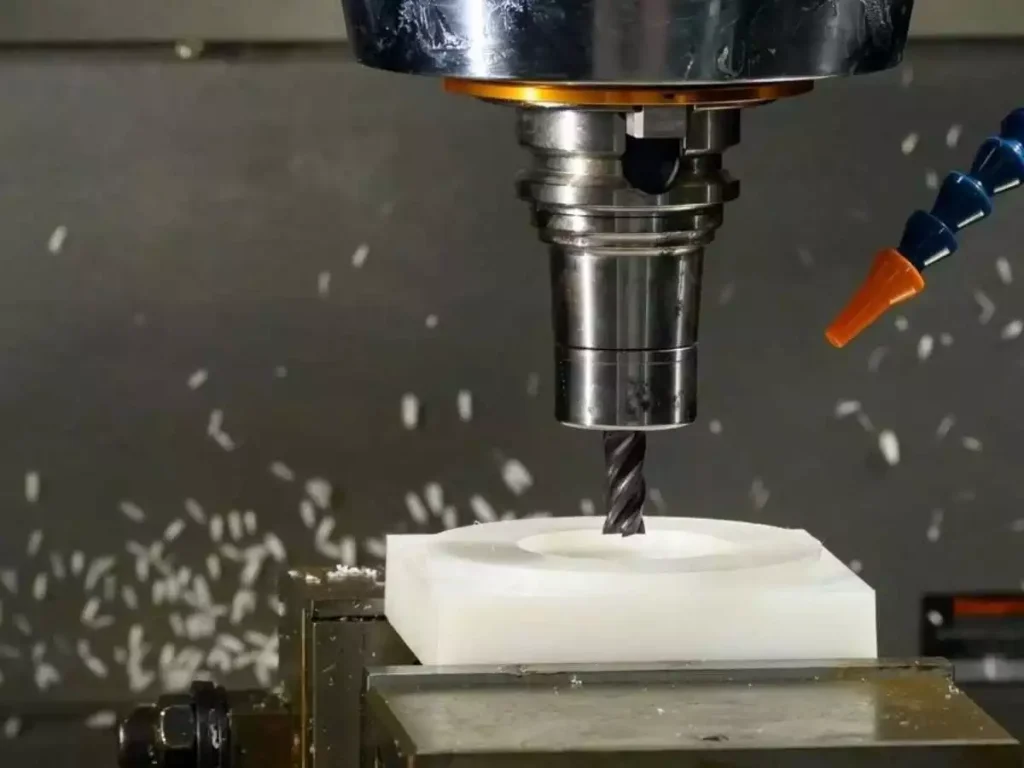
Not all types of nylon behave identically when CNC machined, and selecting the appropriate variant significantly influences both part performance and manufacturing efficiency. Nylon 6 stands out as one of the most commonly used options due to its balanced combination of strength, flexibility, and impact resistance. Compared with other grades, it is relatively easy to machine, making it a popular choice for gears, bushings, and lightweight structural elements. However, engineers should be aware of its propensity to absorb moisture. Without adequate pre-drying or humidity control, Nylon 6 can expand or warp slightly during machining, leading to deviations in dimensional accuracy. To minimize these issues, it is advisable to use moderate spindle speeds and sharp cutting tools, which help limit heat buildup and produce a clean finish.
For projects demanding higher mechanical strength and improved thermal stability, Nylon 66 is often favored. While its greater rigidity can make machining more difficult—accelerating tool wear if parameters are not carefully managed—it compensates with a higher melting point and superior resistance to chemicals. These properties make Nylon 66 particularly well-suited for load-bearing roles in automotive and industrial environments. When machining this material, close attention to spindle speed, feed rate, and tool geometry is essential to maintain precision and prevent deformation, especially for parts with intricate shapes.
A more specialized option is glass-filled nylon, where glass fibers are added to the base material to increase stiffness and dimensional stability. This reinforcement makes the material exceptionally durable and wear-resistant, suitable for precision components or parts subjected to high mechanical stress. Machining glass-filled nylon requires attention to tool wear and cutting strategy, because the abrasive fibers can damage standard tooling. Despite these challenges, the benefits are clear: parts maintain their shape better, resist wear over time, and can perform reliably in demanding industrial applications.
Selecting the right type of nylon is about balancing machinability with performance. Nylon 6 works well for general-purpose parts where flexibility and ease of cutting are priorities. Nylon 66 is better for components that need to handle higher loads or heat. Glass-filled variants are reserved for applications where stiffness, wear resistance, and dimensional precision are critical, even if they require slightly more careful machining. By understanding the differences between these materials, engineers can optimize their CNC processes, reduce trial-and-error, and ensure each component performs exactly as intended.
Engineering Challenges in Nylon CNC Machining
Nylon is a versatile and durable material, but engineers face some unique challenges when machining it. One of the most common problems is its hygroscopicity. Nylon absorbs moisture from the environment, and if not thoroughly dried before machining, this moisture can cause dimensional changes or deformation. A part that appears perfect in a CAD model may be slightly larger or deformed after cutting. To avoid this, pre-drying the nylon and maintaining controlled humidity in the workshop are crucial for high-precision parts.
Another key challenge is thermal expansion. During machining, friction between the tool and the nylon generates heat, causing the material to temporarily expand, resulting in small but crucial deviations from the intended dimensions. Engineers adjust spindle speed, feed rate, and depth of cut to reduce heat buildup. Using sharp, high-quality tools and employing multiple finishing passes rather than single depth cuts also helps maintain dimensional accuracy while preserving surface finish.
Especially in thin-walled or complex structures, nylon parts can also experience stress-induced deformation. Over-clamping or uneven support of the part can create internal stress, causing the material to warp after release from the fixture. Our engineers minimize internal stress to avoid this situation by designing fixtures that evenly distribute pressure and carefully arranging machining sequences. In some cases, minor design modifications, such as adding reinforcing ribs or fillets, can improve rigidity and reduce the risk of deformation without affecting functionality.
Another important consideration in CNC machining of nylon is surface finish. Inappropriate cutting parameters can lead to marks, burrs, and even small molten areas because nylon is softer than metal. Therefore, selecting appropriate tools, controlling cutting speeds, and planning toolpaths to reduce repeated cutting of the same area are crucial steps. For applications such as gears, sliding parts, or housings connected to other components, a smooth surface finish can significantly improve performance and lifespan.
Finally, engineers must balance productivity and precision. Faster cutting speeds increase output but exacerbate heat generation, stress, or tool wear; while slower, more precise cutting speeds improve quality but consume more time. The optimal balance is achieved by considering nylon grade, part geometry, and functional requirements. By understanding these challenges and applying best practices, manufacturers can produce high-quality, high-precision, and durable nylon parts to meet the needs of various industries.
Precision, Tolerances, and Best Practices in Nylon CNC Machining
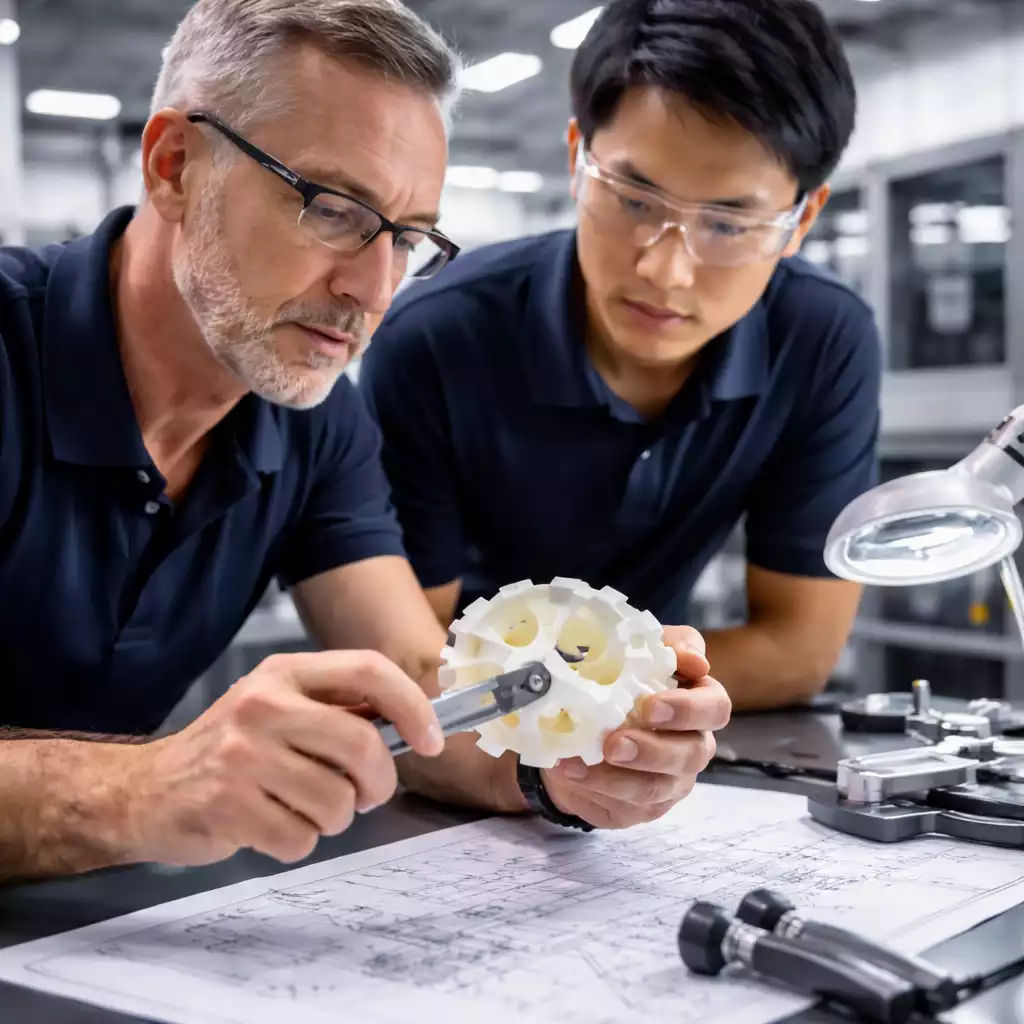
Even minute deviations in precision can affect the assembly or stress performance of parts. Engineers must consider both the design dimensions and the material’s behavior during machining. Factors such as moisture content, thermal expansion, and internal stress all influence the final dimensions and shape of parts. For example, a nylon gear used in high-speed applications may appear flawless on the machine tool, but may expand slightly after cooling, altering gear meshing and affecting its performance.
A combination of material pretreatment and machining strategies is essential to maintain tight tolerances. Pre-drying nylon before machining to remove absorbed moisture is a standard procedure, while maintaining a stable workshop environment effectively prevents unexpected expansion or contraction of the material during processing. When machining nylon, spindle speed, feed rate, and depth of cut must be adjusted according to different material types. For softer nylons, such as nylon 6, machining is relatively easy, but melting or deformation may occur if not properly controlled. In contrast, nylon 66 or glass fiber reinforced nylon are harder, requiring sharper cutting tools and reduced feed rates to ensure dimensional accuracy. Engineers typically employ a multi-stage finishing process to gradually achieve the design dimensions while avoiding material damage.
In nylon machining, the design of fixtures and supports plays a crucial role. For thin-walled or complex-shaped parts, uneven or overly tight clamping can easily lead to warping during machining. To avoid this, engineers typically design specialized fixtures to evenly distribute pressure and ensure material stability throughout the cutting process. Simultaneously, small design modifications, such as adding reinforcing ribs or rounding corners, can increase rigidity and reduce the risk of warping without compromising functionality. Combined with appropriate tool selection and optimized toolpaths, these measures ensure parts meet expected dimensional accuracy and performance requirements, achieving high-quality machining results.
Surface finish is equally crucial in the machining of nylon parts. A uniform, smooth surface not only reduces friction but also improves wear resistance and enhances the overall reliability of the part. In sliding components, gears, and parts that mate with other materials, proper tool selection, cutting strategies, and feed control are particularly critical for achieving high-quality surfaces. Paying attention to these details during the design and manufacturing process helps engineers produce high-precision, durable, and fully functional parts that meet practical application requirements. Furthermore, following best practices in nylon CNC machining can save time, reduce material waste, and improve the overall quality of parts. By pre-drying the nylon before machining, controlling workshop humidity, using sharp and suitable tools, optimizing spindle speed and feed rate, arranging the cutting sequence to reduce stress, and combining necessary design improvements, manufacturers can consistently produce precision and high-performance nylon parts widely used in various industries such as automotive, electronics, industrial machinery, and medical equipment.
Applications and Use Cases of Nylon CNC Machining
Nylon CNC machining is widely used across various industries due to its versatility, strength, and precision. It is particularly prevalent in the automotive industry. Nylon parts, such as gears, bushings, and cable guides, require not only durability and low friction coefficients but also resistance to various chemical media. Engineers designing these parts must consider the impact of repeated stress and temperature variations on performance; therefore, ensuring assembly accuracy and performance stability through precision CNC machining is crucial. In practice, engineers often adjust machining strategies based on the working conditions of the parts, such as performing multiple finishing operations on high-load gears to reduce the risk of stress concentration and warping.
Nylon is also widely used in the electronics industry. Insulating parts, housings, and connectors are typically made of nylon because of its excellent electrical insulation properties and the ability to achieve tight dimensional tolerances through CNC machining. Engineers paying particular attention to surface finish and structural precision when machining these small parts to minimize friction and wear. In many cases, electronic components need to operate for extended periods in high-temperature or high-humidity environments. This necessitates that nylon parts be thoroughly dried before machining and that the machining environment be kept stable to ensure dimensional stability and long-term reliability.
Industrial machinery and automation systems also benefit from CNC machining of nylon. Bearings, rollers, guide rails, and wear-resistant plates are commonly made of nylon due to its excellent wear resistance and low coefficient of friction. For high-stress applications, glass fiber reinforced nylon is particularly suitable, significantly improving part stiffness and dimensional stability. In actual machining, engineers select appropriate tools and cutting parameters based on material properties and optimize toolpaths to achieve high precision and repeatability, which is crucial for maintaining the long-term efficiency and safety of complex machinery.
Nylon also plays an irreplaceable role in medical and laboratory equipment. Due to its high strength, chemical resistance, and ease of machining into precise geometries, nylon is used to manufacture custom components such as valves, pipe fittings, and structural supports. These parts not only need to meet stringent tolerance requirements but must also maintain reliability under harsh operating conditions. Experienced engineers typically combine multiple trial cuts and surface finishing to ensure the dimensional accuracy and functional stability of the parts.
Furthermore, CNC machining of nylon is becoming increasingly prevalent in consumer goods, robotics, and prototyping. Its machinability and mechanical properties enable engineers to quickly create functional prototypes, test designs, and conduct small-batch production before mass production. This allows design teams to iterate products more rapidly, identify potential problems, reduce production costs, and improve the quality of the final product. In practical projects, engineers often choose different nylon materials for different applications; for example, glass fiber reinforced nylon is preferred for its abrasion resistance, while nylon 6 or nylon 66 are chosen for parts requiring high elasticity and ease of machining.
In general, the applications of CNC machining of nylon are almost as extensive as the properties of the material itself. From automotive and electronics to industrial equipment and medical devices, this machining method not only produces precision, durable parts but also allows for customization to different application scenarios. By combining material properties, machining experience, and best practices, manufacturers can continuously provide engineers with high-performance, reliable nylon components that meet the stringent requirements of various industries.
Conclusion: Maximizing the Potential of Nylon CNC Machining
Nylon CNC machining is renowned for its high precision, versatility, and durability, making it the preferred material processing method for engineers and manufacturers across various industries. By gaining a deep understanding of different nylon types, such as nylon 6, nylon 66, and glass fiber reinforced nylon, designers can select the most suitable material for specific applications, regardless of whether flexibility, mechanical strength, or dimensional stability is prioritized.
Achieving high-quality nylon machining requires a simultaneous focus on material properties and machining processes. Controlling material moisture content, managing thermal expansion, selecting appropriate cutting tools and optimizing spindle speeds, as well as designing robust and effective fixtures are all crucial steps in ensuring dimensional accuracy and excellent surface finishes. Experienced engineers flexibly adjust cutting parameters during machining based on the part’s shape and function to prevent deformation or warping, ensuring reliable operation even in harsh environments. Its applications span multiple industries, including automotive parts, industrial machinery components, electronics, and medical devices.
Furthermore, nylon CNC machining provides engineers with the flexibility for prototyping and small-batch production, enabling rapid product iteration, reducing development costs, and optimizing design performance. With its excellent machinability, mechanical properties, and long-term reliability, nylon is ideal for manufacturing high-precision, functional parts that meet modern manufacturing standards.
In summary, a thorough understanding of nylon material properties, machining challenges, and best practices in CNC machining is crucial for producing high-precision, durable, and fully functional components. Through scientific methods and experience-based guidance, manufacturers can fully leverage the advantages of nylon to produce high-quality parts that meet technical requirements and performance expectations while also being efficient and cost-effective.
Want to start your nylon CNC machining project? Feel free to contact XTPROTO.
FAQs
Can nylon be CNC machined and what are its limitations?
Yes, nylon is easy to CNC machine, which is why it’s so popular for many parts. The tricky part is that it absorbs moisture and can get soft from heat, so if you’re not careful, it might swell or deform. Drying the material first and using sharp tools at the right speed usually solves these problems.
Which nylon grades are best for CNC machining?
It depends on what you need. Nylon 6 is tough and easy to work with, great for most parts. Nylon 66 is stiffer and handles heat better, making it perfect for load-bearing components. For really rigid parts, glass-filled nylon is the way to go, though it’s a bit tougher on the tools.
What kind of tolerances can you achieve with nylon CNC machining?
Nylon parts can be pretty precise—around ±0.1 mm is common. To hit that, engineers usually pre-dry the material and factor in any expansion from moisture.
What are common challenges when CNC machining nylon and how can they be addressed?
The main issues are moisture, heat, and getting a smooth finish. The fixes are simple: dry the nylon, use sharp tools, control cutting speed and feed, and make sure chips don’t get in the way. Doing this keeps parts accurate and durable.