
CNC Machining Articles

Solar Energy cnc machining applications

What is CNC Machining for the Solar Industry?

This overview examines how precision CNC machining addresses the mechanical vulnerabilities of utility-scale solar infrastructure. As solar arrays transition to dynamic tracking systems, structural components must endure decades of severe wind loads and thermal shifts without binding or fatiguing.By utilizing multi-axis milling, precision turning, and heavy-gauge laser cutting, CNC processing handles high-strength alloys (aluminum/stainless steel) and industrial polymers with strict GD&T and surface finish (Ra) control. This micro-geometric exactness ensures predictable thermal expansion clearances and flawless protective coating adhesion, far outperforming traditional stamping or casting.Integrating proactive Design for Manufacturing (DFM) reviews further reduces machining cycle times and material scrap at scale. Ultimately, XTPROTO operationalizes these strict engineering standards into factory-direct production, helping developers lower upfront CapEx and optimize long-term Levelized Cost of Electricity (LCOE).

What is CNC Machining for the Solar Industry? Read More »

PPS Polyphenylene SulfideCNC Machining Services

PPS CNC Machining Guide: The Engineering Guide to Precision Machining PPS Plastic

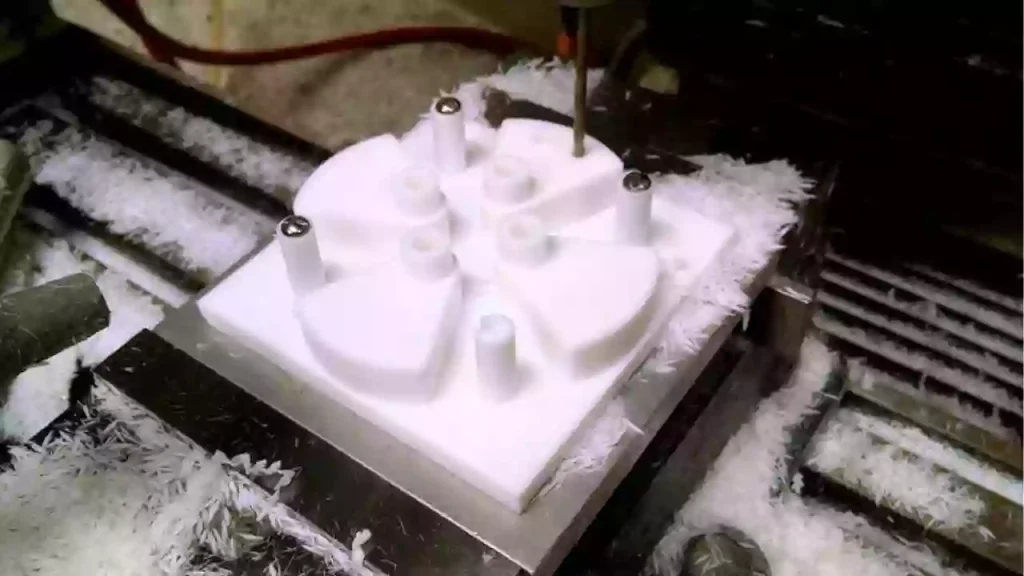
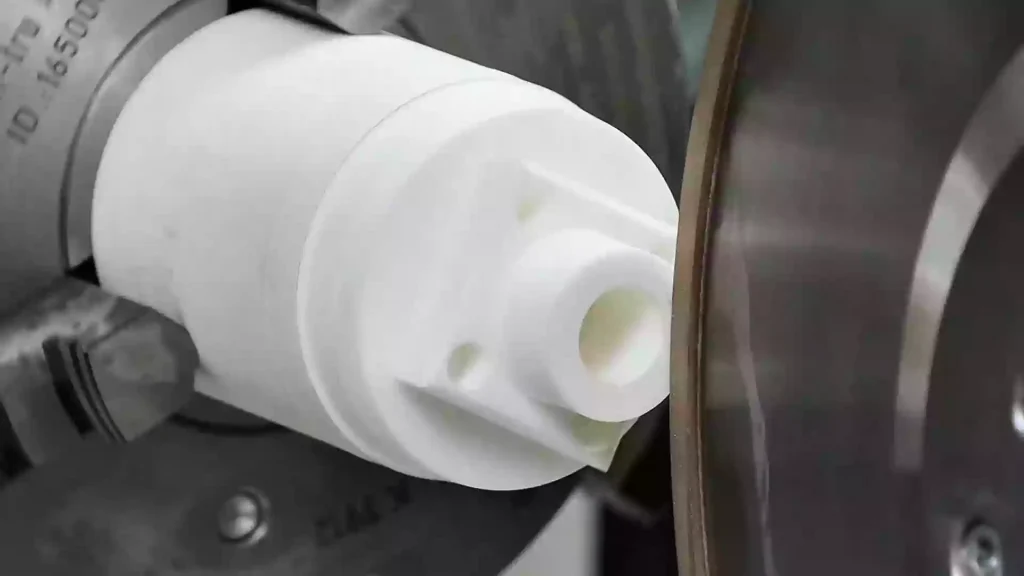
PPS (Polyphenylene Sulfide) is a high-performance engineering plastic known for its excellent heat resistance, chemical stability, and dimensional accuracy, making it suitable for precision industrial components.

In CNC machining, PPS is rigid and stable but relatively brittle, which can lead to edge chipping, cracking, and surface defects if cutting conditions are not well controlled. Reinforced grades (such as glass-filled PPS) increase stiffness but also significantly raise tool wear and machining difficulty.

Successful machining of PPS depends on sharp tooling, controlled cutting parameters, proper fixturing, and heat management. It is widely used in electronics, semiconductor equipment, chemical systems, and high-temperature applications where long-term stability is critical.

PPS CNC Machining Guide: The Engineering Guide to Precision Machining PPS Plastic Read More »

Tool Steel CNC Machining

The Ultimate Guide to Tool Steel CNC Machining:Engineering Principles, Metallurgy, and Cutting Physics Explained

Tool steel CNC machining is fundamentally different from conventional metal cutting due to its hardened martensitic matrix, dense carbide structure, and low thermal conductivity. These characteristics create extreme cutting resistance, localized heat concentration, and unstable chip formation, making machining less about material removal rate and more about process control.

Successful machining requires a system-level approach that integrates material science, cutting physics, machine rigidity, heat treatment strategy, and post-process finishing. From annealed roughing to heat-induced distortion, and from hard milling to EDM finishing, every stage affects the final geometry and performance of the part.

Unlike aluminum or stainless steel, tool steel cannot be treated as a single-stage machining problem. It must be engineered through a controlled sequence of transformations where metallurgy, tooling strategy, and thermal behavior are managed together to ensure dimensional stability and functional reliability.

The Ultimate Guide to Tool Steel CNC Machining:Engineering Principles, Metallurgy, and Cutting Physics Explained Read More »

Magnesium CNC Machining tapping

CNC Machining Magnesium Safely: Fire Risks, Dust Control & CNC Shop Best Practices

Magnesium CNC machining is widely used in aerospace and automotive industries due to its excellent machinability and lightweight properties. However, it is often considered a high-risk material because fine chips and dust can become reactive under heat. In reality, most safety risks come from poor chip control, heat buildup, and improper housekeeping rather than the solid material itself. With correct tooling, stable cutting parameters, and proper chip evacuation, magnesium can be machined safely in modern CNC environments. Fire risks are managed through engineered controls, proper waste handling, and Class D fire safety systems.

CNC Machining Magnesium Safely: Fire Risks, Dust Control & CNC Shop Best Practices Read More »

Machining Parameters of PTFE Machining

PEEK vs. PTFE: An Engineer’s Decisive Guide to High-Performance Plastic Selection and Machining

This technical guide provides a comprehensive analysis of PTFE (Polytetrafluoroethylene) and PEEK (Polyether Ether Ketone), the two leading fluoropolymers in high-performance engineering. Rather than simply comparing data sheets, the article examines these materials through the lens of practical application, machining dynamics, and total lifecycle value.

The analysis highlights that while PTFE remains the gold standard for universal chemical inertness and low-friction sliding applications, its susceptibility to “cold flow” and dimensional instability during thermal phase transitions poses significant challenges for structural use. Conversely, PEEK is identified as a high-strength alternative that mimics the mechanical properties of metal, offering exceptional rigidity and dimensional stability at temperatures up to 250°C, albeit at a significantly higher price point and with more complex manufacturing requirements.

Beyond material properties, the guide delves into the manufacturing realities that dictate success in the shop floor—addressing the stringing and deflection issues inherent to PTFE and the critical stress-relief cycles mandatory for precision PEEK components. By evaluating real-world performance across the semiconductor, medical, and aerospace sectors, this article provides engineers with a decisive framework for balancing upfront material costs against long-term operational reliability, ensuring that theoretical material advantages are successfully translated into high-precision industrial hardware.

PEEK vs. PTFE: An Engineer’s Decisive Guide to High-Performance Plastic Selection and Machining Read More »

PP machining services for hero

What is CNC Machining Polypropylene (PP)?

This article provides a comprehensive overview of CNC machining polypropylene (PP), covering material properties, machining principles, process workflows, tooling and equipment selection, CAM strategies, cost structure, and typical application scenarios. Although PP is low-cost and highly resistant to chemicals, it presents machining challenges such as poor thermal conductivity, heat-induced tool sticking, burr formation, and high thermal expansion, all of which require careful control of tool geometry, feed strategy, toolpath design, and workholding methods. The article also explains differences between PP grades in machining performance and highlights the importance of thermal management and stress control in achieving dimensional stability. Practical applications across industrial, medical, and consumer sectors are discussed to demonstrate its engineering value. Overall, successful PP machining depends on precise control of heat and material behavior rather than cutting speed alone.

What is CNC Machining Polypropylene (PP)? Read More »

HDPE vs. UHMW-PE: Differences, Machining Challenges, and Selection Guide

HDPE vs. UHMW-PE: Differences, Machining Challenges, and Selection Guide Choosing between HDPE and UHMW-PE is a common decision in plastic part design. Although both are polyethylene, they behave very differently in real machining and application conditions. The key is not just comparing material data, but understanding how molecular weight affects machining stability, tolerance control, and

HDPE vs. UHMW-PE: Differences, Machining Challenges, and Selection Guide Read More »

consumer electronics products

5 Common Design Challenges in Consumer Electronics CNC Machining

This article explores five key design challenges in CNC machining of consumer electronics, including ultra-thin wall stability, complex internal geometries for electromagnetic interference shielding, and surface consistency. It details specialized solutions such as vacuum fixtures and five-axis machining, providing engineers with a roadmap to bridge the gap between complex CAD designs and high-quality mass production.

5 Common Design Challenges in Consumer Electronics CNC Machining Read More »

Rubber material

CNC Machining Rubber vs. Injection Molding Rubber: Which is Right for Your Project?

CNC Machining Rubber vs. Injection Molding Rubber: Which is Right for Your Project? For decades, a prevailing assumption has circulated within the engineering field: the manufacturing of rubber parts is inextricably linked to the use of molds. It was long believed that the inherent properties of soft, elastic materials were too unstable to withstand precision

CNC Machining Rubber vs. Injection Molding Rubber: Which is Right for Your Project? Read More »

How to Choose the Right Material for Marine CNC Machining

How to Choose the Right Material for Marine CNC Machining The marine environment imposes extreme conditions on engineered components. Parts that perform reliably in industrial or automotive applications may fail rapidly in seawater due to chloride exposure, pressure variation, and long-term immersion. In marine CNC machining, material selection is not only a mechanical decision. Corrosion

How to Choose the Right Material for Marine CNC Machining Read More »

Scroll to Top