ABS CNC Machining Services
High-impact, cost-effective, and versatile ABS parts machined to ±0.05mm tolerance. Get instant DFM feedback and global shipping within 3-5 days.
Your Trusted One-Stop ABS Parts Manufacturing Partner
We provide comprehensive ABS CNC machining solutions for OEMs and industrial clients, delivering precision-milled and turned components with tolerances up to ±0.05 mm. From rapid cnc machining to scalable contract manufacturing, including assembly and finishing, we manage every stage of production under one roof, simplifying your supply chain, reducing cross-vendor risks, and ensuring consistent product quality. Driven by engineering expertise, we transform your CAD designs into high-performance ABS parts, achieving fast delivery, superior surface finishes, and reliable results—whether for rapid prototypes or low- to high-volume production.
Engineering Team and Support
Our engineering team comprises over 120 experienced mechanical and manufacturing experts, providing expert DFM guidance to bridge the gap between complex CAD designs and scalable production. For ABS components, we focus on thermal stress analysis and advanced toolpath strategies to prevent warpage and consistently maintain tight tolerances of ±0.05 mm across all batches.
Through custom vacuum fixture design for thin-walled housings, material consultation on UL94-V0 and medical-grade ABS, and specialized CNC machining capabilities, our engineers ensure structural integrity, superior surface quality, and accelerated project timelines—from rapid 24-hour prototyping to contract manufacturing of up to 100,000 parts per month.
Machined ABS Mechanical Properties
Property | Typical Range / Value | Why It Matters |
Tensile Strength | 40 – 50 MPa | Provides reliable structural support for functional components and assemblies. |
Impact Resistance | 10 – 30 kJ/m² | Absorbs shocks and impacts without cracking, ideal for rugged enclosures and housings. |
Heat Deflection Temperature | 85 – 105 °C | Maintains shape and dimensional stability under moderate heat exposure. |
Elongation at Break | 40 – 55 % | Offers flexibility to reduce brittle failures during use or assembly. |
Hardness | Rockwell R100 – R107 | Durable surface that resists wear and deformation during machining and service. |
Density | ~1.04 g/cm³ | Lightweight yet strong, ensuring a favorable strength-to-weight ratio. |
Surface Finish (Ra) | 0.8 – 1.6 μm | Smooth as-machined surface, ready for painting, plating, or polishing. |
Flammability Rating | UL94-V0 (optional) | Enhanced safety for electronics and consumer products with self-extinguishing properties. |
ABS CNC Machining Capabilities
Our advanced factory combines high-precision CNC technology with ABS material expertise to provide OEM and industrial clients with full-process services, from rapid cnc machining to large- and small-batch production. We specialize in precision components with tolerances up to ±0.05 mm, capable of consistently machining ultra-thin walls of 0.8 mm, complex internal cavities, and fine features, while effectively preventing common ABS issues such as heat-induced deformation and warping. By integrating DFM evaluation, multi-axis milling, turning, and post-processing, we eliminate quality risks and time costs associated with multiple vendors. Whether it’s functional prototypes delivered within 24 hours or thousands of parts in contract manufacturing, we ensure dimensional stability, superior surface finish, and full compliance with your design specifications, helping your products reach the market quickly.
Advanced ABS CNC Machining Technologies
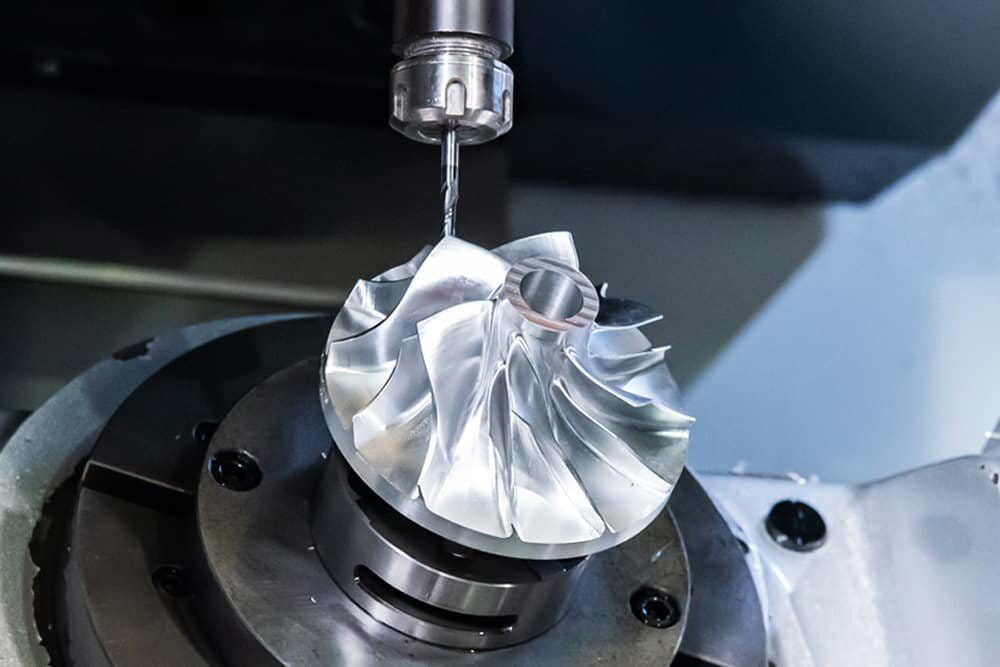
Traditional ABS machining often challenges engineers with thermal warping, surface fuzz, and alignment errors, which are typically caused by slow spindles and manual setups. At XTPROTO, we’ve re-engineered this process by deploying 24,000 RPM high-speed spindles specifically tuned for thermoplastics, enabling efficient chip breaking and controlled heat buildup before deformation occurs. By integrating AI-driven DFM simulations with simultaneous 5-axis machining, we pre-calculate thermal stress and execute complex biomimetic geometries in a single setup, removing the manual interventions that can compromise precision. Through the combined use of in-line probing and hybrid overmolding, we deliver ultra-thin ABS components—down to 0.75 mm—that maintain exceptional dimensional stability and superior surface finishes unattainable by standard machining, ensuring parts are assembly-ready and structurally reliable for the most demanding industrial applications.
Multi-Axis CNC Capabilities for Complex ABS Components
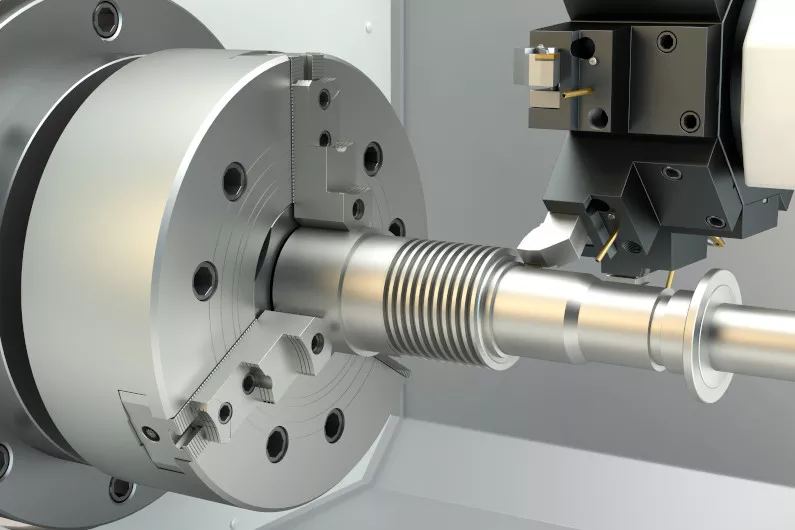
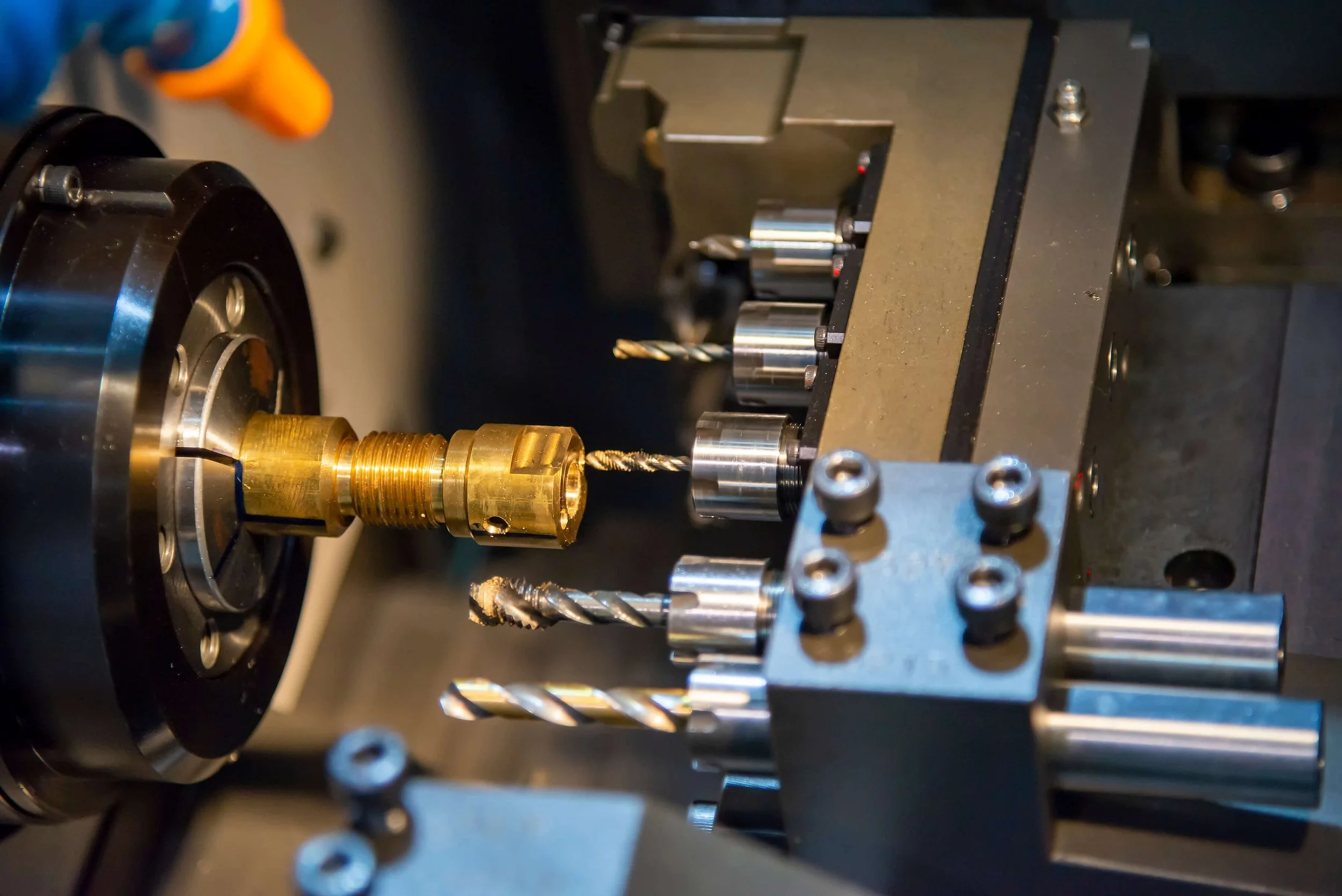
Standard CNC machining often struggles to maintain the structural integrity of ABS, resulting in vibration marks, concentricity drift in cylindrical parts, and deformation from clamping on thin-walled sheets. At XTPROTO, we overcome these material instabilities by operating a comprehensive set of 3-, 4-, and 5-axis milling centers equipped with 24,000 RPM high-speed spindles, enabling low-stress cutting and superior surface finishes. To ensure precise concentricity for bushings and connectors, our Swiss-type automatic lathes handle diameters from 3 mm to 350 mm with tight geometric tolerances, while advanced vacuum fixturing systems minimize the vibration and distortion commonly seen with traditional mechanical clamping on thin-wall ABS components. From a single functional prototype to mid-volume contract runs exceeding 5,000 parts, our integrated cell manufacturing approach accommodates workpieces up to 1,200 × 900 × 500 mm, delivering consistent ±0.05 mm tolerances and assembly-ready results with a fast turnaround difficult to achieve in standard machine shops.
Scalable ABS Machining Solutions
ABS CNC Machining Processes
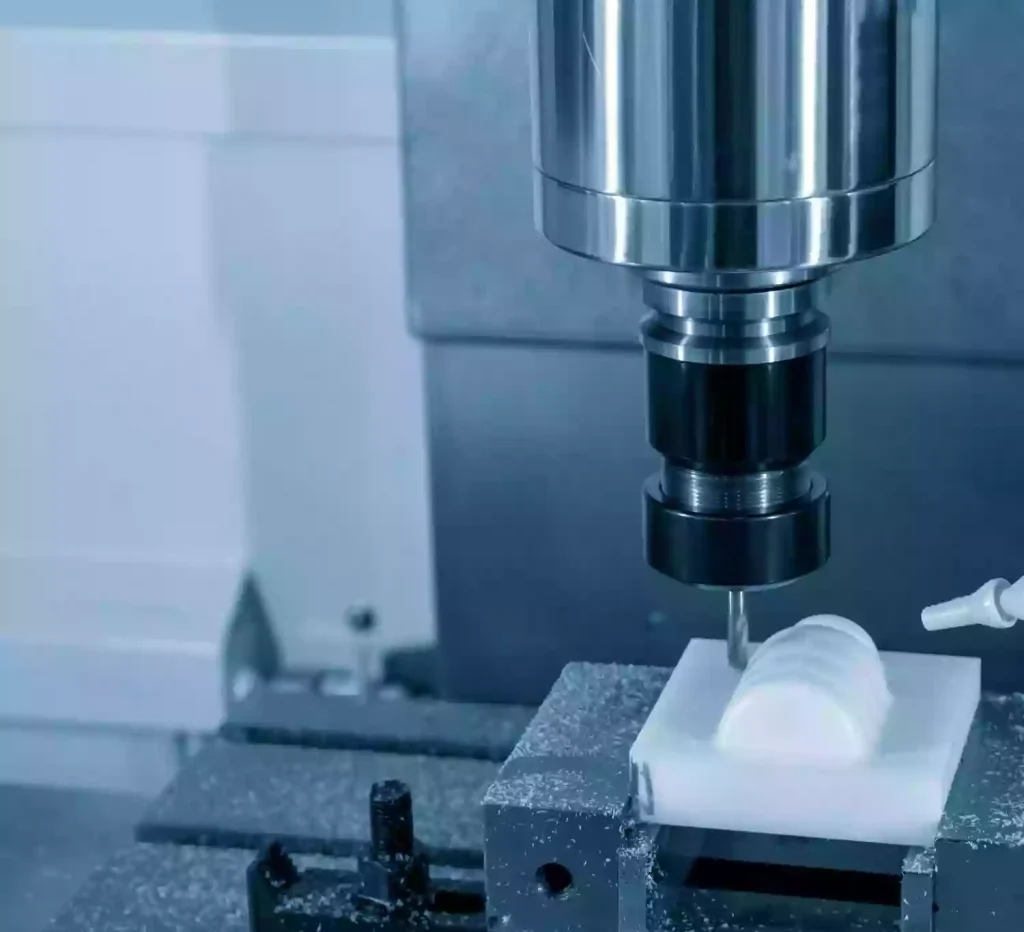
CNC Milling
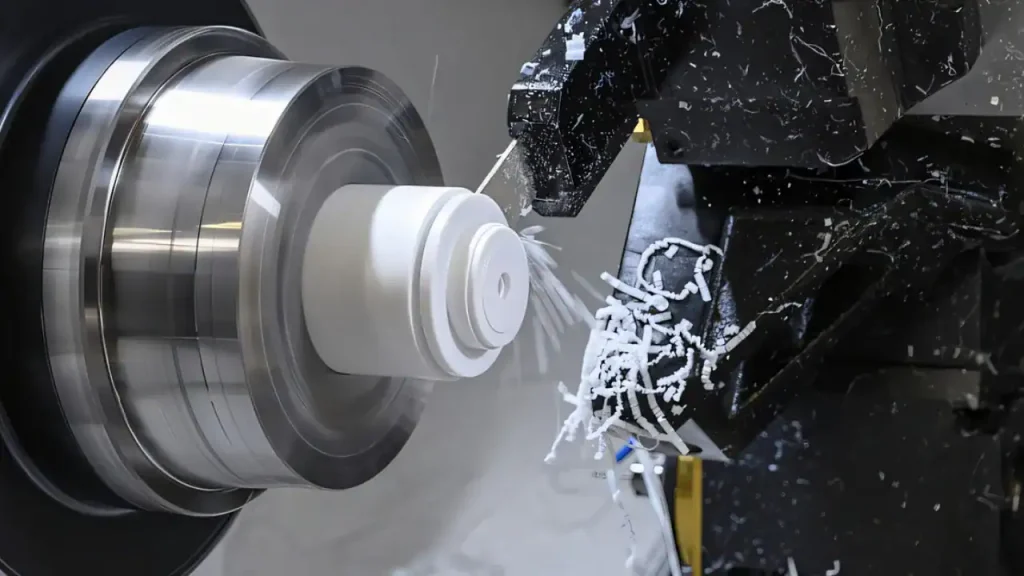
CNC Turning
5-Axis CNC Machining
Swiss Machining
Wire EDM & Tooling
CNC Machining
Quality Control & Inspection
We follow rigorous inspection procedures to ensure that every ABS component meets your CAD specifications and functional requirements. Dimensional accuracy is verified using a hexagonal coordinate measuring machine and optical comparator, while geometric dimensions, tolerances (GD&T), critical features, and hole alignment are carefully checked. Surface finish is measured with a Mitutoyo profilometer to guarantee consistent texture, burr-free edges, and Ra values within specification. Material properties are confirmed through spectroscopic analysis to verify ABS grade, resin purity, and RoHS compliance.
For CNC machined components, stability is closely monitored in a temperature-controlled laboratory to eliminate thermal stress and prevent post-processing warping. Before mass production, we perform 100% First Article Inspection (FAI) and track the process using real-time probing and sampling to prevent tool wear drift. The final audit includes comprehensive appearance and functional testing. Every delivery comes with a detailed Certificate of Inspection (COA), giving you complete confidence in the quality, consistency, and precision of your ABS parts produced through CNC machining.
ABS CNC Machining Design Guidelines
Maintain a minimum wall thickness of 0.8 mm to prevent vibration and heat-induced warping. For structural parts, 1.5 mm to 3.0 mm is recommended for optimal rigidity.
Avoid sharp 90-degree internal corners. Use a minimum radius of 0.5 mm (or 10% of the cavity depth) to accommodate round cutting tools and reduce stress concentrations.
Ensure hole depths do not exceed 4x the diameter to prevent tool deflection. Use coarse threads where possible, as ABS is prone to stripping with ultra-fine pitches.
Standard machining achieves ±0.127 mm. For critical fits, specify ±0.05 mm, but avoid over-tolerancing non-functional areas to keep costs low.
For tall, thin features, keep the height-to-width ratio below 4:1 to ensure dimensional stability during high-speed milling.
Specify Ra 3.2 μm for standard industrial parts. If transparency or a mirror finish is required, design for vapor polishing by ensuring all surfaces are accessible.
Our Manufacturing Facility
We boast a state-of-the-art manufacturing facility spanning over 160,000 square feet, built specifically for high-precision ABS CNC machining. Equipped with over 150 high-speed CNC machining centers (three-axis, four-axis, and five-axis), operating 24/7 to meet demanding OEM production schedules. Our team of over 120 experienced engineers and technicians provides proactive DFM optimization, stress analysis, and advanced toolpath strategies to minimize warpage and ensure consistent part quality.
Climate-Controlled ABS CNC
Standard machine shops often struggle with ABS’s inherent thermal sensitivity, where even minor temperature fluctuations can push critical dimensions out of tolerance during high-volume runs. At XTPROTO, we maintain our entire machining and inspection environment at a stable 22 °C, ensuring the geometric integrity of every high-specification thermoplastic component. This controlled foundation, combined with our fully integrated workflow from raw material preparation through precision five-axis machining and final assembly, allows us to scale production to more than 100,000 parts per month without compromising accuracy. Together with rigorous traceability and reliable global logistics, our climate controlled process guarantees that every ABS part remains dimensionally stable and consistently meets high-quality standards from the machine to the final assembly line.
Tolerance & Precision
Feature Type | Standard (±) | High Precision (±) |
Linear Dimensions | 0.13 mm | 0.05mm |
Hole Diameters | 0.05 mm | 0.025mm |
Concentricity | 0.10 mm | 0.05 mm |
Flatness | 0.15 mm | 0.08 mm |
Angular Degrees | 0.5° | 0.2° |
Surface Finishing Options for ABS
Industries We Serve
Consumer Electronics
Automotive & Transportation
Medical Devices
Industrial Equipment
Aerospace & Defense
Lighting & Electrical
Why Choose XTPROTO for ABS Machining?
What is ABS CNC Machining?
ABS (Acrylonitrile Butadiene Styrene) is a high-impact engineering thermoplastic known for its rigidity, chemical stability, and excellent electrical insulation. It combines the strength of acrylonitrile and styrene with the toughness of polybutadiene rubber.
CNC Machining is the most efficient way to produce ABS parts without the high cost of injection mold tooling. It is the gold standard for functional prototypes and low-to-mid volume production, offering tighter tolerances (up to ±0.05 mm) and sharper internal features than molding. From Flame Retardant (UL94-V0) to Glass-Filled grades, CNC machining preserves the material’s physical integrity for rugged, assembly-ready components.
Advantages of ABS CNC Machining
ABS is easy to cut, enabling high feed rates, clean edges, and exceptionally smooth surface finishes.
Absorbs energy, ideal for rugged enclosures, automotive interiors, and protective housings.
Perfect for vapor polishing, painting, and electroplating.
Disadvantages of ABS CNC Machining
ow melting point (105°C / 221°F); improper speeds or cooling can cause thermal deformation or “gumming.”
Standard ABS degrades and yellows under prolonged sunlight—requires UV-resistant coatings or specialized grades for outdoor use.
Stable against many acids but susceptible to strong solvents, esters, and ketones (e.g., acetone).
FAQ: ABS CNC Machining
Why choose ABS over PC or Nylon for CNC machining?
Can you machine high-performance plastics such as PEEK or PTFE?
What are the lead times for different production sizes?
Your One-Stop ABS CNC Partner
We provide integrated services from design support, machining to finishing and assembly, helping you streamline your supply chain and deliver reliable and scalable ABS components every time.