
PTFE (Teflon)CNC Machining Services
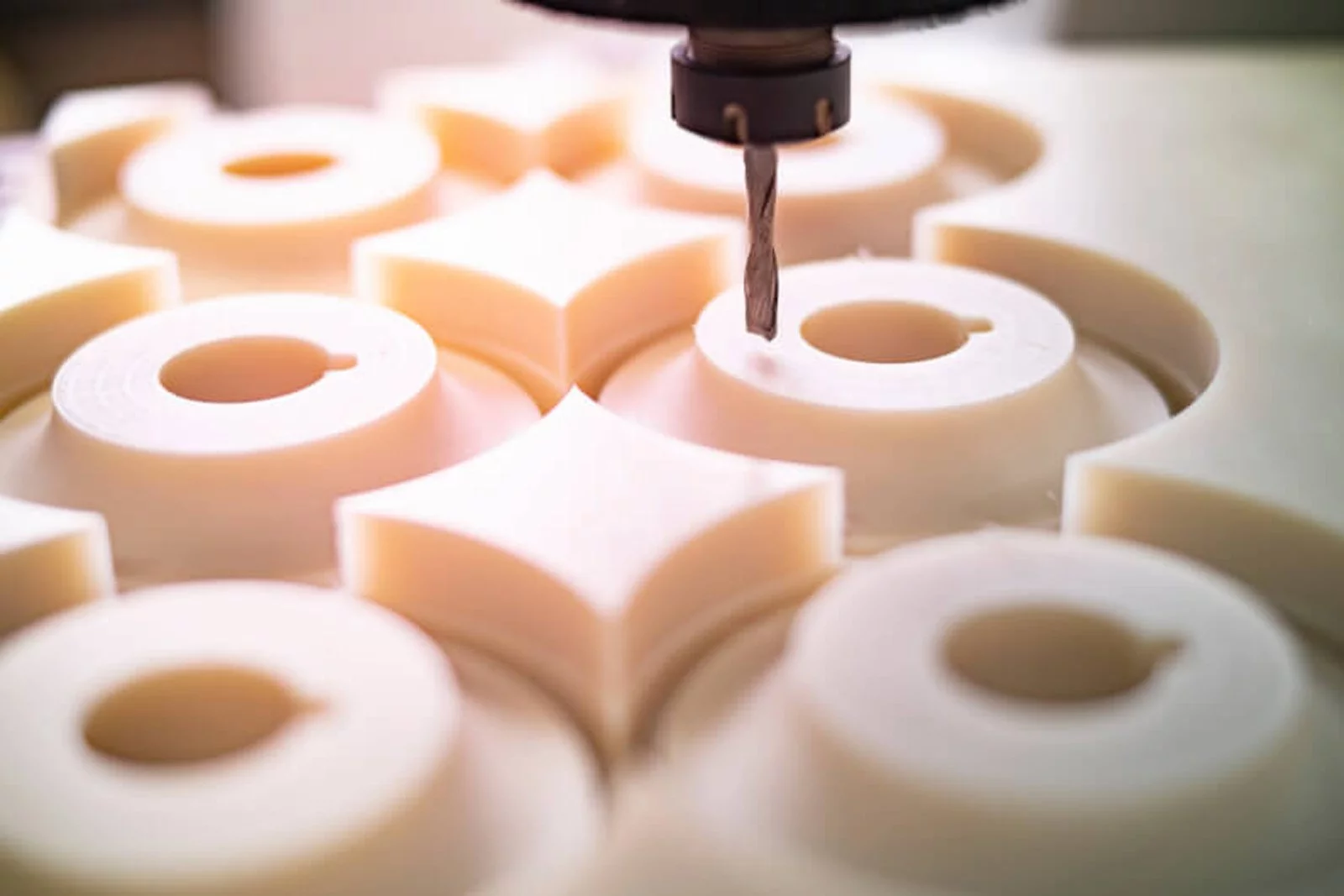
Specialized in deformation-free clamping and thermal expansion control, we deliver PTFE parts that stay true to your CAD tolerances. No burrs, no contamination—engineered specifically for critical applications in medical and semiconductor sectors.
Custom PTFE (Teflon) CNC Machining Services
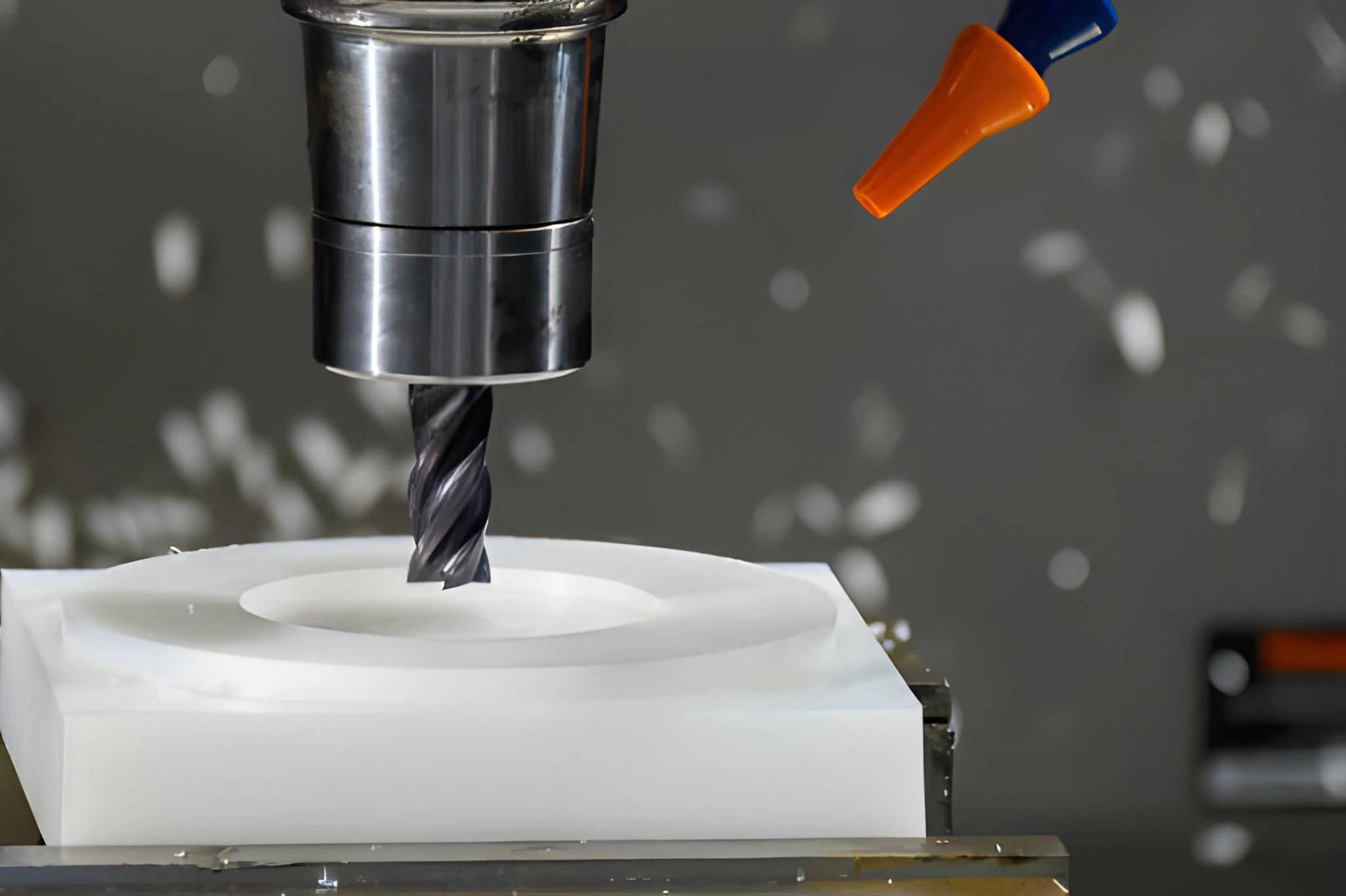
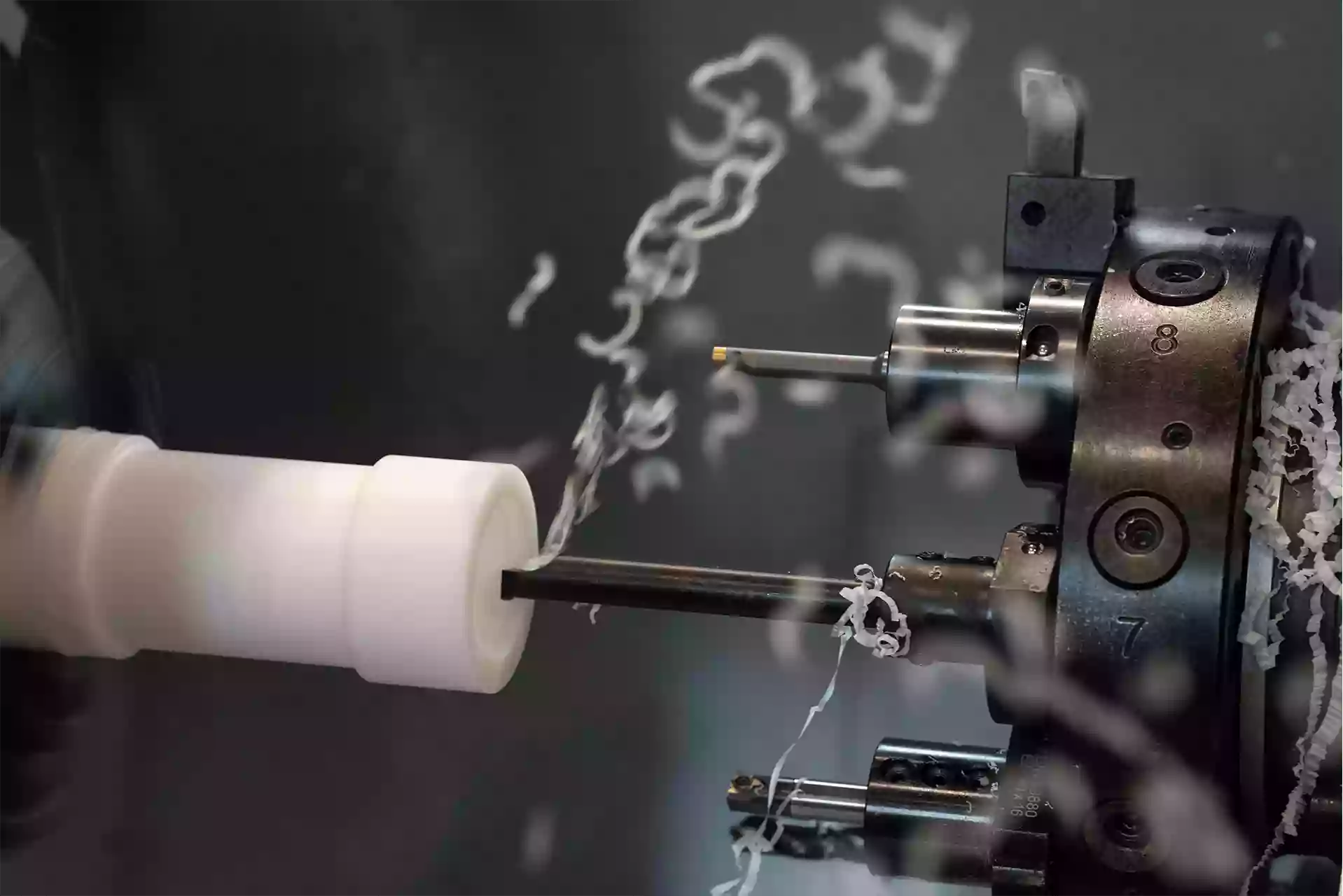
As a specialized service provider, we offer PTFE (Teflon) CNC machining services that focus on material control rather than just cutting. We solve the common struggle of part distortion by using non-invasive custom fixturing to prevent clamping damage and thermal-adaptive compensation to master the material’s expansion. Unlike sourcing platforms, we handle the entire process in-house to deliver zero-burr, high-purity components that align perfectly with your design—ensuring your parts arrive clean, flat, and ready for critical applications.
What is PTFE (Teflon)?
PTFE (Polytetrafluoroethylene), often called Teflon, is a high-performance plastic known for its extreme chemical resistance, low friction, and excellent insulation. While its “non-stick” nature is ideal for medical and semiconductor parts, its extreme softness and thermal sensitivity make it difficult to machine without warping.
We don’t just treat it like any other plastic; we understand that PTFE “flows” under pressure. Our process accounts for its natural expansion and creep, ensuring that the material’s unique properties are preserved while maintaining the structural integrity of your design.
Advantages of PTFE (Teflon)
PTFE is a durable fluoropolymer with properties that make it suitable for demanding applications:
- Low Friction & Wear Resistance: Friction coefficient of 0.05, ideal for sliding and self-lubricating parts.
- Chemical & Thermal Resistance: Stable in acids, bases, and temperatures from -200°C to +260°C.
- Minimal Moisture Absorption: Absorption rate <0.01%, maintaining dimensional stability in humid or submerged conditions.
- Electrical Insulation: High dielectric strength, used in semiconductor and electronic applications.
Technical Specifications of PTFE (Teflon)
To achieve precision in PTFE (Teflon) CNC machining, we evaluate the material’s physical limits. PTFE’s high elongation and thermal sensitivity require a deep understanding of its technical profile to ensure part integrity.
Material Performance Profile
- Thermal Stability: Maintains mechanical properties from cryogenic temperatures up to a 270°C (518°F) service limit.
- Mechanical Ductility: High elongation at break (200% – 450%) provides excellent impact resistance and sealing capabilities.
- Electrical Excellence: Exceptional dielectric strength and low dissipation factor, ideal for high-frequency aerospace electronics.
- Surface Interaction: A remarkably low friction coefficient (0.05–0.10) ensures “self-lubricating” performance in sliding assemblies.
PTFE Material Specification Table
This table summarizes the critical values we monitor during our CNC machining process to ensure part integrity.
Property | Value (Metric/Imperial) | Test Method / Benefit |
Density | 2200 kg/m³ (0.046 lb/in³) | High-density fluoropolymer structure. |
Melting Point | 327°C (621°F) | ASTM D3418; High heat resistance. |
Tensile Strength | 20 – 31 MPa (3,000–4,500 psi) | ASTM D638; Reliable mechanical strength. |
Elongation at Break | 200% – 450% | High ductility for seals and gaskets. |
Hardness | 55 – 65 Shore D | Balanced rigidity for precision machining. |
Thermal Expansion | 200×10⁻⁶/°C | Note: Managed via our Thermal-Adaptive process. |
Coefficient of Friction | 0.05 – 0.10 | ASTM D1894; Ideal for sliding surfaces. |
Water Absorption | < 0.01% | Virtually zero moisture uptake. |
PTFE (Teflon) Material Grades
Material Grade | Key Characteristics | Best Applications |
Virgin PTFE | 100% Pure, FDA compliant, maximum chemical resistance. | Medical implants, food processing, electrical insulators. |
Glass-Filled | 15%–25% glass fiber; reduces “creep” and increases strength. | Structural gaskets, high-load bushings, wear strips. |
Carbon-Filled | High hardness, better thermal conductivity and wear resistance. | Dynamic seals, piston rings, high-speed bearings. |
Bronze-Filled | Superior wear resistance and lowest thermal expansion. | Hydraulic components, heavy-duty seals, high-load sliders. |
PTFE (Teflon) Color Options
While PTFE is most commonly processed in its natural white state, we offer color-coded blends to match specific mechanical requirements.
Color | Material Type | Common Reason for Selection |
White (Natural) | Virgin PTFE | Standard for medical and food-grade use; highest purity. |
Black | Carbon/Graphite Filled | Enhanced wear resistance and electrical conductivity. |
If your project requires custom colors or specific pigment-added blends for identification purposes, please contact us directly for availability.
Controlling Clamping Distortion with Custom Fixturing
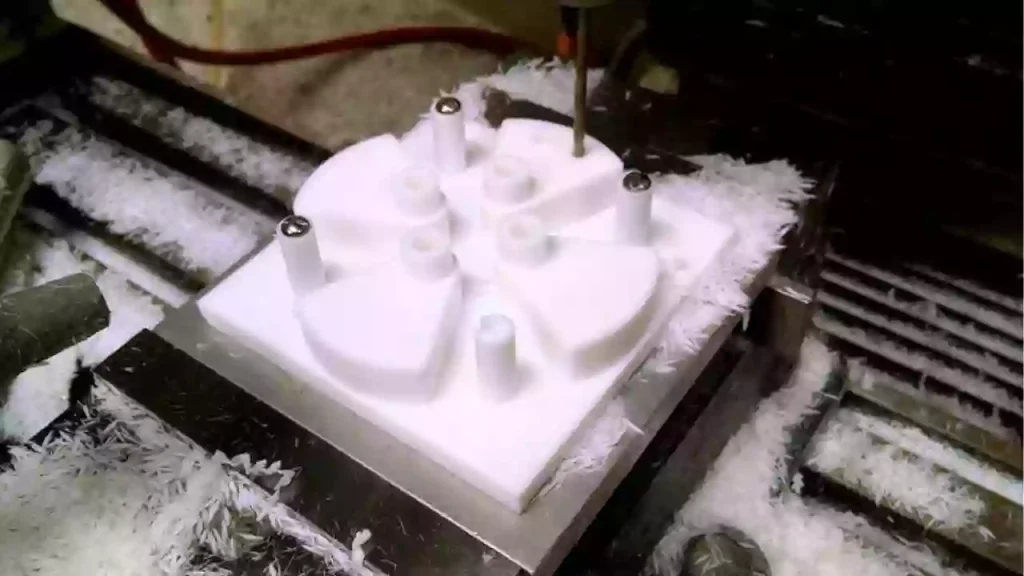
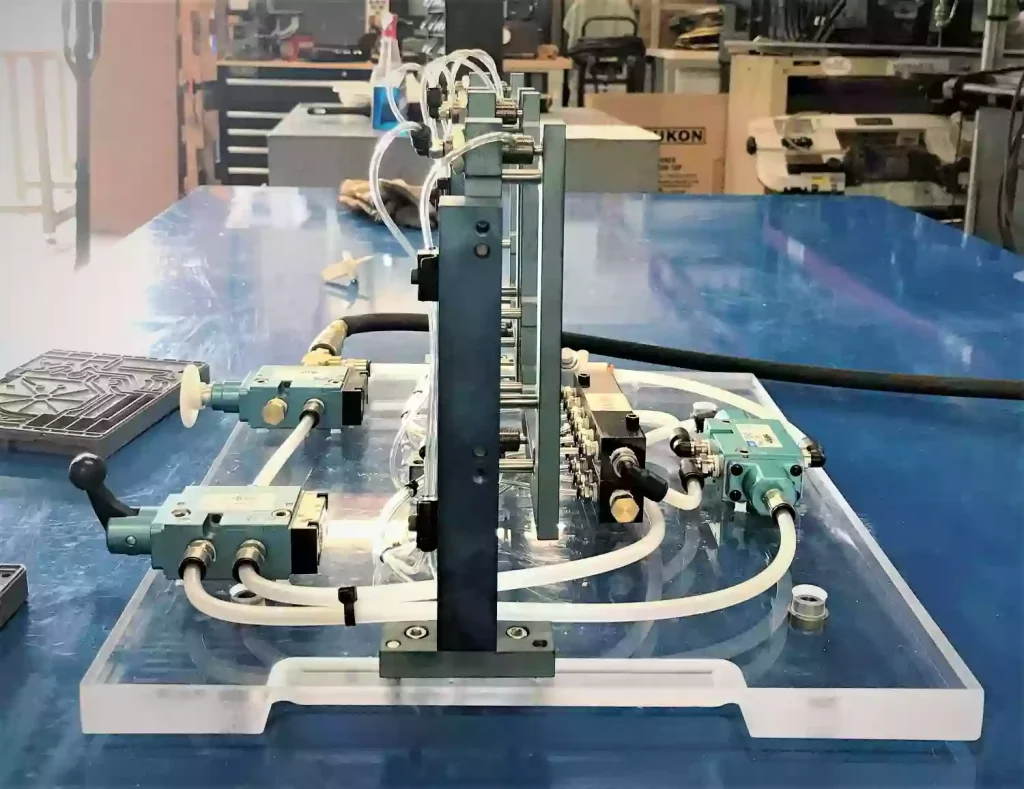
PTFE’s softness makes it highly sensitive to clamping pressure, where uneven force can easily cause deformation before machining begins. We address this by designing custom non-invasive fixturing for each complex geometry. By distributing clamping forces evenly and minimizing point pressure, we secure the part without introducing mechanical stress.
This approach ensures components remain flat, dimensionally stable, and free from clamping marks throughout the machining process.
Mastering Stability through Thermal-Adaptive Compensation
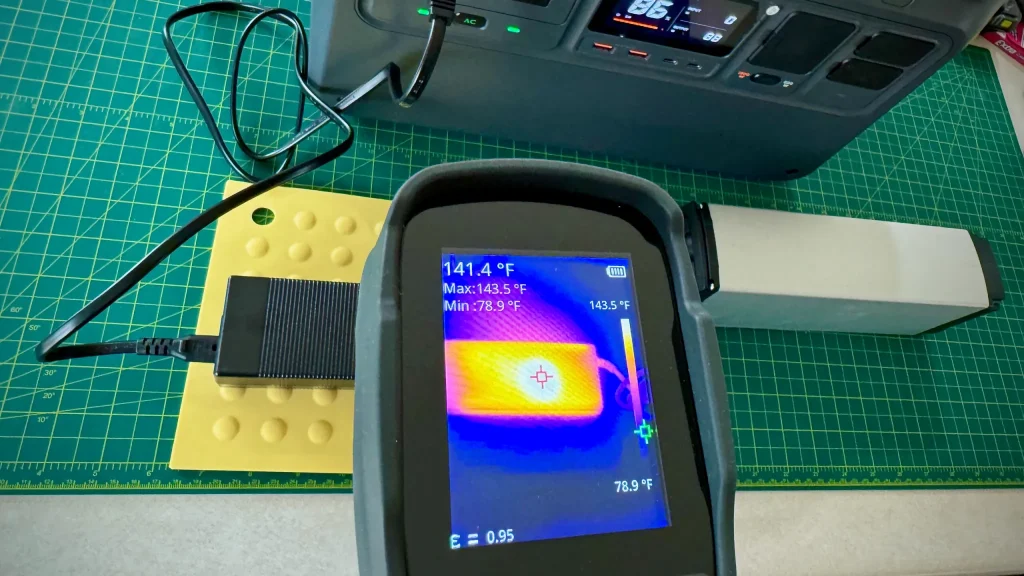
PTFE exhibits a high thermal expansion coefficient, making it sensitive to both ambient temperature changes and cutting-generated heat. Without compensation, this can result in measurable dimensional drift between machining and inspection.
We address this through thermal-adaptive machining control, which combines controlled machining conditions with real-time compensation of tool paths based on expected material expansion behavior. This ensures dimensional consistency is maintained not only during cutting, but also after the part stabilizes at room temperature.
Surface Finishes for CNC Machined Parts
- As Machined: Standard CNC finish with visible tool marks. It offers the highest dimensional accuracy and maintains the material’s natural properties without secondary alteration.
- Sanding & Polishing: A manual or mechanical process that removes 0.02–0.05mm of material to create a brushed or high-gloss mirror surface. Ideal for medical or high-purity applications.
- Sand / Bead Blasting: Uses pressurized media to create a uniform matte or satin texture. This is excellent for hiding tool marks and providing a professional, non-reflective appearance.
- Painting / Wet Spray: The application of a 10–50 μm decorative or protective coating in any custom color. Best for branding and parts requiring specific aesthetic identification.
PTFE Machining Tolerance Standards
Feature Type | Precision Range |
Standard Linear Tolerance | ±0.05 mm (±0.002″); our baseline for most industrial components. |
Tight Linear Tolerance | ±0.02 mm (±0.0008″); available for critical fits and high-precision features. |
Geometric Tolerances (GD&T) | Precise control over Flatness, Cylindricity, and Concentricity for complex assemblies. |
Hole Diameters | Standard accuracy of ±0.025 mm; optimized for press-fits and fluid-tight seals. |
Angle / Angularity | ±0.5° as standard; ensuring exact alignment for angled valve seats and manifolds. |
Repeatability | High consistency across batches, ensuring 100% interchangeability of parts. |
Quality Assurance & Verification
We utilize precision inspection tools, including Hexagon CMM, high-magnification optical comparators, and calibrated digital micrometers to verify every critical dimension.
Every project includes full raw material certification (MTR) and batch tracking, ensuring the polymer grade delivered is exactly what was specified.
Our process includes First-Article Inspection (FAI) and scheduled in-process checks to maintain zero-defect production throughout the entire run.
Our quality management workflows are designed to meet ISO 9001:2015 standards and specific regulatory requirements for medical and food-grade components.
We provide comprehensive Certificates of Conformance (CoC) and detailed dimensional inspection reports (DIM) with every shipment for your records.
Final components undergo ultrasonic cleaning and specialized protective packaging to ensure they arrive ready for high-purity or clinical environments.
A Purpose-Built PTFE Machining Facility
Our 160,000-square-foot facility is specifically designed to meet the demands of large-scale PTFE machining. Equipped with a specialized fleet of high-speed 3, 4, and 5-axis CNC centers, we can efficiently manage both complex custom prototypes and high-volume production runs. The entire workflow, from material storage to custom work-holding fabrication, is centralized within this climate-controlled environment, eliminating the dimensional drift and contamination risks often seen in smaller, non-specialized shops. This 100% in-house manufacturing approach ensures consistent, high-quality PTFE components, backed by the scale and logistical efficiency that only a facility of this size can provide.
Engineering Expertise in PTFE Machining
With a team of over 120 engineers, we offer unmatched technical support for complex PTFE machining projects. Our engineers specialize in the material science of high-performance polymers, ensuring designs are optimized for PTFE’s unique stress-relief and stability needs. This expertise enables us to provide rapid DFM (Design for Manufacturing) feedback, turning challenging concepts into precision-engineered components while minimizing material waste and production costs. Whether for rapid prototyping or large-scale production, our engineers ensure every PTFE part meets the highest standards of technical integrity and precision.
Industry Applications for PTFE Machined Parts
Semiconductor & Electronics
Medical & Life Sciences
Energy & Power
Food & Beverage
Aerospace & Defense
Fluid Handling & Chemical Processing
PTFE Machining FAQs
How does XTPROTO handle burrs and surface finish requirements in PTFE machining?
Does XTPROTO have the capacity for large-scale PTFE production?
How does XTPROTO ensure precision tolerances despite PTFE’s thermal expansion and dimensional instability?
Can XTPROTO meet the cleanliness requirements for PTFE parts in the semiconductor or medical industries?
What technical support does XTPROTO’s engineering team offer during the design phase?
Say Goodbye to PTFE Precision Compromise
Don’t let material deformation and burr issues impact the success of your projects. With XTPROTO’s specialized manufacturing environment and over 20 years of engineering expertise, we ensure your PTFE components are made right the first time—precise and flawless.