
The Ultimate Guide to CNC Threading: Methods, Design Tips, and Troubleshooting
CNC threading is a cornerstone of modern precision manufacturing, enabling the production of high-strength, perfectly mating components across industries like aerospace, automotive, and medical devices. While the process offers unmatched repeatability compared to manual lathing, achieving the perfect thread requires a deep understanding of tool geometry, material behavior, and G-code programming. Whether you are an engineer designing a complex assembly or a machinist optimizing a G76 cycle, this comprehensive guide covers everything from fundamental threading methods to advanced troubleshooting tips to ensure your parts meet the strictest tolerances.
What is CNC Threading?
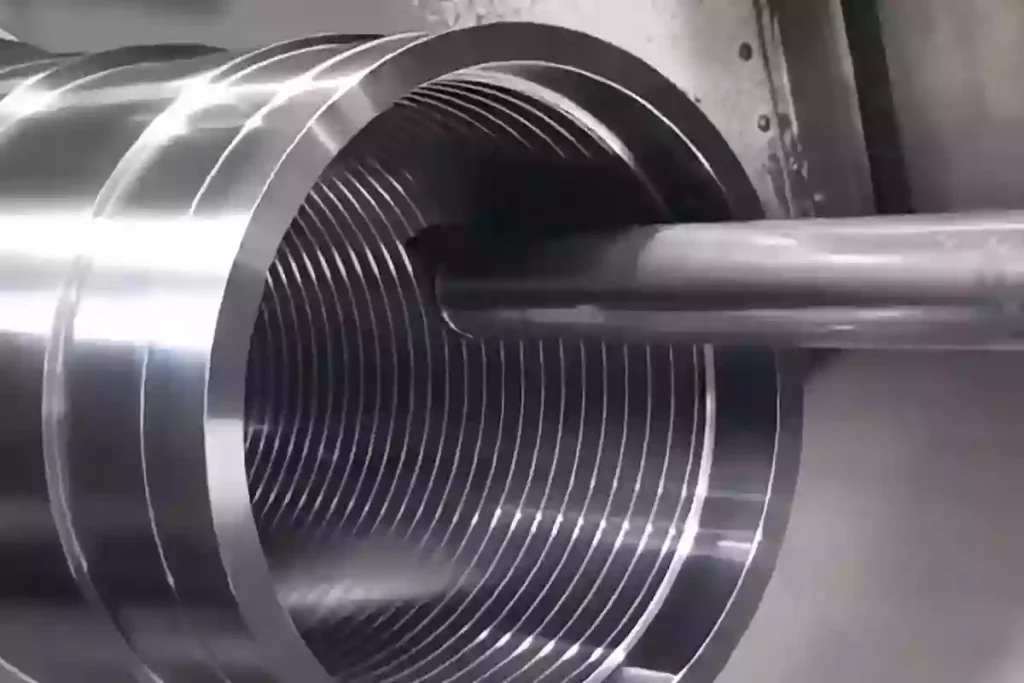
At its core, CNC threading is the process of creating precise helical grooves on a cylindrical or conical surface using computer-controlled machinery. Unlike manual threading, which relies heavily on the operator’s tactile skill, CNC threading utilizes synchronized spindle rotation and axial feed to ensure absolute pitch accuracy. This digital precision allows for the creation of complex internal and external threads that are essential for mechanical fastening, fluid seals, and power transmission in mission-critical applications.
Common Types of Threads in CNC Machining
Choosing the right thread profile is the first step in ensuring functional integrity. While hundreds of standards exist, most CNC projects fall into these four categories:
| Thread Type | Description | Primary Applications |
| Metric Threads (M) | Global standard with 60° thread angle | Automotive, electronics, and global consumer goods |
| Unified Threads (UNC, UNF) | Imperial coarse (UNC) and fine (UNF) pitches | Heavy machinery, North American aerospace |
| Pipe Threads (NPT, BSPP) | Tapered or parallel for pressure-tight seals | Hydraulics, plumbing, oil & gas equipment |
| Acme & Square Threads | High-load, power transmission profiles | Lead screws, jacks, linear actu |
Essential CNC Threading Methods
The choice of method depends on part geometry, material hardness, and production volume.
1. Single-Point Threading
Performed on CNC turning centers, single-point threading uses a specialized carbide insert to cut the thread profile in multiple successive passes. By using multi-pass cycles, the machine can precisely control the depth of each cut. This method is ideal for large-diameter threads or custom pitches that standard tools cannot accommodate.
2. Thread Milling
Thread milling occurs on a 3-axis CNC mill using a rotating helical tool. It is particularly useful for internal threads in large or non-symmetrical parts that cannot be rotated on a lathe. Thread milling provides better chip control and is safer for expensive workpieces.
3. Tapping and Die Cutting
For high-volume production of standard small-diameter holes, CNC tapping is the fastest solution. Modern rigid tapping cycles synchronize spindle speed with feed rate, ensuring consistent thread quality without the need for floating tap holders.
Key Design Considerations for Engineers
To reduce manufacturing costs and prevent tool failure, incorporate these “Design for Manufacturing” principles early in CAD design:
- Thread Depth for Blind Holes: Follow the “3x diameter” rule to avoid chip packing and tool breakage.
- Internal vs. External Threading Constraints: Ensure adequate clearance and tool reach.
- Material Machinability: Stainless steel requires slower surface speeds; aluminum supports high-speed cycles.
- Tolerance and Class Fits: Understand Class 2A/2B (standard) vs. Class 3A/3B (tight) fits to balance precision and cost.
Troubleshooting: Solving Common Threading Issues
Even with perfect programming, variables like tool wear and material inconsistency can cause defects. Use this table to diagnose and correct common problems:
| Issue | Potential Cause | Pro-Tip Solution |
| Torn or Rough Threads | Incorrect cutting speed (SFM) or built-up edge | Increase surface speed; ensure high-pressure coolant flow |
| Thread Chatter | Insufficient rigidity or excessive tool overhang | Minimize tool stick-out; switch to flank infeed (29°–30°) |
| Tool Breakage | Chip clogging, especially in internal threads | Use peck threading cycles; verify hole diameter |
| Inconsistent Pitch | Spindle/feed synchronization error | Disable Constant Surface Speed (G96) and use Constant RPM (G97) |
Quality Assurance: Inspecting the Final Thread
Threads are not finished until verified. Key inspection methods include:
- Go/No-Go Gauges: Verify pitch diameter and functional fit.
- Thread Micrometers: Measure pitch diameter accurately without relying on tactile feel.
- Optical Comparators: Inspect thread profile angle, root radius, and signs of tool wear.

Best Practices for High-Quality CNC Threads
- Flank Infeed (29°–30°): Distributes cutting load to reduce tool deflection.
- Spring Passes: Light finishing passes achieve a mirror-like surface finish.
- Deburring Strategy: Specialized tools or brushes preserve thread form while removing burrs.
Conclusion
Successful CNC threading balances robust design, strategic tool selection, and precise programming. By understanding the nuances between milling and turning threads—and anticipating common hurdles like chip evacuation—manufacturers can produce high-quality, high-strength threads with minimal downtime. For optimal results, consult with your CNC machining partner early in the design phase to ensure manufacturability and minimize costly revisions.