
The Ultimate Guide to Precision Aluminum CNC Machining in 2026
Aluminum has become one of the most popular metals in CNC machining because it strikes the perfect balance between strength, weight, and machinability. Lightweight yet durable, corrosion-resistant, and easy to work with, aluminum is widely used across aerospace, automotive, electronics, medical devices, and industrial equipment. Whether you are creating a prototype or producing thousands of parts, aluminum CNC machining offers the precision and flexibility required to get the job done efficiently.
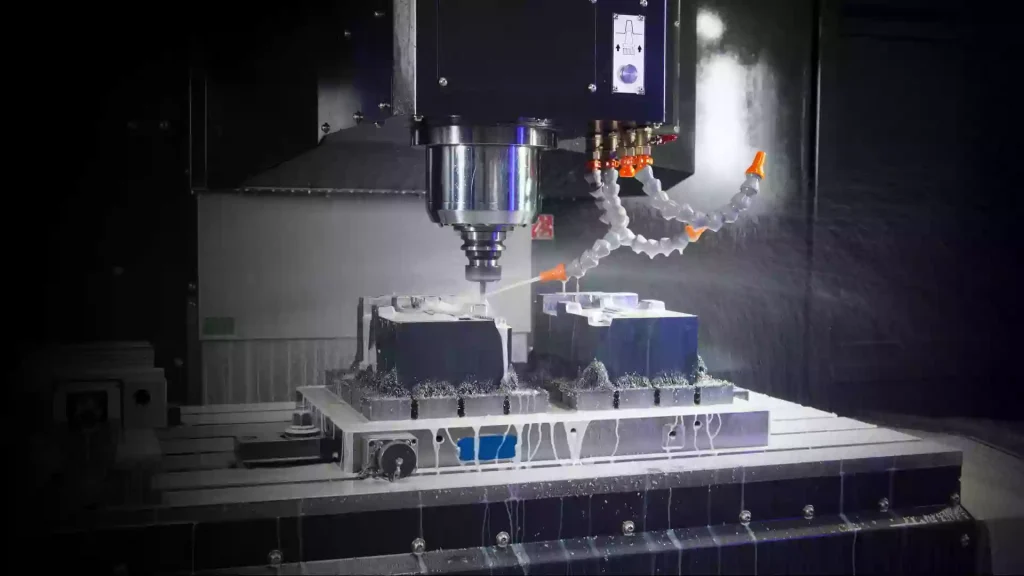
What Is Aluminum CNC Machining?
In simple terms, aluminum CNC machining is the process of transforming aluminum stock into precision components using computer-controlled machines. Common operations include CNC milling for complex surfaces, CNC turning for shafts and cylindrical components, and drilling for holes and threaded features. Depending on the part geometry, 3 axis CNC machining, 4 axis CNC machining, or 5 axis CNC machining may be used to achieve intricate shapes and tight tolerances. The right combination of processes ensures parts are accurate, repeatable, and high-quality.
Why Aluminum Works So Well
Aluminum’s properties make it ideal for CNC machining. It machines faster than steel, which reduces production time and tool wear. Its high strength-to-weight ratio makes it perfect for aerospace and automotive applications. Aluminum also naturally resists corrosion, which is critical for outdoor or marine parts, and its thermal conductivity is advantageous for heat-dissipating components like electronics housings and engine parts. These characteristics, along with cost-effectiveness, explain why so many engineers choose precision CNC machining with aluminum.
Common Aluminum Alloys
Selecting the right aluminum alloy is crucial. 6061 aluminum is popular for general-purpose parts, 7075 aluminum provides high strength for aerospace applications, and 2024 aluminum offers excellent fatigue resistance. 5052 aluminum is ideal for corrosion-resistant parts, while 6063 aluminum is often chosen for smooth finishes and aesthetic components. Choosing the correct alloy ensures your part performs as expected without increasing manufacturing complexity.
CNC Machining Processes
Aluminum can be machined using several methods. CNC milling is used for pockets, slots, and 3D shapes. CNC turning handles round parts like shafts and bushings. CNC routing is effective for sheets or panels, while CNC grinding can produce ultra-precise surfaces. For highly detailed components, Swiss machining or sinker EDM and wire EDM is ideal. Multi-axis approaches, including 4 axis CNC machining and 5 axis CNC machining, allow machining of complex geometries with features on multiple sides. Combining these processes can optimize speed and precision without compromising quality.
Surface Finishes
After machining, aluminum often requires finishing to improve appearance and durability. Common finishes include anodizing for corrosion resistance, bead blasting for a matte texture, polishing for a smooth surface, powder coating for color and protection, and chromate conversion coating for chemical resistance. Selecting the right finish can enhance both aesthetics and functionality, especially in harsh environments.
Applications
Aluminum CNC machined parts are found in nearly every industry. In aerospace, they are used for brackets, structural housings, and interior components. Automotive applications include engine parts, heat sinks, and chassis components. Electronics often require aluminum enclosures or heat-dissipating parts. Medical devices use aluminum for precision housings and instrument components, while industrial machinery employs aluminum for fixtures, automation components, and tooling. This versatility makes aluminum a cornerstone of metal CNC machining.
Tolerances and Design Tips
Aluminum allows tight tolerances, typically between ±0.005 mm and ±0.01 mm. Minimum wall thicknesses can range from 0.5–1 mm, and hole diameters are accurate to ±0.01 mm. For ultra-precise parts, combining CNC grinding or Swiss machining can achieve micron-level accuracy. When designing, avoid sharp internal corners, maintain uniform wall thickness, standardize hole sizes, and minimize deep cavities. Using the correct alloy for the application ensures durability and keeps production efficient.
Material Comparison
Aluminum is often compared to steel, titanium, and plastics. Steel offers higher strength but is heavier and slower to machine. Titanium is strong and corrosion-resistant but costly and difficult to cut. Plastics are lightweight and corrosion-resistant but lack the strength of metal. Aluminum offers the best balance of machinability, strength, weight, and cost for most engineering needs.
Cost Considerations
Several factors influence the cost of aluminum CNC machining: alloy selection, part complexity, machining time, tooling requirements, finishing, and production volume. Proper planning and design optimization can reduce costs without compromising quality. Choosing a supplier with multi-axis capabilities, CNC Swiss machining, and EDM experience ensures smooth production and reliable results.
FAQ
Q: Which aluminum alloy is best for CNC machining?
A: It depends on your application, but generally 6061 aluminum is great for general-purpose parts, while 7075 aluminum offers higher strength for aerospace or structural applications. For fatigue-sensitive components, 2024 aluminum is a strong choice, and 5052 aluminum works well in corrosion-prone environments.
Q: Is aluminum easier to machine than steel?
A: Yes, aluminum is much easier to machine. It cuts faster, causes less tool wear, and generally allows for tighter tolerances with lower forces compared to steel.
Q: What tolerances can be achieved in aluminum CNC machining?
A: Typical tolerances range from ±0.005 mm to ±0.01 mm, depending on the alloy, process, and machine. For ultra-precise components, combining CNC grinding or Swiss machining can reach even micron-level accuracy.
Q: Can multiple CNC processes be combined on one aluminum part?
A: Absolutely. Many parts benefit from combining CNC milling, CNC turning, and EDM in a single workflow to achieve complex geometries and tight tolerances efficiently.
Q: What finishing options are commonly used on aluminum CNC parts?
A: Common finishes include anodizing (standard or hard), bead blasting, polishing, powder coating, and chromate conversion coatings. The right finish improves appearance, durability, and corrosion resistance.
Q: How does aluminum compare to other CNC materials like steel, titanium, or plastic?
A: Aluminum offers the best balance of machinability, strength, weight, and cost for most engineering applications. Steel is stronger but heavier and slower to machine, titanium is strong and corrosion-resistant but expensive and difficult to cut, and plastics are lightweight and corrosion-resistant but lack metal strength.